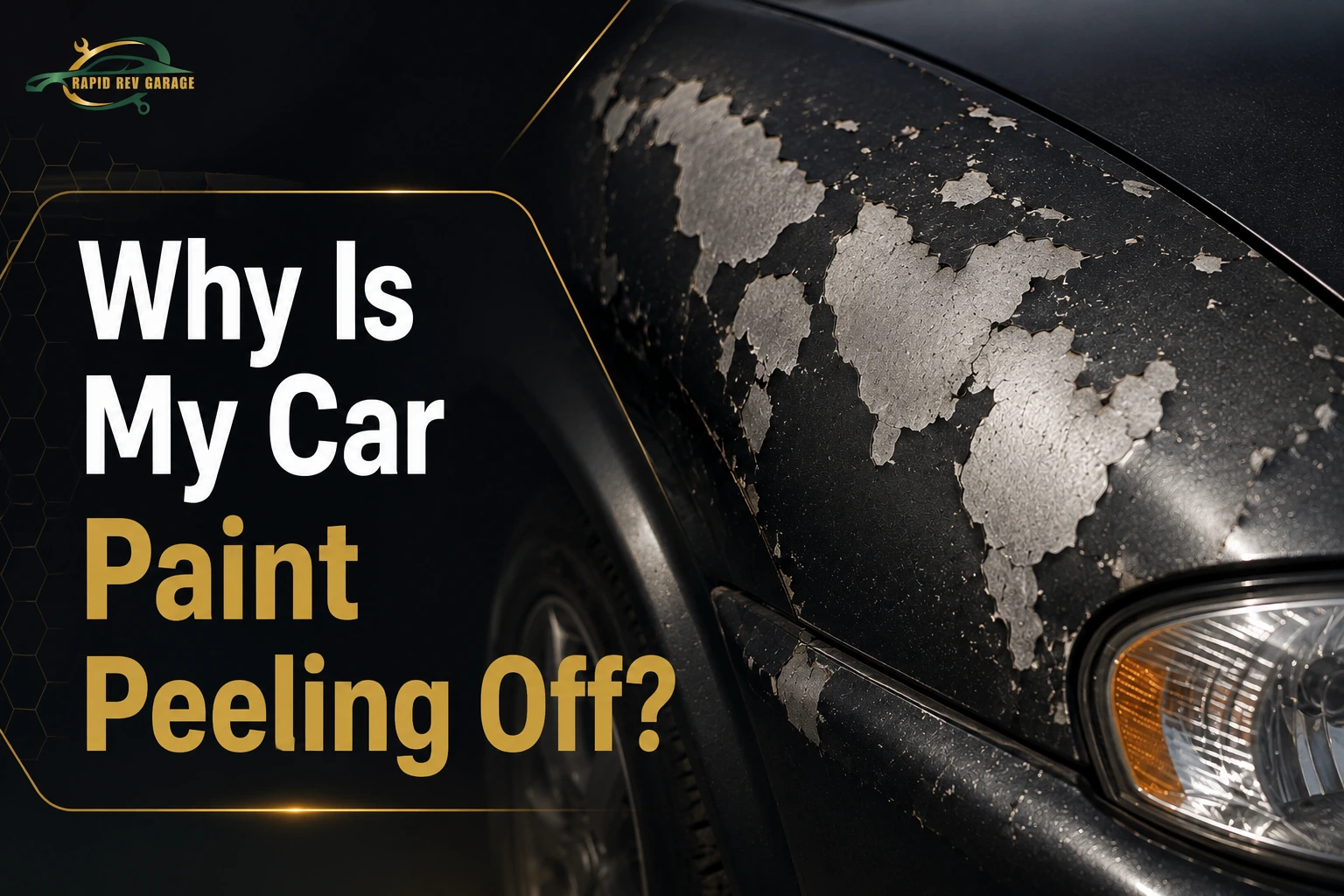
What’s Really Causing Car Paint Peeling
Car paint peeling almost always comes down to a breakdown in the bond between the clear coat, base coat, primer, and the body panel underneath. Years of UV exposure, extreme heat, moisture, stone chips, harsh chemicals, and rushed or poorly prepped repaints are the usual suspects. In Dubai specifically, the sun does much of the damage on its own: intense UV, high surface temperatures, and constant dust all accelerate the failure of a clear coat. What looks like a small cosmetic flake at first can expose bare metal underneath, and once that happens, you’re no longer just dealing with looks. Getting it checked early usually means a smaller, cheaper fix.
Table of Contents
- Understanding the Problem: Why Car Paint Peeling Actually Happens
- Warning Signs That Peeling Has Already Started
- What’s Really Causing the Paint to Fail
- How a Technician Figures Out What’s Actually Wrong
- What the Repair Process Actually Looks Like
- What Happens If You Leave It
- Is It Still Safe to Drive the Car?
- How Long Does a Repair Like This Take?
- What Actually Affects the Price
- Simple Habits That Slow Down Paint Damage
- Dubai-Specific Advice for Protecting Your Paint
- Why Choose Rapid Rev Garage for Engine Repair and Services?
- Frequently Asked Questions
- Related Services
- Final Call-to-Action
Why Car Paint Peeling Actually Happens
Seeing flakes or loose patches on your car is annoying at the best of times, especially when the rest of the vehicle still looks decent. Car paint peeling is a sign that one of the layers in your paint system has stopped adhering to the layer beneath it.
A modern finish is built in layers: primer, base coat, and clear coat sitting on top. The clear coat does most of the protective work and gives you that glossy look, while the base coat carries the actual color. When the bond between any of these layers weakens, you start to see cloudiness, cracking, flaking, or, in worse cases, whole sections lifting away.
It’s not always an age thing either. A car can start peeling within a year or two after a repaint if the panel wasn’t cleaned, sanded, or properly cured the first time around. And once it starts, no amount of polishing brings it back; the surface needs a proper look to see how deep the damage actually goes.
Warning Signs That Peeling Has Already Started
Catching car paint peeling early makes a real difference. Keep an eye out for:
- A cloudy or milky-looking patch on the clear coat
- Small flakes appearing around the edge of a damaged spot
- Paint that’s visibly lifting off the panel
- A rough, almost chalky feel to the surface
- Faded color showing through a damaged clear coat
- Cracks spreading out from the affected area.
- Larger sheets of paint coming away.
- Primer or bare metal starting to show.
- Bubbling under the paint surface
- One panel looking noticeably duller than the rest.
A dull roof or bonnet is often the first sign that the clear coat is on its way out, since horizontal panels take the brunt of the sun’s UV rays.
What’s Really Causing the Paint to Fail
Sun exposure over the years. UV radiation is honestly the biggest culprit. It slowly breaks down the clear coat until it’s brittle, dull, and cracked long before you actually see it lifting.
Heat cycling. Cars expand slightly in the heat and contract again once they cool. Do that thousands of times over the years, and it puts real stress on paint that’s already weakened.
A rushed repaint job. If a panel’s been resprayed before, how well that job was done matters a lot. Dust, grease, leftover wax, wrong sanding, or a repaint that wasn’t given enough time to cure properly all lead to poor adhesion down the line.
Stone chips and scratches. A chip that breaks through to the metal gives moisture and dirt a way to get under the surrounding paint, and that small chip can grow into a much bigger peeling patch.
Bird droppings, sap, and harsh chemicals. Left sitting in the sun, these eat into the clear coat faster than most people realize.
Water getting underneath. Once moisture reaches bare metal through a chip or a bad repair, oxidation and rust aren’t far behind. This is exactly why car paint peeling shouldn’t be brushed off as purely cosmetic.
Plain old age. Even a great factory finish has a shelf life. Years of sun, washing, and general exposure wear down its protective ability, especially on cars that live outdoors.
How a Technician Figures Out What’s Actually Wrong
Before jumping into any repair, a proper technician needs to know exactly which layer has failed. That usually means:
A close visual check of the size, location, and pattern of the damage.
Figuring out which layer failed. Clear-coat failure often reveals the original color beneath, while more severe damage exposes primer or bare metal.
Checking the surrounding area for loose edges, cracking, or signs the damage is spreading beyond what’s visible.
Looking for corrosion if metal is exposed, since rust changes the whole approach to the repair.
Asking about the car’s history. A previous repaint or body repair often explains exactly why the paint is failing now.
Skipping this step is how workshops end up just repainting over a problem that’s still there underneath.
What the Repair Process Actually Looks Like
The right fix depends entirely on how bad things actually are.
For minor surface issues without real layer separation, a paint correction or polish can sometimes help, but it won’t fix a clear coat that’s already lifted.
In a small, localized area, the unstable paint is removed, the surface is properly prepped, primer is applied where needed, and the section is refinished. The surrounding paint also gets checked so nothing nearby is quietly about to fail too.
For more serious cases, where multiple layers or a large section has separated, the damaged coating needs to be removed entirely, and the panel is properly prepared before anything new goes on. If metal is exposed, extra prep work is needed before color and clear coat are applied; a repair worth paying for fixes the actual paint system, not just the visible flakes.
What Happens If You Leave It
Ignore car paint peeling and the damaged area not staying the same size; it spreads. Once the protective layers are gone, whatever’s underneath has no protection from moisture and everyday grime. Bare metal left exposed for long enough starts to rust.
Left unchecked long enough, you’re looking at bigger peeling patches, fading and discoloration on nearby panels, actual rust forming, a bodywork bill that’s grown well past what it would’ve cost early on, and a car that looks worse than it needs to — which matters if you’re planning to sell it down the line.
Is It Still Safe to Drive the Car?
In most cases, yes. Peeling paint on its own doesn’t touch the engine, brakes, steering, or anything mechanical, so you’re not in any immediate danger driving around with it.
That said, if bare metal is showing, it’s worth getting looked at sooner rather than later. And if the peeling came from an accident, or there are loose panels or sharp trim pieces involved, don’t put off getting it checked.
If something separate goes wrong mechanically and you end up stuck somewhere, that’s a different situation entirely; that’s when calling roadside assistance makes more sense than trying to limp the car to a workshop yourself.
How Long Does a Repair Like This Take?
It really depends on how much car paint peeling damage you’re dealing with:
| Repair Situation | Typical Time | What’s Usually Involved |
| Small localized spot | 1–2 days | Sanding, prep, and refinishing |
| Single panel repaint | 1–3 days | Full prep, paint, and clear coat |
| Extensive peeling | 2–5+ days | Stripping, prep, and complete refinish |
| Multiple panels affected | Several days | Panel-by-panel inspection and repair |
Actual timing shifts depending on panel condition, paint type, and how long the finish needs to cure.
What Actually Affects the Price
There’s no flat rate for fixing peeling car paint, since the job can range from a small touch-up to a full panel repaint. What moves the price:
- How many panels are affected
- How large the peeling area actually is
- How deep the damage goes
- Whether primer or bare metal is showing
- Any rust or corrosion present
- Past bodywork on that panel
- The type and quality of paint used
- How difficult the color match is
- How much surface prep is needed
- Curing time and labor involved
Going with the cheapest quote isn’t always the smart move here. A rushed job that doesn’t fix the underlying adhesion issue often peels again.
Simple Habits That Slow Down Paint Damage
You can’t stop every cause of car paint peeling, but a few habits genuinely help:
- Park in the shade or under cover when you can, rather than leaving the car in direct sun all day
- Wash with proper automotive products, not whatever’s under the kitchen sink.
- Clean off bird droppings and tree sap quickly, before they’ve had time to bake into the paint.
- Rinse dust off instead of wiping it away dry, since dry wiping grinds sand into the surface.
- Get chips and scratches fixed while they’re still small.
- If a panel needs repainting, don’t cut corners on prep; proper cleaning, sanding, and curing are what make the paint actually stick.
Dubai-Specific Advice for Protecting Your Paint
Dubai isn’t an easy environment for a car’s finish. Between the UV intensity, the heat, the dust storms, and the humidity swings, exterior paint takes a real beating here compared to almost anywhere else.
A few things that help if you are living day-to-day with this climate: Use covered parking whenever you can get it, wash off dust rather than brush it, keep an eye on the roof and bonnet as they take the worst of the sun, deal with bird droppings promptly, and don’t let small chips go untreated. If you notice any lifting or fading, get it checked before it spreads. A few weeks is enough to catch clear-coat problems before they become a huge job.
Why Choose Rapid Rev Garage for Car Painting in Dubai?
Not every workshop that offers a repaint actually knows what caused the damage in the first place, and that’s usually where the trouble starts. At Rapid Rev Garage, we don’t just spray over a peeling patch and send you on your way. We figure out why the paint failed — whether it’s UV damage, a bad previous repaint, or moisture that’s worked its way underneath — and fix the actual cause, not just the visible flaking.
Dubai’s climate is brutal on paintwork, and we deal with the fallout from that every day. Our technicians know how to properly prep a panel, match color accurately, and apply a finish that’s built to hold up against the heat and sun instead of failing again in a year. If you’ve been searching for a garage near me because your car’s paint is peeling, fading, or cracking, Rapid Rev Garage in Al Quoz is set up to handle it properly the first time.
Frequently Asked Questions
Q1: Is peeling paint just a cosmetic issue?
Not always. If it’s exposed primer or bare metal underneath, that surface becomes a lot more vulnerable to moisture, oxidation, and eventually rust.
Q2: Can I fix it myself?
Small, purely cosmetic spots might be manageable on your own. Still, once multiple paint layers have failed, it’s usually worth handing it to a professional and getting the color to match. The adhesion right isn’t as simple as it looks.
Q3: Will polishing stop it from getting worse?
No. Polishing can help a surface that’s oxidized but still intact; it won’t reattach a clear coat that’s already separated.
Q4: Why does the roof always seem to peel first?
It gets more direct sun than any other panel. That constant UV exposure wears down the clear coat faster, which is why roofs, hoods, and boots tend to show trouble earliest.
Q5: Does peeling always mean a full repaint?
Not necessarily. It depends entirely on how much of the paint system has actually failed. Sometimes it’s a localized fix; sometimes it’s bigger — a proper inspection tells you which.
Q6: Does heat make it worse?
Yes. Heat speeds up the breakdown of a finish that’s already weakened, and the constant heating and cooling cycle adds even more stress over time.
Q7: Can I still wash a car with peeling paint?
You can; use gentle automotive-safe products and avoid blasting water directly at loose paint edges. Ideally, get the damage repaired rather than repeatedly exposing it to conditions that worsen it.
Related Services
If your paint issue is connected to broader vehicle needs, our team also handles car painting near me for full refinishing work, mobile car mechanic callouts if the car isn’t safe to drive, and roadside assistance for anything that leaves you stranded. For general upkeep, check our car service Dubai page, and for a faster diagnostic booking, visit our car mechanic near me page.
Conclusion
If you’ve spotted car paint peeling anywhere on your car, don’t wait for a small patch to turn into a much bigger repair. Whether it’s the clear coat, base coat, primer, or something deeper that’s failed changes what the fix actually looks like, and that’s not something to guess at.
Bring it in and let us tell you exactly what’s going on rather than just papering over the symptoms. Visit our garage near me to book an inspection and fix your car paint peeling with Rapid Rev Garage in Al Quoz.
💬 Message us directly on WhatsApp to get it looked at.