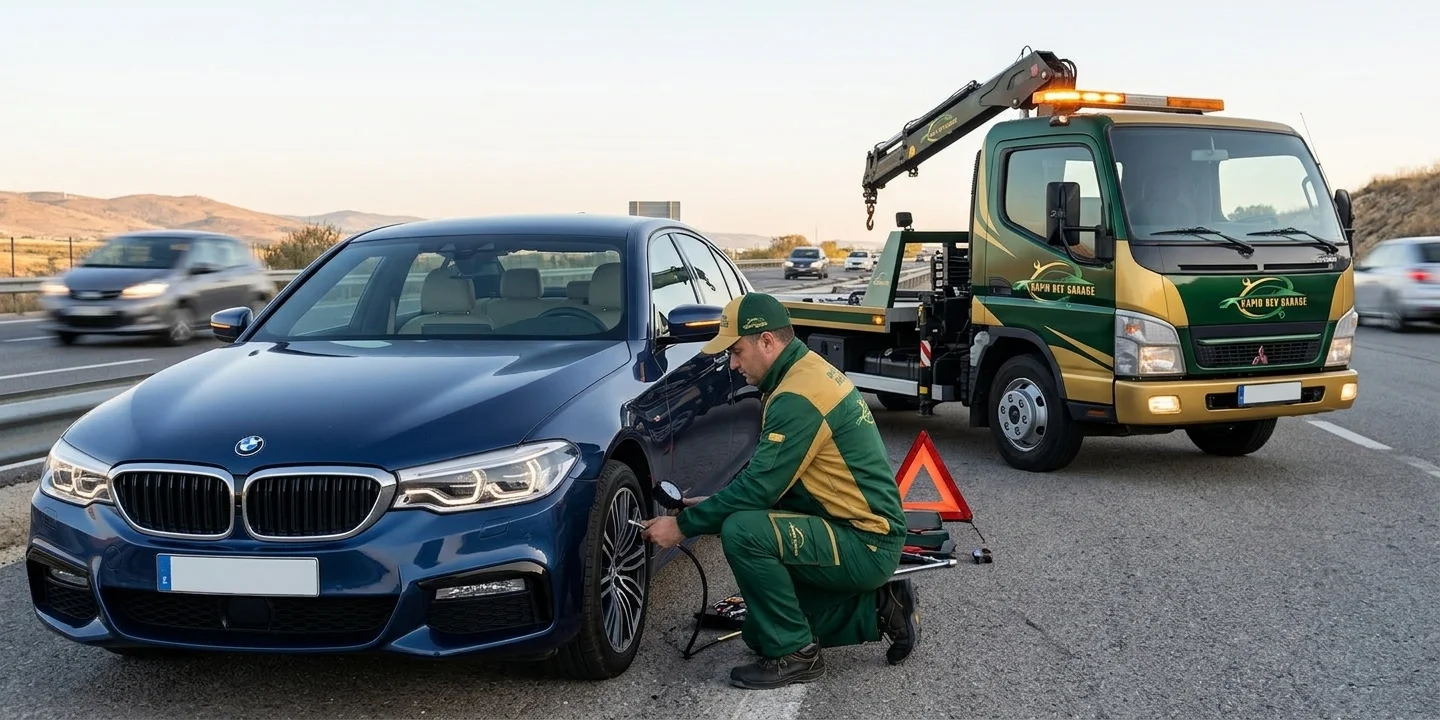
Car Recovery and Towing are related services, but they are not always the same. Towing usually means moving a vehicle from one place to another with a tow truck. Recovery is a wider service. It can include towing, winching, roadside help and getting a stuck or damaged vehicle to a safe location. For example, a car that will not start on a Dubai road may need towing. A vehicle stuck in sand may need recovery equipment first. Knowing the difference allows you to select the appropriate service and prevent delays. When in doubt, explain the problem to a professional roadside assistance team before moving the car.
Table of Contents
- Problem Overview: Understanding the Difference
- Symptoms: When Your Car May Need Help
- Common Causes of Vehicle Recovery
- Car Recovery and Towing: What’s the Difference?
- Diagnostic Process
- Recovery and Towing Process
- Risks of Ignoring a Disabled Vehicle
- Can You Continue Driving?
- Recovery Time
- Cost Factors
- Prevention Tips
- Dubai-Specific Advice
- Why Choose Rapid Rev Garage for Roadside Assistance?
- Frequently Asked Questions
- Related Services
- Final Call-to-Action
Problem Overview: Car Recovery and Towing Explained
A broken-down car can leave you unsure about what to do next.
You may call a recovery company when your car will not start. But the type of help you need depends on what happened.
Car Recovery and Towing are often used interchangeably. In practice, they can mean different things.
Towing mainly focuses on transporting a vehicle. A tow truck connects to the car and takes it to a garage, home or another safe location.
Recovery can cover more situations. It may involve a vehicle that is stuck, damaged, overturned or difficult to access. Recovery teams may use winches, ramps, flatbed trucks or other equipment.
Knowing which service you need can save time when you are already dealing with a breakdown.
Symptoms: When You May Need Car Recovery and Towing
Your vehicle may need professional help if you notice any of these problems:
- The engine will not start.
- The battery is completely flat.
- The car has suffered major engine damage.
- The vehicle has been involved in an accident.
- A tire problem makes driving unsafe.
- The transmission has failed.
- The car is stuck in sand or mud.
- The vehicle has lost a wheel or suspension component.
- Warning lights appear and performance is seriously affected.
- The car cannot move safely under its own power.
Do not try to drive a badly damaged car to reach a workshop.
If you are searching for a garage near me, ask whether the workshop can arrange recovery or roadside assistance before attempting to move the vehicle yourself.
Common Causes of Car Recovery and Towing
Breakdowns happen for many reasons. Some are simple. Others require specialist equipment.
Battery Failure
A dead battery is one of the most common reasons for roadside assistance. A jump-start may solve the problem. If the battery is damaged, it may need to be replaced.
Engine Problems
Major engine faults can make the vehicle unsafe or impossible to drive. In this situation, towing may be needed.
Transmission Failure
A failed transmission can stop a vehicle from moving. An automatic car may also require careful loading to prevent further damage.
Accidents
A damaged vehicle may have steering, suspension, brake or body problems. Move it using suitable recovery equipment.
Stuck Vehicles
Cars can become stuck in sand, soft ground or difficult parking areas. Recovery may require winching rather than standard towing.
Car Recovery and Towing: What’s the Difference?
The easiest way to understand Car Recovery and Towing is to look at what each service is designed to do.
| Service | Main Purpose | Common Situation | Typical Equipment |
|---|---|---|---|
| Towing | Move a vehicle | Breakdown or mechanical failure | Tow truck |
| Recovery | Get a vehicle out of trouble | Accident, sand, difficult location | Winch, flatbed, recovery truck |
| Roadside Assistance | Help at the breakdown location | Battery, flat tire, minor fault | Jump pack, tools |
| Flatbed Transport | Carry the full vehicle | Luxury, damaged or non-running car | Flatbed truck |
Towing is usually about transportation.
Recovery is broader. It can include getting the vehicle into a position where it can then be transported safely.
For a simple breakdown, a tow truck may be enough. For a car stuck in sand or damaged after an accident, a recovery vehicle may be more suitable.
Diagnostic Process: How Professionals Decide What You Need
A professional team should first understand what happened.
The technician or recovery operator may ask:
- Where is the vehicle?
- Is it on a main road, in a parking area or on a difficult surface?
- Can the engine start?
- Can the car move?
- Is there visible accident damage?
- Are the wheels or suspension damaged?
- Is the vehicle stuck?
- What type of car is it?
This information helps determine the safest way to move the vehicle.
For example, a flat battery may only need a jump-start. A car with serious suspension damage may need a flatbed truck.
Repair Process: What Happens After the Vehicle Is Moved?
Recovery is only the first step.
Once your vehicle reaches a safe location or workshop, the next step is diagnosis.
The technician may inspect the engine, transmission, battery, brakes, suspension, tires and electrical system.
If the problem is small, the repair may be completed quickly. A more serious fault may require replacement parts and further testing.
Rapid Rev Garage can help with vehicle inspections and repairs after a breakdown. This makes it easier to move from roadside support to proper mechanical care.
Risks of Ignoring a Disabled Vehicle
Leaving a broken-down vehicle in an unsafe location can create several problems.
Road Safety Risk
A disabled car can become a hazard for other drivers, especially on busy roads.
Further Vehicle Damage
Driving a vehicle with a serious mechanical fault can make the original problem worse.
Battery Drain
Leaving electrical systems running while waiting can further drain a weak battery.
Traffic and Parking Problems
A vehicle left in the wrong location may block traffic or create a parking issue.
Higher Repair Costs
Continuing to drive after a serious fault can turn a small repair into a much larger one.
Can You Continue Driving?
Sometimes, yes. But it depends on the fault.
If the problem is minor and the vehicle is operating normally, you may be able to drive to a workshop.
Do not continue driving if you have:
- Severe brake problems
- Steering failure
- Major fluid leaks
- Engine overheating
- Heavy smoke
- Serious accident damage
- A broken suspension component
- Severe transmission problems
- A flat tire that cannot be safely repaired
When the vehicle cannot be driven safely, Car Recovery and Towing can provide a safer way to move it.
If you are unsure, stop in a safe place and contact roadside assistance.
Recovery Time: How Long Does It Take?
The time depends on your location, traffic, vehicle condition and type of recovery needed.
| Situation | Typical Time |
|---|---|
| Battery jump-start | 30–60 minutes |
| Simple roadside assistance | 30–90 minutes |
| Standard towing | 45–120 minutes |
| Flatbed recovery | 1–2 hours |
| Vehicle stuck in sand | 1–3 hours |
| Accident recovery | 1–3+ hours |
These are general estimates. Busy roads, traffic, weather and the exact recovery location can change the arrival and recovery time.
Cost Factors: What Affects the Price?
The cost of Car Recovery and Towing varies between situations.
Common factors include:
- Distance to the destination
- Vehicle size and weight
- Type of recovery truck
- Time of day
- Road location
- Accident damage
- Need for winching
- Special equipment
- Destination garage
- Type of vehicle
A simple tow is usually less complicated than recovering a car stuck in sand or moving a heavily damaged vehicle.
Ask for a clear estimate before the service begins whenever possible.
Prevention Tips: How to Reduce Breakdown Risk
You cannot prevent every breakdown. However, regular maintenance can lower the risk.
Try these simple habits:
- Check your battery regularly.
- Keep tires correctly inflated.
- Replace worn tires before they become unsafe.
- Check engine oil levels.
- Watch the coolant level.
- Do not ignore warning lights.
- Service the vehicle on time.
- Check your brakes regularly.
- Keep basic emergency items in the car.
- Save a trusted roadside assistance number.
Regular maintenance is especially useful for cars that are driven every day in Dubai traffic.
Dubai-Specific Advice: Stay Safe During a Breakdown
Dubai roads can be busy and summer heat can make a breakdown harder to handle.
If your car stops working, move to a safe location if you can. Turn on the hazard lights and avoid standing close to moving traffic.
Do not attempt a risky repair on the roadside.
During very hot weather, engine overheating and battery problems can become more common. Keep water available for yourself and wait somewhere safe if possible.
If your vehicle is stuck or damaged, Car Recovery and Towing may be safer than trying to move it yourself.
For drivers looking for a garage near me, choosing a workshop that also understands roadside breakdowns can make the process easier.
Why Choose Rapid Rev Garage for Roadside Assistance?
When your car stops unexpectedly, fast and safe support matters.
Rapid Rev Garage can assist Dubai drivers with roadside problems and vehicle recovery needs. The team can help determine whether your vehicle needs a simple roadside fix or transport to a workshop.
The right equipment also matters. A luxury or heavily damaged vehicle may need careful loading to prevent additional damage.
Rapid Rev Garage can also inspect the vehicle after recovery and help identify the mechanical problem.
If your vehicle cannot be driven safely, roadside assistance is often the best first step.
Frequently Asked Questions
1. What is the difference between car recovery and towing?
Car Recovery and Towing are closely related, but towing usually means transporting a vehicle. Recovery can include towing, plus winching, accident recovery and other ways to get a vehicle out of trouble.
2. When should I call a recovery service?
Call a recovery service when your vehicle cannot move safely, has been badly damaged, is stuck or needs specialist equipment to be transported.
3. Can a recovery truck move a luxury car?
Yes. However, luxury and performance cars may require a flatbed truck and careful loading to protect low bodywork and specialist components.
4. Is towing safe for an automatic car?
It depends on the vehicle and the transmission type. Some automatic cars should not be towed with their driven wheels on the road. A flatbed truck may be the safer option.
5. How much does vehicle recovery cost in Dubai?
There is no single price. Distance, vehicle type, location, equipment and the type of recovery required all affect the cost.
Related Services
If you need help after a breakdown, related services may include:
- Roadside assistance
- Car towing
- Battery jump-start
- Battery replacement
- Flat tire assistance
- Vehicle diagnostics
- Accident recovery
- Engine repair
- Transmission repair
- Brake repair
- Full vehicle inspection
Final Call-to-Action
Knowing the difference between Car Recovery and Towing can help you make the right decision during a stressful breakdown.
Do not risk driving a damaged or unsafe vehicle. Get professional help and move the car safely to a suitable location.
If you need roadside assistance, vehicle recovery or mechanical support in Dubai, Rapid Rev Garage can help.
For drivers searching for a reliable garage near me, contact Rapid Rev Garage for professional vehicle support and repair services.
Location: Rapid Rev Garage – Google Maps