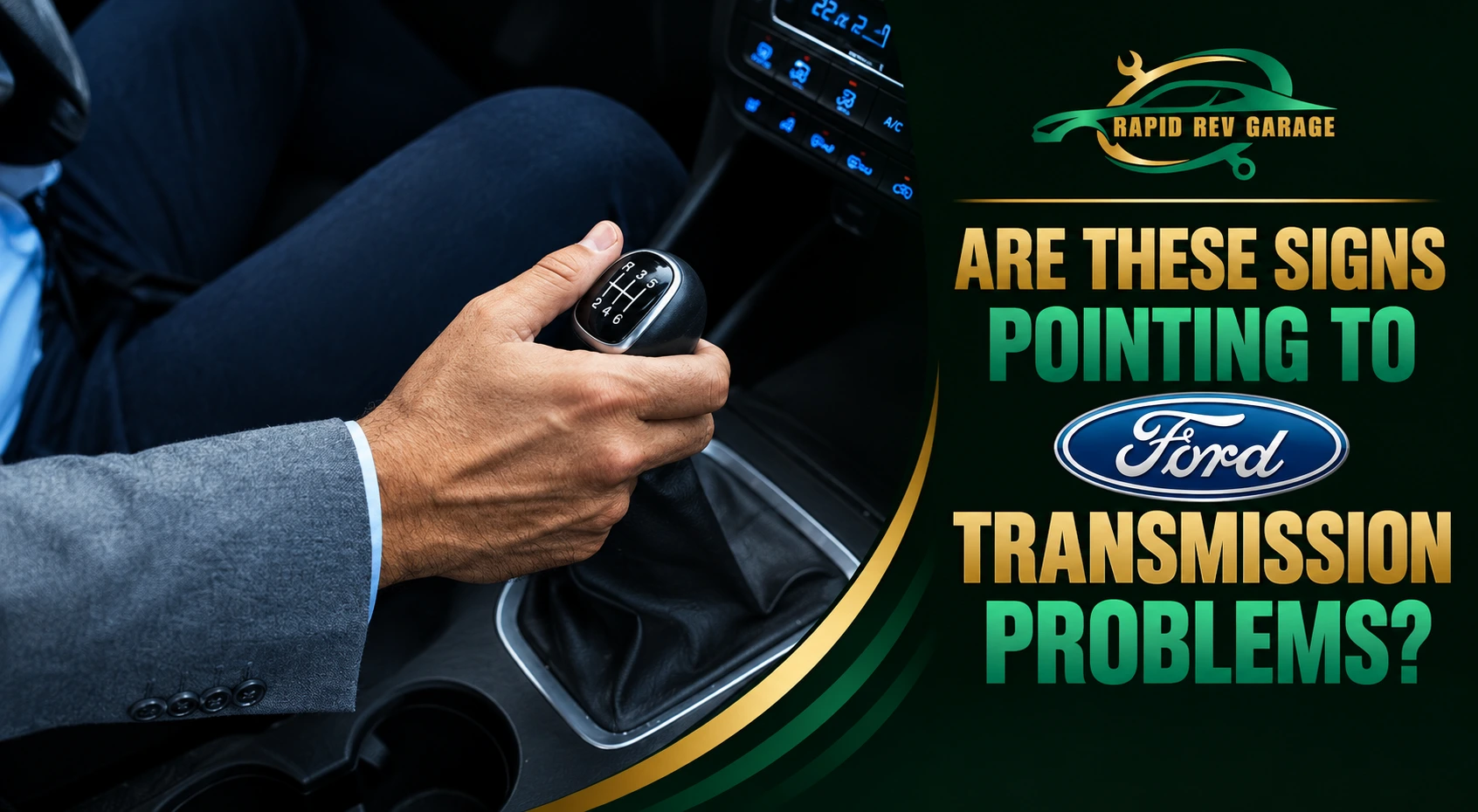
Ford transmission problems can show up as delayed shifting, slipping gears, rough changes, strange noises, fluid leaks, or a burning smell. Some issues are minor, such as old fluid or a faulty sensor. Others can involve the valve body, solenoids, clutch packs, or internal transmission parts. If your Ford transmission not shifting properly, do not ignore the change. Early testing can help prevent a small fault from becoming a costly repair. Dubai heat and heavy traffic can also place extra stress on the transmission, so prompt inspection is useful when warning signs appear.
Table of Contents
- Problem Overview
- Symptoms
- Common Causes
- Diagnostic Process
- Repair and Service Process
- Risks of Ignoring It
- Can You Continue Driving?
- Repair and Service Time
- Cost Factors
- Estimated Repair Cost
- Prevention Tips
- Dubai-Specific Advice
- Why Choose Rapid Rev Garage for Ford Transmission Repair in Dubai?
- Relevant Service Page
- Related Services
- FAQs
- Final Thoughts
Problem Overview: When Ford Transmission Problems Start to Affect Your Drive
Your transmission transfers engine power to the wheels and changes gears as your speed changes. When it develops a fault, the car may feel different before a major breakdown happens.
Ford transmission problems symptoms can appear as a small delay, a hard gear change, or a strange sound. A Ford transmission fluid leak may also leave red, brown, or dark fluid under the vehicle, depending on the transmission and fluid condition.
Not every shifting issue means you need to replace the whole transmission. A proper scan and mechanical inspection can help find the actual cause.
Ford Transmission Problems vs. Normal Gear Changes
| Sign | What It May Indicate | Urgency |
|---|---|---|
| Small shift delay | Fluid, sensor, or adaptation issue | Medium |
| Hard gear change | Solenoid, valve body, or pressure issue | Medium |
| Gear slipping | Fluid pressure or internal wear | High |
| Fluid leak | Seal, line, pan, or cooler issue | High |
| No drive or reverse | Serious transmission fault | Very high |
Symptoms: Common Warning Signs to Watch
Knowing Ford transmission problems symptoms can help you act before the vehicle becomes undriveable.
⚠️ Ford Transmission Slipping
The engine may rev higher, but the car does not speed up as expected. This is often described as Ford transmission slipping. Low fluid, worn clutch components, or hydraulic problems can cause it.
⚠️ Ford Transmission Not Shifting Properly
Your Ford may stay in one gear, shift too late, or refuse to select the next gear. Ford transmission not shifting properly can be linked to sensors, solenoids, software, fluid pressure, or internal parts.
⚠️ Ford Transmission Shifting Problems
Watch for jerking, hesitation, clunking, delayed engagement, or repeated downshifts. These Ford transmission shifting problems should be checked if they keep happening.
⚠️ Other Ford Transmission Failure Symptoms
Other Ford transmission failure symptoms include a burning smell, warning lights, unusual whining or grinding, fluid leaks, or loss of drive.
Common Causes Behind Ford Transmission Problems
Several faults can create similar symptoms. A technician needs to test the vehicle before deciding on a repair.
Low or Old Transmission Fluid
Transmission fluid lubricates parts and helps create hydraulic pressure. Low, dirty, or overheated fluid can affect shifting.
Faulty Solenoids or Sensors
Electronic solenoids control fluid flow inside the transmission. A failed solenoid or faulty speed sensor can cause poor shifting.
Valve Body Problems
The valve body directs transmission fluid through different passages. Wear or contamination can lead to delayed or harsh shifts.
Software or Adaptation Issues
Some shifting concerns can be related to control-module software or learned shift values. A scan can help identify these issues.
Internal Wear
Worn clutch packs, bearings, gears, or other internal components can cause more serious symptoms and may require rebuilding or replacement.
Diagnostic Process: How a Ford Transmission Is Checked
A proper diagnosis helps avoid replacing good parts.
- Initial inspection: The technician asks about the symptoms, driving conditions, and recent repairs.
- Fluid check: Fluid level, condition, smell, and possible leaks are inspected.
- Computer scan: Transmission and engine control modules are checked for fault codes.
- Road test: The technician observes shifts, engagement, slipping, and abnormal sounds.
- Pressure and electrical tests: These can help locate hydraulic, wiring, sensor, or solenoid faults.
- Mechanical inspection: If needed, the transmission and related components are checked more closely.
- Repair plan: The technician explains the cause, required work, and expected cost before major repairs begin.
Repair and Service Process: Step-by-Step Ford Transmission Repair
Ford transmission repair depends on the actual fault. A good service process should follow these steps:
Step: 1
Confirm the fault through scanning and physical testing.
Step: 2
Locate leaks and inspect seals, lines, cooler connections, and the transmission pan.
Step 3:
Correct fluid issues by repairing leaks and using the correct Ford-spec fluid.
Step 4:
Test electronic parts such as solenoids, sensors, wiring, and control modules.
Step 5:
Service the valve body if testing shows pressure or valve-related problems.
Step 6:
Repair internal parts if clutch, gear, bearing, or other internal damage is confirmed.
Step 7:
Refill and check fluid to the correct level and specification.
Step 8:
Clear codes and road test the vehicle to confirm that the repair worked.
Risks of Ignoring Ford Transmission Problems
Ignoring early symptoms can allow wear to spread. A small leak can reduce fluid levels. Low fluid can increase heat and friction. Continued slipping can also damage clutch material and other parts.
In severe cases, the vehicle may lose drive or become unsafe to operate. Delaying Ford transmission repair may also turn a smaller service into a more expensive rebuild or replacement.
Can You Continue Driving With Transmission Symptoms?
It depends on the symptom.
If the car has a mild shift issue but still drives normally, a short trip to a workshop may be possible. Avoid hard acceleration and heavy traffic when possible.
Do not continue driving if the transmission is slipping badly, the car will not move, fluid is leaking heavily, there is a burning smell, or the vehicle suddenly loses drive. In these cases, roadside assistance is a safer option.
If you are searching ‘garage near me‘, choose a workshop like Rapid Rev Garage that can diagnose the transmission instead of simply clearing warning codes.
Repair and Service Time: How Long Does It Take?
The time depends on the cause and the Ford model.
| Type of Work | Typical Time Range* |
|---|---|
| Scan and basic inspection | 30–90 minutes |
| Fluid service or minor leak repair | 1–4 hours |
| Solenoid or sensor repair | Several hours to 1 day |
| Valve body service | 1–2 days |
| Transmission rebuild | Several days |
| Transmission replacement | 1–3 days |
*These are general estimates. Parts availability and the condition of the vehicle can change the actual time.
Cost Factors: What Affects the Final Repair Bill?
The cost depends on the exact Ford model, transmission type, fault, parts needed, and labor involved.
A simple fluid service is very different from an internal rebuild. The final price can also change if the transmission has been driven for a long time with low fluid.
Estimated Ford Transmission Repair Cost in Dubai
| Repair Type | Estimated Range (AED) |
|---|---|
| Diagnostic scan and inspection | 150–350 |
| Transmission fluid service | 350–900 |
| Minor leak repair | 400–1,200 |
| Sensor or solenoid repair | 500–2,000+ |
| Valve body repair/service | 1,500–4,000+ |
| Transmission rebuild | 3,500–8,000+ |
| Transmission replacement | 5,000–15,000+ |
These figures are general market estimates, not fixed quotes. The exact cost should be confirmed after diagnosis.
Prevention Tips to Reduce Transmission Wear
Use this simple checklist to keep your Ford transmission in better condition:
- ✅ Check for fluid leaks regularly.
- ✅ Follow the correct transmission service schedule.
- ✅ Use the correct fluid specification for your Ford.
- ✅ Do not ignore delayed or harsh shifts.
- ✅ Avoid aggressive acceleration when the transmission is hot or showing symptoms.
- ✅ Get warning lights scanned instead of resetting them without diagnosis.
- ✅ Have the transmission inspected after overheating or a major fluid leak.
- ✅ Keep cooling systems in good condition, especially in Dubai.
Dubai-Specific Advice for Ford Owners
Dubai’s hot weather can raise operating temperatures, while stop-and-go traffic can add more heat and stress. Long drives, heavy traffic, and frequent air-conditioning use can also increase the overall load on the vehicle.
If your Ford starts shifting differently during hot weather, arrange an inspection rather than assuming the problem will disappear when temperatures drop. A local workshop can also check the transmission cooler, fluid condition, electrical system, and related components.
For urgent breakdowns, roadside assistance can help move the vehicle safely when driving it could cause more damage.
Why Choose Rapid Rev Garage for Ford Transmission Repair in Dubai?
Rapid Rev Garage provides Ford-focused inspection and repair support in Dubai. Our team can inspect shifting issues, scan transmission systems, check fluid leaks, and identify whether the problem is electrical, hydraulic, or mechanical.
For Ford transmission problems that involve slipping, delayed engagement, warning lights, or unusual noises, professional diagnosis is important. Rapid Rev Garage will recommend the appropriate Ford transmission repair based on the actual fault rather than guessing from symptoms alone.
Relevant Service Page
For routine maintenance, diagnostics, and repair support, you can check out our Ford service page. It provides more information about Ford maintenance and workshop support in Dubai. If your Ford is showing shifting symptoms, book an inspection before the issue becomes more serious.
Related Services for Ford Owners
- Ford engine diagnostics
- Ford brake repair
- Ford AC repair
- Ford electrical diagnostics
- Transmission fluid service
- Car computer scanning
- Roadside assistance
- General car inspection
FAQs
What Are the Most Common Ford Transmission Problems?
Common issues include slipping, delayed engagement, harsh shifting, fluid leaks, faulty solenoids, sensor faults, valve body problems, and internal wear.
Why Is My Ford Transmission Slipping?
Ford transmission slipping can happen because of low or worn fluid, pressure problems, clutch wear, solenoid faults, or internal transmission damage. A proper diagnosis is needed to identify the cause.
Why Is My Ford Not Shifting Properly?
Ford transmission not shifting properly may be caused by low fluid, a bad sensor, a faulty solenoid, control-module issues, or mechanical wear.
Can a Ford Transmission Be Repaired Instead of Replaced?
Yes. Some faults can be repaired without replacing the complete transmission. The correct option depends on the failed components and the amount of internal damage.
How Do I Know If My Ford Has a Transmission Fluid Leak?
Look for fluid spots under the vehicle, a low fluid level, burning smells, or shifting changes. A workshop can locate the leak and identify its source.
When Should I Stop Driving My Ford?
Stop driving and arrange roadside assistance if the vehicle loses drive, slips severely, leaks a large amount of fluid, smells strongly of burning, or makes serious mechanical noises.
How Much Does Ford Transmission Repair Cost in Dubai?
There is no single price. A basic fluid service may cost much less than a rebuild or replacement. Diagnosis is needed for an accurate estimate.
Can Hot Weather Cause Ford Transmission Issues?
Heat can increase transmission operating temperatures and may worsen an existing fluid, cooling, or mechanical problem. Regular maintenance is especially important in Dubai.
How Long Do Ford Transmissions Last?
A Ford transmission can often last around 150,000–200,000 miles with proper maintenance. Driving habits, servicing, heat, and the specific Ford model can affect its lifespan.
What Does Transmission Slipping Feel Like?
Transmission slipping may feel like the engine revs increase without a matching increase in speed. You may also notice delayed acceleration, sudden gear changes, or hesitation.
Can a Software Update Fix Harsh Shifts?
Yes, in some cases. A transmission control software update or relearn procedure can improve harsh shifting when the issue is related to software or adaptive settings.
Is It Safe to Drive with Transmission Slipping?
It is generally not recommended. Continued driving can increase transmission damage. If slipping is severe, arrange roadside assistance instead of driving the vehicle.
How Often Should Ford Transmission Fluid Be Changed?
The interval varies by Ford model, transmission, and driving conditions. Follow the service schedule in your owner's manual and inspect the fluid if shifting problems appear.
Why Does My Ford Shudder at Low Speed?
A low-speed shudder can be caused by old or incorrect transmission fluid, torque converter problems, clutch wear, or other drivetrain issues. A proper inspection can identify the cause.
Is Rebuilding Cheaper Than Replacing a Transmission?
Often, rebuilding can cost less than installing a new transmission, but it depends on the damage, parts, labor, and transmission type. A diagnosis can help compare both options.
Final Thoughts
If your Ford is slipping, shifting late, leaking fluid, or showing a transmission warning, do not wait for a complete breakdown. Rapid Rev Garage will inspect the vehicle and help identify the right repair path.
Book a Ford transmission inspection in Dubai and address the issue before it becomes a larger repair.
You can also visit us at our Al Quoz, Dubai branch,
Rapid Rev Garage: https://maps.app.goo.gl/wjK13vovXTKx5SsH8