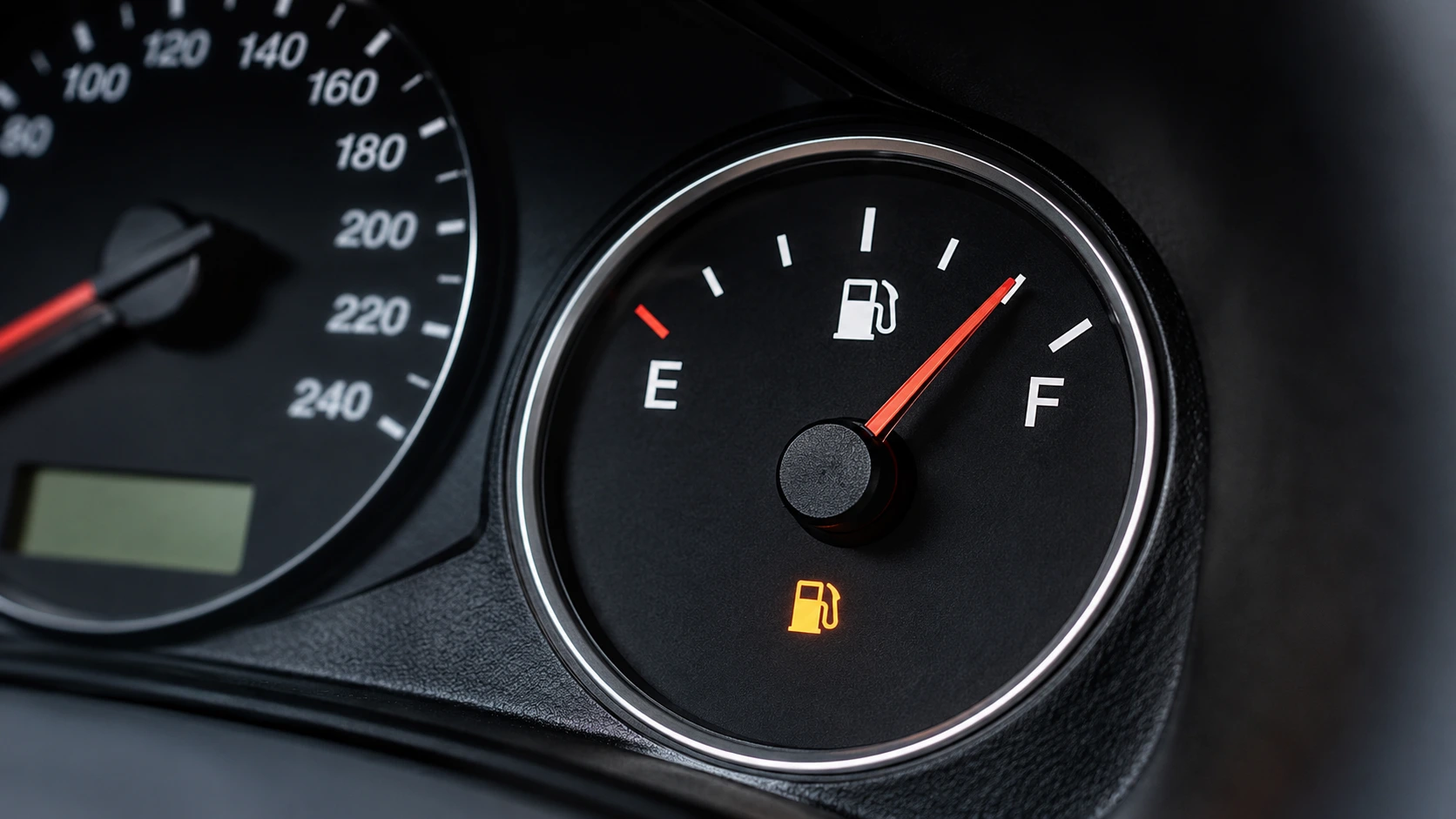
When a fuel gauge gives incorrect readings, it is more than a minor inconvenience — it’s a safety risk. A gauge reading full when the tank is half-empty, sitting on empty with a quarter tank remaining, or jumping erratically between positions all have the same consequence: you cannot trust the information you’re relying on to know when to refuel. In Dubai’s heat, this fault is accelerated by conditions that degrade the sender unit and its wiring faster than in any temperate market.
At Rapid Rev Garage in Al Quoz, we diagnose fuel gauge faults across all makes and models using electrical testing and diagnostic scanning before any component is recommended for replacement.
Fuel Gauge Gives Incorrect Readings — Quick Verdict
When a fuel gauge gives incorrect readings in Dubai, the cause is almost always the fuel level sender unit inside the tank — a float and resistor assembly that wears out from constant movement and heat exposure. Less frequently, the fault sits in the wiring between the sender and the instrument cluster, in the cluster itself, or in a blown fuse. In Dubai, the sender unit degrades faster from heat exposure and fuel quality factors. The fault is diagnosed through a combination of instrument cluster self-test, sender resistance measurement, and wiring continuity check — not by replacing the most likely component and hoping.
Table of Contents
- How the Fuel Gauge System Actually Works
- What Incorrect Readings Look Like — The Different Fault Patterns
- Why the Sender Unit Fails — and Why Dubai Accelerates It
- Every Component That Can Cause This Fault
- How We Find the Exact Fault at Rapid Rev Garage
- Getting It Fixed — What the Repair Involves
- The Safety Risk of Driving With This Fault
- Is It Still Safe to Use the Car?
- How Long the Repair Takes
- What to Expect in Terms of Cost
- Keeping the Fuel System Reliable in Dubai
- The Dubai Factor — Heat and Fuel Quality
- Why Rapid Rev Garage?
- FAQ
- Conclusion
How the Fuel Gauge System Actually Works
Before diagnosing why a fuel gauge gives incorrect readings, understanding the system explains immediately why specific symptoms point to specific components.
Three Parts That Must All Work Together
The fuel gauge system consists of three elements — the sender unit inside the fuel tank, the wiring harness connecting it to the instrument cluster, and the gauge display itself. A failure in any one of the three produces an incorrect reading at the dashboard.
What the Sender Unit Does
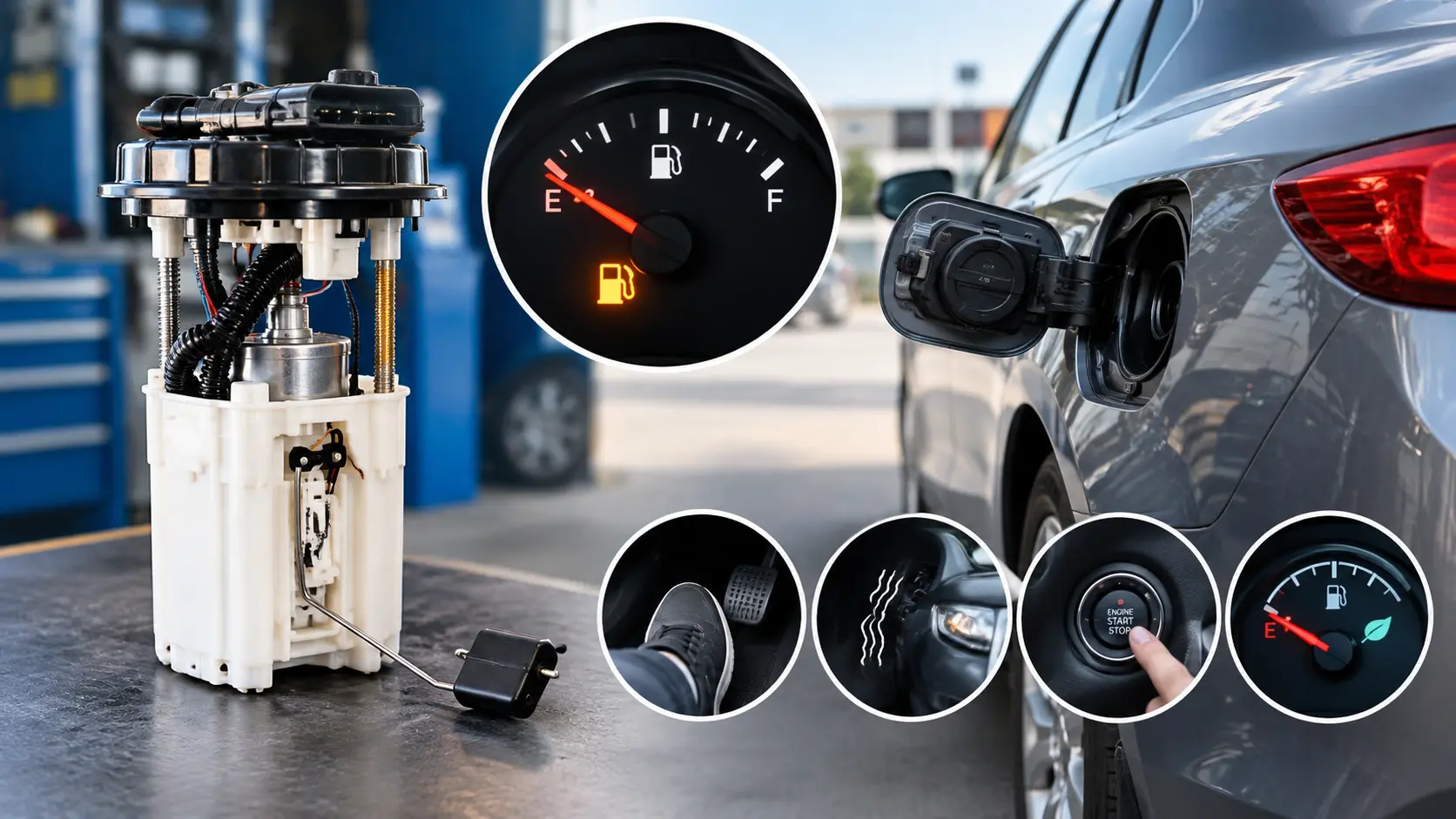
The sender unit is a float connected to a variable resistor mounted inside the fuel tank. As the fuel level rises and falls, the float moves up and down, changing the resistance value it sends to the gauge. A full tank produces one resistance value; an empty tank produces a different one. The gauge reads this resistance and translates it into the needle position the driver sees.
Why Constant Movement Creates Wear
The sender unit moves continuously with every fuel level change and with every movement of the vehicle that causes fuel to slosh inside the tank. This constant motion wears the contact wiper across the resistor strip over time — creating gaps in the resistive surface that produce erratic or inaccurate signals.
What Incorrect Readings Look Like — The Different Fault Patterns
The specific symptom pattern when a fuel gauge gives incorrect readings tells a clear story about which part of the system is failing.
Gauge Stuck on Full Regardless of Fuel Level
A gauge that reads full even after significant driving almost always indicates a short circuit in the sender circuit — the wiring or sender is producing a signal that corresponds to a full tank regardless of actual level. Some sender designs read maximum when the circuit has zero resistance, so a short to ground produces a permanent full reading.
Gauge Stuck on Empty With Fuel in the Tank
This is the opposite fault and the more dangerous of the two — a driver who runs out of fuel believing they have fuel remaining is a roadside emergency. An open circuit in the sender, a broken float, or a disconnected wiring connector produces a signal corresponding to empty. This is also what happens when a blown fuse removes power from the sender circuit entirely.
Gauge Reading Erratically or Jumping
A needle that moves unpredictably — swinging between different positions without a corresponding change in fuel level — almost always indicates intermittent contact in the sender’s resistor strip. Worn areas in the resistive track produce signal dropouts as the wiper moves through the damaged section, creating the erratic movement the driver sees.
Gauge Reading Consistently Low or High by a Fixed Amount
A gauge that reads a quarter tank low across the entire range — not erratically, but consistently offset — can indicate an instrument cluster calibration fault, an incorrect sender unit fitted during a previous repair, or a wiring resistance issue adding a fixed offset to the sender’s signal.
Why the Sender Unit Fails — and Why Dubai Accelerates It
The sender unit is the most frequently faulting component in this system, and Dubai’s conditions specifically accelerate its degradation.
The Mechanical Wear Mechanism
Every kilometre driven causes the float arm to move through fuel level changes, and every corner, acceleration, and braking event causes fuel to slosh and moves the float. The wiper contact that reads the resistive strip wears from this continuous movement. On a high-mileage vehicle doing daily Dubai commuting, the sender unit may have completed millions of wiper movements across the resistor strip.
Heat Exposure Inside the Fuel Tank
Fuel in a Dubai vehicle experiences significantly higher temperatures than in a temperate market — particularly in vehicles parked in direct sun where fuel tank temperatures can rise considerably. Heat degrades the resistive materials in the sender unit and hardens the rubber seal that keeps the sender seated in the tank. A sender that would last well past 100,000 km in Europe may show wear-related inaccuracy before 70,000 km in Dubai conditions.
Fuel Quality and Contaminants
Fuel contaminants and water ingestion — which is more common when tanks are frequently run very low, as the sediment settled at the tank bottom is stirred up — accelerate corrosion of the sender’s electrical contacts. Running the tank consistently below a quarter contributes to this, particularly in Dubai’s heat where the low fuel level means less thermal mass protecting the sender from heat.
Our car mechanic team checks sender resistance values and wiring integrity before recommending any component replacement on fuel gauge faults.
Every Component That Can Cause This Fault
While the sender unit is the most common cause, each component in the chain deserves consideration before parts are ordered.
The Fuel Level Sender Unit
A worn resistive track, broken float arm, or corroded electrical connection at the sender connector produces the three symptom patterns above — stuck full, stuck empty, or erratic movement. This is the component inside the fuel tank that requires fuel tank access to replace.
The Instrument Cluster
The gauge in the cluster reads the sender signal and converts it to needle position. A cluster fault produces incorrect readings from a sender that is working correctly — and is distinguished from a sender fault by testing the sender resistance directly and comparing it against what the cluster displays.
The Wiring Harness
The wiring between the sender and the cluster passes through the vehicle floor and is exposed to heat, vibration, and occasionally moisture from flooring. A chafed wire, corroded connector, or open circuit produces exactly the same symptoms as a faulty sender. Testing continuity and resistance of the wiring specifically confirms or rules out this cause.
Blown Fuse
The instrument cluster circuit is typically fuse-protected. A blown fuse can remove power from the sender circuit specifically, producing an empty reading. This is the first check before any other testing — it takes 60 seconds and costs nothing.
How We Find the Exact Fault at Rapid Rev Garage
A systematic diagnostic sequence identifies which component causes a fuel gauge gives incorrect readings fault before any part is ordered or any tank access is performed.
Instrument Cluster Self-Test First
Most modern vehicles have an instrument cluster self-test mode that sweeps all gauges from minimum to maximum. If the fuel gauge moves through its full range during the self-test, the cluster display is functioning — the fault is in the sender or wiring. If the gauge doesn’t move during the self-test, the cluster itself is suspect.
Fuse Check
All fuses related to the instrument cluster and fuel sender circuit are verified before any further testing. A blown fuse resolved here prevents unnecessary sender or cluster investigation.
Sender Resistance Measurement
With the fuel level known, the sender connector is accessed and resistance measured directly at the sender. Comparing the measured resistance against the expected value for the known fuel level confirms whether the sender is reading correctly. A sender producing an out-of-range resistance value at a known fuel level is confirmed faulty.
Wiring Continuity Test
Where the sender resistance is correct but the gauge still reads incorrectly, the wiring harness is tested for continuity and resistance between the sender connector and the cluster. A wiring fault identified here confirms the harness as the cause — preventing an unnecessary sender replacement.
Diagnostic Scan for Cluster Faults
On modern vehicles with digital instrument clusters, a full diagnostic scan reads any stored fault codes in the Body Control Module and cluster module — revealing software or sensor communication faults that produce gauge inaccuracy without any mechanical component failing.
Getting It Fixed — What the Repair Involves
The repair for any fuel gauge gives incorrect readings fault is matched to the confirmed diagnostic finding.
Sender Unit Replacement
The most common repair — the fuel tank sender unit is accessed through the boot floor or under-body access point depending on the vehicle, and the old unit is replaced with a correctly-specified unit for the make, model, and tank configuration. The fuel level is verified after installation to confirm the gauge reads correctly. Our car service packages include fuel system condition checks at every major service visit.
Wiring Harness Repair
Where a specific wiring fault is confirmed — a chafed wire, corroded connector, or open circuit — the affected section is repaired or replaced. Connector cleaning or replacement resolves corrosion-related intermittent faults at lower cost than harness replacement.
Fuse Replacement
A blown fuse is replaced with the correct amperage rating. If the fuse blows again, the underlying short circuit in the protected circuit is investigated.
Instrument Cluster Repair or Replacement
Where the cluster itself is confirmed faulty, the cluster is repaired or replaced. On modern vehicles, a replacement cluster requires VIN coding to the vehicle through diagnostic software to ensure the odometer reading is correctly transferred.
The Safety Risk of Driving With This Fault
A fuel gauge that gives incorrect readings creates a specific and real risk that goes beyond inconvenience.
Running Out of Fuel — The Primary Risk
A gauge reading higher than actual fuel level removes the driver’s warning of an impending empty tank. Running out of fuel on Sheikh Zayed Road or in the middle of a desert highway section is both dangerous and expensive. The risk is not theoretical — it is the direct consequence of trusting a gauge that reads full when the tank is near empty.
Secondary Fuel System Damage
Running the fuel tank very low — which happens more frequently when a driver believes they have more fuel than they do — stirs up sediment from the tank bottom and draws it into the fuel system, clogging the fuel filter and potentially damaging the fuel injectors. Our roadside assistance covers Al Quoz and nearby Dubai areas for fuel-related breakdowns while the fault is being arranged for repair.
Is It Still Safe to Use the Car?
Driving with a fuel gauge that gives incorrect readings is safe from a mechanical standpoint — the engine runs normally — but carries the specific risk described above.
Manage the Risk With Mileage Tracking
Until the fault is repaired, track mileage from each fill-up rather than relying on the gauge. Refuel at a conservative mileage interval regardless of what the gauge shows — this removes the running-out-of-fuel risk while the repair is pending.
Don’t Defer for Long
This is not a fault to live with for months. The safety risk — and the potential fuel system damage from running low repeatedly — argues for repair within one to two weeks rather than indefinite management.
How Long the Repair Takes
Repair time depends on which component is confirmed faulty.
Fuse and Wiring Work
Fuse replacement or wiring repair is typically completed same-day in one to two hours including testing after repair.
Sender Unit Replacement
Sender unit replacement requires fuel tank access — typically two to four hours depending on the vehicle platform and whether the tank requires any removal for access. Same-day service in most cases.
Instrument Cluster Work
Cluster repair or replacement with VIN coding typically takes one to three hours depending on the vehicle and coding requirements.
What to Expect in Terms of Cost
Cost depends on the confirmed fault — which is why the diagnostic sequence matters before any cost discussion.
Fuse and Wiring Repairs
Fuse replacement: AED 100–250 including diagnostic confirmation. Wiring harness repair at a specific fault point: AED 300–700 depending on access complexity.
Sender Unit Replacement
AED 500–1,500 depending on vehicle make, model, and sender unit specification. Performance and luxury vehicles with more complex fuel systems sit at the higher end. A written quote is provided after the diagnostic confirms the sender as the fault — not before.
Instrument Cluster Work
AED 600–2,500 depending on whether the cluster requires repair or replacement and the VIN coding complexity for the specific platform. For any exterior or other work needed alongside the fuel system repair, our car painting team handles colour-matched work in the same visit.
Keeping the Fuel System Reliable in Dubai
Specific habits prevent a fuel gauge gives incorrect readings fault from recurring and reduce the chance of recurrence after a repair.
Avoid Running the Tank Below a Quarter
Running the tank consistently low exposes the sender unit to tank sediment and reduces the thermal buffer the fuel provides around the sender in hot conditions. Refuelling at a quarter tank rather than empty extends sender life and protects the fuel pump from heat.
Use Quality Fuel Consistently
Fuel quality in Dubai varies between stations and grades. Using the correct specification fuel for the vehicle’s engine and avoiding very low-cost stations where fuel quality may be inconsistent reduces contamination-related sender wear. Our mobile car mechanic covers Al Quoz and nearby Dubai areas for on-site diagnosis if the vehicle isn’t practical to bring in.
The Dubai Factor — Heat and Fuel Quality
Dubai’s conditions specifically accelerate the fuel gauge sender faults that produce incorrect readings.
Under-Bonnet and Under-Body Heat
The fuel tank sits under the vehicle floor and absorbs heat from the road surface in Dubai’s summer — where road surface temperatures can significantly exceed ambient air temperature. This sustained thermal exposure hardening sender seals and degrading resistive materials faster than in any temperate market.
The Low Fuel Habit
Many Dubai drivers refuel infrequently and run tanks very low before filling. This pattern is particularly common given the convenience of petrol stations throughout the city. However, the repeated exposure of the sender unit to the heat and sediment at the bottom of the tank accelerates wear faster than a driver who maintains a consistently fuller tank. Our garage near me location in Al Quoz serves drivers across Business Bay, Jumeirah, Barsha, Satwa, Downtown, and the Sheikh Zayed Road corridor.
Why Rapid Rev Garage?
We test before we replace. A fuel gauge gives incorrect readings fault that is resolved by replacing the sender unit when the actual fault is a blown fuse, or by replacing the cluster when the actual fault is a wiring connector, wastes money and time. The diagnostic sequence — fuse check, cluster self-test, sender resistance measurement, wiring continuity test — takes less than an hour and produces an accurate answer before any part is ordered. Every fuel gauge gives incorrect readings case at Rapid Rev Garage follows this sequence.
FAQ — Fuel Gauge Gives Incorrect Readings
These are the questions most frequently asked about this fault at our Al Quoz workshop.
Why is my fuel gauge stuck on full even after driving a long distance?
A gauge stuck on full almost always indicates a short circuit in the sender circuit — the wiring or sender is producing a maximum-resistance signal regardless of actual fuel level. A sender resistance test and wiring check confirm which.
Can a blown fuse cause an incorrect fuel gauge reading?
Yes — a blown fuse in the instrument cluster circuit can remove power from the sender circuit, producing a permanent empty reading. This is the first check in any fuel gauge diagnosis.
My fuel gauge worked fine in winter but reads wrong in summer — why?
Heat affects the sender unit's resistive materials and electrical connections — a sender that is borderline in cooler conditions fails more obviously in summer heat. This is a common presentation in Dubai where seasonal temperature changes are significant.
How do I know if it's the sender unit or the instrument cluster that's faulty?
The cluster self-test distinguishes between the two — if the gauge sweeps correctly during self-test, the cluster is working and the fault is in the sender or wiring. If it doesn't sweep, the cluster is suspect.
Is it safe to keep driving if my gauge reads lower than actual fuel level?
Yes — but track mileage from each fill rather than relying on the gauge, and refuel at a conservative interval. The risk is running empty unexpectedly, which is avoidable with mileage tracking while the repair is pending.
Conclusion
A fuel gauge that gives incorrect readings is a solvable fault with a clear diagnostic path — fuse check, cluster self-test, sender resistance measurement, and wiring continuity test identify the specific failing component before any part is ordered. In Dubai’s heat, the sender unit is the most common cause and fails earlier than factory service intervals suggest. Rapid Rev Garage in Al Quoz diagnoses every fuel gauge fault through this sequence rather than replacing the most likely component and hoping.
Rapid Rev Garage is in Al Quoz, serving drivers across nearby Dubai areas — Business Bay, Jumeirah, Downtown, Barsha, Satwa, and the Sheikh Zayed Road corridor. Book your appointment on WhatsApp or find us on Google Maps.
Rapid Rev Garage — Fuel Gauge Gives Incorrect Readings | Al Quoz, Dubai