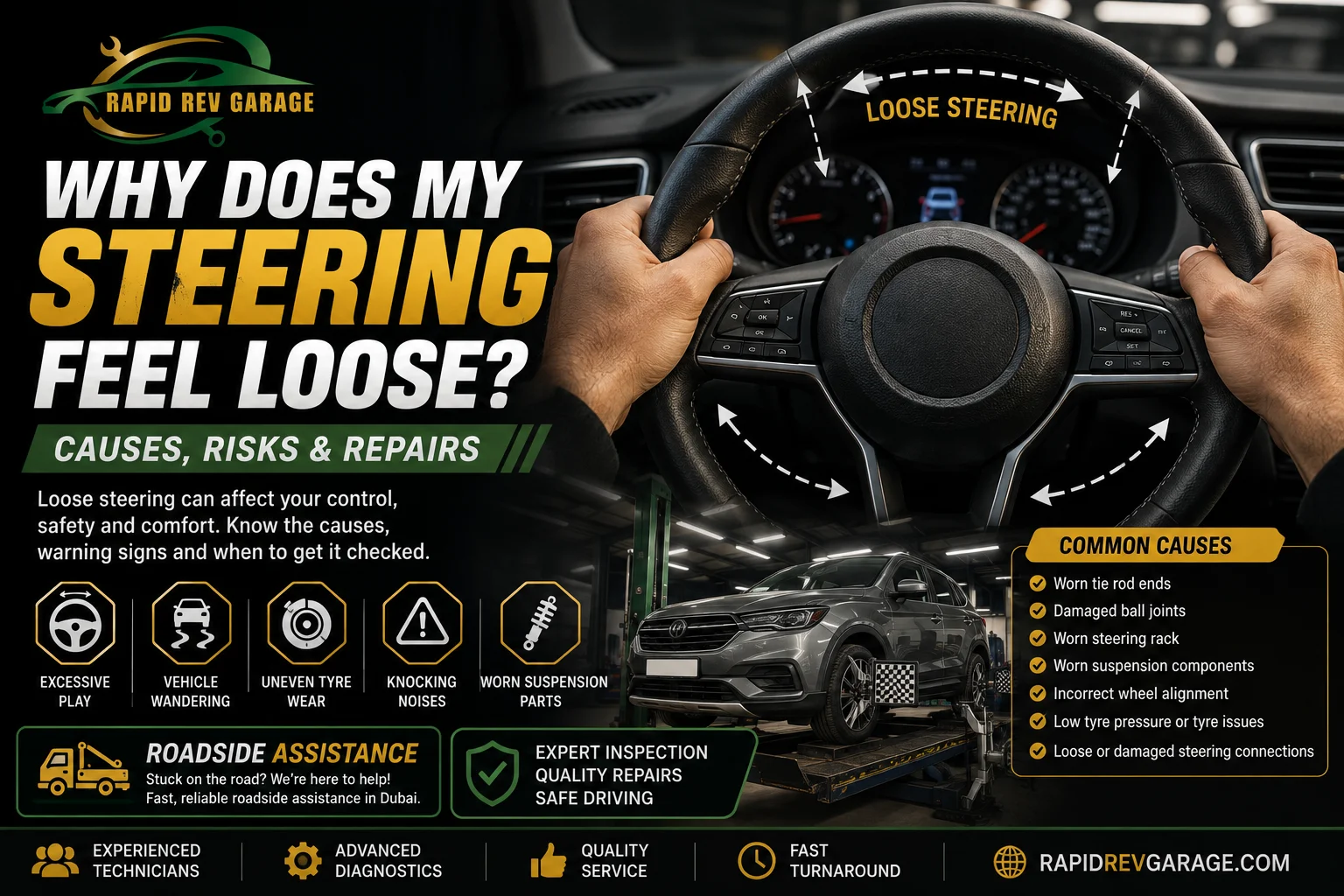
If your steering feels loose while driving, don’t ignore the problem. Loose steering can come from worn tie rods, ball joints, steering rack components, suspension parts, incorrect wheel alignment, low tire pressure or other steering-system faults.
You may notice excessive steering wheel play, delayed vehicle response, uneven tyre wear or the car drifting out of its lane. Because steering directly affects vehicle control, a professional inspection is the most prudent way.
Because steering directly affects vehicle control, a professional inspection is the safest approach. If the vehicle feels unstable or difficult to control, avoid driving it and contact a reliable garage or roadside assistance provider in Dubai.
Table of Contents
- Problem Overview
- Symptoms to Watch For
- Common Causes
- Diagnostic Process
- Repair Process
- Risks of Ignoring It
- Can You Continue Driving?
- Repair Time
- Cost Factors
- Prevention Tips
- Dubai-Specific Advice
- Why Choose Rapid Rev Garage for Roadside Assistance?
- Frequently Asked Questions
- Final Call-to-Action
Problem Overview: What Does Steering Feel Loose Actually Mean?
When drivers say their Steering Feel Loose, they usually mean the steering wheel has more movement than normal before the vehicle responds. The car may feel less precise, especially when changing lanes, turning at higher speeds or driving over uneven roads.
A small amount of steering movement can be normal depending on the vehicle. Still, a sudden change should always be investigated. Steering problems can involve the steering wheel, steering rack, tie rods, ball joints, suspension components, tires or wheel alignment.
If the problem appeared suddenly, treat it as a safety issue rather than simply an inconvenience.
Symptoms That Usually Accompany Steering Feel Loose
A Steering Feel Loose problem can appear alongside several noticeable symptoms. Watch for changes in how your vehicle responds.
Common warning signs include:
- Excessive steering-wheel play
- Delayed response when turning
- Vehicle wandering or drifting
- Knocking or clunking sounds
- Steering vibration
- Uneven or rapid tire wear
- Vehicle pulling to one side
- Steering that feels unusually light
- Difficulty keeping the car straight
- Instability over bumps
- Strange noises while turning
- Steering wheel not returning normally after a turn
If several symptoms appear together, arrange an inspection as soon as possible.
Common Causes: Why Does Steering Feel Loose?
There is no single cause of loose steering. Different components can create similar symptoms.
1. Worn Tie Rod Ends
Tie rod ends connect steering components and help transfer steering-wheel movement to the front wheels. Excessive wear can create play and make the vehicle feel less responsive.
2. Damaged Ball Joints
Ball joints allow suspension components to move while maintaining the connection between the wheel assembly and suspension. Excessive wear can affect both steering precision and vehicle stability.
3. Steering Rack Wear
A worn or damaged steering rack can create excessive play, unusual noises or inconsistent steering response.
4. Worn Suspension Components
Control arms, bushings, and related suspension parts can deteriorate over time. Worn components may make the steering feel vague, particularly on rough roads.
5. Incorrect Wheel Alignment
Poor alignment can make the vehicle pull, wander or feel difficult to keep straight. It can also contribute to uneven tire wear.
6. Tire Pressure or Tire Problems
Incorrect tire pressure, damaged tires or mismatched tire conditions can change steering behavior. Always check tire pressure against the manufacturer’s recommended specification.
7. Loose or Damaged Steering Connections
Loose fasteners or damaged steering-system components can cause dangerous movement and require immediate professional attention.
Diagnostic Process: How a Garage Finds the Fault
When your Steering Feel Loose, a technician should avoid replacing parts based only on symptoms. A proper inspection helps identify the actual source of the problem.
A typical diagnostic process includes:
- Initial customer assessment – The technician asks when the issue started and under what driving conditions it occurs.
- Visual inspection – The technician checks steering and suspension components for visible damage or excessive wear.
- Steering play inspection – The technician checks for abnormal movement in steering components.
- Suspension inspection – Ball joints, bushings, control arms and related parts are examined.
- Wheel and tire check – The technician inspects tire pressure, condition, and wheel security.
- Alignment check – Wheel alignment is assessed if the symptoms suggest an alignment issue.
- Road test when safe – The vehicle may be tested to reproduce the reported steering behavior.
- Repair recommendation – The technician explains which components require repair or replacement.
Repair Process: What Usually Needs to Be Fixed?
The correct repair depends on the component causing the problem. A Steering Feel Loose complaint may require something as simple as an alignment adjustment or as extensive as replacing a steering-system component.
| Possible Problem | Typical Repair | Urgency |
|---|---|---|
| Incorrect wheel alignment | Wheel alignment | Medium |
| Low tire pressure | Pressure correction | High |
| Worn tie rod end | Component replacement | High |
| Damaged ball joint | Component replacement | High |
| Worn control-arm bushings | Bush/component replacement | Medium–High |
| Steering rack wear | Rack repair/replacement | High |
| Loose steering connection | Tightening or component repair | Critical |
| Damaged tire | Tire replacement | High |
After repairs, the technician should verify steering operation and, where applicable, perform wheel alignment.
Risks of Ignoring Loose Steering
Driving with a loose steering feel can become increasingly risky because the steering system controls the vehicle’s direction.
Potential consequences include:
- Reduced steering precision
- Difficulty maintaining your lane
- Increased stopping and maneuvering difficulty
- Faster tire wear
- Additional suspension damage
- Poor vehicle stability
- Unexpected steering behavior
- Increased risk during emergency ploys
A minor worn component can also place additional stress on other parts. Delaying an inspection may therefore turn a relatively straightforward repair into a more expensive job.
Can You Continue Driving With Loose Steering?
If your steering feels loose, the issue is mild, and the vehicle remains stable, you may be able to drive carefully to a workshop, but you should not delay a professional assessment.
Do not continue driving if:
- The steering wheel suddenly develops major play.
- The vehicle is difficult to control.
- You hear severe knocking from the steering or suspension.
- A wheel appears unstable.
- The vehicle pulls sharply.
- Steering becomes unusually heavy or unpredictable.
- You suspect a broken steering or suspension component.
In these situations, roadside assistance is the safer option.
Repair Time: How Long Does It Take?
Repair time is determined by the failed component and the availability of replacement parts.
| Inspection or Repair | Approximate Workshop Time |
|---|---|
| Initial steering inspection | 30–90 minutes |
| Wheel alignment | 30–60 minutes |
| Tie rod replacement | 1–3 hours |
| Ball joint replacement | Several hours |
| Control-arm or bushing repair | Several hours |
| Steering rack repair/replacement | Several hours to 1 day |
| Multiple suspension repairs | 1 day or longer |
These are general estimates. A technician can provide a more accurate timeframe after inspection.
Cost Factors: What Determines the Repair Price?
The cost of fixing a Steering Feel Loose problem varies considerably. The main factors include:
- Vehicle make and model
- Type of failed component
- OEM or aftermarket parts
- Number of components requiring replacement
- Labour time
- Wheel alignment requirements
- Availability of replacement parts
- Additional suspension damage
- Diagnostic requirements
Luxury and performance vehicles can have higher parts and labor costs than standard vehicles.
The best approach is to diagnose the fault first rather than replacing multiple components unnecessarily.
Prevention Tips for Better Steering Performance
Regular maintenance can help identify steering and suspension wear before it becomes a major problem.
Follow these simple habits:
- Check tire pressure regularly.
- Inspect tires for uneven wear.
- Pay attention to new steering noises.
- Avoid hitting curbs and deep potholes where possible.
- Follow the manufacturer’s maintenance schedule.
- Have alignment checked after significant impacts.
- Inspect suspension components during routine servicing.
- Address unusual steering behavior early.
- Do not ignore vibration or wandering.
- Get professional assistance after a major road impact.
Early diagnosis can save both time and repair costs.
Dubai-Specific Advice: Protect Your Steering in Local Driving Conditions
Dubai’s roads can expose vehicles to high temperatures, heavy traffic, construction areas, speed bumps, and occasional rough surfaces. These conditions can contribute to tire and suspension wear over time.
Hot weather can also increase tire pressure, so check tire pressure according to the vehicle manufacturer’s recommendations rather than adjusting it randomly.
If your steering feel becomes loose after hitting a pothole, curb or road obstruction, arrange an inspection. If your vehicle becomes difficult to control on Dubai roads, contacting a professional roadside assistance service can be safer than trying to reach a workshop yourself.
For dependable vehicle support in Dubai, Rapid Rev Garage can assist with inspections, mechanical repairs and roadside assistance.
Why Choose Rapid Rev Garage for Roadside Assistance?
When your steering feels loose, you may wonder if the vehicle is safe to drive; skilled roadside assistance can help you avoid unnecessary risks.
Rapid Rev Garage provides automotive support in Dubai and can help drivers dealing with unexpected vehicle problems. Our services can be particularly useful when a steering or suspension issue develops away from a workshop.
Reasons to consider Rapid Rev Garage include:
- Roadside assistance support
- Vehicle inspection and diagnostics
- Mechanical repair services
- Suspension and steering checks
- Support for different vehicle makes and models
- Workshop repair after roadside diagnosis
If the vehicle cannot be safely driven, roadside assistance can be a much better option than risking the road.
Frequently Asked Questions
Why does my Steering Feel Loose when I drive?
Common causes include worn tie rods, ball joints, steering rack components, suspension bushings, incorrect alignment, tire problems or loose steering connections.
Is loose steering dangerous?
It can be. If the steering has excessive play or the vehicle is difficult to control, have the issue inspected immediately.
Can wheel alignment cause loose-feeling steering?
Incorrect alignment can cause wandering and poor steering response, although genuine steering play may indicate worn or damaged components.
Should I drive to a garage with loose steering?
If the vehicle feels unstable, do not drive it. Contact roadside assistance instead. If the symptoms are minor and the car remains stable, arrange a professional inspection as soon as possible.
How much does loose steering repair cost in Dubai?
There is no single price because the cost depends on the failed component, vehicle model, parts, and labor. A proper diagnosis is needed before we can provide an accurate estimate.
Final Call-to-Action
Don’t ignore changes in steering behavior. If your steering feels loose, arrange an inspection before the problem develops into a more serious safety issue.
For drivers in Dubai who need workshop assistance or roadside support, Rapid Rev Garage is a practical option for professional vehicle inspection and repair.
Contact or Visit Rapid Rev Garage
If the vehicle feels unsafe to drive, don’t take the risk request roadside assistance and have the steering and suspension system professionally checked.