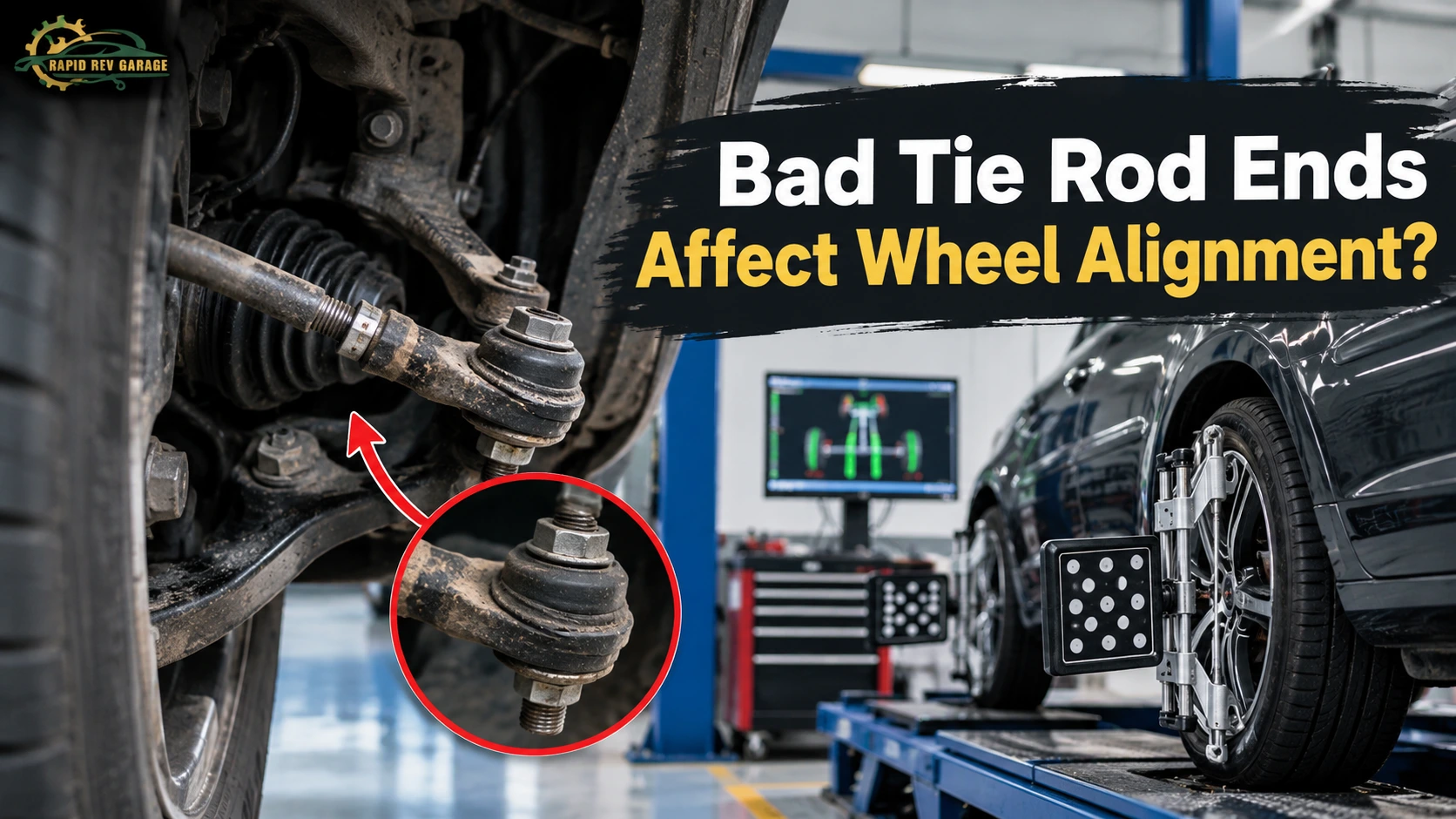
Yes. Bad tie rod ends will knock your wheel alignment out of whack. These little things connect your steering rack to your wheels. When the wheels wear out, they can point in slightly different directions. You may notice a dragging car, uneven tire wear, a misaligned steering wheel, or a clang over bumps. You can’t fix worn parts with a simple alignment. The mechanic must replace the loose part, then fix the alignment. Dubai’s heat, dust, and speed bumps speed up this wear. Early action saves your tires and keeps your steering safe.tie
Why a Small Steering Part Can Throw Your Whole Alignment Off
Your steering system turns the front wheels when you move the steering wheel. The tie rod is the last link in that chain. It sits between the steering rack and each front wheel.
Tie rod ends do more than help you steer. They also hold your wheels at the right angle.
How the Tie Rod Sets the Toe Angle of Your Wheels
Toe is the direction your tires point when you look at the car from above. The tie rod sets this angle. Even a small change can wear tires quickly and make the car feel nervous.
Each end has a small ball joint inside. That joint lets the wheel move up and down while it turns. When the joint wears, it gets loose. The wheel then shifts a little on its own, and your alignment settings cannot hold. This is one of the most common causes of wheel alignment problems on daily-driven cars.
Steering Parts Compared: What Each One Does to Your Alignment
This table shows the main steering and suspension parts and how each one affects alignment.
| Part | What It Does | Signs of Wear | Effect on Alignment | Usual Fix |
| Steering wheel | Lets the driver choose direction | Off-center wheel, shaking | Shows a problem but rarely causes one | Find the root cause, then re-center after alignment |
| Steering column | Passes wheel movement down to the rack | Clicking, stiff turning | Low direct effect | Repair or replace if loose |
| Steering rack | Moves the tie rods left and right | Fluid leaks, loose or heavy steering | Can shift toe when worn | Rack repair or replacement |
| Inner tie rod | Links the rack to the outer tie rod ends | Clunk when turning, play in the steering | Changes toe | Replace with the outer end |
| Outer tie rod end | Links the tie rod to the wheel hub | Knocking, torn boot, loose feel | Changes toe directly | Tie rod replacement, then alignment |
| Ball joint | Lets the wheel pivot up and down | Creaking, uneven tire wear | Changes camber and toe | Replace the joint |
| Control arm bushing | Holds the suspension arm in place | Vibration, pull when braking | Changes caster and camber | Replace the bushings |
| Wheel bearing | Lets the wheel spin freely | Humming that grows with speed | Adds play at the wheel | Replace the bearing |
Only a few parts directly affect your toe. The tie rod and its end are the main ones. That is why a loose one causes wheel alignment issues so quickly.
Bad Tie Rod Ends Symptoms You Can See, Hear, and Feel
Bad tie rod ends often start with small warnings. Many drivers ignore them for months. Watch for these signs.
Signs You Can See
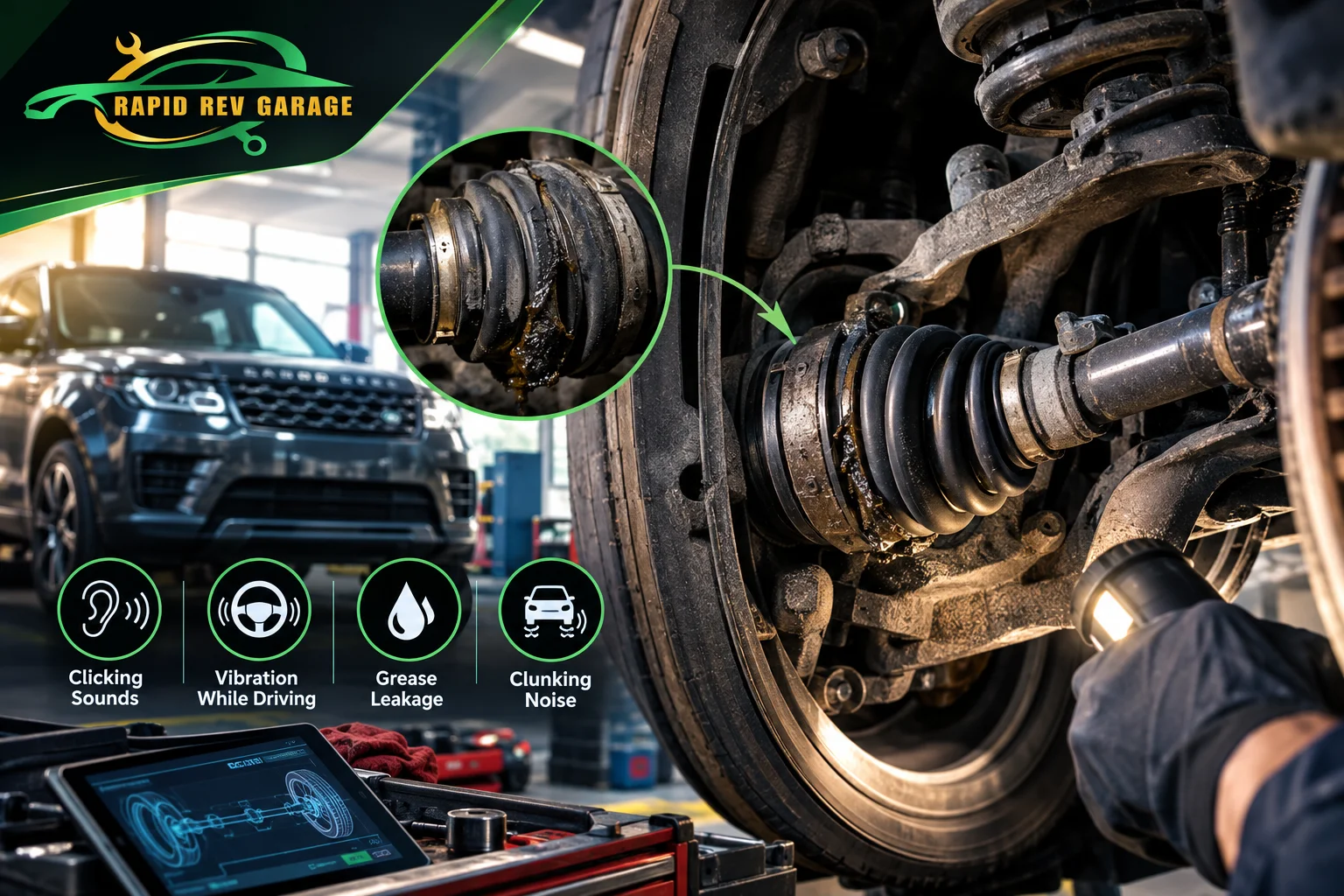
Look at your front tires first. Wear on the inside or outside edge is a red flag. Then check the steering wheel. If it sits crooked while you drive straight, the alignment is off. A torn rubber boot or grease around the joint also points to a failing part.
Sounds You Can Hear
A clunk or knock over bumps is the classic sign. You may hear it on speed humps or in slow turns. A rattle from the front end is another clue.
Feel Through the Wheel
Loose or vague steering is a common complaint. The car may drift or pull to one side. You might feel shaking at highway speed. If your alignment goes off again soon after a fresh setting, worn parts are often the reason.
Many of these signs also match other steering and suspension problems. A proper check identifies the faulty part.
Common Causes of Tie Rod Ends Failure on Dubai Roads
Tie rod ends failure rarely has one cause. Several factors wear the part down. Dubai conditions speed it up.
Extreme Heat Cracks the Rubber Boot
The rubber boot keeps grease in and dirt out. Summer heat dries it and makes it split. Once it cracks, the grease escapes and the joint runs dry.
Dust and Sand Grind Down the Joint
Al Quoz dust and desert sand slip through torn boots. Inside, they act like sandpaper on the ball joint. The play grows a little every week.
Speed Bumps, Potholes and Curbs
Powerful jolts send a hard shock through the steering. A quick speed bump or curb hit can break a tie rod or loosen the joint in no time. Stop-and-go traffic adds thousands of little movements per day.
Age and High Mileage
Every joint wears with time. Many tie rods need work between 70,000 and 150,000 km, depending on the car and the roads. Worn tie rod ends often show up sooner on heavy SUVs.
Big Wheels and Modified Cars
Lowered cars and oversized wheels put extra strain on steering parts. Off-road runs on dunes add more. These cars need checks more often.
How a Mechanic Tests for Worn Tie Rods Step by Step
A good test takes more than a quick look. Any skilled car mechanic near me should follow steps like these.
- Road test. The mechanic drives the car to listen for noises and feel for any pull.
- Visual check. The car goes on a lift. The mechanic inspects the boots, grease, and joints.
- Rock test. The mechanic holds each front wheel at the 3 and 9 o’clock positions and rocks it. Play here points to worn tie rod ends or a bad wheel bearing.
- Full steering check. We check inner tie rods, ball joints, bushings, and the steering rack for play and leaks.
- Alignment scan. A computer machine reads your toe, camber, and caster. Big toe errors help confirm the wear.
- Clear report. You should see the worn parts and hear a plan before any work starts.
How Tie Rod Replacement and Wheel Alignment Are Done
This repair is two jobs done in the right order. First, the technician removes the worn parts. Then the alignment is reset.
Step 1: Remove the Old Part and Fit a New One
The mechanic lifts the car and removes the wheel. The technician notes the position of the old tie rod ends, then unthreads it. The technician puts the new end in at the same setting. The technician then tightens it to the proper tightness.
Step 2: Check the Rest of the Steering System
A new part will not last on a worn system. The technician checks the inner tie rods, ball joints, and rack boots. Replace any part with play during the same visit. This is where good steering repair saves you a second trip.
Step 3: Reset the Wheel Alignment
Changing a tie rod always changes the toe. Then a four-wheel alignment is in order. The machine fixes toe, camber, and caster back to the manufacturer’s requirements. Then the steering wheel is straight.
Step 4: Test Drive and Final Check
A road test confirms the car tracks straight and the steering is quiet. The technician then rechecks every bolt.
Services That Fix the Problem and Stop It Coming Back
These services work best together:
- Tie rod replacement, including inner and outer parts as needed.
- Four-wheel alignment after every steering repair
- Full steering and suspension inspection
- Ball joint and control arm bushing replacement
- Steering rack service or repair
- Tire rotation and new tires if the wear is uneven
What Happens If You Ignore Tie Rod End Problems
Small tie rod end problems grow fast. Here is what can happen if you wait.
- Tires wear out early. Bad toe eats through a front tire much faster than normal.
- Handling gets worse. The car wanders and reacts slowly.
- Other parts wear too—a loose joint hammers ball joints, bearings, and the rack.
- Fuel use may rise. Tires that drag sideways waste energy.
- The joint can fail. If it separates, the wheel can turn on its own. You can lose steering control.
- You may fail your annual vehicle test. Loose steering is a common reason for a fail.
Can You Keep Driving With a Bad Tie Rod?
Only for a short, slow trip to the workshop, and only if the play is small. Avoid highways and heavy traffic. Loose steering is not a risk worth taking.
Stop at once if you hear loud knocking or feel the wheel wobble. Pull over safely and call roadside assistance. A tow costs far less than a crash.
How Long Tie Rod Repair Takes at the Garage
Most jobs finish the same day. One tie rod end takes about 30 to 60 minutes. A pair plus alignment usually takes one to two hours. Rusted bolts or extra worn parts can add time. Book in the morning to get your car back by evening.
What Affects the Cost of Tie Rod Replacement
Several things change the price:
- Car make and model. European and luxury cars use pricier parts.
- Part quality. Original parts cost more than aftermarket ones.
- Number of parts—one side, both sides, or inner and outer.
- Labor time. Rusted or stuck parts take longer to remove.
- Alignment fee. This is part of a proper job.
- Extra repairs. Worn ball joints or a leaking rack add to the bill.
Ask for a written quote before work starts. Fixing worn tie rod ends on both sides at once can save you a second alignment. Early repair also costs far less than replacing ruined tires.
Simple Habits That Protect Your Steering and Suspension
A few habits keep your steering parts alive longer:
- Cross speed bumps slowly and straight on.
- Avoid curbs and potholes when you can.
- Add a steering check to every car service in Dubai.
- Get an alignment check every year, or after a hard hit.
- Look at the rubber boots before summer. Cracks mean it is time to replace them.
- Wash sand off the underside after desert drives.
- Act on small noises right away.
Dubai-Specific Advice: Heat, Dust and Speed Bumps
Dubai is rough on steering parts. The summer heat raises the temperature under the car very high. Many cars also make the transition from frigid underground parking to heated highways each day. That swing puts a load on rubber boots and oil.
And sandstorms and construction dust add to the wear. Malls and villa areas use speed bumps to add shocks. Here, steering and suspension issues can show up earlier than in cooler locations.
Keep these tips in mind:
- Inspect your car before summer starts.
- Book a steering check after any off-road drive.
- Choose a garage near me that can inspect, repair, and align your car in one visit.
- If the car feels unsafe, do not drive it. A mobile car mechanic can check it where it is parked. Roadside assistance can then move it to the workshop.
Why Choose Rapid Rev Garage for Tie Rod Ends Replacement
Tie rod ends replacement in Al Quoz, Dubai at Rapid Rev Garage is the best option. Before touching any part, the team looks at the overall steering system. This helps identify the real cause instead of masking the symptom.
Easy to search a garage near me. Picking the proper one is tougher. Watch for these signs:
- A full steering and suspension check before the quote
- Clear pricing and a plain explanation of each part
- Four-wheel alignment after every steering repair
- Old parts shown on request
The team follows this approach on every job.
Frequently Asked Questions About Tie Rod Problems
Q1: Can a bad tie rod cause vibration?
Yes. A loose tie rod lets the wheel move slightly at speed. You may feel it as shaking in the steering wheel.
Q2: How long do tie rods last?
Most last between 70,000 and 150,000 km. Dubai heat, dust, and rough roads can shorten that. Check them at every service.
Q3: Does alignment fix a bad tie rod?
No. Alignment sets angles, but it cannot tighten a worn joint. Replace the part first, then align the wheels.
Q4: Is a loose tie rod dangerous?
Yes. It can cause poor control and, in bad cases, total failure. Get it checked right away.
Q5: How much does tie rod replacement cost?
Price depends on your car, the part quality, and how many parts need work. Ask the garage for a written quote before you approve the job.
Q6: What does a failing tie rod sound like?
Most drivers hear a knock or clunk over bumps and in slow turns. Some cars rattle from the front end.
Q7: Can I replace only one tie rod?
Yes, if the other side is healthy. Both sides often wear at a similar rate, so ask the mechanic to check each one. An alignment is needed either way.
Related Services That Keep Your Steering Safe
These services often go together with tie rod repair:
- Wheel alignment and balancing. Resets your angles after steering work.
- Steering repair. Covers racks, pumps, columns, and joints.
- Suspension repair. Covers shocks, ball joints, and control arm bushings.
- Tire service—rotation, balancing, and replacement after uneven wear.
Need car painting near me after a curb hit? Fix the mechanical damage first. Then repair the paint.
Book Your Steering Check Today
Don’t wait for that little clunk to turn into tie rod end failure. A quick inspection today is much cheaper than new tires or a tow.
Trust Rapid Rev Garage for tie rod end replacement in Al Quoz, Dubai. Message the staff on WhatsApp to book your inspection today.