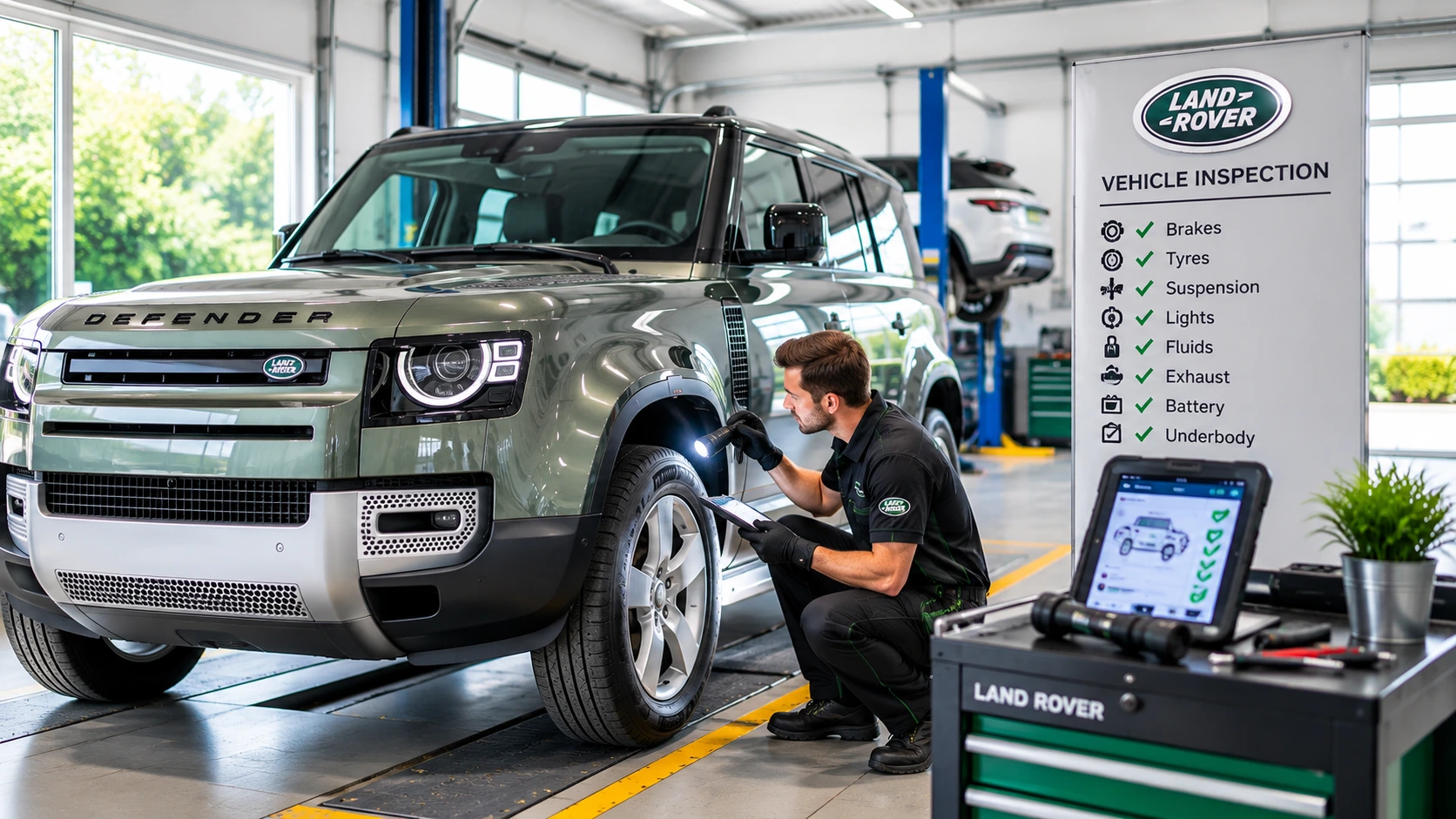
A vehicle inspection service sounds like one thing until you actually book one and discover how much variation exists between providers. Some inspections take fifteen minutes and produce a verbal “looks fine.” Others take ninety minutes, use a ramp and proper diagnostic equipment, and produce a written report with measurements.
The difference matters enormously — especially before a used car purchase or as part of maintaining a vehicle you already own. A proper vehicle inspection service is systematic, documented, and covers every major system. Anything less isn’t really an inspection.
This breaks down exactly what should be included in a professional vehicle inspection service in Dubai — and why each component matters in this specific climate and market.
Vehicle Inspection Service Dubai — Why the Standard Matters
Dubai’s conditions create specific risks that a generic inspection checklist doesn’t account for. Heat degrades rubber and fluids faster than temperate-market intervals assume. The used car market carries mileage discrepancy and accident concealment risks that are more common here than in many other regions.
A vehicle inspection service built for Dubai needs to address these specifically — not just run through a checklist designed for a different climate and a different market.
A Land Cruiser came through for inspection with a clean service folder and a confident seller. Full diagnostic scan showed gearbox fault history cleared ten days earlier — torque converter slip codes at operating temperature. The buyer walked away. That finding only surfaces with proper diagnostic access.
What a Vehicle Inspection Service Should Cover
Exterior Paint and Panel Assessment
Paint depth measurement at multiple points per panel using an electromagnetic gauge. A factory panel reads consistently within a predictable range — a resprayed panel reads differently from the originals beside it.
Panel gap measurement at every opening, overspray detection on weather seals, and body filler identification from anomalous depth readings round out this section. This is the foundation for identifying undisclosed accident repairs.
Underbody Ramp Inspection
No genuine vehicle inspection service is complete without a ramp. The underbody shows a car’s real history more honestly than any other area — sellers rarely prepare it for presentation.
Chassis rail straightness, floor pan condition, evidence of structural repair work, oil seal condition, CV boot integrity, and subframe mounting points are all assessed here. Physical damage from speed bump impacts is common and only visible from below.
Engine Bay Assessment
Coolant condition tested with a refractometer — not a colour check. Oil leak evidence from valve covers and sump gaskets. Battery terminal corrosion and manufacture date stamp.
A suspiciously clean engine bay on a high-mileage vehicle warrants extra scrutiny during the running assessment — recent steam cleaning sometimes conceals active leaks rather than indicating good care.
Cold Start and Running Assessment
The vehicle should be cold for this part of a vehicle inspection service — a seller who pre-warms the car removes one of the most informative data points available.
Idle quality in the first 30 seconds, exhaust smoke at start-up, coolant temperature progression, and throttle response once warm all reveal information that a warm engine hides completely.
Full Multi-System Diagnostic Scan
Every control unit scanned — not just engine and transmission. Body control, airbags, ABS, chassis management, and comfort systems all carry fault data that generic scanners miss entirely.
Fault history retrieval is the most valuable part of this scan. Cleared codes still leave traces in the system log — and a proper car mechanic using the right diagnostic equipment finds them.
Transmission Assessment
Shift quality from cold through to operating temperature. Torque converter behaviour under light throttle cruising. Low-speed engagement on dual-clutch units — where DCT wear shows earliest.
CVT belt smoothness under varied load, and clutch bite point on manual vehicles, complete the transmission section of a thorough vehicle inspection service.
Brake System Assessment
Pad thickness measurement at all four corners — documented, not estimated. Disc condition including scoring, heat cracking, and runout measurement. Brake fluid moisture content using a calibrated tester.
A spongy or long pedal during the test drive often indicates degraded fluid or air in the system — both findings that affect safety, not just maintenance scheduling.
Suspension and Steering
A road test reveals highway stability, steering response, and pull under braking. Suspension noise over speed bumps — deliberately traversed at moderate speed — exposes worn bushings that a smooth motorway drive completely masks.
Ramp assessment of ball joints, tie rod ends, and subframe bushings under load completes the picture. Soft components on a claimed low-mileage car are a discrepancy flag.
AC System Performance
Vent temperature measurement at idle and under load. Compressor clutch engagement and cycling behaviour. Refrigerant pressure testing on both high and low sides.
In Dubai, a system that’s marginal in spring will fail completely by July. Pressure testing during a vehicle inspection service catches this before it becomes the owner’s problem.
Tyre Condition
Tread depth at multiple points across the width. DOT age code — tyres over five years old in Dubai’s UV environment are a replacement consideration regardless of remaining tread. Sidewall condition and brand matching across each axle.
Vehicle Inspection Service — Pre-Purchase vs Periodic
Pre-Purchase Inspections
A pre-purchase vehicle inspection service establishes a car’s actual condition before money changes hands. The report becomes the negotiating document — minor findings support small price adjustments, serious findings change the decision entirely.
For owners who proceed with purchase, a fresh car service immediately afterward sets a clean, documented baseline regardless of claimed service history.
Periodic Inspections for Owned Vehicles
A periodic vehicle inspection service every 20,000 km catches developing faults before they cause failures. Battery conductance dropping below 65%, air spring pressure retention declining, DSG fluid showing early thermal degradation — all caught before symptoms appear.
The repairs these inspections prevent — compressor failures, gearbox rebuilds, cooling system failures — cost considerably more than the inspection itself.
Using the Inspection Report
For Negotiation
A written report converts a feeling into evidence. Minor findings support light price adjustments. Medium findings — pads at 30%, an early-cracking hose — justify negotiating rectification costs off the price.
Serious findings — structural damage, cleared gearbox fault history, airbag deployment records — are grounds to walk away or demand a price that fully reflects real repair costs.
For Ownership Planning
If a car passes with only minor findings, the report becomes the ownership baseline. Items flagged as developing go into a maintenance schedule — nothing in the first twelve months should be a surprise.
For paint correction or accident repairs identified during inspection, professional car painting with manufacturer-matched colour codes handles the work correctly.
Support Beyond the Inspection
When the car needs roadside help between services, a qualified mobile car mechanic handles battery issues, fault resets, and fluid checks on-site.
For genuine emergencies, proper roadside assistance ensures safe recovery without further damage to a vehicle whose condition you’re still learning.
For owners in Al Quoz and surrounding areas looking for a garage near me that conducts genuinely thorough, documented inspections — the quality of the assessment determines the quality of every decision that follows.
FAQ
How much does a vehicle inspection service cost in Dubai?
Most quality workshops charge AED 200–350 — a small cost against the financial exposure of hidden faults.
What's the difference between pre-purchase and periodic inspections?
Pre-purchase establishes condition before buying; periodic inspections on owned vehicles catch developing faults before they become expensive failures.
Can a vehicle inspection service detect previous accident damage?
Yes — paint depth measurement, panel gap alignment, and underbody ramp inspection together reveal repairs regardless of documentation.
How long does a proper vehicle inspection service take?
A thorough inspection with ramp assessment and full diagnostic scan takes 60–90 minutes depending on the vehicle.
Is a vehicle inspection service worth it on a car I already own?
Yes — periodic inspections catch developing faults like battery decline, air spring leaks, and transmission fluid degradation before they cause expensive failures.
Conclusion
A proper vehicle inspection service is systematic, documented, and covers every major system — exterior, underbody, engine, diagnostics, transmission, brakes, suspension, AC, and tyres. Whether before a purchase or as periodic maintenance on a car you own, the information it produces is worth far more than its cost.
Rapid Rev Garage in Al Quoz conducts thorough vehicle inspection services for all makes and models — ramp inspection, full diagnostic scanning, and written reports. Book your inspection on WhatsApp or find the workshop on Google Maps.