Yes — a dirty fuel filter reduce performance situation develops in a very direct and measurable way. The fuel filter sits between the fuel tank and the fuel injectors, capturing debris, water, and particulate from the fuel supply before it can reach the precision components of the injection system. As the filter accumulates contamination, it restricts fuel flow — and reduced fuel flow means the engine cannot receive the quantity of fuel it needs under demand, particularly under hard acceleration and high load conditions. The result is a vehicle that runs fine at light throttle but fails to deliver when the driver asks for full performance.
At Rapid Rev Garage in Al Quoz, every dirty fuel filter reduce performance complaint is diagnosed with a fuel pressure test under load — confirming the restriction before the filter is replaced and after, to verify the improvement.
Dirty Fuel Filter Reduce Performance — Quick Verdict
A dirty fuel filter reduces performance by restricting fuel flow to the injectors — most noticeably under high demand conditions where the engine requires maximum fuel delivery. In Dubai, fuel filter contamination develops faster than European service intervals assume, because UAE fuel quality varies by station, because driving in stop-start heat stresses the entire fuel system, and because vehicles regularly run low on fuel — stirring tank sediment into the filter. The symptoms follow a specific progression: hesitation under hard acceleration first, then power loss at highway speed, then rough idle as the restriction becomes severe, and finally difficulty starting as fuel pressure drops below the minimum threshold for injector operation.
Table of Contents
- How a Fuel Filter Works and Why It Gets Dirty
- The Performance Symptoms — From Mild to Severe
- How Dubai’s Conditions Accelerate Fuel Filter Contamination
- How We Confirm the Filter Is the Cause at Rapid Rev Garage
- The Right Fix — Filter Replacement and System Assessment
- What Happens If a Clogged Filter Is Left Without Replacement
- Is It Safe to Keep Driving?
- How Long the Repair Takes
- What the Repair Costs in Dubai
- Preventing Fuel Filter Contamination in Dubai
- Why Rapid Rev Garage?
- FAQ
- Conclusion
How a Fuel Filter Works and Why It Gets Dirty
Understanding the fuel filter’s function explains exactly why its contamination produces the specific performance symptoms it does.
What the Fuel Filter Captures
The fuel filter removes particulate matter, rust particles from the fuel tank interior, water that has entered the fuel supply, and manufacturing debris that is present in even new fuel tanks. Without the filter, these contaminants would reach the fuel injectors — precision components with tolerances measured in microns — and damage their spray pattern, stick their pintle valves open or closed, or block their screens.
The Progressive Restriction Mechanism
A clean filter has negligible resistance to fuel flow — the fuel pump delivers full rated pressure and volume through it without effort. As the filter accumulates captured debris, the resistance increases. Initially the fuel pump compensates by working slightly harder. As restriction increases, the pump reaches its maximum output and can no longer maintain full pressure through the increasingly clogged filter. At this point, fuel pressure at the injector rail drops — and the engine’s ability to deliver the commanded fuel quantity to the cylinders is directly compromised.
Why High Load Is Affected First
At idle and light throttle, fuel demand is modest — the small fuel volume required per injection cycle can still pass through a partially-restricted filter at adequate pressure. Under hard acceleration and high engine load, fuel demand per cycle increases dramatically. The restricted filter can no longer supply this higher volume at the required pressure — and the pressure drop at the injector rail is what produces the hesitation and power loss the driver notices specifically under demand.
The Performance Symptoms — From Mild to Severe
A dirty fuel filter reduce performance fault progresses through a specific symptom sequence as the restriction increases.
Stage One — Hesitation Under Hard Acceleration
The earliest symptom is a brief stumble or hesitation specifically under hard acceleration from low speed — accelerating from a standstill at full throttle, overtaking, or accelerating hard from a slow traffic situation. Light throttle driving remains completely normal. The hesitation occurs because hard acceleration demands maximum fuel flow — and the partially restricted filter cannot quite meet this demand momentarily.
Stage Two — Power Loss at Highway Speed
As restriction increases, sustained high-speed driving produces noticeable power loss. The engine requires continuous high fuel flow at motorway speed — the filter that could supply adequate fuel for brief light-throttle city driving now fails to maintain adequate pressure at sustained highway demand. The vehicle feels flat above 100 km/h, and overtaking on Emirates Road or Sheikh Zayed Road requires significantly more effort than before.
Stage Three — Rough Idle and Fuel Smell
At more severe restriction, idle quality begins to deteriorate. The fuel pressure at idle drops below the stable minimum required for consistent injector operation — the engine produces a rough or hunting idle with occasional misfires. A fuel smell may be present from injectors that are running lean and compensating with timing retard. Our car mechanic team reads fuel trim corrections and misfire counters during this stage to distinguish filter restriction from sensor or injector faults that produce the same idle quality symptoms.
Stage Four — Hard Starting and Stalling
At near-complete restriction, the fuel system cannot build adequate cranking pressure for reliable starting. The vehicle may crank for several seconds before firing, may stall shortly after starting when fuel demand increases from idle, and may cut out under gentle acceleration as the minimal remaining fuel flow is insufficient for even light-load operation.
How Dubai’s Conditions Accelerate Fuel Filter Contamination
Dubai’s fuel supply and driving patterns accelerate the contamination behind every dirty fuel filter reduce performance complaint earlier than European service intervals anticipate.
Fuel Quality Variability at Dubai Stations
UAE fuel quality is generally good at major branded stations — but variability exists between stations, between supply batches, and particularly at smaller or budget stations. Water contamination — from condensation in above-ground storage tanks under Dubai’s temperature cycling — is more frequent than in markets with underground fuel storage in stable-temperature environments. Water in the fuel system contributes to fuel filter clogging faster than clean fuel alone.
Running the Tank Low Stirs Sediment
A behaviour pattern common in Dubai — filling up only when the fuel warning light appears — repeatedly runs the tank to very low levels. Every time the fuel level drops near the bottom of the tank, the pump draws from the area where settled sediment and tank debris accumulate. This sediment is loaded into the fuel filter on every low-tank episode. A driver who consistently fills at 10–15% remaining tank level accumulates fuel filter debris significantly faster than one who refuels at 25% remaining. For any breakdown from a fuel system failure, our roadside assistance covers Al Quoz and nearby Dubai areas.
Heat Accelerates Fuel Degradation
Dubai’s sustained heat causes fuel to degrade slightly in storage — a tank of fuel that sits for weeks in a hot vehicle develops varnish deposits faster than the same fuel in a cool-climate vehicle. These deposits contribute to filter loading over the vehicle’s service life.
How We Confirm the Filter Is the Cause at Rapid Rev Garage
Fuel filter restriction is confirmed by fuel pressure testing — not by assumption from the symptoms alone.
Fuel Pressure Test at Idle and Under Load
A fuel pressure gauge installed in the fuel system measures delivery pressure at idle and during a simulated high-demand condition. A correctly-functioning fuel system maintains pressure within a defined range at all conditions. A system with a restricted filter shows normal or near-normal idle pressure — because the flow demand at idle is low — but drops significantly under load when demand increases. This drop confirms the filter as the flow-restricting component.
Comparison Against Specification
The measured pressure is compared against the manufacturer’s specified fuel pressure range for the specific vehicle. A pressure that is within specification at idle but drops below specification under simulated load confirms a restriction in the fuel supply path — most commonly the filter.
Filter Inspection on Replacement
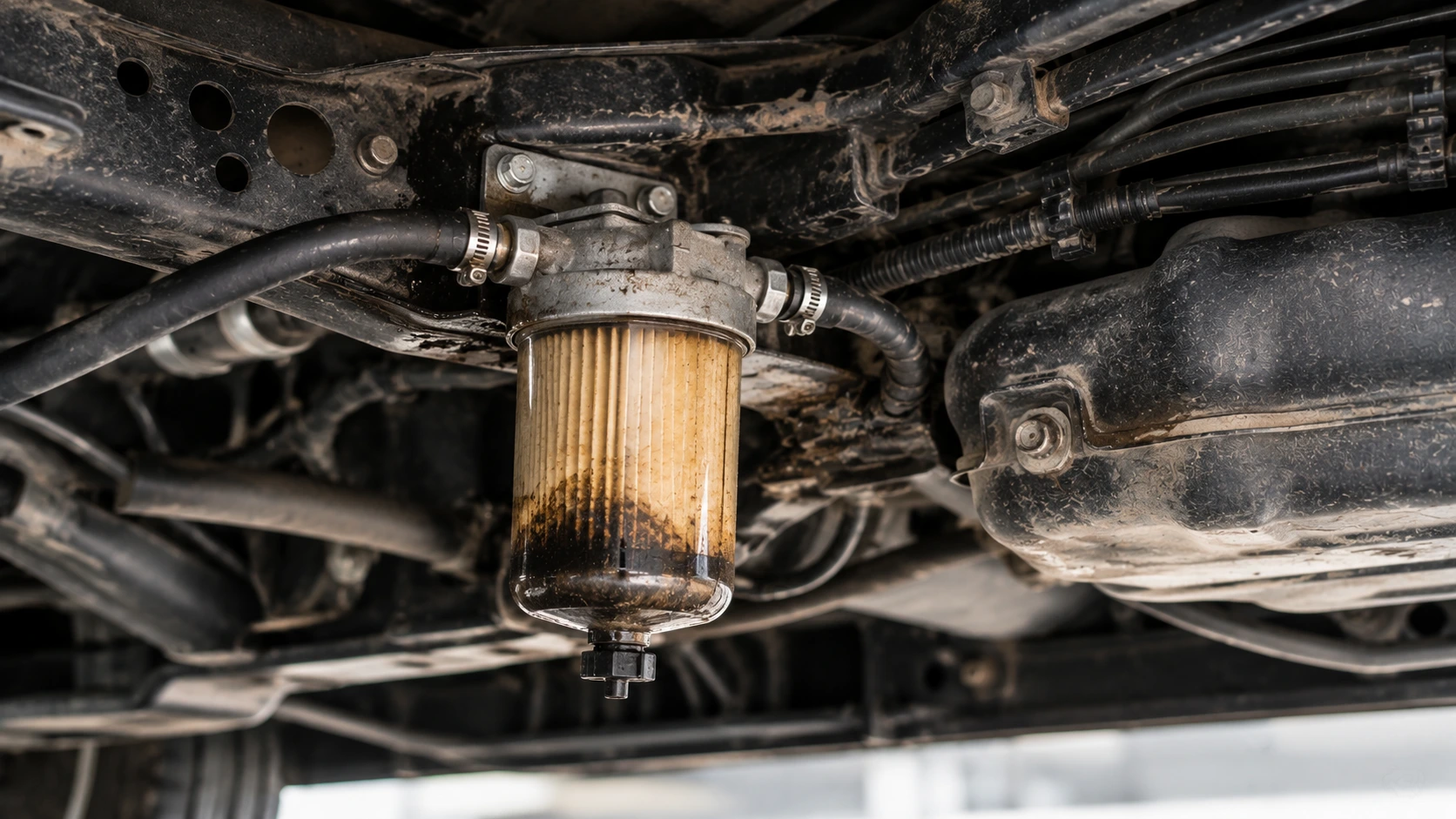
When the filter is removed as part of confirming the dirty fuel filter reduce performance diagnosis, its physical condition is assessed — the amount of debris captured in the filter media, any evidence of water contamination, and the colour and composition of the captured material. This information confirms the contamination mechanism and helps identify whether any upstream fuel system issue needs to be addressed alongside the filter replacement. Our car service packages include fuel pressure monitoring at every major service for vehicles with known filtration issues.
The Right Fix — Filter Replacement and System Assessment
The repair scope depends on the severity of the restriction and whether any secondary components have been affected.
Filter Replacement With Correct Specification
The fuel filter is replaced with the correct specification for the vehicle — the correct flow rating, the correct fitting type, and the correct micron filtration rating. An undersized filter replacement produces a performance restriction; an undersized micron rating allows contamination to pass through. Post-replacement, the fuel pressure test is repeated to confirm pressure is restored to specification under load.
Fuel Injector Inspection Where Extended Restriction Existed
Where the filter has been severely restricted for a significant mileage — indicated by very dark filter media and significant debris load on removal — the fuel injectors are assessed for contamination. Injectors that have been operating with restricted fuel supply and low delivery pressure may have accumulated deposits on their spray tips. A fuel injector cleaning service at the same visit restores spray pattern quality.
Fuel System Flush Where Water Contamination Is Found
Water contamination found in the removed filter warrants a fuel system inspection and flush to remove residual water from the fuel rail. Water in the injection system damages injector pintle seals and accelerates corrosion in the fuel rail. For exterior repairs needed alongside fuel system work, our car painting team handles colour-matched repairs at the same visit.
What Happens If a Clogged Filter Is Left Without Replacement
When a dirty fuel filter reduce performance fault is ignored, the consequences extend beyond the performance symptoms.
Fuel Pump Damage From Extended High-Effort Operation
The fuel pump compensates for filter restriction by running at higher voltage and current draw than its rated design. A pump operating at maximum effort to push through a restricted filter accumulates wear significantly faster than a pump operating within its designed pressure range. Every dirty fuel filter reduce performance fault left unaddressed risks a fuel pump failure that a filter replacement would have prevented that costs AED 800–2,500 to address. The pump failure is a direct consequence of extended restricted filter operation.
Injector Damage From Pressure Pulsation
Uneven fuel delivery through a severely restricted filter produces pressure pulsation in the fuel rail — the alternating high and low pressure as the pump works against the restriction. Pressure pulsation damages injector pintle seals and reduces injector consistency over time.
Is It Safe to Keep Driving?
The safety assessment depends on the severity of the restriction.
Mild Restriction — Driveable, Book This Week
A hesitation only under hard acceleration with all other driving conditions normal represents mild-to-moderate filter restriction. The vehicle is driveable for careful short-term driving. Book within the week.
Severe Restriction With Rough Idle or Stalling Risk — Book Today
A filter restriction that is affecting idle quality or producing stalling risk should be addressed the same day. A vehicle that stalls in Dubai’s traffic creates a safety risk and an inconvenience that a fuel filter replacement would have prevented.
How Long the Repair Takes
Repair time depends on whether the filter is externally accessible or integrated within the fuel pump assembly inside the tank.
Filter Replacement on Standard Access Vehicles
One to two hours including fuel pressure test before and after replacement. Same-day service in all standard cases.
Filter Replacement With In-Tank Access (Pump-Integrated Filters)
Some modern vehicles integrate the fuel filter with the fuel pump assembly inside the tank. Access requires fuel tank preparation. Two to four hours on most platforms.
What the Repair Costs in Dubai
Cost depends on the filter location and whether injector cleaning or fuel system flush is required alongside replacement.
Standard External Filter Replacement
AED 250–600 including the filter and fuel pressure confirmation. Most Japanese and European vehicles with external inline filters sit in this range.
Integrated In-Tank Filter/Pump Assembly
AED 800–2,500 depending on the vehicle platform and whether the full pump assembly or only the filter element requires replacement. A written quote is provided after the fuel pressure test confirms the filter as the specific cause. Our mobile car mechanic covers Al Quoz and nearby Dubai areas for on-site fuel pressure assessment.
Preventing Fuel Filter Contamination in Dubai
Specific habits significantly extend fuel filter service life in Dubai’s conditions.
Refuel Before the Low Fuel Warning
Maintaining the fuel level above 20–25% consistently reduces the frequency of pump drawing from the sediment-rich tank bottom. This single habit extends fuel filter service life meaningfully in Dubai’s conditions — the filter captures significantly less tank sediment per year.
Use Quality Fuel Consistently
Major branded stations with high throughput — ENOC, ADNOC, BP — maintain better fuel quality consistency than low-throughput stations. Consistent use of quality fuel reduces the debris and water contamination reaching the filter per litre of fuel consumed.
Filter Replacement at Dubai-Appropriate Intervals
Most manufacturers specify fuel filter replacement at 30,000–50,000 km or every two to three years. In Dubai’s conditions, the lower end of this range is appropriate for vehicles doing city driving and running low frequently. Our garage near me location in Al Quoz serves drivers from Business Bay, Jumeirah, Barsha, Satwa, Downtown, and the Sheikh Zayed Road corridor.
Why Rapid Rev Garage?
When a dirty fuel filter reduce performance complaint arrives, the fuel pressure test is the diagnostic that confirms the filter as the cause — not the symptom pattern alone. Hesitation under acceleration and power loss at speed are produced by multiple fuel system, ignition, and sensor faults that have nothing to do with the filter. The pressure test under load distinguishes a filter restriction from a failing fuel pump, a faulty pressure regulator, or a sensor fault before any part is replaced.
FAQ — Dirty Fuel Filter Reduce Performance
These are the questions most frequently asked about fuel filter faults at our Al Quoz workshop.
Does a dirty fuel filter affect fuel economy?
Yes — a restricted filter causes the engine management system to compensate for lean fuelling by adjusting injection timing and quantity, and the fuel pump runs at higher effort, both of which increase fuel consumption slightly. The economy impact is typically noticeable only at severe restriction stages.
Can a dirty fuel filter cause a misfire?
Yes — at severe restriction stages, fuel pressure at the injector rail drops low enough that injector spray becomes inconsistent. The inconsistent spray produces incomplete combustion on affected cylinders — recorded as misfires in the engine management system's misfire counter.
How do I know if my fuel filter or my fuel pump is causing the problem?
Both produce similar symptoms — the distinction is in the pressure test. A failing pump produces low pressure even with the filter removed. A restricted filter produces adequate pressure when the filter is bypassed and low pressure with the filter in circuit.
How often should I replace my fuel filter in Dubai?
Every 20,000–30,000 km for Dubai city drivers who frequently run the tank low. Vehicles that maintain the tank above 20% and use quality fuel consistently can extend to the manufacturer's maximum interval.
Can a fuel filter cause the car to not start?
Yes — at near-complete restriction, the fuel system cannot build adequate cranking pressure. The engine cranks but fails to fire because insufficient fuel reaches the injectors. This is a symptom of a severely neglected filter rather than a new-onset fault.
Conclusion
A dirty fuel filter reduce performance progressively and predictably — starting with hard-acceleration hesitation, progressing to highway power loss, and eventually affecting idle quality and starting reliability. In Dubai’s conditions, where fuel quality variability and low-tank driving accelerate filter contamination, replacement at shorter intervals than European factory schedules assume is appropriate. Rapid Rev Garage in Al Quoz confirms the filter as the cause through a fuel pressure test under load before and after replacement — producing a confirmed diagnosis rather than a parts-swap based on symptom pattern.
Rapid Rev Garage is in Al Quoz, serving drivers across nearby Dubai areas — Business Bay, Jumeirah, Downtown, Barsha, Satwa, and the Sheikh Zayed Road corridor. Book your appointment on WhatsApp or find us on Google Maps.
Rapid Rev Garage — Dirty Fuel Filter Reduce Performance | Al Quoz, Dubai