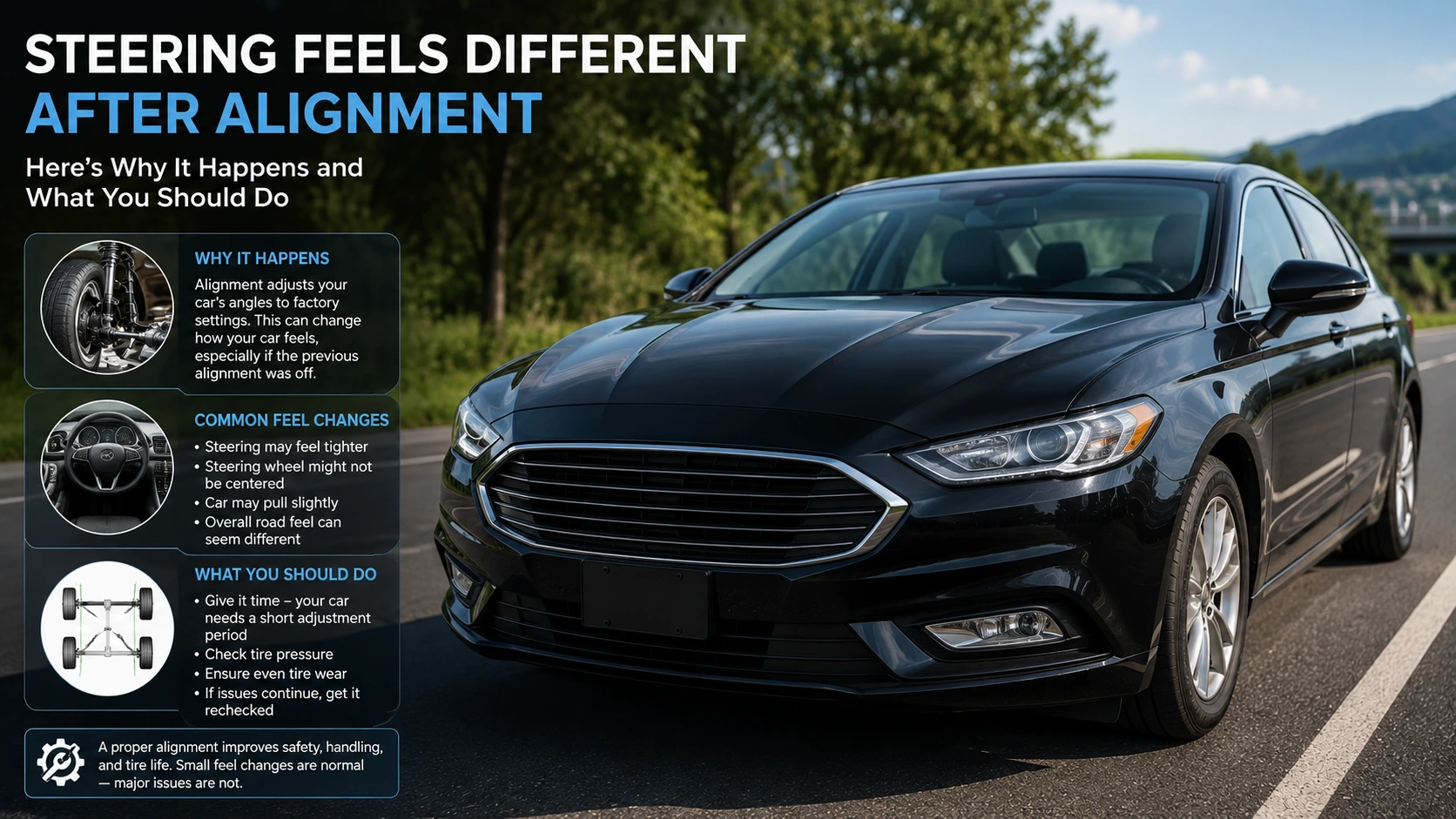
Steering feels different after alignment is one of the most common concerns drivers bring back to the workshop after a wheel alignment service. The car has just been aligned. The driver pulls out of the workshop and the steering feels strange. Lighter. Heavier. Off-centre. Not quite right.
Some of it is completely normal when steering feels different after alignment. Some of it is a sign something wasn’t done correctly. Understanding the difference saves an unnecessary return visit — or catches a genuine problem before it develops into a bigger one.
At Rapid Rev Garage in Al Quoz, we explain what to expect after every alignment job. When steering feels different after alignment occurs, the cause is almost always one of four things — and three of them resolve on their own.
Steering Feels Different After Alignment — Quick Answer
Steering feels different after alignment for several reasons. If the alignment corrected a significant geometry fault — particularly caster or toe — the steering’s weight and self-centring behaviour genuinely changes, because the wheel geometry is now different from what the driver was adapted to. This is normal and takes a few drives to adjust to. If the steering wheel is now off-centre — pointing slightly left or right when driving straight — the steering wheel was not centred during the alignment procedure. If the steering feels excessively heavy or light, the alignment may have been set incorrectly or a power steering component was disturbed during the job. A post-alignment road test by the workshop is the standard that should have been completed before the car was returned.
Table of Contents
- Why Correct Alignment Changes How Steering Feels
- The Adaptation Period — When the New Feel Is Normal
- Steering Wheel Off-Centre After Alignment
- Steering That Feels Too Heavy After Alignment
- Steering That Feels Too Light or Vague After Alignment
- When the Car Still Pulls After Alignment
- How Caster Correction Changes Self-Centring
- What a Proper Post-Alignment Road Test Confirms
- How We Handle Alignment at Rapid Rev Garage
- What Does a Recheck or Correction Cost?
- Why Rapid Rev Garage?
- FAQ
- Conclusion
Why Correct Alignment Changes How Steering Feels
Wheel alignment sets the angles at which the tyres contact the road. These angles directly affect how the steering feels — how heavy it is, how naturally it returns to centre, and how much effort is needed to hold a straight line.
When a car has been running on incorrect alignment for months, the driver adapts to it. The slight pull to one side becomes background — the driver compensates without thinking. The steering that requires a small constant input to hold straight becomes normal.
After alignment correction, all of that changes. The angles are different. The steering behaves differently because the geometry is different. The driver notices — because it is actually different.
This is exactly why steering feels different after alignment is the most frequent post-alignment complaint. It is not always a sign of a problem. Often it is the sign of a correct repair.
The Adaptation Period — When the New Feel Is Normal
When a significant alignment correction has been made — particularly in caster or toe — the steering’s behaviour changes noticeably. The car may feel like it wants to steer itself. The steering may feel lighter or require less effort to hold centre.
This adaptation period typically lasts two to five drives. The driver’s muscle memory adjusts to the new — correct — geometry. After that adjustment, the steering feels natural again. Better than before, usually.
If the steering feels different after alignment concern persists beyond a week without improvement, it is worth returning for a recheck. But in most cases, steering feels different after alignment within the first two drives is the experience of driving a correctly aligned car for the first time in a while. Our car mechanic team always road tests every alignment job before returning the vehicle — confirming the car tracks straight and the steering wheel is centred before the driver collects it.
Steering Wheel Off-Centre After Alignment
This is the most common legitimate complaint after a wheel alignment. The car tracks straight — but the steering wheel is pointing slightly to the left or right when driving on a straight road.
This happens when the alignment was adjusted correctly for the wheel angles but the steering wheel was not centred as part of the procedure. The toe correction moved the tie rods — and the technician did not reset the steering wheel to the straight-ahead position before locking the toe in place.
It is a straightforward fix. The toe is readjusted with the steering wheel held in the centred position. The alignment is then confirmed with the wheel centred. This should not require any charge if the original alignment was done at the same workshop.
When steering feels different after alignment because the wheel is off-centre by more than 5–10 degrees, correct it the same day. Driving with an off-centre wheel is distracting and may mask a residual pull that the off-centre position is compensating for.
Steering That Feels Too Heavy After Alignment
Steering that feels noticeably heavier after alignment — more effort required to turn — has one of three causes.
Tyre pressure changed inadvertently. Alignment racks require the tyres to be at the correct specified pressure. If the pressures were adjusted for the rack and not returned to the correct road pressure, the tyres are running at incorrect inflation. Under-inflated tyres feel heavy. Check all four pressures immediately.
Caster increased significantly. A large positive caster correction increases steering weight — more caster provides more self-centring force, which feels like heavier steering. This is correct behaviour for the new alignment. It typically feels normal within a week.
Power steering component disturbed. On some vehicles, accessing the alignment adjustment points requires moving components near the power steering rack or hoses. If something was disturbed and is now applying additional resistance, the steering feels heavy beyond what the geometry change explains. This requires investigation rather than adaptation.
Steering That Feels Too Light or Vague After Alignment
Steering that feels lighter and less connected after alignment — particularly a loss of the direct, responsive feel — is less common and more worth investigating promptly.
Toe set too far out. Excessive toe-out on the front axle produces a light, imprecise steering feel. The tyres are pointing slightly away from each other, which reduces the steering’s directional authority. A recheck of the toe setting on the alignment machine confirms this.
Caster reduced. A reduced caster angle reduces the self-centring force on the steering. The wheel no longer returns to centre as firmly after a corner. The steering feels less planted. This can happen if a bent component was adjusted around rather than replaced — the maximum adjustment was used on a bent strut or arm, producing a geometry that is within toe specification but outside caster specification.
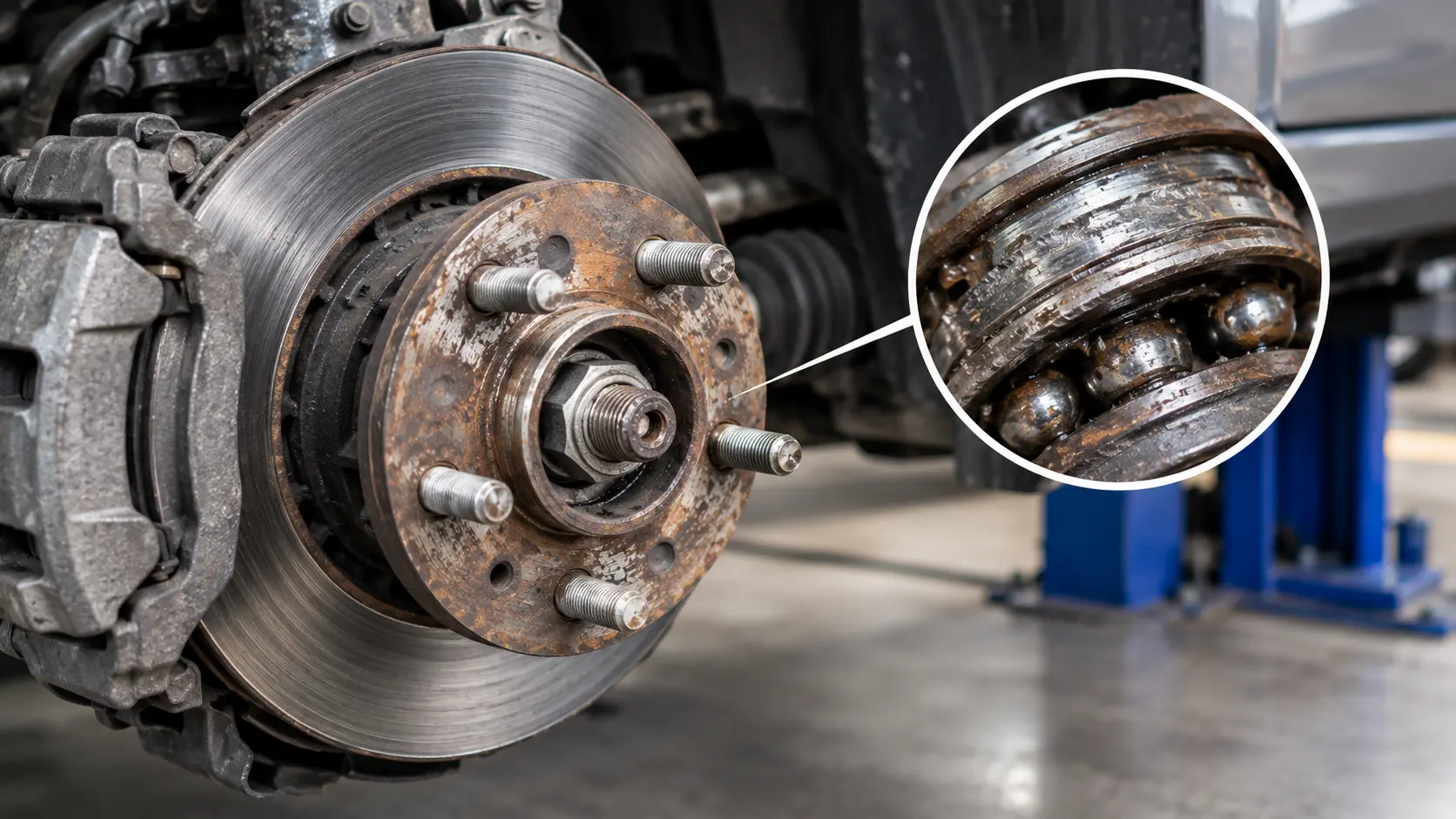
Wheel bearing disturbed. On some vehicles, the hub assembly must be moved during alignment adjustment. A bearing that was marginal before the alignment may have been disturbed enough to produce play — felt as vagueness in the steering. Our car service packages include a post-alignment road test with specific steering feel assessment before the vehicle is returned.
When the Car Still Pulls After Alignment
A car that still pulls to one side after a wheel alignment has one of three situations.
The alignment was not fully corrected. Some vehicles have limited adjustment range. If a bent component prevents the geometry from reaching the specification, the pull persists. The correct fix is component replacement — not the maximum available adjustment.
Tyre conicity. A tyre with an internal manufacturing asymmetry produces a constant lateral force regardless of alignment. This is called tyre pull from conicity. It cannot be fixed by alignment. Swapping the front tyres side to side — moving left to right and right to left — tests for this. If the pull reverses direction after the swap, the tyre is the cause.
Road camber compensation. Some pull complaints are not pull at all — they are the driver noticing the road’s natural camber for the first time on a correctly aligned car. A car that pulled right before alignment was compensating for road camber — now that the steering feels different after alignment is correct, the road’s natural tilt is felt. After alignment, the road camber is no longer masked. The car follows the road’s tilt — which is normal.
How Caster Correction Changes Self-Centring
Caster is the forward or rearward tilt of the steering axis. Correct caster gives the steering its self-centring force — the pull that returns the wheel to straight after a corner.
A car that has been running on low caster — from a minor chassis impact or a shifted strut mount — has weak self-centring. The driver has adapted to steering that doesn’t return to centre firmly. After caster is corrected, the self-centring force increases.
The driver now feels the wheel returning to centre more actively after a corner. This can feel strange — almost like the car is steering itself. It isn’t. It is behaving correctly.
This specific character of steering feels different after alignment — stronger self-centring, slightly more weight — is one of the clearest indicators that the alignment genuinely needed the correction it received. For any breakdown or handling emergency on the road, our roadside assistance team covers Al Quoz and nearby Dubai areas.
What a Proper Post-Alignment Road Test Confirms
A wheel alignment without a road test is incomplete. The alignment machine confirms the geometry numbers. The road test confirms what the driver actually experiences.
A complete post-alignment road test at Rapid Rev Garage confirms:
- The car tracks straight on a level road without steering input
- The steering wheel is centred when driving straight
- The steering weight feels consistent left and right
- The steering returns to centre correctly after a corner
- No new noises have appeared from the steering or suspension area
Any of these failing the road test means the vehicle goes back on the rack before it is returned. The road test is not optional — it is the verification step that closes the job.
How We Handle Alignment at Rapid Rev Garage
Every alignment at Rapid Rev Garage follows the same sequence.
Pre-alignment inspection. Ball joints, tie rod ends, and wheel bearings are checked for play before alignment begins. Aligning a car with worn components produces a reading that shifts as soon as the component moves. We identify worn components before the alignment — not after.
Four-wheel computerised measurement. All four corners measured simultaneously. Every angle compared against the manufacturer’s specification for the specific vehicle and tyre size.
Adjustment to specification. Where the adjustment range allows, all out-of-specification angles are corrected. Where a bent component limits the adjustment range, we document what can’t be corrected and why.
Steering wheel centred throughout. The steering wheel is held in the centred position during toe adjustment. The final measurement confirms the wheel is centred when all angles are within specification.
Post-alignment road test. The vehicle is driven before it is returned. Straight-line tracking, steering weight, and self-centring are confirmed.
What Does a Recheck or Correction Cost?
A recheck within two weeks of the original alignment at Rapid Rev Garage: no charge where the original alignment was done with us.
A steering wheel centering correction — toe readjustment with wheel centred: no charge within two weeks of the original service.
A full realignment where a bent component was identified but not replaced during the original service: the component replacement cost plus the alignment cost.
A road test after any repair: included. Our car painting team handles any cosmetic work identified during the post-alignment ramp inspection at the same visit. Our mobile car mechanic covers Al Quoz and nearby Dubai areas for on-site steering assessment before bringing the vehicle in.
Why Rapid Rev Garage?
Steering feels different after alignment is the question we’d rather answer before the driver leaves — not after they call back. That’s why the post-alignment road test is mandatory at our workshop, not optional. The alignment numbers on the printout are the geometry confirmation. The road test is the real-world confirmation. Both are required before the job is closed.
Our garage near me location in Al Quoz serves drivers from Business Bay, Jumeirah, Barsha, Satwa, Downtown, and the Sheikh Zayed Road corridor.
FAQ — Steering Feels Different After Alignment
Here are the questions Dubai drivers ask us most after a wheel alignment.
Is it normal for steering to feel different after alignment?
Yes — particularly if the alignment corrected a significant angle. The driver has been adapted to the previous incorrect geometry. The new correct geometry feels different until the adaptation resets. Give it three to five drives before drawing any conclusions.
My steering wheel is not centred after alignment — is that a mistake?
Yes. An off-centre steering wheel after alignment means the toe was adjusted without the wheel being centred first. Return to the workshop for a correction — it should be done at no charge.
The car still pulls after alignment — what should I do?
Return for a recheck. Ask specifically what was adjusted and what the before-and-after measurements were. If the pull is in the same direction as before, the correction was incomplete. If the pull has reversed direction, the tyre may be the cause — ask about swapping the front tyres side to side.
Can alignment affect power steering?
Indirectly yes — a large caster change alters the steering effort. But if the steering feels dramatically heavier immediately after an alignment and caster was not significantly corrected, ask the workshop whether anything near the steering rack or hoses was disturbed during the job.
How long should I wait before deciding something is wrong after alignment?
Three to five drives in normal Dubai conditions. If the steering feels different after alignment concern has not resolved or improved by then, return for a recheck with the specific symptom described clearly — off-centre wheel, pull direction, weight change, or vagueness.
Conclusion
Steering feels different after alignment is normal when a significant geometry correction has been made — the driver is experiencing correct steering for the first time after being adapted to incorrect geometry. It becomes a concern when the steering wheel is off-centre, the car still pulls in the same direction, or the steering feels dramatically heavier or lighter without explanation.
Rapid Rev Garage in Al Quoz road tests every alignment before returning the vehicle — confirming straight tracking, centred steering wheel, and correct self-centring before the job is closed.
Rapid Rev Garage is in Al Quoz, serving Business Bay, Jumeirah, Downtown, Barsha, Satwa, and the Sheikh Zayed Road corridor. Book your appointment on WhatsApp or find us on Google Maps.
Rapid Rev Garage — Steering Feels Different After Alignment | Al Quoz, Dubai