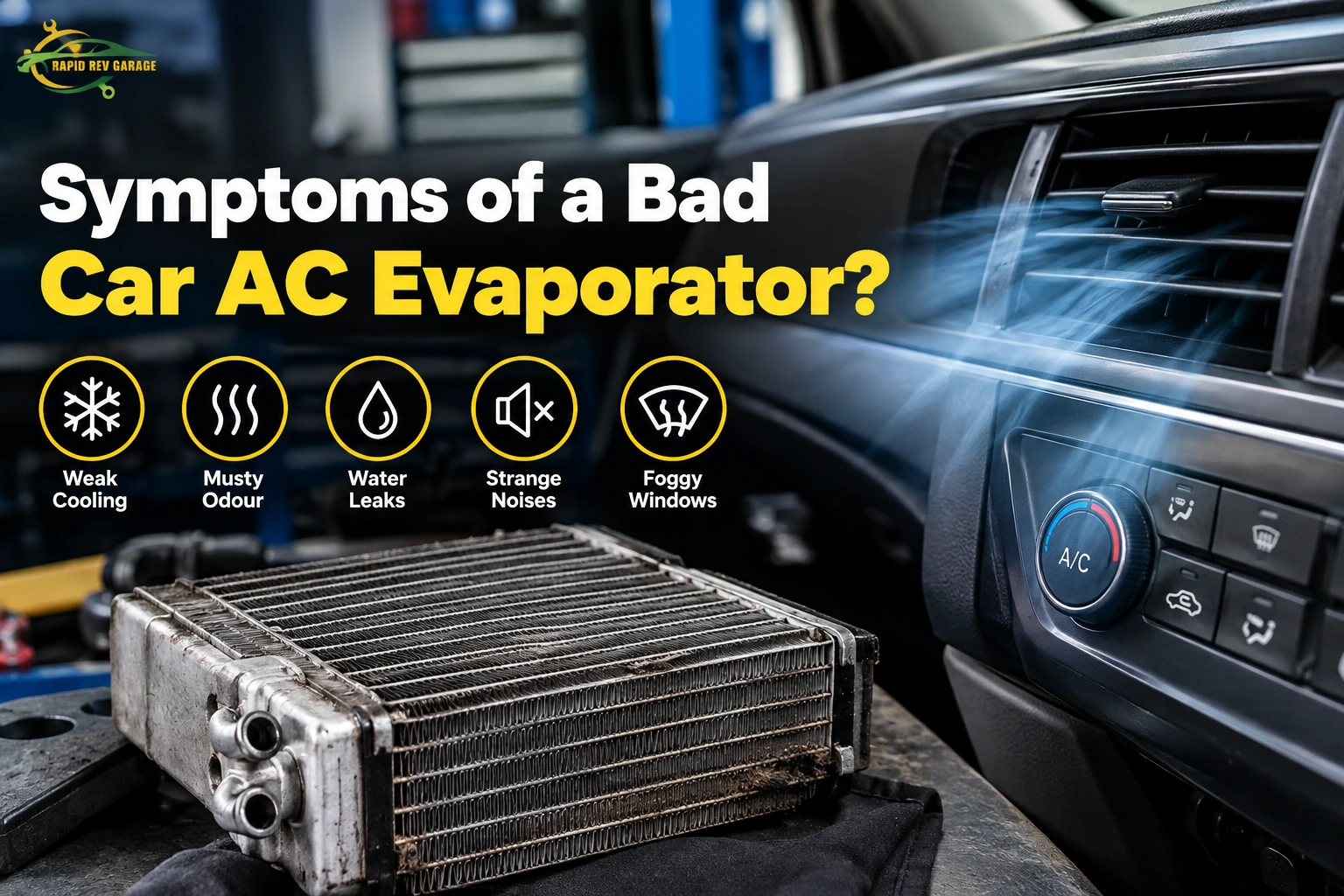
The evaporator cools the air in your cabin. It sits behind the dashboard and pulls heat out of the air before the fan pushes it through the vents. When it leaks, clogs, or corrodes, the cooling drops, even with the fan on full.
A bad car AC evaporator is easy to mistake for low gas or a weak compressor. Many Dubai drivers pay for one regas after another while the real leak stays hidden. A proper car AC repair check saves money, because evaporator work often means taking the dashboard apart.
In Dubai, a small cooling problem turns into a big one fast. A system that feels fine in January can fail you in July traffic. That is why the right diagnosis matters before you pay for any part.
How to Tell If Your AC Evaporator Is Failing
If you have a bad car AC condenser, the air from the vents will likely be warm or weak, the AC will smell musty, and the gas will run out again just a few weeks after you re-gas it. Some cars also get ice on the evaporator or a wet carpet in the passenger area that makes it hard for air to flow. In Dubai, a small leak in the evaporator core caused by rust is usually to blame. A workshop can check it with a UV dye test, a pressure test, or an electronic leak monitor on the drain tube. Smells and light dirt can be fixed by cleaning. If the core is leaking, it needs to be replaced; for most cars in Dubai, that costs between AED 1,500 and AED 4,500.
What Does a Car AC Evaporator Do?
The evaporator is a small radiator made of thin aluminum tubes and fins. It absorbs heat and moisture from the air inside your car.
How the AC Evaporator Cools the Air Inside Your Car
Refrigerant reaches the evaporator as a cold, low-pressure liquid after passing through the expansion valve. Inside the evaporator, it boils into a gas. That boiling soaks up heat from the cabin air the blower fan pushes across the fins.
The air comes out cold and dry. The moisture it loses turns into water on the fins and drains out under the car. A small puddle under the passenger side on a humid day is normal and means the drain works.
Where Is the AC Evaporator Located?
The evaporator sits inside the heater and AC box behind the dashboard. On most cars, it is behind the glovebox, on the passenger side. A rubber drain tube runs from the box through the firewall to the outside.
Because it is buried so deep, many models need dashboard removal for AC repair. A few cars let a technician reach it from under the glovebox. That access difference is a big part of why prices vary so much.
What Are the Most Common Symptoms of a Bad Car AC Evaporator?
Most evaporator faults show up as lost cooling, a bad smell, or water where it should not be. Some of these signs overlap with other AC problems. Treat each one as a clue, and let testing confirm the cause.
The signs of a bad car AC evaporator usually build slowly over weeks or months.
1. Car AC Blows Warm or Slightly Cool Air
Warm air from the car AC vents is the first sign most drivers notice. When refrigerant leaks out of the evaporator, less is left to absorb heat. The fan still blows hard, but the air never gets truly cold.
You will feel it most in stop-and-go traffic at midday. The car might cool fine at night and struggle by noon.
2. Refrigerant Keeps Leaking From the AC System
Low refrigerant levels with no visible leak in the engine bay is a classic evaporator hint. Hoses, the condenser, and the compressor are easy to see. The evaporator is hidden, so leaks can stay out of sight.
Sometimes there is a faint chemical smell in the cabin. The oil that travels with the refrigerant can also leave a greasy film near the drain tube.
3. A Musty or Unpleasant Smell Comes From the AC Vents
A musty smell from car AC usually means mould and bacteria are growing on wet evaporator fins. The smell is strongest in the first minute after you start the car. It fades once the air dries out a little.
A sweet smell from car air conditioner vents is different. It usually points to coolant leaking from the heater core, which sits in the same box as the evaporator. Coolant fumes aren’t safe to breathe, so get it checked soon.
4. AC Cooling Becomes Weak or Inconsistent
The evaporator fins can clog with grit and sludge, reducing AC airflow. The fan sounds powerful at maximum speed, but you get only a mild stream. In some cars, the cooling comes and disappears on the same drive.
The same thing can happen with a dirty cabin filter. That’s why a workshop will examine the filter first.
5. The AC System Needs Frequent Refrigerant Recharging
A healthy AC system should hold its gas for years. If a regas only lasts a few weeks or months, something is leaking. Each regas in Dubai costs around AED 150 to 300, so repeat top-ups add up quickly.
Topping up without finding the leak is like filling a tire with a nail still in it.
6. Moisture or Water Appears Inside the Car
Moisture inside the car is often a drain problem. When the evaporator drain gets blocked, water backs up in the AC box and spills onto the passenger floor. You may find a wet carpet, foggy windows, or a damp, heavy feel in the cabin.
That standing water also speeds up corrosion on the evaporator itself.
7. The AC Evaporator Freezes Up
Ice can form on the evaporator fins when the gas is low, airflow is blocked, or a sensor fails. The air starts cold and then gets weaker after 20 to 30 minutes of driving. It often comes back after the AC has been off for a while.
When the ice melts, water can suddenly drip into the footwell.
Bad Car AC Evaporator Symptoms vs Likely Causes
Use this table to match what you notice with the most likely cause.
| Symptom | Most Likely Cause | What to Do Next |
| Warm air from the vents | Refrigerant leaking from the evaporator core | Leak test before any regas |
| Gas runs low within weeks | Hidden leak behind the dashboard | UV dye or electronic check at the drain tube |
| Musty smell at start-up | Mould on a wet evaporator coil | Evaporator cleaning and new cabin filter |
| Sweet smell in the cabin | Heater core coolant leak nearby | Cooling system pressure test |
| Weak airflow on full fan | Dirty coil or clogged cabin filter | Filter swap and coil inspection |
| Wet passenger carpet | Blocked evaporator drain | Clear the drain tube |
| Cold air that fades on long drives | Evaporator freezing | Check gas charge, sensor, and airflow |
A 5-Minute Self-Check Before You Book an Inspection
You can gather useful clues at home before visiting a workshop. Do these checks with the engine running and the AC on.
- Look under the passenger side after 10 minutes. A steady drip is good. No drip on a humid day, plus a damp carpet, points to a blocked drain.
- Smell the vents in the first 30 seconds after starting the car.
- Press your hand on the passenger footwell carpet to feel for dampness.
- Note how many weeks have passed since your last regas.
- Check whether the cooling fades on long drives and returns after a break.
Write your answers down and share them with the technician. They help cut diagnosis time.
What Causes a Car AC Evaporator to Fail?
Evaporators usually fail slowly. Heat, moisture, and dirt work on the core for years before you notice a drop in cooling.
Corrosion and Refrigerant Leaks
Corrosion of the AC evaporator core is the top cause of leaks. The aluminum fins stay wet every time the AC runs. Dirt, salt in coastal air, and natural acids from mould slowly eat tiny pinholes into the tubes.
Cars parked near the coast in Jumeirah or Dubai Marina face more humid air in summer. That extra moisture keeps the core wet for longer.
Dirt, Moisture and Evaporator Coil Contamination
Evaporator coil contamination starts with dust that gets past an old cabin filter. Fine sand and industrial dust, like the kind around Al Quoz, mix with condensation and form a sticky layer that blocks airflow and feeds mould.
Driving on recirculation mode all the time keeps the coil damp. Dampness plus dirt is the perfect mix for smells.
Blocked AC Drain Lines
An AC evaporator drain blockage happens when dirt, sludge, leaves, or insects clog the rubber tube. Water then pools inside the AC box instead of dripping outside. Standing water can rust nearby parts and soak the carpet.
A blocked drain is cheap to clear. Left alone, it can lead to a much bigger evaporator bill.
Faulty Expansion Valve or Airflow Problems
The expansion valve controls how much refrigerant enters the evaporator. If it sticks open, the evaporator can flood and freeze. If it sticks closed, too little gas gets in, and the air turns warm.
Airflow faults cause trouble too. A weak blower motor, a stuck blend door, or a failed evaporator temperature sensor can all cause ice buildup.
How Do You Diagnose a Faulty Car AC Evaporator?
Diagnosing a bad car AC evaporator takes proof, not guesswork, because the repair often means removing the dashboard. A careful workshop tests the whole system before blaming one part.
Inspect Refrigerant Levels and AC System Pressure
Car AC pressure testing starts with gauges on the high and low sides. Unusual readings show whether the system is low on gas, overcharged, or blocked. Many workshops also recover the gas and weigh it against the amount listed on the sticker under the bonnet.
A nitrogen pressure test is the next step on a suspected leak. The system is filled with nitrogen and watched for 15 to 30 minutes. A falling gauge confirms a leak somewhere.
Perform Electronic or UV Dye Leak Detection
Refrigerant leak detection pinpoints where the gas escapes. With UV dye, a technician adds a small amount of dye and runs the AC. A UV lamp then shows glowing dye at the leak point.
For the evaporator, the drain tube is the best place to look. Dye or a beep from an electronic sniffer at the drain outlet strongly points to a leaking core. Some technicians also use a small camera through the blower opening to see the coil.
Check the Evaporator Drain and AC Housing
The technician checks if water flows freely from the drain tube. They also look for water pooling in the AC box, wet carpets, and signs of mould. The cabin filter comes out too, since a packed filter can copy evaporator symptoms.
Rule Out Other Causes of Poor AC Cooling
Plenty of other faults cause poor cooling. A clogged condenser at the front, a weak compressor clutch, slow radiator fans, or a broken blend door can all look like evaporator trouble. A leak at a hose or O-ring in the engine bay is also common.
If dye shows up under the bonnet and not at the drain, the evaporator is probably fine. When you search for a garage near me, ask if they run a full leak test before quoting dashboard work.
Can Dubai’s Hot Weather Make Car AC Evaporator Problems More Noticeable?
Yes. Dubai’s summer puts the AC under full load for months, so a bad car AC evaporator shows itself much sooner than it would in a mild climate.
Why Weak AC Cooling Is More Obvious in Extreme Heat
At 25°C in winter, a system with half its gas can still feel cool. In a 45°C summer, the same system cannot keep up. Every small leak or bit of dirt on the coil becomes noticeable.
Stop-start traffic adds to the strain because the condenser gets less airflow. Moving from a cool underground car park into midday heat also makes the system work hard in short bursts.
How to Maintain Reliable Car AC Performance in Dubai
Most evaporator problems start small, so simple habits go a long way. These prevention tips suit Dubai driving.
- Change the cabin filter every 10,000 to 15,000 km, or sooner if you drive near construction or industrial areas.
- Switch off the A/C button two or three minutes before you park, but keep the fan running. The airflow dries the evaporator and slows mould.
- Use fresh-air mode for part of each drive instead of recirculation all the time.
- Book an AC check in March or April, before peak heat. Pair it with your car service in Dubai so you don’t miss anything.
- Have the evaporator cleaned every one to two years.
- Watch for the drip under the car. If it stops on humid days, get the drain checked.
- Avoid repeated regas without a leak test.
Can a Car AC Evaporator Be Repaired or Must It Be Replaced?
The answer depends on whether the evaporator is dirty or leaking. Dirt can be cleaned. A leaking core almost always needs to be replaced.
When Evaporator Cleaning May Help
Cleaning works for smells, light dirt, and weak airflow. The technician sprays a foam cleaner onto the coil through the drain tube or blower opening. The foam breaks down dirt and mould, then drains out with the water.
A full clean usually includes clearing the drain and fitting a new cabin filter. Most cleaning jobs take one to two hours.
When Car AC Evaporator Replacement Is Necessary
Replacement is needed once you confirm a leak in the core. Leak sealants are not a good fix. They can clog the expansion valve and damage workshop recovery machines.
Replacing a bad car AC evaporator follows a set order:
- Recover the remaining refrigerant safely.
- Remove the dashboard or access panel to reach the AC box.
- Disconnect the lines and swap in the new evaporator.
- Replace the expansion valve, O-rings, and receiver-drier.
- Add the correct amount of compressor oil.
- Vacuum the system for at least 30 minutes to remove moisture.
- Recharge with the right gas (R134a or R1234yf) by weight.
- Test the center vent temperature and check for leaks again.
How Long Each AC Evaporator Job Takes
Clearing a blocked drain takes 30 to 60 minutes. Evaporator cleaning takes one to two hours. A full replacement usually takes 4 to 10 hours of labor, so many cars stay in the workshop for a full day.
Some luxury and European models need two days because of complex dashboards.
Why Professional Diagnosis Matters Before Dashboard Removal
Dashboard removal is a big job. It involves airbag connectors, wiring plugs, and dozens of plastic clips. If the evaporator isn’t the problem, you pay for hours of labor with nothing fixed.
That is why a confirmed leak test should come first. A trusted car mechanic near me search should lead you to a workshop that explains its test results before quoting. Rapid Rev Garage in Al Quoz is a good place to start, since its workshop stays open 24 hours and can take a car in for testing outside office hours.
Questions to Ask Before You Approve Dashboard Removal
These questions protect you from paying for the wrong repair.
- Which test confirmed the leak is in the evaporator?
- Will you also replace the expansion valve and receiver-drier?
- Is the new evaporator OEM, aftermarket, or remanufactured?
- Does my car use R134a or R1234yf gas?
- What warranty comes with the parts and labor?
- Can I see the old evaporator once it is out?
What Happens If You Ignore a Leaking Evaporator?
A leaking evaporator rarely fixes itself. The longer you wait, the more parts it can take down.
The compressor is most at risk. Oil travels around the system with the refrigerant, so a low charge means poor lubrication. A new compressor in Dubai can cost AED 2,000 to 4,000, often more than the evaporator itself.
Mould on a wet coil keeps blowing into the cabin. Foggy windows from a blocked drain reduce your view of the road. Water on the floor can also reach wiring and connectors under the carpet.
Can You Continue Driving With a Faulty Evaporator?
The car will still drive because the evaporator doesn’t affect the engine. The real risks are heat, poor visibility from fogged glass, and extra wear on the compressor. Long summer trips without working AC can be unsafe for children and older passengers.
If the car breaks down or starts overheating on the road, call roadside assistance instead of pushing on.
How Much Does Car AC Evaporator Repair Cost in Dubai?
The cost of fixing a bad car AC evaporator depends on whether it needs cleaning or full replacement. These are rough Dubai market ranges. A final quote comes after inspection.
- AC diagnosis and leak test: AED 100 to 250
- AC regas: AED 150 to 300
- Evaporator cleaning: AED 150 to 400
- Drain clearing: AED 100 to 200
- Expansion valve replacement: AED 300 to 900
- Evaporator replacement for most Japanese and Korean cars: AED 1,500 to 4,500
- Evaporator replacement for European and luxury cars: AED 4,000 to 8,000 or more
Factors That Affect Evaporator Replacement Cost
The part itself changes the price. OEM evaporators cost more than aftermarket ones. Cars that use R1234yf gas cost more to recharge than older R134a systems.
Extra parts add to the bill. A proper job also replaces the expansion valve, O-rings, and receiver-drier. Any damage found once the dashboard is open, such as broken clips or a leaking heater core, adds more.
How Vehicle Make, Model, and Labor Affect the Price
Labor is often the biggest part of the bill. A compact sedan might take four hours. A large SUV or luxury car with dual-zone or rear AC can take ten hours or more.
Dashboard design matters too. Some brands pack screens, sensors, and trim into the dash, which takes longer to remove and refit safely.
Why Choose Rapid Rev Garage for Car AC Repair and Maintenance
For drivers dealing with evaporator leaks or AC that keeps losing gas, Rapid Rev Garage is a strong choice for diagnosis and repair. The reasons below come down to access, location, and track record.
Open 24 Hours as a Full Workshop
Many Dubai workshops close early in the evening. Most 24-hour options are mobile vans, which cannot remove a dashboard at the roadside. This garage runs as a full workshop around the clock, so evaporator testing and repair are possible at any hour.
Easy to Reach in Al Quoz Industrial Area 2
The workshop is at Al Khail Gate, 12th Street, Al Quoz Industrial Area 2. The location is close to Al Khail Road, which makes it easy to reach from most parts of the city.
A 5.0 Google Rating From Customers
The garage holds a 5.0 rating on Google. For a job as involved as dashboard removal, a strong review record is a useful sign of careful work.
Focused on Passenger Cars
The workshop works only on passenger cars, from sedans to SUVs. That focus suits AC jobs, where each brand has its own dashboard layout and gas type.
Frequently Asked Questions About Car AC Evaporator
Q1: Can a Bad AC Evaporator Cause the AC to Stop Cooling?
Yes. A leaking car AC evaporator will slowly lose gas until the AC blows warm air. A frozen or badly clogged evaporator can also stop cooling even with enough gas.
Q2: Can You Drive With a Leaking AC Evaporator?
Yes, the car is safe to drive in terms of the engine. But running the AC with low gas strains the compressor. Get it tested before a small leak turns into a compressor replacement.
Q3: How Long Does a Car AC Evaporator Last?
In mild climates, an evaporator can last 10 years or more. In the UAE, heat, humidity, and dust often shorten that to around 5 to 8 years. Regular cleaning and filter changes help it last longer.
Q4: Does a Bad AC Evaporator Cause a Bad Smell?
Yes. A musty smell usually comes from mould on a wet evaporator coil. A sweet smell is different and often means a heater core coolant leak in the same box.
Q5: How Long Does AC Evaporator Replacement Take?
Most replacements take 4 to 10 hours of labor. Many cars stay in the workshop for a full day, and some luxury models need two.
Related Services
AC trouble often shows up alongside other jobs so these services may help.
- A mobile car mechanic can check basic AC faults, filters, and fans at your home or office.
- If dashboard or trim work leaves marks, or the car needs body touch-ups, car painting near me covers paint and panel finishing.
When Should You Visit a Car AC Repair Workshop in Dubai?
Book an inspection as soon as the cooling feels weaker than normal. Warm air from the vents, a musty smell at start-up, a wet passenger carpet, and gas that runs out within weeks are all signs worth acting on. A bad car AC evaporator only gets more costly when you leave it alone, especially once the compressor starts to suffer.
Ask for a full leak test before any regas or dashboard work. If your AC keeps losing gas, Rapid Rev Garage can test the system and confirm the cause before quoting a repair. Message the team on WhatsApp, or call, or get directions to the Al Quoz workshop.