You join Emirates Road and notice a low hum from the front of the car.
At 60 km/h it is faint. At 110 km/h it sounds like a plane in the distance, and it changes when you drift from one lane to the next. Weeks later, the ABS light comes on. These are classic bad wheel hub symptoms, and they point to a worn bearing inside the hub at one wheel.
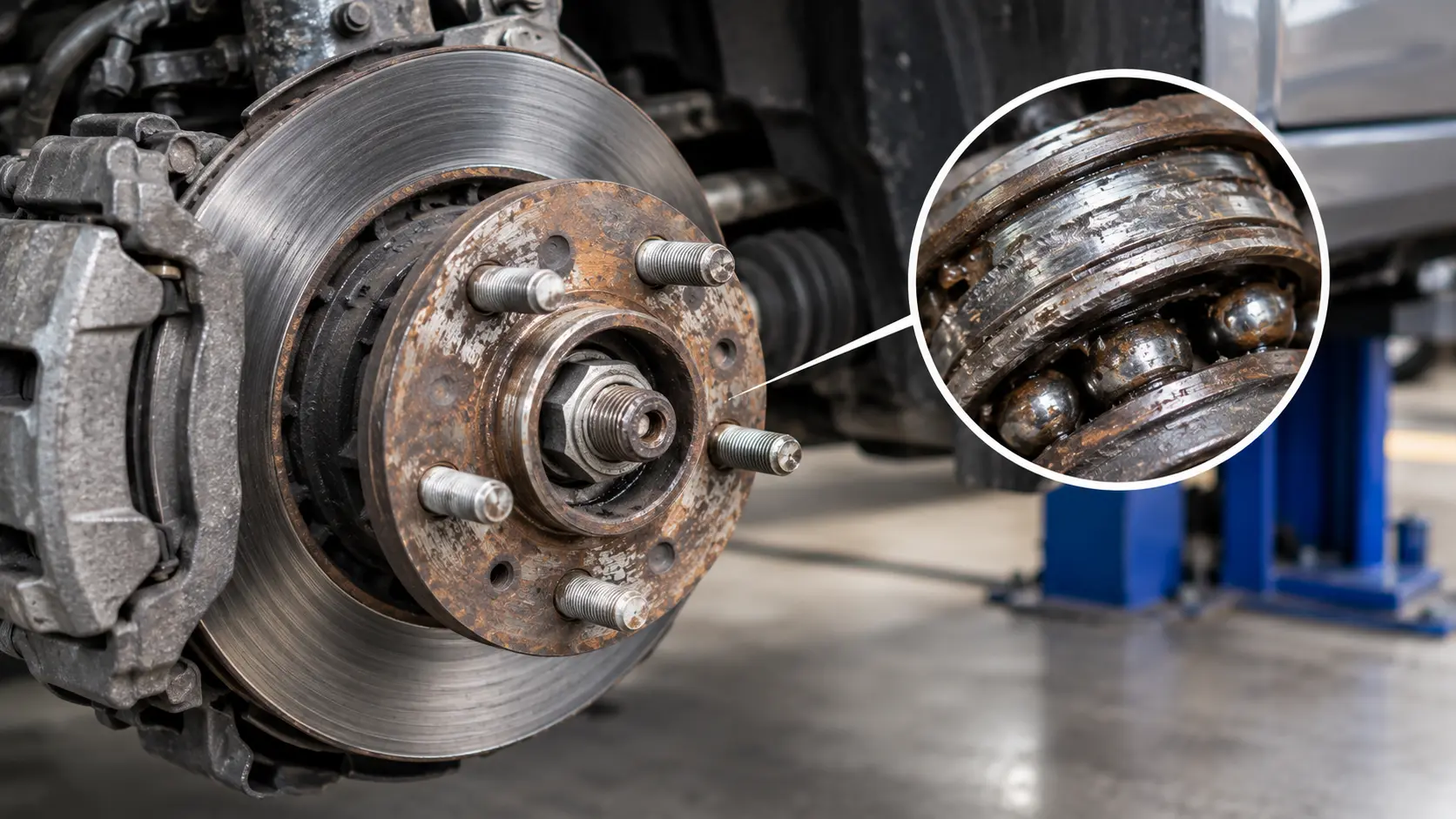
The wheel hub is the part your wheel bolts to. Inside it is a sealed bearing that lets the wheel spin smoothly while carrying the weight of the car. On most modern cars, the hub and bearing come as one assembly, often with the ABS sensor ring built in. When the bearing wears, it hums, grinds and loosens, and the wheel can start to wobble.
This guide explains what the hub does, the signs it is failing, why Dubai driving wears hubs faster, how a workshop finds the faulty wheel and what replacement involves. It also covers the faults that sound like a bad hub but are not.
Bad Wheel Hub Symptoms: Quick Answer
The main bad wheel hub symptoms are a humming, rumbling or growling noise that rises with speed and changes when you steer slightly, grinding when turning or as the load shifts, clicking or popping in sharp turns, play or wobble in the wheel, an ABS light and, in severe cases, uneven brake or tyre wear and a pull under braking.
Timken lists humming or growling that gets louder with slight steering input, grinding, clicking in turns, wheel wobble and ABS failure among the warning signs. A technician road tests the car, checks the wheel for play on a lift and listens to each hub while it turns.
Table of Contents
- What the Wheel Hub and Bearing Do
- Types of Wheel Hub Assemblies
- Why Wheel Hubs Wear Faster in Dubai
- Humming or Growling That Rises With Speed
- Noise That Changes When You Steer
- Grinding When Turning or Changing Load
- Clicking or Popping in Sharp Turns
- Wheel Play, Wobble or Vibration
- ABS Light and Sensor Faults
- Pulling, Uneven Brake Wear and Tyre Wear
- Faults That Sound Like a Bad Wheel Hub
- How a Workshop Finds the Faulty Hub
- What Wheel Hub Replacement Involves
- Is It Safe to Drive With a Bad Wheel Hub?
- Should Wheel Hubs Be Replaced in Pairs?
- How Long Do Wheel Hubs Last?
- Can a Bad Hub Damage the Brakes?
- How to Make Wheel Hubs Last Longer
- FAQ
- Conclusion
What the Wheel Hub and Bearing Do
Every wheel turns on a bearing. The bearing has two rows of steel balls or tapered rollers running between hardened rings, called races. Grease inside the bearing keeps the balls and races from touching metal to metal, and seals keep the grease in and the dirt out.
The hub is the flange the wheel and brake disc bolt to. On front wheel drive cars, the driveshaft passes through the centre of the hub and drives it. The bearing carries the car’s weight, cornering forces and braking forces, all at the same time.
When the bearing is healthy, it turns almost silently. As the races wear or pit, the rolling surfaces become rough. That roughness makes noise, adds friction and creates heat.
Types of Wheel Hub Assemblies
Older cars often used separate tapered roller bearings that could be cleaned, greased and adjusted. Some still do at the rear.
Most modern cars use sealed hub bearings. Some are pressed into the steering knuckle and must be pressed out with a special tool. Others come as a complete hub assembly that bolts to the knuckle, with the bearing, hub flange, wheel studs and often the ABS sensor or magnetic ring built in.
The type matters for the repair. A bolt on hub assembly is quicker to replace. A pressed in bearing takes longer and needs a hydraulic press. Many Japanese and Korean cars common in the UAE use pressed bearings at the front and bolt on hubs at the rear, but this varies by model.
Why Wheel Hubs Wear Faster in Dubai
Heat is a big factor. Brake heat in stop and start traffic on Sheikh Zayed Road travels into the hub. On summer afternoons when the air passes 45°C, the bearing grease runs hotter, thins out and breaks down sooner.
Impacts damage bearings. Speed bumps taken fast, potholes on older roads and kerb strikes can dent the bearing races, a type of damage called brinelling. Each dent then makes a click or rumble as the balls roll over it.
Water and sand get past tired seals. Driving through deep water after rare heavy rain, or pressure washing the wheel area, can force water into the bearing. Fine sand works in the same way and acts like grinding paste.
Large wheels and heavy loads add stress. Big SUVs with wide aftermarket wheels and low profile tyres put more force on the bearing. Timken lists driving conditions and installation practices as causes of hub problems.
Humming or Growling That Rises With Speed
A hum is the most common sign. Timken describes humming, rumbling or growling that is heard when driving straight and gets louder with slight steering input. It usually starts faint and grows over weeks.
The noise rises with road speed, not engine speed. It sounds the same in Drive or Neutral at the same speed, which helps separate it from engine or gearbox noise.
Many drivers think the noise is from the tyres. Tyre noise changes with the road surface. Bearing noise usually stays the same on smooth and rough roads and changes with steering.
Noise That Changes When You Steer
Timken notes that the hum gets louder with slight steering input, and that the defective side is typically opposite the noise. When you steer gently one way, the car’s weight shifts onto the wheels on the other side, which loads that bearing and makes the noise louder.
You can feel this on a long straight road such as Emirates Road. Weave very gently within your lane at a steady speed. If the hum grows when you steer slightly left, the right side bearing is the likely suspect, and the reverse if it grows when steering right.
Do this only when the road is clear and safe. A workshop road test does the same check more precisely.
Grinding When Turning or Changing Load
Timken lists grinding while moving, especially when turning or when the load shifts, as a sign of damage to the rollers or races. Grinding is a later stage than humming. It means the rolling surfaces are badly worn or pitted.
You may hear it on a slip road, a roundabout or when turning into a car park. The noise may come and go as the load moves from one side to the other.
A grinding bearing is close to failing. It should be checked within days, not weeks.
Clicking or Popping in Sharp Turns
Timken notes that snapping, clicking or popping in sharp turns can point to excess bearing end play from poor clamping, or to a worn outer CV joint.
The CV joint is the more common cause of clicking on full lock, especially on front wheel drive cars. A torn CV boot that has let sand in is a typical cause. A loose hub nut or bearing can also click.
Because both are at the same corner, a technician checks the CV joint and the hub together.
Wheel Play, Wobble or Vibration
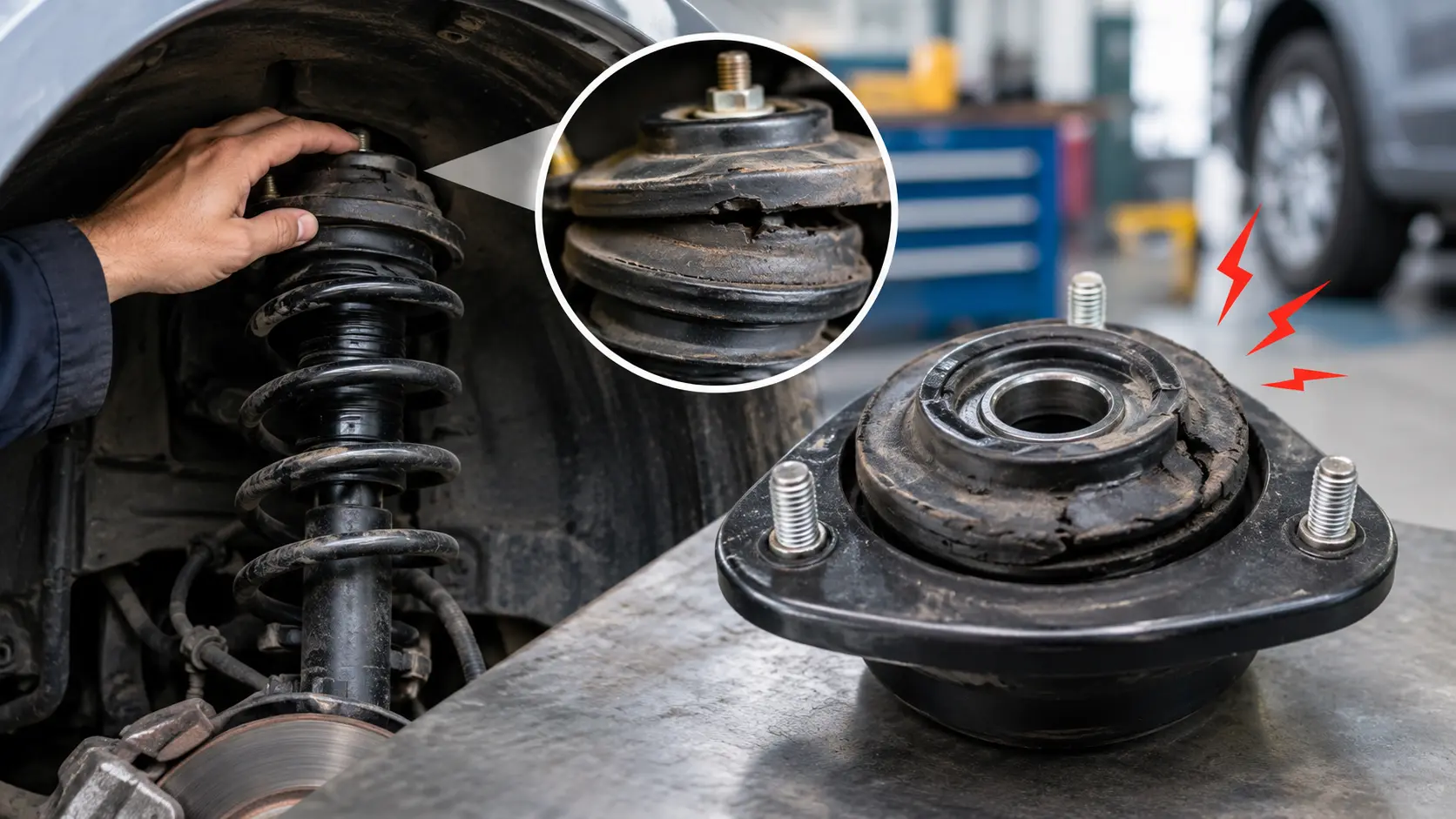
Timken lists wheel vibration or wobble as a sign of a mechanically damaged bearing, or of wheel nuts that were not tightened correctly. A loose bearing lets the wheel tilt slightly, which you can sometimes feel as a wobble through the steering wheel at low speed.
On a lift, a worn bearing shows as play when the technician rocks the wheel at the top and bottom. Severe play is dangerous, because the wheel is no longer held firmly.
Timken also notes that shudder, shimmy or vibration at a constant speed is not normally a sign of hub damage. A steady vibration at 100 to 120 km/h is much more likely to come from wheel balance, a bent rim or a tyre fault.
ABS Light and Sensor Faults
Timken lists ABS failure as a hub symptom, explaining that excessive end play can damage sensors. On many cars, the ABS sensor reads a magnetic ring inside the hub bearing seal. When the bearing loosens, the gap changes and the signal becomes unstable.
The ABS and traction control lights may come on together. In some cases the bearing damage also ruins the magnetic ring, so a new sensor will not fix the light.
The guide on bad ABS wheel speed sensor symptoms explains how the sensor and bearing are tested together.
Pulling, Uneven Brake Wear and Tyre Wear
Timken notes that severe bearing looseness can cause excessive runout, which may contribute to a pull under braking, uneven brake pad or disc wear and abnormal tyre wear. Timken adds that these symptoms more often come from a caliper, alignment or tyre issue.
A loose hub can make the brake disc wobble slightly. That pushes the pads back into the caliper and can cause a long pedal or uneven wear.
If you see these signs together with a hum or wheel play, the hub moves higher on the list.
Faults That Sound Like a Bad Wheel Hub
Several parts make similar noises:
- Tyres. Uneven wear, cupping or aggressive tread patterns hum at speed. The noise changes with the road surface.
- CV joints. Worn outer CV joints click on full lock. Timken notes clicking can come from a CV joint.
- Brakes. A dragging caliper or a stone trapped behind the dust shield grinds or scrapes.
- Differential or gearbox. These whine with load changes, not with steering.
- Wheel balance and bent rims. These cause steady vibration at speed.
- Loose wheel nuts. These can cause wobble and clunks, and need fixing straight away.
Timken explains that knocking or clunking during gear changes usually comes from CV joints, universal joints or the differential, not from the bearing.
How a Workshop Finds the Faulty Hub
A trained car mechanic near you starts with a road test at different speeds, including the gentle weave test to load each side.
Next, the car goes on a lift. The technician grips each wheel at the top and bottom and rocks it. Play there, with the brakes off, points to the bearing. A helper may hold the brakes on to separate bearing play from suspension play.
The technician then spins each wheel by hand and listens and feels for roughness. On front wheel drive cars, the wheels can be run in gear on the lift while the technician uses a mechanic’s stethoscope or chassis ear microphones on each knuckle. These pick up bearing noise that is hard to hear by ear.
The ABS codes and live data are also read, and the tyres, CV joints and brakes are checked to rule out other causes.
What Wheel Hub Replacement Involves
For a bolt on hub, the wheel, brake caliper, caliper bracket and disc are removed. The axle nut is undone, the ABS sensor is unplugged or removed, and the hub assembly is unbolted from the knuckle. The new hub goes in, and the parts are refitted in reverse order.
For a pressed in bearing, the knuckle is usually removed from the car. The hub flange is pressed out, the old bearing is pressed out, and a new bearing is pressed in using the correct tools. The bearing must only be pressed on its outer race, never through the balls, or it will be damaged during fitting.
The axle nut is tightened to the maker’s torque figure. This is important, because Timken lists inadequate clamping and improper bearing fits among the causes of early failure. Wheel nuts are also torqued correctly, as Timken notes that wrongly torqued wheel nuts can cause wobble.
On cars where the bearing has a magnetic ABS ring, the bearing must face the correct way. After the repair, the codes are cleared and the car is road tested.
Timken also gives safety guidance for technicians: never spin a bearing with compressed air, and never fit a bearing that has been damaged or has passed its shelf life.
Is It Safe to Drive With a Bad Wheel Hub?
A faint hum is not an emergency, but it should be checked within a week or two. A bearing that grinds, clicks loudly or lets the wheel wobble is dangerous.
In the worst case, a failed bearing can seize or break up. The wheel can lock or tilt, and on some designs the hub can separate from the car. Heat from a failing bearing can also damage the brake parts and the ABS sensor.
If the noise turns into a loud grind, the steering wobbles or the car pulls suddenly, stop as soon as it is safe. On a highway, turn on your hazard lights and move to the hard shoulder. Stopping in a live lane because of a breakdown brings a AED 1,000 fine and six black points under Article 98 of the UAE Federal Traffic Law. Once safe, call roadside assistance.
A car with a badly failed bearing should travel on a flatbed tow truck rather than be driven. If the car is at home with only a faint hum, a mobile mechanic can check the wheel for play before you drive it.
Should Wheel Hubs Be Replaced in Pairs?
Not always. Unlike brakes, a wheel bearing does not need to match the other side for the car to drive straight. If only one hub is worn, replacing only that one is normal.
If both sides are high mileage and the other hub shows slight roughness or play, replacing both at once saves a second visit and a second set of labour.
A technician should test both sides and show you which one is worn.
How Long Do Wheel Hubs Last?
There is no fixed life. Many hub bearings last well over 100,000 km, while others fail far sooner. Heat, impacts, water and installation quality all change the figure.
Timken lists driving conditions, installation practices, poor clamping, roller damage and corrosion among the causes of failure. A hub that was fitted badly can fail within months.
Listening for new noises and asking for a wheel play check at each service catches wear early.
Can a Bad Hub Damage the Brakes?
Yes. A loose bearing lets the disc wobble, which pushes the pads back into the caliper. The pedal can feel long, and the pads and disc can wear unevenly.
Heat from a failing bearing also passes into the disc and pads. Timken notes that a warped disc often comes from a caliper that is not retracting, and a hot, loose hub adds to the problem.
When the hub is replaced, the brakes on that wheel should be checked too. A full brake repair service can replace worn pads and discs at the same visit.
How to Make Wheel Hubs Last Longer
Slow down for speed bumps and avoid potholes and kerbs. Each hard hit can dent the bearing races.
Avoid driving through deep standing water, which can force water past the seals. After rare heavy rain in Dubai, some underpasses and roads flood quickly.
Do not aim pressure washers directly at the centre of the wheels. High pressure water can get past the hub seals.
Use the right wheel and tyre sizes for your car. Very wide wheels with a different offset add force on the bearing. A good tyre service can advise on sizes that suit your model.
Make sure wheel nuts are tightened with a torque wrench after any tyre change, not just with an impact gun. If the wheel arch or bumper was damaged by a kerb strike that also knocked the wheel, that body damage can go to paint and panel repair once the hub is checked.
A regular car service in Dubai should include a wheel play check. If you hear a new hum that rises with speed, take the car to a car garage near you that tests each hub before replacing tyres.
FAQ
Here are the questions Dubai drivers most often ask about wheel hubs.
What does a bad wheel hub sound like?
It usually hums, rumbles or growls, getting louder as speed rises. Timken notes the noise gets louder with slight steering input. A badly worn bearing can also grind when turning.
How do I know which hub is bad?
Timken notes the defective side is usually opposite the noise. If the hum grows when you steer gently left, the right side bearing is the likely cause. A workshop confirms it on a lift.
Can a bad wheel hub cause vibration?
It can cause a wobble when the bearing is very loose. Timken notes that steady vibration at a constant speed is not normally a hub problem. Wheel balance and tyres are more likely causes.
Can a bad wheel bearing affect ABS?
Yes. Timken lists ABS failure as a hub symptom, because excess bearing play can damage the sensor or change its signal. On many cars, the ABS ring is built into the bearing.
Is a humming wheel hub safe?
A faint hum is not an emergency, but have it checked soon. A grinding noise, wheel wobble or loud clicking means the bearing could fail, so stop driving and have the car checked.
Conclusion
A bad wheel hub shows up as a hum that rises with speed and changes when you steer, grinding in turns, clicking, wheel play, an ABS light and, in severe cases, uneven brake and tyre wear. Brake heat, impacts, water and sand wear hub bearings faster in Dubai. A road test, a play check on a lift and a listening test at each wheel find the faulty corner before any part is replaced.
Rapid Rev Garage is a full workshop open 24 hours at Al Khail Gate, 12th Street, Al Quoz Industrial Area 2, serving passenger cars across Al Quoz, Business Bay, Jumeirah, Al Barsha, Satwa, Downtown and the Sheikh Zayed Road corridor. Visit https://rapidrevgarage.com, send your car model and the speed where the hum starts on WhatsApp, or get directions on Google Maps.
Rapid Rev Garage | Bad Wheel Hub Symptoms | Al Quoz, Dubai