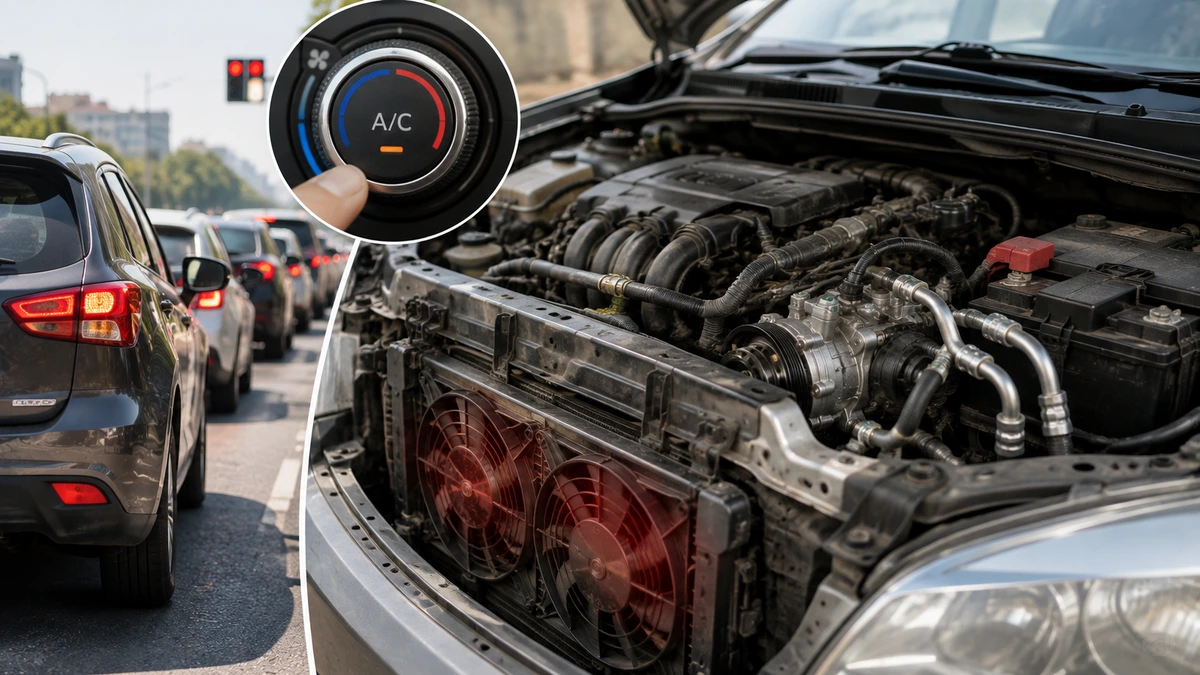
When a car AC stop cooling in traffic situation develops — cold and effective on the move but blowing warm or mildly cool air the moment the vehicle slows to a standstill — is one of the most specific and most diagnosable fault patterns the AC system produces. The traffic-specific character of this fault is the single most useful piece of diagnostic information: it tells you exactly which components the AC system depends on when natural airflow disappears, and which of them are failing.
At Rapid Rev Garage in Al Quoz, our car AC repair team diagnoses every car AC stop cooling in traffic complaint with a condenser fan output test, system pressure measurement at idle, and a condenser inspection — confirming the cause before any part is recommended for replacement.
Car AC Stop Cooling in Traffic — Quick Verdict
When a car AC stops cooling in traffic, the cause is almost always one of four things: the condenser cooling fan is weak or failed — removing the airflow that moving speed normally provides; the refrigerant charge is too low to maintain adequate system pressure at the compressor’s lower idle speed; the condenser fins are blocked with Al Quoz dust reducing heat rejection capacity precisely when airflow is most limited; or the compressor’s variable displacement control is failing to increase output at idle to compensate for reduced vehicle speed. At speed, natural airflow through the front grille supplements or replaces the cooling fan’s function. At a standstill in Dubai’s traffic, that natural airflow drops to zero — and any weakness in the fan, the refrigerant charge, or the condenser’s ability to reject heat becomes immediately apparent.
Table of Contents
- Why Traffic Exposes AC System Weakness Specifically
- The Cooling Fan — When It Fails, Traffic Cooling Fails
- Low Refrigerant and Its Traffic-Specific Effect
- Blocked Condenser Fins — The Dubai Dust Problem
- Compressor Behaviour at Idle
- How Dubai’s Summer Removes Every Thermal Margin
- How We Confirm the Exact Fault at Rapid Rev Garage
- The Right Fix for Each Confirmed Cause
- What Happens If This Is Left Without Repair
- Is It Safe to Keep Using the Car?
- How Long the Repair Takes
- What the Repair Costs in Dubai
- Preventing Traffic AC Failure in Dubai
- Why Rapid Rev Garage?
- FAQ
- Conclusion
Why Traffic Exposes AC System Weakness Specifically
The traffic-specific pattern of car AC stop cooling in traffic is more than a symptom — it is the diagnosis itself.
What the Moving Vehicle Provides
When the vehicle is moving at speed, air is forced through the front grille across the condenser at a rate that provides substantial cooling capacity. This natural airflow assists or replaces the electric cooling fan in rejecting heat from the refrigerant. At 60 km/h, the natural airflow across the condenser provides far more cooling capacity than the electric fan alone. At a standstill, natural airflow is zero — the condenser fan carries the full burden.
What Changes at a Standstill in Traffic
The moment the vehicle stops in traffic, the AC system loses the natural airflow that was supplementing or masking any weakness in the fan, the refrigerant charge, or the condenser’s heat rejection. A cooling fan running at 70% of its rated output, a refrigerant charge 10% below specification, or a condenser that is 30% blocked by dust — all of these are invisible at speed because natural airflow compensates. At a standstill in Business Bay summer traffic, the compensation disappears and the weakness is exposed.
The Cooling Fan — When It Fails, Traffic Cooling Fails
The electric condenser cooling fan is the component most directly responsible for traffic-specific AC failure.
How a Partial Fan Failure Produces This Exact Pattern
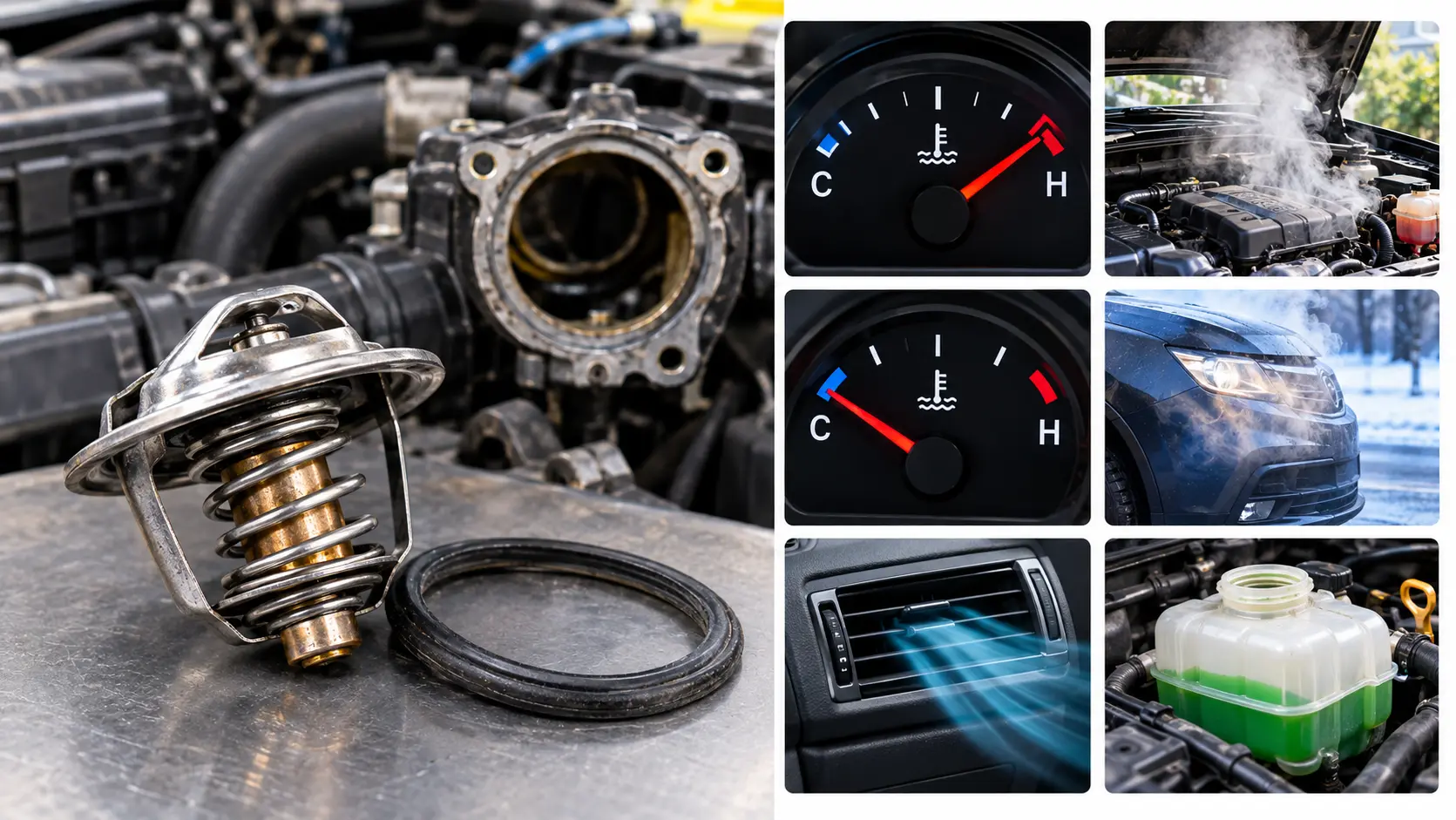
A cooling fan fault is the primary cause when a car AC stop cooling in traffic complaint appears — a motor running at reduced speed — from a worn motor winding, a failing relay that provides reduced voltage, or a temperature switch that activates late — delivers less airflow across the condenser than a fully functioning fan. At speed, the natural airflow compensates and the AC cools adequately. The moment the car stops and natural airflow drops to zero, the reduced fan output is suddenly the entire condenser cooling mechanism — and it is insufficient.
Why the Pattern Returns Every Time the Car Stops
The repeatability of the pattern — cooling improves every time the car moves and deteriorates every time it stops — is the strongest indicator that the fan is the primary cause rather than a refrigerant issue, which would produce more variable cooling regardless of speed. A speed-dependent pattern this consistent almost always points to the fan or condenser airflow as the primary fault.
Fan Relay and Temperature Switch Assessment
A cooling fan that activates at too high a temperature — from a faulty temperature switch — allows the system pressure to rise before the fan is called. In Dubai’s summer, where ambient temperatures are already high, this delayed activation reduces the fan’s cooling contribution at exactly the most critical condition — stopped in traffic. Our car mechanic team tests fan activation temperature and output speed as the first physical check on every car AC stop cooling in traffic complaint.
Low Refrigerant and Its Traffic-Specific Effect
A system with a refrigerant charge below specification has reduced heat carrying capacity — and this reduction becomes most visible at the low compressor speeds of idle.
Why Idle Makes Low Charge More Noticeable
The AC compressor runs at engine speed — at idle, it rotates more slowly than at highway speed and circulates refrigerant at a lower rate. A system with a full refrigerant charge produces adequate cooling at idle compressor speed. A system with a marginal charge that cools adequately at higher compressor speed may drop below the threshold for effective cooling at idle speed — producing the traffic-specific cooling reduction the driver notices.
The Gradual Nature of Refrigerant Loss
AC systems that have slow leaks lose refrigerant gradually — a system that is 15% below specification this month may have been barely below specification three months ago. The driver may not have noticed any cooling reduction at speed because the higher compressor speed compensated. As the charge drops further, the traffic-specific pattern becomes more pronounced. Finding and sealing the leak before recharging is the repair that prevents this pattern from returning within weeks.
Blocked Condenser Fins — The Dubai Dust Problem
The condenser’s ability to reject heat depends on clean fins with adequate airflow across them. In Dubai’s environment — particularly for vehicles driven in Al Quoz and other industrial areas — fin blockage develops at a rate that meaningfully reduces heat rejection capacity.
How Fin Blockage Creates Traffic-Specific Failure
A condenser with 30–40% of its fin area blocked by compacted dust rejects less heat per unit of airflow. At speed, sufficient airflow passes through the remaining clear fin area to maintain adequate heat rejection. At a standstill, where total airflow is already limited to fan output only, the reduced fin area is no longer sufficient to reject the heat the refrigerant is carrying. The result is rising system pressure at idle — and the pressure-actuated clutch disengages or the cabin temperature rises as the system cannot maintain cooling.
External vs Internal Blockage
The most common blockage in Dubai is external — dust compacted into the fin gaps from the front. This is cleaned with a gentle pressure wash from the rear face of the condenser, pushing debris forward and out. Internal scale blockage from degraded coolant shared in combined radiator-condenser assemblies is a separate issue that requires chemical treatment or replacement. Our car service packages include a condenser external fin inspection at every major service.
Compressor Behaviour at Idle
On vehicles with variable displacement compressors — which includes most modern vehicles — the compressor adjusts its displacement to match the cooling demand. A compressor with a failing displacement control valve may not increase its output at idle to compensate for the reduced vehicle speed and natural airflow.
The Idle-Specific Compressor Test
Measuring high-side pressure at idle and at elevated RPM (2,000 RPM) identifies whether the compressor is responding correctly to the change in demand. A correctly functioning variable displacement compressor produces higher high-side pressure at idle — working harder to compensate for reduced natural airflow. A compressor that maintains the same pressure at idle as at 2,000 RPM has a displacement control issue that is contributing to the traffic cooling failure.
How Dubai’s Summer Removes Every Thermal Margin
Dubai’s summer conditions are uniquely demanding — directly amplifying why a car AC stop cooling in traffic fault is so common here and specifically amplify the traffic-specific cooling failure.
Ambient Temperature Reduces Condenser Efficiency
The condenser rejects heat from the refrigerant into the surrounding air. At 45°C ambient, the temperature difference between the hot refrigerant and the surrounding air is smaller than at 25°C ambient — meaning the condenser must work harder to reject the same amount of heat. Any reduction in condenser efficiency — from dust blockage or reduced fan output — has a proportionally larger effect at 45°C ambient than at 25°C, because the baseline efficiency margin is already narrowed.
Underground Parking to Summer Sun Cycling
Dubai vehicles cycle between underground parking cool and peak summer road temperatures daily. Each cycle tests the AC system’s ability to handle the maximum thermal differential. A system with a marginal fan output or borderline refrigerant charge manages the moderate temperature of underground parking adequately — and is immediately exposed as insufficient when the vehicle emerges into full summer sun and stops in the first traffic jam. For any emergency related to AC failure in extreme heat, our roadside assistance covers Al Quoz and nearby Dubai areas.
How We Confirm the Exact Fault at Rapid Rev Garage
This section covers the key details for this topic.
Road Test to Confirm the Pattern
The AC is assessed at cruise speed and at idle — confirming the speed-dependent cooling pattern and measuring cabin temperature drop at both conditions. This confirms the fault is genuine traffic-specific rather than a general AC underperformance.
Fan Output Measurement at Idle
Fan activation temperature and output airflow are measured at operating temperature. A fan running at reduced output is identified — not just whether the fan is running, but whether it is running at its rated capacity.
System Pressure at Idle vs Elevated RPM
High and low side pressures at idle and at 2,000 RPM confirm refrigerant charge adequacy and compressor displacement response. The pressure pattern distinguishes a low-charge fault from a fan fault from a compressor control fault.
Condenser Inspection
Physical inspection of fin blockage with a torch from the rear face. A heavily blocked condenser is identified immediately and cleaned during the diagnostic visit.
The Right Fix for Each Confirmed Cause
This section covers the key details for this topic.
Cooling Fan Repair or Replacement
The specific failing component in the fan circuit — motor, relay, or temperature switch — is replaced. Fan output is confirmed at rated capacity after replacement. For exterior work needed alongside AC repairs, our car painting team handles colour-matched work at the same visit.
Refrigerant Leak Detection, Sealing, and Correct Recharge
The leak is confirmed by pressure testing and UV or electronic detection. The specific leak point is sealed. The system is recharged to the manufacturer-specified gram weight — not estimated by gauge reading. Post-recharge, system pressures at idle and at elevated RPM confirm correct operation.
Condenser Cleaning
External fin blockage is cleared with a pressure wash from the rear face of the condenser. Where the blockage is severe or includes insect nesting material in the fin gaps, a foam condenser cleaner is applied before washing. Post-cleaning, system pressures confirm the improvement in condenser heat rejection.
Compressor Displacement Control Valve Replacement
Where the compressor control valve is confirmed as the fault, replacement restores correct variable displacement operation. This is a targeted repair that avoids unnecessary full compressor replacement.
What Happens If This Is Left Without Repair
A car AC stop cooling in traffic fault that is accepted and driven through typically worsens progressively.
Low Refrigerant Damages the Compressor
A system that is low on refrigerant is also low on compressor oil — the oil circulates dissolved in the refrigerant. Continued operation with low refrigerant accelerates compressor bearing and piston wear. The traffic-specific cooling failure that could have been resolved with a leak seal and recharge becomes a compressor replacement requirement if the low-charge operation continues for months.
Blocked Condenser Accelerates Head Pressure Issues
A condenser running with significant fin blockage operates at higher head pressure than designed — stressing the compressor against this elevated pressure on every drive. The compressor’s service life is reduced by each high-head-pressure operating hour.
Is It Safe to Keep Using the Car?
The car is mechanically safe to drive with this fault — the AC performance issue does not affect engine safety or braking.
The Comfort and Health Consideration
In Dubai’s summer heat, a car AC that stops cooling in traffic produces cabin temperatures that are genuinely hazardous during extended stops — particularly for children and elderly passengers in the rear seat. This is not a fault to accept and manage through summer.
Book Within the Week
This fault worsens progressively in summer conditions and may prevent safe driving in peak heat within months of its onset. Book within the week — ideally before the peak summer period rather than during it. Our mobile car mechanic covers Al Quoz and nearby Dubai areas for on-site fan and pressure assessment.
How Long the Repair Takes
This section covers the key details for this topic.
Fan and Relay Work
Fan relay or motor replacement: one to three hours.
Refrigerant Service
Leak detection, sealing, and correct recharge: two to four hours depending on leak location.
Condenser Cleaning
30–60 minutes including post-cleaning pressure confirmation.
Compressor Control Valve
Two to three hours including post-replacement pressure assessment at idle and elevated RPM.
What the Repair Costs in Dubai
This section covers the key details for this topic.
Fan and Condenser Work
Fan relay replacement: AED 150–400. Fan motor or assembly replacement: AED 400–1,200 depending on vehicle. Condenser cleaning: AED 200–400.
Refrigerant Service
Leak detection and O-ring seal: AED 300–700. Full system refrigerant recharge R-134a: AED 250–500. R-1234yf recharge (newer vehicles): AED 400–800.
Compressor and Major Work
Compressor displacement control valve: AED 500–1,500. Full condenser replacement where cleaning is insufficient: AED 800–2,500. A written quote is confirmed after the diagnostic assessment. Our garage near me location in Al Quoz serves drivers from Business Bay, Jumeirah, Barsha, Satwa, Downtown, and the Sheikh Zayed Road corridor.
Preventing Traffic AC Failure in Dubai
This section covers the key details for this topic.
Annual Pre-Summer Fan Output Test
A fan output test before the summer peak — April at the latest — identifies a fan approaching end of life before the peak demand period exposes the failure. A fan replaced in April costs the same as one replaced in August but avoids a summer of inadequate traffic cooling.
Condenser Cleaning at Every Major Service
Condenser external fin inspection and cleaning where needed at every major service prevents the gradual blockage from reaching the threshold where it affects traffic cooling performance. Al Quoz vehicles particularly benefit from this given the industrial dust environment.
Why Rapid Rev Garage?
We diagnose car AC stop cooling in traffic by starting with the traffic-specific pattern — confirming it is speed-dependent before testing any component. A speed-dependent fault points to the fan, refrigerant charge, and condenser first — not to the compressor or evaporator that would produce cooling failure at all speeds. This pattern-first approach directs the diagnostic to the correct components immediately and prevents the expensive investigation of components that are unlikely to produce a traffic-only fault.
FAQ — Car AC Stop Cooling in Traffic
These are the questions most frequently asked about this fault.
Why does my car AC work fine on the highway but fail in traffic?
At highway speed, natural airflow through the front grille supplements the cooling fan. In traffic, this natural airflow drops to zero. Any weakness in the fan, refrigerant charge, or condenser heat rejection that was masked at speed is fully exposed when the car stops.
My AC was recharged recently — why is it still failing in traffic?
The recharge may have addressed the refrigerant level temporarily, but if the underlying leak was not found and sealed, the refrigerant has escaped again. Alternatively, if the fan or condenser is the actual cause, a refrigerant recharge has no effect on the traffic cooling fault.
Can I drive through summer with AC that only fails in traffic?
In the short term, carefully — but cabin temperatures during traffic stops in peak summer heat are a genuine health risk, particularly for children. Repair within the week rather than driving through summer with this fault.
How do I know if it's the fan or low refrigerant causing the problem?
A cooling fan fault produces the pattern every time the car stops, consistently. Low refrigerant produces a similar pattern but may be slightly more variable. The system pressure test at idle versus elevated RPM is the definitive distinction — and it takes under 10 minutes.
Does adding refrigerant fix traffic-specific AC failure?
Only if low refrigerant is the confirmed cause and the leak has been sealed. Adding refrigerant to a system with a failed cooling fan does not improve traffic cooling — because the fan is the component that provides condenser airflow at a standstill.
Conclusion
A car AC stop cooling in traffic in Dubai has a specific cause — almost always the cooling fan, low refrigerant, or a blocked condenser — and the traffic-specific pattern identifies which components to test first. Speed-dependent AC cooling failure is one of the most diagnosable AC faults because the pattern itself eliminates most of the system immediately. Rapid Rev Garage in Al Quoz confirms the traffic-specific pattern, tests fan output and system pressures, and inspects the condenser before recommending any repair.
Rapid Rev Garage is in Al Quoz, serving drivers across nearby Dubai areas — Business Bay, Jumeirah, Downtown, Barsha, Satwa, and the Sheikh Zayed Road corridor. Book your appointment on WhatsApp or find us on Google Maps.
Rapid Rev Garage — Car AC Stop Cooling in Traffic | Al Quoz, Dubai