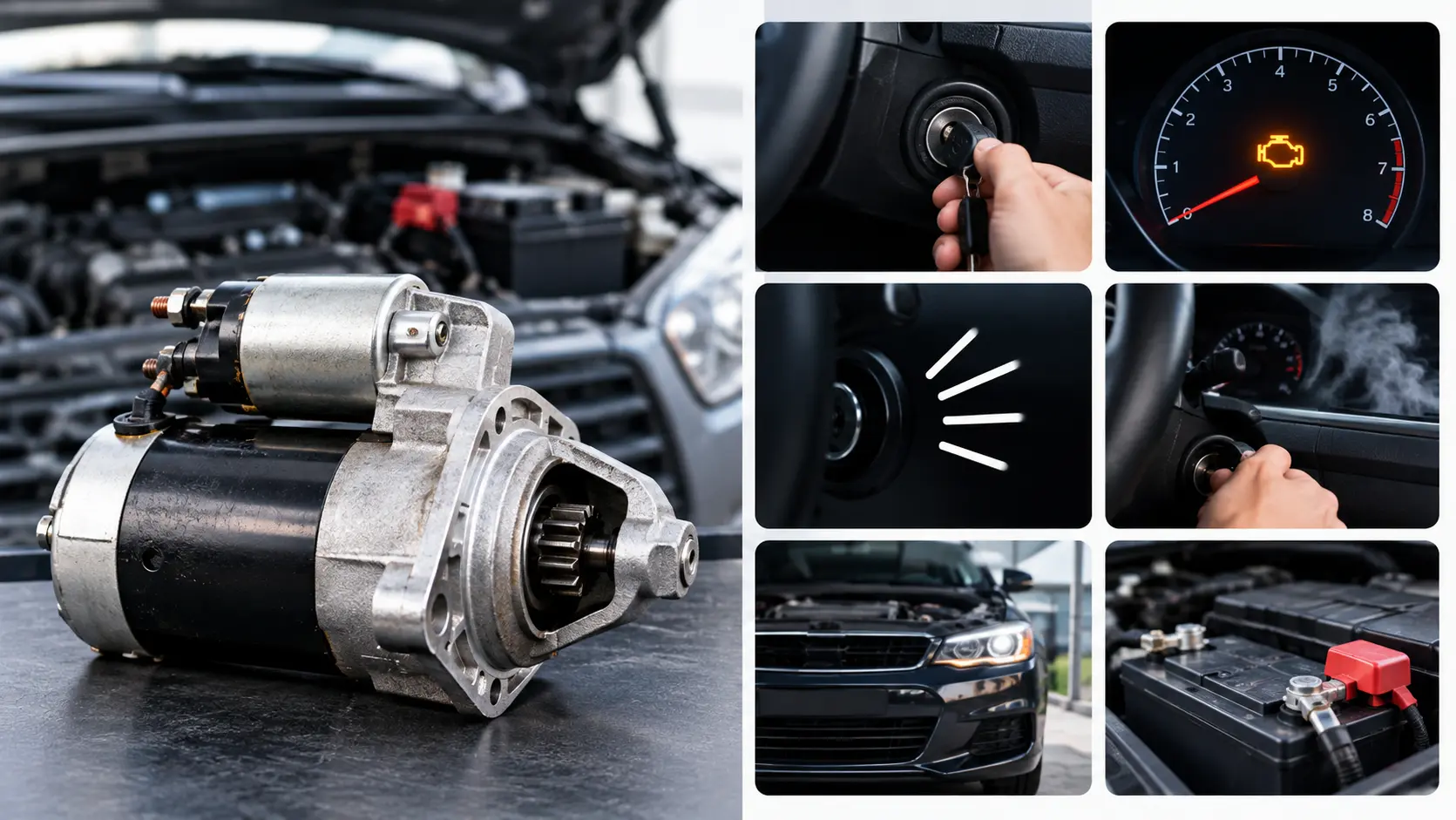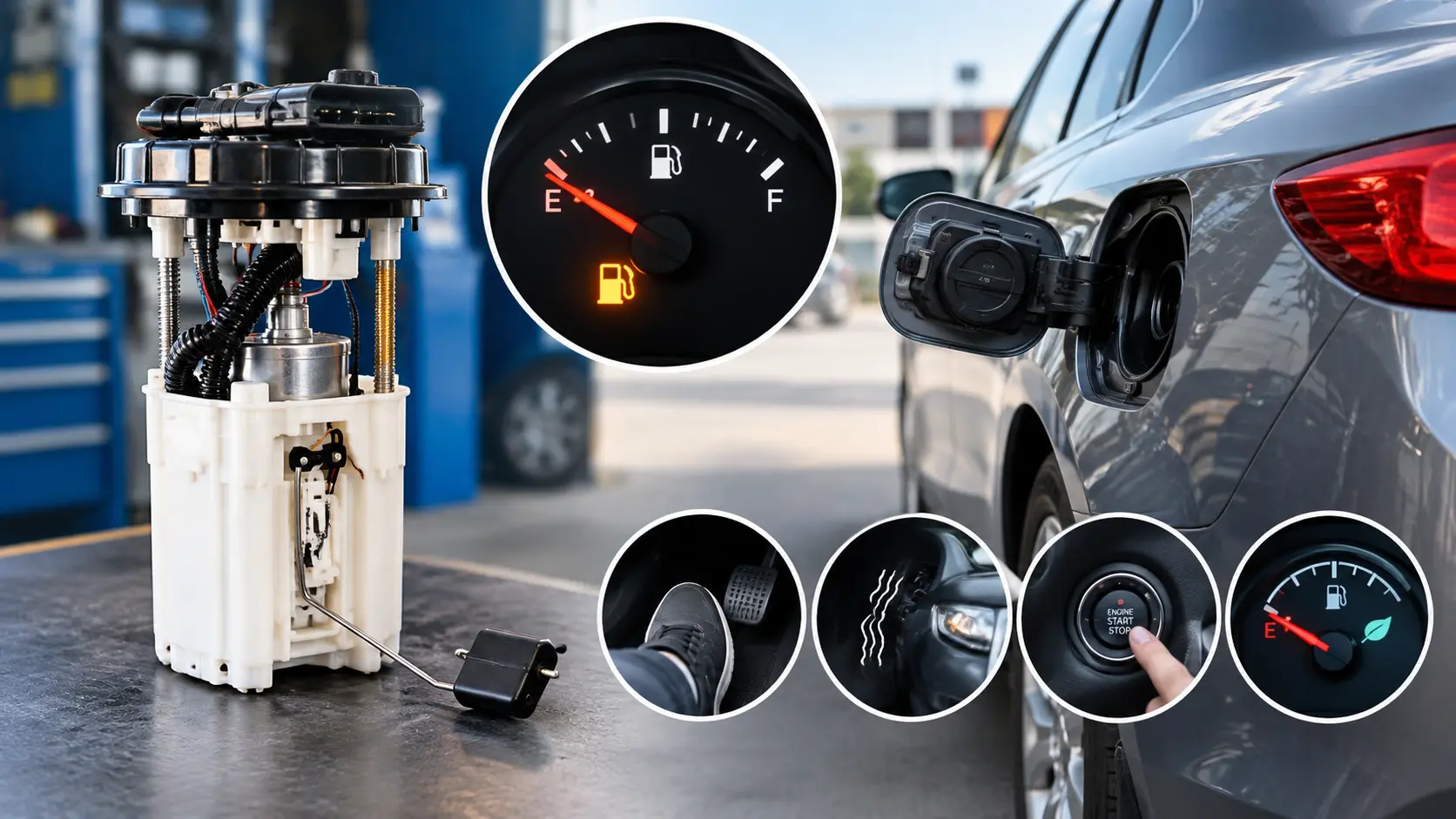
If your car needs multiple attempts to start, do not treat it as a normal starting habit. Repeated attempts can point to a weak battery or starter motor, low fuel pressure, a failing fuel pump check valve, a leaking injector, or a faulty crankshaft or camshaft sensor. Notice whether the engine cranks slowly, cranks normally but does not fire, or starts only when the engine is cold or warm. These details help identify the cause. In Dubai, extreme heat can make battery, electrical, fuel-system and sensor problems more noticeable. A professional diagnostic test is the safest way to find the real fault before the car eventually refuses to start.
Table of Contents
- Problem Overview
- Symptoms to Watch For
- Common Causes
- How the Problem Is Diagnosed
- Repair Process
- Risks of Ignoring the Problem
- Can You Continue Driving with a Car That Needs Multiple Attempts to Start?
- Repair Time
- Cost of Repair
- Cost Factors
- Prevention Tips
- Dubai-Specific Advice
- Why Choose Rapid Rev Garage for Car Starting Problems?
- FAQs
- Related Articles
- Relevant Service Page
- Final Thoughts and Call-to-Action
Problem Overview: Why Does a Car Need Several Attempts to Start?
A healthy petrol or diesel car should normally start within a few seconds after you turn the key or press the start button. If the car needs multiple attempts to start, something may be preventing the engine from receiving the correct combination of fuel, air, ignition and electrical power.
For example, a driver may notice that the car takes 2 to 3 tries to start every morning. Another driver may find that the vehicle starts normally when cold but struggles after a long drive.
These patterns matter.
A car whose engine turns over continuously without starting has a different diagnostic direction from a car whose starter barely turns the engine.
The first important question is:
Does the engine crank strongly but fail to start, or does it crank slowly?
That simple distinction can save diagnostic time and prevent unnecessary parts replacement.
Symptoms That Often Appear With Hard Starting
Look for the following warning signs:
- Car takes 2 to 3 tries to start
- Engine cranks for several seconds before firing
- Engine turns over continuously without starting
- Slow or weak cranking sound
- Clicking when pressing the start button
- Car starts normally in the morning but struggles when hot
- Hard start after driving long distance
- Engine hard to turn over when warm
- Car starts and then immediately stalls
- Rough idle immediately after starting
- Check engine light
- Car smells like gas after long start attempt
- Battery warning or electrical warning
- Fuel pump sounds unusual when ignition is switched on
- Starting problem becomes worse over several weeks
A useful practical tip is to record exactly when the problem happens. Does it occur after the car sits overnight, after refuelling, after a long drive, or only when the engine is hot? That information can be more useful than simply saying, “My car is hard to start.”
Common Causes of a Car That Needs Multiple Attempts to Start
1. Weak Battery
A weak battery may still turn the engine over, but it may not provide sufficient voltage during cranking.
Dubai’s high temperatures can place additional stress on automotive batteries. A battery that appears acceptable during a quick check may still perform poorly under starting load.
2. Weak or Failing Starter Motor
A starter motor converts electrical energy into the mechanical force needed to crank the engine.
If the starter motor spinning slow hard start is the pattern you notice, the starter deserves attention.
A weak starter motor drawing too many amps can cause slow cranking and voltage drop. The result may be a car that needs repeated attempts before starting.
3. Fuel Pressure Loss Overnight
One important cause of morning hard starting is fuel pressure that does not remain where it should after the engine is switched off.
This can involve:
- Fuel pump check valve
- Fuel pressure regulator
- Fuel line issue
- Injector leakage
The diagnostic clue is particularly strong when the vehicle struggles after sitting overnight but starts more easily after the first successful start.
Technicians may investigate fuel rail bleeding pressure overnight by checking how fuel pressure behaves after the engine is switched off.
4. Bad Fuel Pump Check Valve
A bad fuel pump check valve long crank can allow fuel pressure to fall after shutdown.
The engine may therefore need additional cranking before sufficient fuel pressure is restored.
This is one reason simply replacing the battery may not solve the problem.
5. Crankshaft Position Sensor
The crankshaft sensor helps the engine control system determine crankshaft position and speed.
A failing sensor may cause:
- Extended cranking
- Intermittent no-start
- Stalling
- Hard starting
- Starting problems when hot
If you notice crankshaft sensor extended cranking time, professional testing is recommended rather than replacing the sensor based only on symptoms.
6. Camshaft Position Sensor
A faulty camshaft sensor can interfere with engine timing information.
A common clue is bad cam sensor hard start when hot, although the exact symptoms depend on the vehicle’s engine management system.
7. Leaking Fuel Injector
A leaking injector can disturb the air-fuel mixture.
A leaking injector hard start cold may cause extended cranking, rough running or a fuel smell.
If the car smells like gas after long start attempt, do not ignore it. Excess fuel may be entering the engine, or fuel may be leaking externally. Both situations deserve inspection.
8. Ignition System Problems
Petrol engines need a strong spark at the correct time.
Possible causes include:
- Worn spark plugs
- Weak ignition coils
- Damaged ignition wiring
- Electrical connection problems
A weak ignition system can produce longer cranking, misfires or rough starts.
9. Air and Throttle Problems
A dirty throttle body, air-flow problem or intake leak can affect the mixture required for starting.
This is less obvious than a dead battery but can produce repeated starting attempts.
How a Professional Diagnostic Process Works
A proper diagnosis should follow evidence rather than guesswork.
Step 1: Confirm the Starting Pattern
The technician asks:
- Does it happen cold or hot?
- Does it happen after sitting overnight?
- How many attempts are normally required?
- Does the starter crank slowly or normally?
- Does the car eventually start and run normally?
Step 2: Battery and Starting-System Test
The battery is tested under load, while starter operation and voltage drop are checked.
This helps separate a battery problem from a starter motor problem.
Step 3: Scan the Vehicle
Modern vehicles can store diagnostic trouble codes relating to crankshaft sensors, camshaft sensors, fuel systems and other engine-control components.
However, a scan code does not automatically mean that the named part is defective. Live data and physical testing are still important.
Step 4: Check Fuel Pressure
The technician checks whether the fuel system reaches the required pressure and whether pressure holds after shutdown.
This can reveal fuel pump, regulator, injector or check-valve problems.
Step 5: Check Ignition and Engine Data
Spark, injector operation, crankshaft/camshaft signals and relevant live data can be checked.
Step 6: Verify the Repair
After the repair, the vehicle should be started repeatedly under the conditions that originally caused the problem.
This final step is important because a car that starts once after repair is not necessarily fully fixed.
Repair Process: What Usually Needs to Be Fixed?
The repair depends entirely on the confirmed cause.
| Confirmed Problem | Typical Repair |
|---|---|
| Weak battery | Battery replacement |
| Failing starter | Starter motor repair/replacement |
| Fuel pressure loss | Fuel-system testing and faulty component repair |
| Bad fuel pump check valve | Fuel pump/check-valve repair as applicable |
| Crankshaft sensor fault | Sensor replacement and system verification |
| Camshaft sensor fault | Sensor replacement and relearn if required |
| Leaking injector | Injector testing, cleaning or replacement |
| Worn spark plugs | Spark plug replacement |
| Ignition coil problem | Faulty coil replacement |
| Throttle/intake issue | Cleaning, leak repair or component replacement |
The key point is simple: do not replace the fuel pump, starter, battery or sensors just because one of them is a common cause. Test first.
Risks of Ignoring a Car That Needs Multiple Starting Attempts
A starting problem often becomes progressively less convenient and more expensive.
Repeatedly ignoring it can lead to:
- Complete no-start condition
- Being stranded at work or home
- Premature starter wear
- Battery discharge
- Fuel-system damage becoming more serious
- Increased risk of catalytic-converter damage if the engine is repeatedly flooded or misfiring
- Difficulty starting in traffic or remote areas
- Higher repair costs if the original fault causes secondary problems
If you already need several attempts every day, waiting for the car to “fix itself” is not a good strategy.
Can You Continue Driving with a Car That Needs Multiple Attempts to Start?
You may be able to drive the vehicle temporarily if it starts reliably and runs normally, but continued driving is not recommended until the cause is identified.
The risk is that the problem can change from hard starting to complete no-start without much warning.
Do not continue driving if the car:
- Stalls while driving
- Smells strongly of fuel
- Shows severe engine misfire
- Has smoke or unusual engine noises
- Has an overheating warning
- Loses electrical power
- Will not start consistently
In those situations, arrange professional roadside assistance rather than repeatedly trying to start the vehicle.
How Long Does This Repair Take?
Repair time depends on the cause.
| Problem | Approximate Time |
| Battery test/replacement | 15–45 minutes |
| Starter diagnosis | 30–90 minutes |
| Starter replacement | 1–3 hours |
| Sensor diagnosis/replacement | 1–3 hours |
| Fuel pressure diagnosis | 1–2 hours |
| Fuel pump replacement | 2–5+ hours |
| Injector testing | 1–3 hours |
| Injector replacement | 2–5+ hours |
| Complex intermittent fault | Several hours or longer |
These are general workshop estimates, not guaranteed times. Vehicle design and access to components can make a major difference.
How Much Does It Cost to Repair a Car That Needs Multiple Attempts to Start in Dubai?
The price can range from a relatively small electrical repair to a much larger fuel-system or engine-management repair.
Estimated Dubai Independent-Workshop Cost Guide
| Repair Type | Typical Estimated Range |
| Battery-related repair/replacement | AED 250–700+ |
| Starter-related repair | AED 350–1,500+ |
| Crank/cam sensor repair | AED 300–1,200+ |
| Fuel-pressure diagnosis | AED 200–500+ |
| Fuel pump replacement | AED 600–2,500+ |
| Injector service/replacement | AED 300–2,500+ |
| Electrical/wiring diagnosis | AED 250–1,000+ |
| Complex starting-system repair | AED 800–3,000+ |
*These are estimated ranges, not fixed Rapid Rev Garage prices. The actual cost depends on the vehicle, part brand, labour time, fault complexity and whether OEM/OE-equivalent parts are used.
A proper diagnostic inspection is usually more economical than replacing several parts through trial and error.
What Factors Affect the Repair Cost?
The final price can change based on:
- Car make and model – Luxury and European vehicles can have higher parts and labour costs.
- Fault location – A simple sensor is usually cheaper than an inaccessible fuel pump.
- Part quality – OEM and OE-equivalent components cost more than low-quality alternatives.
- Diagnostic complexity – Intermittent faults may require additional testing.
- Labour access – Some components require substantial disassembly.
- Additional damage – A neglected starting problem may involve more than one failed component.
How to Prevent Repeated Starting Problems
Use this simple checklist:
Starting-System Checklist
- ✅ Check battery condition regularly.
- ✅ Do not ignore slow cranking.
- ✅ Replace worn spark plugs according to the manufacturer’s schedule.
- ✅ Keep fuel-system maintenance up to date.
- ✅ Pay attention to unusual fuel smells.
- ✅ Investigate check-engine lights promptly.
- ✅ Do not repeatedly crank the engine for long periods.
- ✅ Have intermittent starting problems diagnosed early.
- ✅ Use the correct engine oil and service intervals.
- ✅ Have the charging system checked if the battery repeatedly becomes weak.
A useful rule is:
If the starting behavior has changed, investigate the change rather than waiting for a complete failure.
Dubai-Specific Advice for Hard Starting Problems
Dubai’s climate changes the way drivers experience vehicle problems. High ambient temperatures and prolonged exposure to heat can make marginal batteries, electrical connections and sensors more likely to show symptoms.
Drivers should be particularly alert if the problem appears:
- After parking outside for several hours
- After long-distance driving
- In heavy Dubai traffic
- After the engine becomes fully warm
- After the car sits overnight
- When the vehicle has been parked for several days
For example, hard start after driving long distance may point the diagnostic process toward heat-sensitive electrical or fuel-system components.
Likewise, if the engine hard to turn over when warm, the starter, battery, cables and engine mechanical condition should be considered rather than assuming it is only a fuel problem.
If your car stops starting in a shopping-centre car park, residential area or roadside location, a mobile mechanic or roadside assistance service can be more convenient than attempting repeated starts.
Rapid Rev Garage operates from Al Quoz and states that it provides mobile mechanic services across Dubai as well as 24/7 emergency assistance.
Why Choose Rapid Rev Garage for Car Starting Problems?
When your car needs multiple attempts to start, the priority should be accurate diagnosis rather than guessing which component to replace.
Rapid Rev Garage in Al Quoz provides computerized diagnostics and mechanical repair for different makes and models. Its service offering includes engine repair, car mechanics, mobile car mechanics and roadside assistance.
The garage also states that its diagnostic approach uses modern equipment and that technicians can perform mobile scanning when customers cannot easily bring the vehicle to the workshop.
For a starting problem, the practical advantage is having the battery, starter, fuel system, sensors and engine-management system considered together instead of treating each symptom separately.
If you are searching for the best starter motor and fuel pump mechanic, the right choice is a workshop that diagnoses the cause before recommending the replacement part.
FAQs
Why does my car take multiple tries to start?
Common causes include weak battery power, a starter motor problem, low fuel pressure, a failing fuel pump check valve, a leaking injector, or a crankshaft/camshaft sensor fault. A diagnostic test is needed to identify the exact cause.
Why is my car turning over several times before starting?
This usually means the engine is cranking, but ignition, fuel pressure, engine timing information or another starting requirement is not being achieved quickly enough.
Why does my car click multiple times when I try to start it?
Multiple clicks often point toward low battery voltage, poor battery-terminal connection, or a starter/solenoid problem. A battery load test and starting-system inspection can separate these causes.
What happens if you try to start your car too many times?
Repeated long attempts can drain the battery and put extra load on the starter motor. On some petrol engines, repeated unsuccessful starts can also introduce excess fuel into the engine.
Is it normal for a car to take 2 or 3 attempts to start?
No. An occasional delayed start can happen, but if the car takes 2 to 3 tries to start repeatedly, it should be diagnosed.
Why does my car start normally when cold but struggle when hot?
Heat-sensitive sensors, starter-motor problems, fuel-pressure issues and electrical faults can cause hot-start problems. A bad cam sensor hard start when hot is one possible pattern, but testing is needed before replacing a sensor.
Why does my car take longer to start after sitting overnight?
Fuel pressure bleeding down after shutdown can be a major possibility. A technician may test for fuel rail bleeding pressure overnight, along with the fuel pump, check valve, regulator and injectors.
Can a bad fuel pump cause multiple starting attempts?
Yes. A weak fuel pump or failing check valve can cause low or delayed fuel pressure, resulting in extended cranking before the engine starts.
Can a bad crankshaft sensor cause hard starting?
Yes. A failing crankshaft sensor can interfere with the engine-control system's ability to determine crankshaft position and speed, potentially causing extended cranking or intermittent no-start conditions.
Why does my car smell like petrol after trying to start it?
A fuel smell after repeated starting attempts may indicate excess fuel entering the engine or a fuel leak. A strong fuel smell should not be ignored because fuel leakage can create a safety risk.
Should I replace the battery if my car needs several attempts to start?
Not automatically. The battery should be load-tested and the starter's electrical draw checked first. A healthy-looking battery does not rule out a starter, cable, charging or fuel-system problem.
When should I call a mechanic for repeated starting problems?
If the issue happens repeatedly, becomes worse, occurs when the engine is hot, or leaves you needing multiple attempts every day, arrange a professional inspection. If the vehicle will not start, a mobile mechanic or roadside assistance can be the safer option.
Can Rapid Rev Garage diagnose a car that struggles to start?
Yes. Rapid Rev Garage provides computerized diagnostics, engine diagnostics and mobile mechanic services in Dubai. Its workshop is located in Al Quoz, and its website states that mobile diagnostic support is available for customers who cannot bring their vehicle to the workshop.
How much does it cost to diagnose a starting problem in Dubai?
The cost depends on the depth of testing and vehicle. A basic scan may be relatively quick, while intermittent fuel, electrical or sensor faults require additional testing. Rapid Rev Garage states that its diagnostic services are priced according to the vehicle and complexity of the problem rather than using one universal repair price.
Why does my car struggle to start after a long drive?
A heat-sensitive starter, sensor, fuel-pressure issue or electrical fault can cause this pattern. The technician should reproduce the problem while the engine is hot.
Why does my car crank but not start?
The engine may be receiving insufficient fuel, spark or correct engine-position information. Battery and starter operation should also be checked.
Why does my car start after waiting for a few minutes?
An intermittent electrical, sensor or fuel-system fault may temporarily recover after the vehicle cools or fuel pressure changes.
Can a weak starter drain the battery?
Yes. A starter that draws excessive current can place significant demand on the battery and electrical system.
Is hard starting a sign of engine failure?
Not necessarily. Many hard-start problems are caused by relatively replaceable components such as batteries, starters, sensors, injectors or fuel-system components. Proper diagnosis is essential before assuming major engine damage.
Is it safe to drive a car that is difficult to start?
If it starts and runs normally, a short trip to a repair workshop may be possible, but there is a risk of a no-start condition. If it stalls, smells strongly of fuel or shows other serious symptoms, arrange professional assistance instead.
Related Articles
For drivers researching related starting, electrical and mechanical problems, useful topics include:
- 7 Hidden Car Problems Most Drivers Ignore Completely
- Why Your Car Seat Vibrates While Driving and How to Fix It?
- Why Is My Check Engine Light Flashing? What To Do Now
- Is It Safe to Drive With a Burning Rubber Smell From Car?
- 15 Signs Your Engine Needs Repair
Relevant Service Page
For a starting problem that requires professional inspection, Rapid Rev Garage’s car mechanic service is relevant for mechanical diagnosis and repair in Dubai. The company states that its Al Quoz technicians handle battery checks, engine services and complex diagnostics for different makes and models.
Rapid Rev Garage – Car Mechanic Near Me in Dubai
For more complex engine-related starting faults, Rapid Rev Garage also provides engine repair services in Al Quoz with diagnostic testing and repairs for different vehicle types.
Rapid Rev Garage – Engine Repair in Dubai
Conclusion
A car needs multiple attempts to start for a reason. It may be something simple, such as a weak battery, or it may involve the starter motor, fuel pressure, injectors, crankshaft sensor, camshaft sensor or another engine-management component.
The important thing is to identify the pattern early.
If your car takes two or three attempts every morning, cranks for a long time after sitting overnight, struggles after a long drive, or clicks repeatedly when you press the start button, do not keep guessing and replacing parts.
Get the starting system properly diagnosed.
If you’re in Dubai and need a ‘garage near me‘, or ‘mechanic near me‘ for a vehicle that has already stopped starting, Rapid Rev Garage in Al Quoz offers workshop diagnostics, mobile mechanic support and 24/7 emergency assistance.
Book a diagnostic inspection with Rapid Rev Garage and find out why your car is taking multiple attempts to start before a small starting problem becomes a complete breakdown.
You can also visit us at our Al Quoz, Dubai branch,
Rapid Rev Garage: https://maps.app.goo.gl/wjK13vovXTKx5SsH8