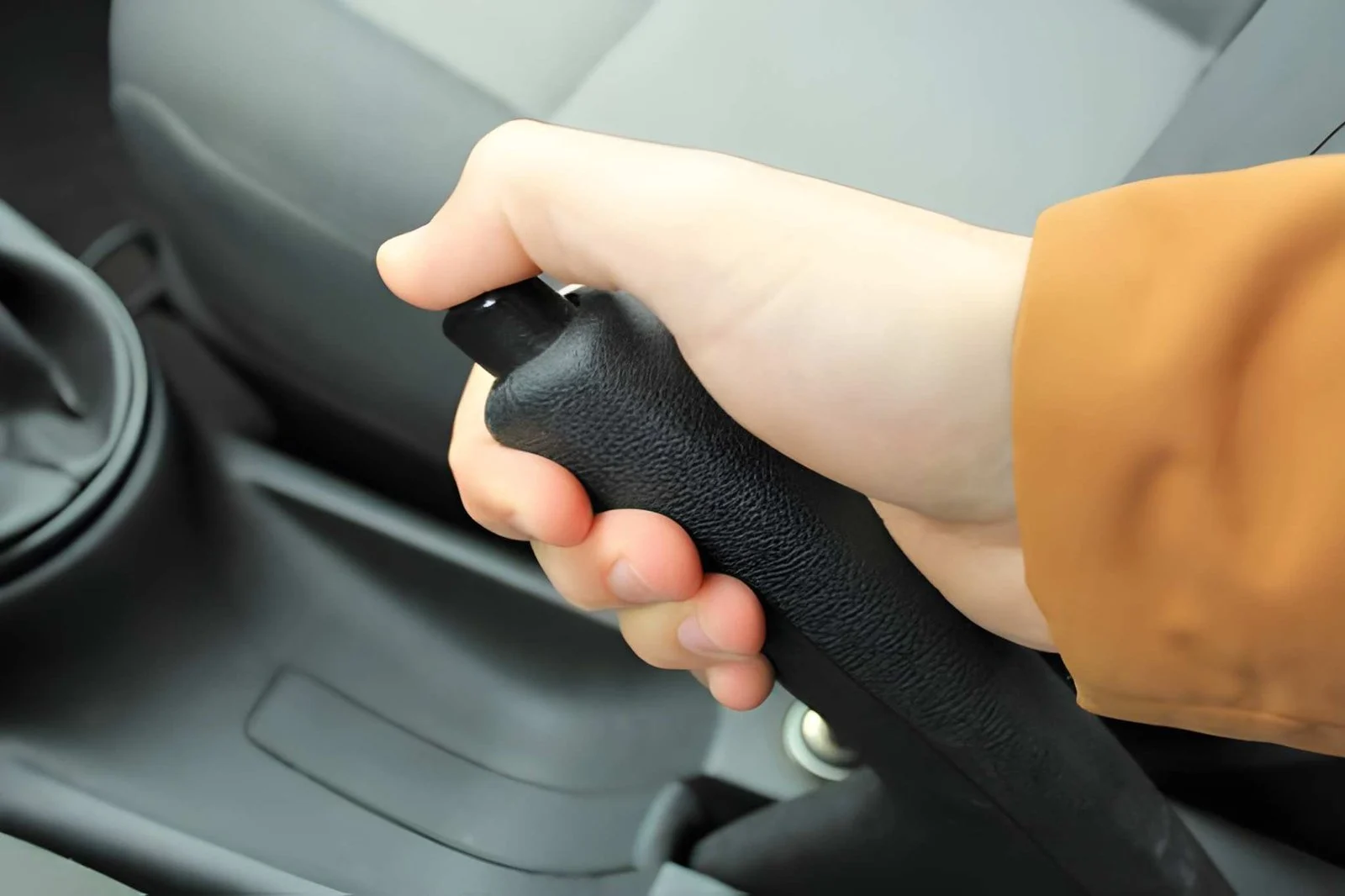
When a car rolls even with handbrake applied — the vehicle creeps forward or backward with the handbrake fully pulled — is a safety fault, not a minor inconvenience. A handbrake that doesn’t hold means the car can move whenever it is parked on any incline.
In Dubai, a car rolls even with handbrake applied situation matters more than in most flat cities. Underground car park ramps, the slopes on Sheikh Zayed Road access roads, and the parking areas in Jumeirah’s hilly residential sections all involve inclined surfaces where a handbrake that doesn’t hold will let the car roll.
At Rapid Rev Garage in Al Quoz, every car rolls even with handbrake applied fault is treated as a safety priority. The cause is specific in every case — and the repair is always clearly defined.
Car Rolls Even With Handbrake Applied — Quick Answer
A car rolls even with the handbrake applied because the handbrake mechanism is not clamping the rear brakes with sufficient force to hold the vehicle stationary. The most common causes are stretched or snapped handbrake cables that cannot transmit full lever force to the rear brakes, worn rear brake pads or shoes where the friction material has worn to the point where full clamping cannot hold the vehicle, a seized or corroded cable that moves partially but not fully, a rear caliper or drum wheel cylinder that is not engaging under handbrake operation, or an incorrect handbrake adjustment where the mechanism was never properly set up. In Dubai, cable corrosion and rear pad wear are the most frequent causes of a car rolls even with handbrake applied fault — heat accelerates both significantly.
Table of Contents
- How the Handbrake System Actually Works
- Stretched or Snapped Handbrake Cable
- Worn Rear Brake Pads or Drum Shoes
- Seized or Corroded Handbrake Cable
- Rear Caliper Handbrake Mechanism Fault
- Incorrect Handbrake Adjustment
- Electronic Handbrake Faults on Modern Vehicles
- How Dubai’s Heat Degrades Every Handbrake Component
- How We Diagnose Car Rolls Even With Handbrake Applied
- The Services That Fix Each Confirmed Cause
- What Does the Repair Cost in Dubai?
- Immediate Steps If the Car Is Rolling
- Why Rapid Rev Garage?
- FAQ
- Conclusion
How the Handbrake System Actually Works
On most vehicles, the handbrake — also called the parking brake — operates independently of the main hydraulic brake system. It uses a mechanical cable that runs from the lever inside the car to the rear brakes.
On drum brake rear axles, the cable pulls a lever that expands the brake shoes against the drum. On disc brake rear axles, the cable either pulls a secondary mechanical caliper mechanism inside the rear caliper piston, or — on electronic parking brake systems — a motor drives the caliper piston directly.
The handbrake holds the car stationary — when a car rolls even with handbrake applied situation develops, this clamping has failed with enough force to resist the vehicle’s weight on any expected incline. When it fails to hold, the clamping force is insufficient for the weight and gradient combination.
Understanding the system type — drum, mechanical disc, or electronic — determines which component to investigate first. Our car mechanic team identifies the system type before any investigation begins, since each type has a completely different fault path.
Stretched or Snapped Handbrake Cable
The handbrake cable runs from the lever through a conduit to the rear brake mechanism. It is under tension every time the handbrake is applied. Over years of use, the cable stretches — the inner wire elongates within its conduit, reducing the pull force that reaches the rear brakes.
A stretched cable produces a handbrake lever that travels further than normal before engagement and produces less clamping force at full travel. The driver applies the handbrake fully — the lever reaches its stop — but the cable’s reduced travel at the brake end doesn’t apply sufficient force to hold the vehicle on an incline.
In Dubai’s heat, cable stretch is accelerated. The cable passes through an aluminium or steel conduit that expands and contracts with temperature cycles. This thermal cycling fatigues the cable wire over time, increasing stretch rate. A cable that was correctly adjusted two years ago may be significantly stretched by year four in Dubai’s conditions.
A snapped cable produces a handbrake lever that pulls to its full extent with almost no resistance — the cable tension is gone. The car immediately rolls when placed on an incline.
Worn Rear Brake Pads or Drum Shoes
For the handbrake to hold the vehicle, the rear brake friction material must have sufficient thickness to generate the required clamping force against the disc or drum surface.
Rear brake pads that are heavily worn — below 3mm — cannot generate the friction force needed to hold the vehicle on a significant incline even with the full cable travel applied. The pads clamp against the disc, but the reduced friction material provides insufficient grip.
On drum brake systems, worn brake shoes produce the same result — insufficient friction surface to hold the vehicle stationary. Drum shoes also develop glazing over time, where the friction material surface hardens and loses its coefficient of friction even before the material is completely worn.
This cause of car rolls even with handbrake applied is confirmed when the main hydraulic brakes are adequate but the handbrake specifically has reduced holding power. The handbrake uses only the rear brakes — if the rear pads are worn while the fronts are adequate, the main brakes feel normal but the handbrake cannot hold. For any roadside emergency from a handbrake failure on a slope, our roadside assistance team covers Al Quoz and nearby Dubai areas at any time.
Seized or Corroded Handbrake Cable
A handbrake cable that is seized — where the inner wire cannot move freely within its conduit — transmits partial force to the rear brakes. The lever moves, but only part of the movement reaches the brake.
In Dubai, cable seizure happens from a combination of moisture exposure — during the inter-season high-humidity months — and salt air near coastal areas. The cable conduit traps moisture that causes the inner wire to corrode. The corrosion produces friction between the wire and the conduit walls that prevents free movement.
A seized cable is often identified by the handbrake lever returning very slowly or not fully after being released — the seized cable resists the return spring tension. In severe cases, the lever stays partially raised because the cable is locked in tension.
Rear Caliper Handbrake Mechanism Fault
On vehicles with disc brakes at all four corners, the rear caliper has a secondary mechanism specifically for the parking brake. This is a screw-type mechanism inside the caliper that pushes the piston when the cable is pulled — independent of the hydraulic circuit.
This mechanism has its own wear patterns. The screw thread that drives the piston can corrode or seize — preventing the piston from moving under handbrake application even when the cable itself is functional. The caliper may be providing full hydraulic braking under pedal application while the mechanical parking brake mechanism inside it is completely inoperative.
This fault produces a car rolls even with handbrake applied situation where the cable pull is correct, the lever travel is normal, but no clamping is occurring at the rear because the caliper’s mechanical mechanism has failed. The caliper is rebuilt with a new mechanism or replaced as a unit. Our car service packages include a handbrake holding test and rear caliper mechanism check at every major service.
Incorrect Handbrake Adjustment
The handbrake cable system has an adjustment point — either a threaded adjuster on the cable itself or a self-adjusting mechanism built into the rear brake. If the adjustment is insufficient — because the cable was never correctly set up after a brake service, or because the self-adjuster has failed — the cable doesn’t travel far enough to apply full clamping force.
Incorrect adjustment is common after a rear brake service where the technician did not correctly set the handbrake adjustment before returning the vehicle. The hydraulic brakes work normally — the hydraulic system is separate. But the handbrake has insufficient cable travel to hold the vehicle.
The handbrake adjustment test: with the vehicle on level ground, apply the handbrake fully and count the number of clicks before it is fully engaged. For most vehicles, correct adjustment is three to five clicks to full engagement. More than seven or eight clicks confirms insufficient adjustment — the cable is either stretched or incorrectly set.
Electronic Handbrake Faults on Modern Vehicles
On vehicles with an electronic parking brake — a switch rather than a mechanical lever — the system uses an electric motor at each rear caliper to apply clamping force.
An electronic parking brake that doesn’t hold may have a motor that has failed to apply full clamping force, a control module fault preventing the full apply command, or a fault in the caliper mechanism that the motor drives.
Electronic parking brake faults are confirmed by a diagnostic scan reading the parking brake module’s fault codes and the motor current draw during apply. A motor drawing below-rated current is not producing full clamping force. A module fault code identifies the electronic cause.
How Dubai’s Heat Degrades Every Handbrake Component
Every component in the handbrake system is affected by Dubai’s sustained heat.
Cable. Heat cycles expand and contract the cable and conduit repeatedly — accelerating stretch and fretting corrosion inside the conduit.
Drum shoe friction material. Heat from Dubai’s braking frequency — stop-start traffic — glazes drum shoe surfaces faster. Once glazed, the shoe produces less friction even at full application.
Rear caliper seal. The caliper’s internal rubber seals degrade from heat, allowing the parking brake screw mechanism to corrode internally.
Adjustment mechanism. Self-adjusting mechanisms depend on a spring-loaded ratchet that can seize in high-heat, high-humidity conditions — locking the adjustment at an incorrect position.
How We Diagnose Car Rolls Even With Handbrake Applied
Lever travel and click count. The handbrake lever is applied and the number of clicks to full engagement is counted. More than seven clicks confirms insufficient cable travel — either stretch or incorrect adjustment.
Hill hold test. The vehicle is placed on the workshop ramp at a specific gradient and the handbrake applied. Confirmation that the vehicle rolls identifies that the holding force is insufficient for the gradient.
Cable pull force test. The force required to move the cable at the brake end is measured. A cable requiring higher-than-specified pull force confirms seizure. A cable requiring less-than-specified force confirms stretch or damage.
Rear caliper mechanism check. On disc brake vehicles, the caliper’s mechanical parking brake mechanism is assessed for free operation by disconnecting the cable and manually operating the mechanism. A seized or non-functional mechanism confirms caliper fault.
Electronic system scan. On EPB vehicles, the parking brake module is scanned for fault codes and motor current data.
The Services That Fix Each Confirmed Cause
Handbrake cable replacement. Stretched or seized cable replaced with a new unit. Post-replacement, adjustment is set and the hill hold test confirms correct holding. AED 300–700 per cable including adjustment.
Rear brake pad or drum shoe replacement. New friction material fitted. Post-replacement, handbrake adjustment re-set. AED 300–800 per axle.
Rear caliper rebuild or replacement. Seized parking brake mechanism rebuilt or caliper replaced. AED 500–1,500 per caliper.
Handbrake adjustment service. Cable tension adjusted to correct specification. AED 100–250.
EPB motor or module replacement. Confirmed EPB fault addressed with motor or module replacement and system recalibration. AED 600–2,000. For any paintwork needed alongside brake work, our car painting team handles colour-matched repairs at the same visit.
What Does the Repair Cost in Dubai?
| Service | Cost Range |
| Handbrake cable replacement | AED 300–700 |
| Rear brake pad/shoe replacement | AED 300–800 per axle |
| Rear caliper rebuild or replacement | AED 500–1,500 per caliper |
| Handbrake adjustment | AED 100–250 |
| EPB motor or module | AED 600–2,000 |
All costs confirmed after the lever travel test, hill hold test, and cable assessment. Our mobile car mechanic covers Al Quoz and nearby Dubai areas for on-site handbrake assessment. Our garage near me in Al Quoz serves drivers from Business Bay, Jumeirah, Barsha, Satwa, Downtown, and the Sheikh Zayed Road corridor.
Immediate Steps If the Car Is Rolling
If the car rolls despite the handbrake being fully applied:
Leave it in gear. On a manual transmission, leaving the car in first gear (uphill) or reverse (downhill) provides significant additional holding resistance even without the handbrake. On an automatic, ensure the selector is in Park — the parking pawl is an independent mechanical lock.
Use wheel chocks. If the vehicle must be left on a slope without adequate holding, a wheel chock — or a rock, a kerb stone — placed against the downhill tyres provides a physical stop.
Do not rely on the handbrake alone. Until the fault is repaired, use Park and a wheel chock on any slope where rolling would be a danger to people or other vehicles.
Book the repair the same day. A handbrake that doesn’t hold is a safety fault with no acceptable deferral period.
Why Rapid Rev Garage?
A car rolls even with handbrake applied has a specific cause — cable, friction material, caliper mechanism, adjustment, or electronic system. Replacing the cable when the actual fault is a seized caliper mechanism fixes nothing. The hill hold test, cable pull force assessment, and caliper mechanism check together identify the specific cause before any component is ordered.
Every car rolls even with handbrake applied repair at Rapid Rev Garage ends with a hill hold test confirming the vehicle stays stationary on the workshop ramp before it is returned to the driver.
FAQ — Car Rolls Even With Handbrake Applied
Here are the questions Dubai drivers ask us most about handbrake faults.
How many clicks should the handbrake make when fully applied?
Between three and seven clicks for most vehicles — the specific number is in the owner's manual. Above seven clicks confirms the cable is stretched or incorrectly adjusted. Below two clicks may indicate the cable is too tight or a caliper mechanism is sticking in a partially applied position.
My car holds on gentle slopes but rolls on steep ones — is the handbrake broken?
The handbrake may be adjusted correctly for light gradients but is at the margin of its holding capacity. A stretched cable or worn rear pads that are borderline adequate on a flat road or gentle slope will not hold on a steep ramp. Book an assessment — the fault will worsen as the cable stretches further or the pads wear more.
Can I adjust the handbrake myself?
The adjustment nut under the handbrake lever or at the cable equaliser is accessible on most vehicles. However, correct adjustment requires a measurement of the click count and a holding test at the correct gradient — not just tightening until the lever feels firm. Overtightening the adjustment causes the rear brakes to drag permanently, generating heat and accelerating pad and disc wear.
The handbrake warning light stays on even when the handbrake is released — what does that mean?
Either the handbrake switch is faulty — reporting the handbrake as applied when it isn't — or the brake fluid level sensor has triggered the light alongside the handbrake light. Check the brake fluid level first. If the fluid is correct and the light stays on after fully releasing the handbrake, the switch or the EPB system needs scanning.
Is it illegal to drive with a faulty handbrake in Dubai?
The UAE Vehicle Technical Compliance standards require the parking brake to hold the vehicle on a 20% gradient. A handbrake that cannot hold the vehicle on any gradient fails this requirement. A vehicle that fails a Tasjeel inspection for parking brake function is not roadworthy until repaired.
Conclusion
Every car rolls even with handbrake applied situation has a specific mechanical or electronic cause. Stretched cable, worn rear friction material, a seized caliper mechanism, incorrect adjustment, or an EPB system fault — each produces the same rolling symptom and each requires a different targeted repair.
Rapid Rev Garage in Al Quoz identifies the specific cause through a lever travel test, hill hold test, and caliper mechanism check — then confirms the repair with a hill hold test before returning any vehicle with a car rolls even with handbrake applied complaint.
Rapid Rev Garage is in Al Quoz, serving Business Bay, Jumeirah, Downtown, Barsha, Satwa, and the Sheikh Zayed Road corridor. Book your appointment on WhatsApp or find us on Google Maps.
Rapid Rev Garage — Car Rolls Even With Handbrake Applied | Al Quoz, Dubai