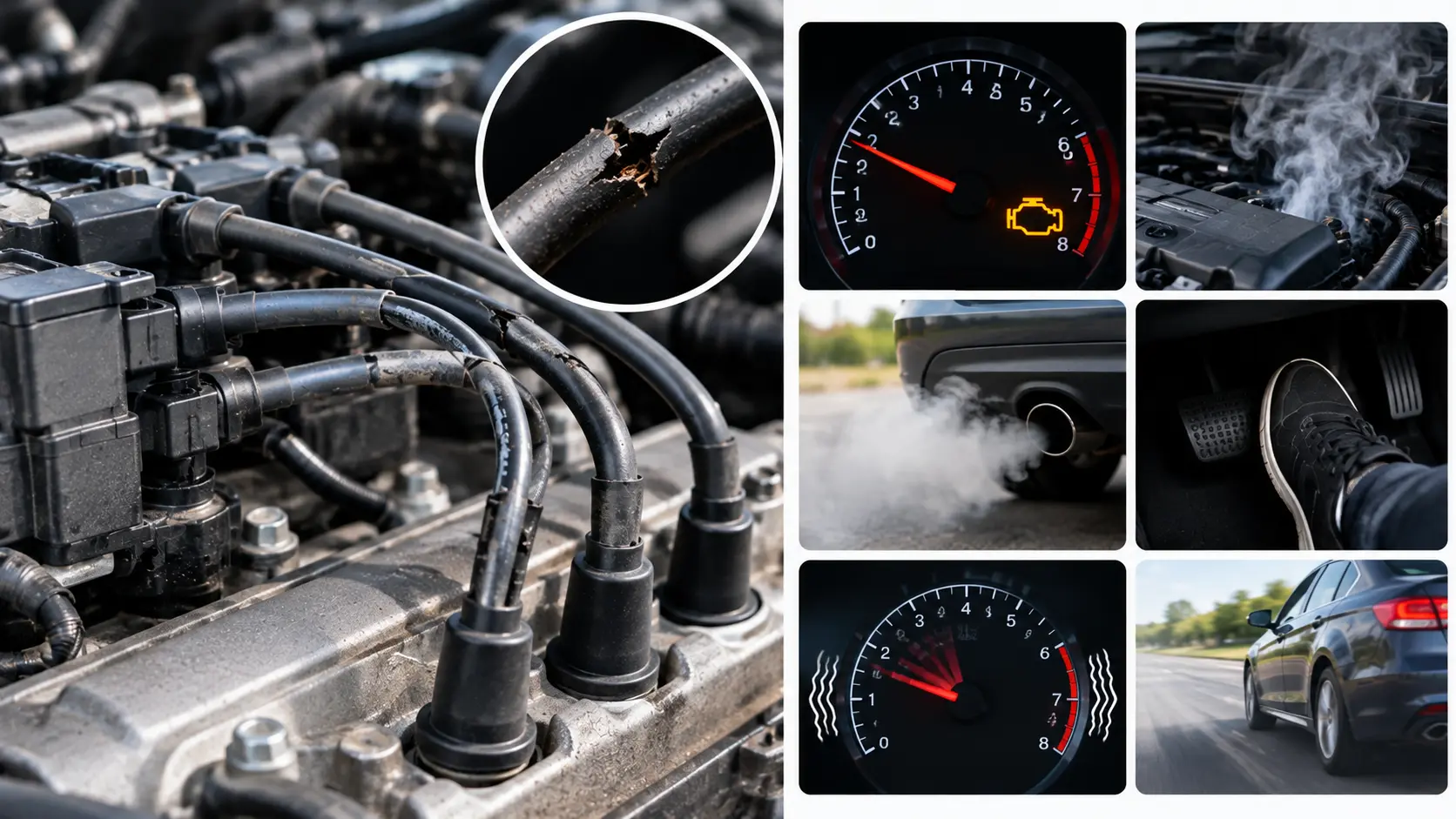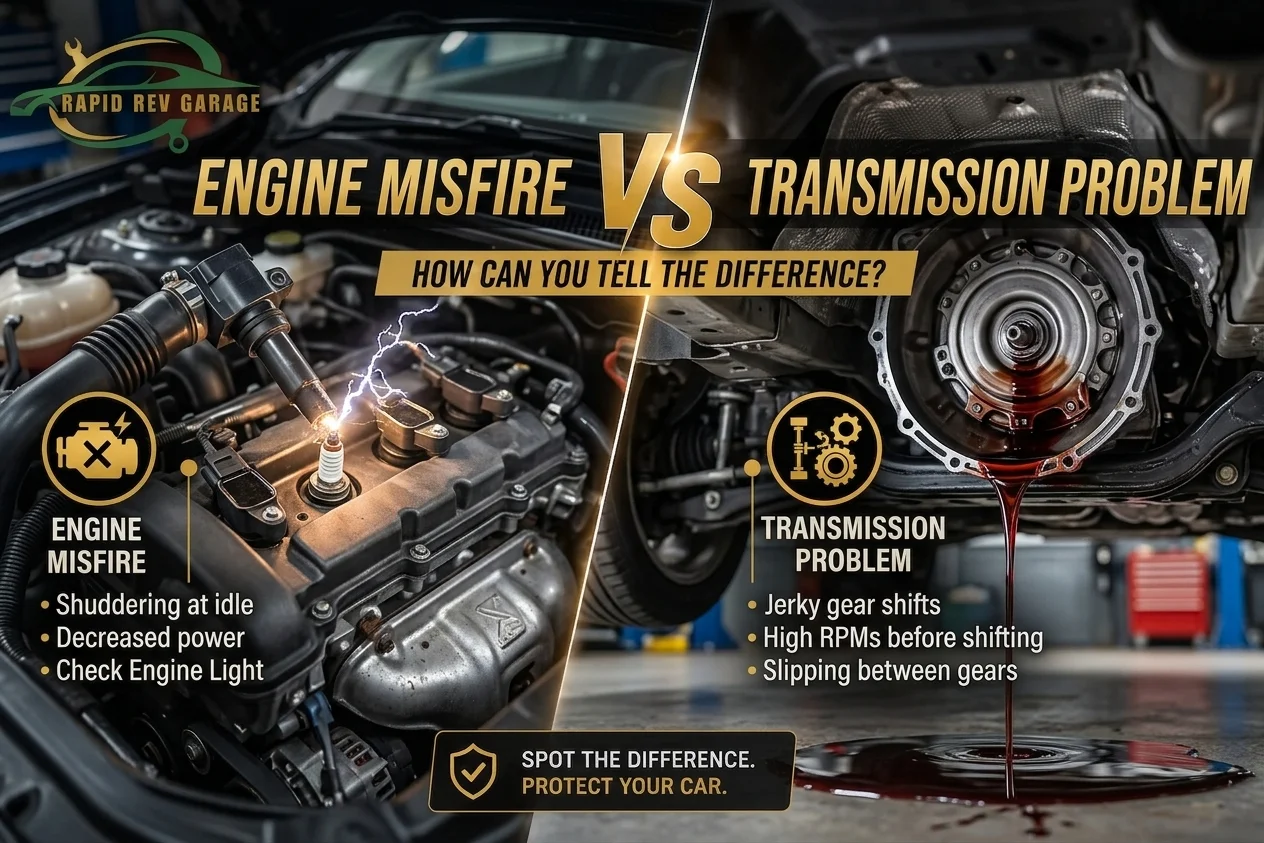
An engine misfire vs transmission problem can cause similar shaking, but the warning signs are often different. An engine misfire usually causes rough running, poor acceleration, jerking or a flashing check engine light. A transmission problem may cause shaking during gear changes, delayed engagement, slipping or harsh shifting. The shaking can also come from other issues, such as worn engine mounts, bad spark plugs or driveline parts. Do not ignore severe vibration. Continuing to drive can turn a small repair into a major one. A proper diagnostic check can identify the source and prevent unnecessary repairs.
Table of Contents
- Problem Overview: Why Is Your Car Shaking?
- Engine Misfire vs. Transmission Problem: Key Differences
- Symptoms to Watch For
- Common Causes Behind Vehicle Shaking
- Diagnostic Process
- Repair Process
- Risks of Ignoring the Problem
- Can You Continue Driving?
- Typical Repair Time
- Cost Factors
- Prevention Tips
- Dubai-Specific Advice
- Why Choose Rapid Rev Garage for Roadside Assistance?
- Frequently Asked Questions
- Related Services
- Final Call-to-Action
Problem Overview: Engine Misfire vs Transmission Problem — Why Is Your Car Shaking?
A shaking car can be worrying. It can also be difficult to identify the exact cause.
Sometimes, the engine is not burning fuel correctly. In other cases, the transmission is struggling to change or hold gears. Both problems can make the vehicle feel rough.
The key is to notice when the shaking happens.
Does it happen while idling? Does it start when you accelerate? Does the car shake only when changing gears? These details help a mechanic narrow down the problem.
These details make the engine misfire vs transmission problem question easier to answer.
Engine Misfire vs transmission problem: Key Differences
When one or more cylinders do not burn the air-fuel mixture properly, the engine misfires. The engine may run unevenly and lose power.
A transmission problem affects how engine power reaches the wheels. You may notice harsh gear changes, slipping, hesitation or vibration during acceleration.
| Feature | Engine Misfire | Transmission Problem |
|---|---|---|
| Shaking at idle | Common | Less common |
| Shaking during acceleration | Common | Common |
| Check engine light | Often appears | May appear |
| Rough engine sound | Common | Usually not the main symptom |
| Gear slipping | No | Common |
| Harsh gear changes | Possible but uncommon | Common |
| Poor acceleration | Common | Common |
| RPM changes without speed increase | Less common | Common |
| Burning smell | Possible | Possible |
| Loss of engine power | Common | May occur |
| Main repair area | Engine and ignition system | Transmission and drivetrain |
This comparison does not replace a proper inspection. Some faults can produce similar symptoms.
Symptoms to Watch For Before the Problem Gets Worse
Knowing the warning signals can help you respond sooner.
Signs of an Engine Misfire
Common symptoms include:
- Rough idle
- Engine shaking at a stop
- Sudden jerking during acceleration
- Poor fuel economy
- Loss of power
- Check engine light
- Flashing check engine light
- Uneven engine sound
- Difficulty starting
A flashing check engine light deserves special attention. It may indicate an active misfire that could damage the catalytic converter.
Signs of a Transmission Problem
Transmission-related symptoms may include:
- Shaking during gear changes
- Delayed gear engagement
- Harsh shifting
- Transmission slipping
- Strange noises
- High engine RPM without matching speed
- Trouble selecting a gear
- Burning transmission-fluid smell
If the shaking happens mainly when the car changes gears, the transmission becomes a stronger suspect.
Common Causes Behind Vehicle Shaking
There are many possible causes. A technician should check the vehicle before replacing parts.
Common Engine Causes
A misfire can result from:
- Worn spark plugs
- Failed ignition coils
- Dirty fuel injectors
- Low fuel pressure
- Vacuum leaks
- Faulty sensors
- Poor fuel quality
- Low engine compression
A damaged engine mount can also make normal engine movement feel much worse inside the cabin.
Common Transmission Causes
Transmission shaking can be linked to:
- Low transmission fluid
- Old or contaminated fluid
- Worn transmission components
- Faulty solenoids
- Valve body problems
- Clutch wear
- Torque converter faults
- Transmission mount damage
This is why the Engine Misfire vs transmission problem diagnosis should not be based on vibration alone.
Diagnostic Process: How Mechanics Find the Real Cause
A professional diagnostic check starts with the symptoms.
The technician may enquire about when the shaking occurs and whether it varies with engine or vehicle speed.
Next, the vehicle may receive an electronic scan. Diagnostic trouble codes can point toward ignition, fuel, engine or transmission faults.
The technician can then inspect:
- Spark plugs and ignition coils
- Engine mounts
- Fuel system
- Air intake system
- Transmission fluid
- Transmission mounts
- Sensors and wiring
- Gear engagement
- Engine and transmission operation during a road test
A good diagnostic process prevents unnecessary part replacement.
Repair Process: Fixing the Source of the Shaking
The repair depends on the failed component.
For an engine misfire, the mechanic may replace spark plugs, ignition coils, injectors or damaged sensors. A vacuum leak may need sealing.
Transmission repairs vary more widely. A simple fluid service may solve some problems. Other faults may require solenoid repair, valve body work, clutch replacement or internal transmission repair.
The Engine Misfire vs transmission problem distinction matters because these repairs involve very different systems and costs.
At Rapid Rev Garage, technicians can inspect the vehicle and help identify the cause before major repairs begin.
Risks of Ignoring It
Ignoring shaking is rarely a good idea.
A continuing engine misfire can increase fuel use and damage the catalytic converter. In severe cases, it can cause more engine damage.
A transmission fault can also become more expensive over time. Continued slipping can create additional heat and wear.
A small problem may therefore become a major repair if you keep driving without checking it.
Can You Continue Driving?
It depends on the severity of the symptoms.
If the car has a mild vibration and no warning lights, drive carefully to a workshop for an inspection.
However, do not continue driving if:
- The check engine light is flashing
- The engine is losing significant power
- The car is shaking violently
- The transmission will not engage
- You smell burning
- The engine temperature is rising
- The vehicle cannot shift safely
In certain cases, roadside assistance may be a safer option than taking the car to a workshop.
Typical Repair Time
Repair time depends on the cause and vehicle model.
| Repair | Typical Time |
|---|---|
| Diagnostic scan and inspection | 30–60 minutes |
| Spark plug replacement | 30–90 minutes |
| Ignition coil replacement | 30–90 minutes |
| Vacuum leak repair | 1–3 hours |
| Engine mount replacement | 1–3 hours |
| Transmission fluid service | 1–2 hours |
| Solenoid or valve body repair | 3–6+ hours |
| Major transmission repair | Several hours to multiple days |
These are general estimates. Some luxury and high-performance vehicles may take longer.
Cost Factors: What Affects the Final Repair Bill?
There is no single price for a shaking car.
The final cost can depend on:
- Vehicle make and model
- Fault location
- Parts required
- Labour time
- Diagnostic complexity
- Engine damage
- Transmission damage
- Original or aftermarket parts
A simple spark plug issue is usually much easier to repair than an internal transmission fault.
The Engine Misfire vs transmission problem diagnosis can therefore make a major difference to the expected repair cost.
Prevention Tips for Dubai Drivers
Dubai’s heat and heavy traffic can place extra stress on vehicles.
Following the service schedule can help reduce the likelihood of engine and gearbox problems.
Helpful maintenance habits include:
- Change engine oil on schedule.
- Check coolant levels regularly.
- Replace worn spark plugs.
- Inspect ignition coils when needed.
- Service the transmission according to manufacturer guidelines.
- Check transmission fluid when applicable.
- Replace dirty air filters.
- Do not ignore warning lights.
- Get unusual shaking checked early.
- Avoid aggressive driving when the vehicle is already showing symptoms.
Regular maintenance is especially useful for vehicles that spend long periods in traffic.
Dubai-Specific Advice for Shaking Vehicles
Dubai’s hot weather can make existing mechanical problems more noticeable.
Long traffic jams can keep the engine and transmission working for extended periods. Stop-and-go driving also places extra demand on automatic transmissions.
Air conditioning adds another load to the engine. If the engine already has a weak ignition coil, worn spark plugs or another fault, rough running may become more noticeable when the AC is running.
If your car starts shaking in Dubai traffic, don’t assume the heat is the cause. Get the vehicle checked.
If you are searching for a garage near me, choose a workshop that can perform proper engine and transmission diagnostics rather than simply replacing parts based on symptoms.
Why Choose Rapid Rev Garage for Roadside Assistance?
A shaking car is not always safe to drive.
Rapid Rev Garage can help when your vehicle develops a serious fault, and you cannot safely reach a workshop. Roadside assistance can help with severe shaking, loss of power, transmission trouble or other mechanical problems.
The right approach is to identify the cause first. This helps avoid unnecessary repairs and gives you a clearer idea of what the vehicle needs.
If you are looking for a garage near me in Dubai, professional diagnostic support can help you determine whether the issue comes from the engine, transmission or another component.
Frequently Asked Questions
1. Can a misfire make my car shake?
Yes. A misfire can make the engine run unevenly, causing noticeable shaking, especially while idling or accelerating.
2. How do I know if the shaking is from the transmission?
Shaking that happens mainly during gear changes, along with slipping or delayed engagement, may point toward a transmission problem.
3. Is it safe to drive a car that is misfiring?
It is best to avoid driving with a serious misfire. A continuing misfire can damage the catalytic converter and other components.
4. Can low transmission fluid cause shaking?
Yes. Low or degraded transmission fluid can contribute to poor shifting, slipping, and vibration in some vehicles.
5. Should I call roadside assistance if my car is shaking badly?
Yes. If the shaking is severe or the vehicle has lost power, calling roadside assistance can be safer than continuing to drive.
Related Services
If your vehicle is shaking, you may need one or more of these services:
- Engine diagnostics
- Transmission diagnostics
- Spark plug replacement
- Ignition coil inspection
- Engine repair
- Transmission repair
- Engine mount replacement
- Transmission fluid service
- Computer diagnostics
- Roadside assistance
- Vehicle inspection
Final Call-to-Action
Don’t ignore a shaking vehicle. The problem may be a simple ignition fault or it could involve the transmission. Finding the cause early can save time and prevent expensive damage.
If you are dealing with an engine misfire vs. transmission problem, contact Rapid Rev Garage for professional vehicle diagnostics and repair support in Dubai. If the vehicle is not safe to drive, ask about roadside assistance before attempting to reach a workshop.