A good workshop doesn’t just fix what you bring in. It also finds what you didn’t know was there.
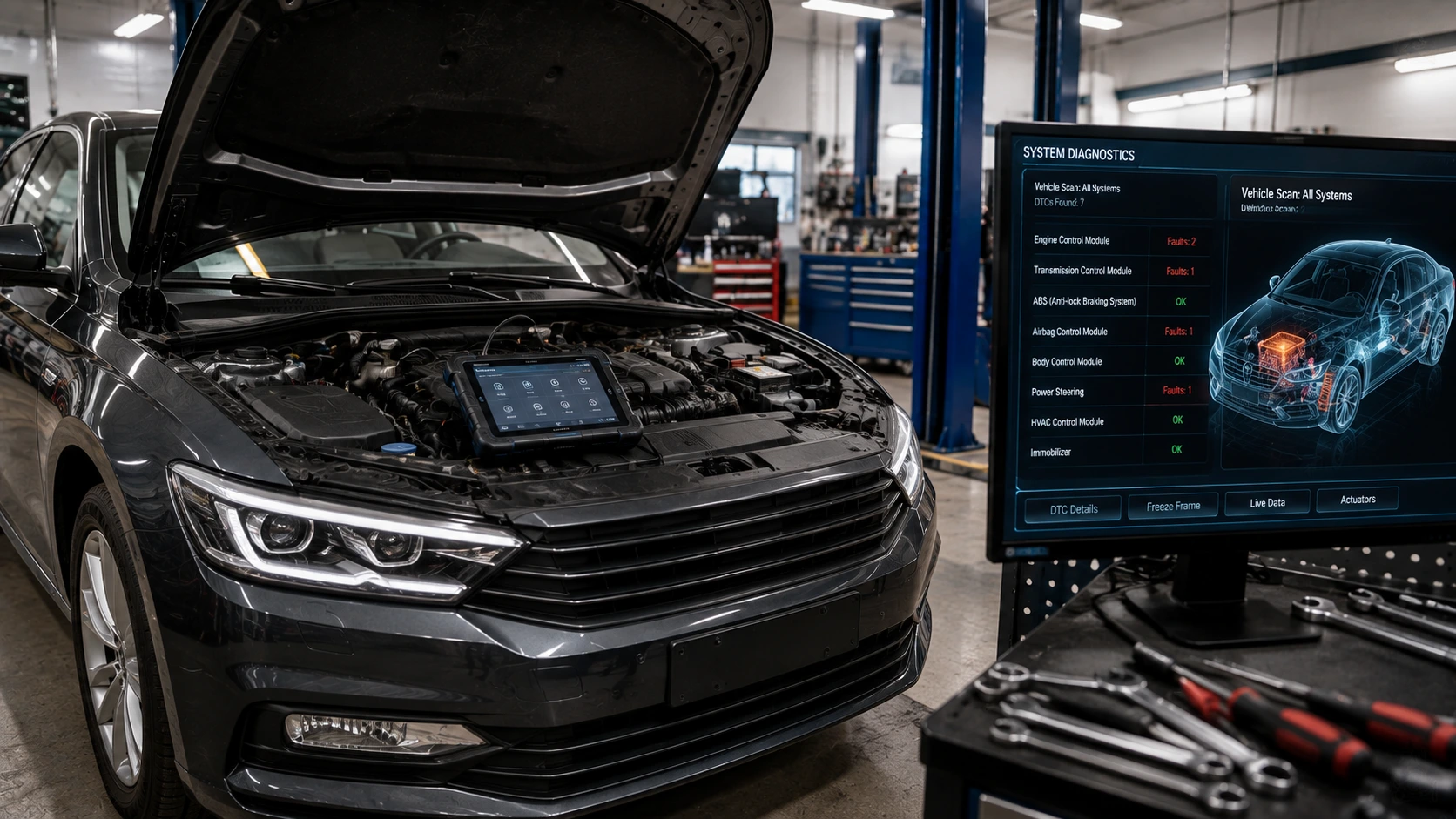
Workshop identify hidden problems using a combination of diagnostic scanning, physical inspection, and road testing — not through guesswork or experience alone. Workshop identify hidden problems because those problems haven’t caused a symptom you’ve noticed yet. But they’re logged in the car’s computer, visible in its behaviour under load, or detectable on a ramp.
In Dubai, the ability to workshop identify hidden problems early matters more than in most places. Heat degrades components faster. Stop-start driving cycles stress systems repeatedly. And faults that are small today become expensive quickly in summer heat.
At Rapid Rev Garage in Al Quoz, finding hidden problems before they become breakdowns is a core part of every major service.
Workshop Identify Hidden Problems — Quick Answer
A workshop identifies hidden problems through four methods: reading the car’s full fault log across all electronic modules, running live data tests under the conditions that trigger the fault, performing a ramp inspection of every mechanical component, and comparing measured values against manufacturer specifications. Hidden problems are those the driver hasn’t noticed but the car has already recorded — a pending fault code, a sensor reading that’s drifting, a bushing that’s cracked but hasn’t started clunking yet. Finding these early means fixing them cheaply. Missing them means waiting for a breakdown.
Table of Contents
- Why “Hidden” Problems Are Still Recorded by the Car
- Reading All ECU Modules — Not Just the Engine
- What Live Data Testing Finds That a Static Scan Misses
- The Ramp Inspection — What We Look for Underneath
- How We Spot Problems Specific to Dubai’s Conditions
- Pre-Purchase Inspections — Finding Problems the Seller Didn’t Mention
- Identifying Battery and Charging Problems Before They Strand You
- Fluid Condition Testing — What Colour and Smell Tell Us
- How a Road Test Reveals What the Workshop Bay Can’t
- What to Expect From a Full Health Check at Rapid Rev Garage
- How Often You Should Get a Full Inspection in Dubai
- What It Costs in Dubai
- Why Rapid Rev Garage?
- FAQ
- Conclusion
Why “Hidden” Problems Are Still Recorded by the Car
Modern cars monitor themselves continuously. Every sensor, every module, every system is tracked in real time.
When something falls outside the acceptable range — even briefly — the ECU logs it. This happens whether or not a warning light appears. The light only comes on when the fault reaches a threshold. Before that threshold, the fault is stored silently as a pending code.
This means the car often knows about a problem weeks or months before the driver does.
A workshop that reads only the engine module misses all the other modules storing data. ABS faults, transmission faults, airbag module irregularities, HVAC system errors — all logged, none visible without a full scan.
This is how a workshop identify hidden problems begins: reading everything the car has already recorded. Our car mechanic team reads all available ECU modules on every diagnostic visit — not just the engine.
Reading All ECU Modules — Not Just the Engine
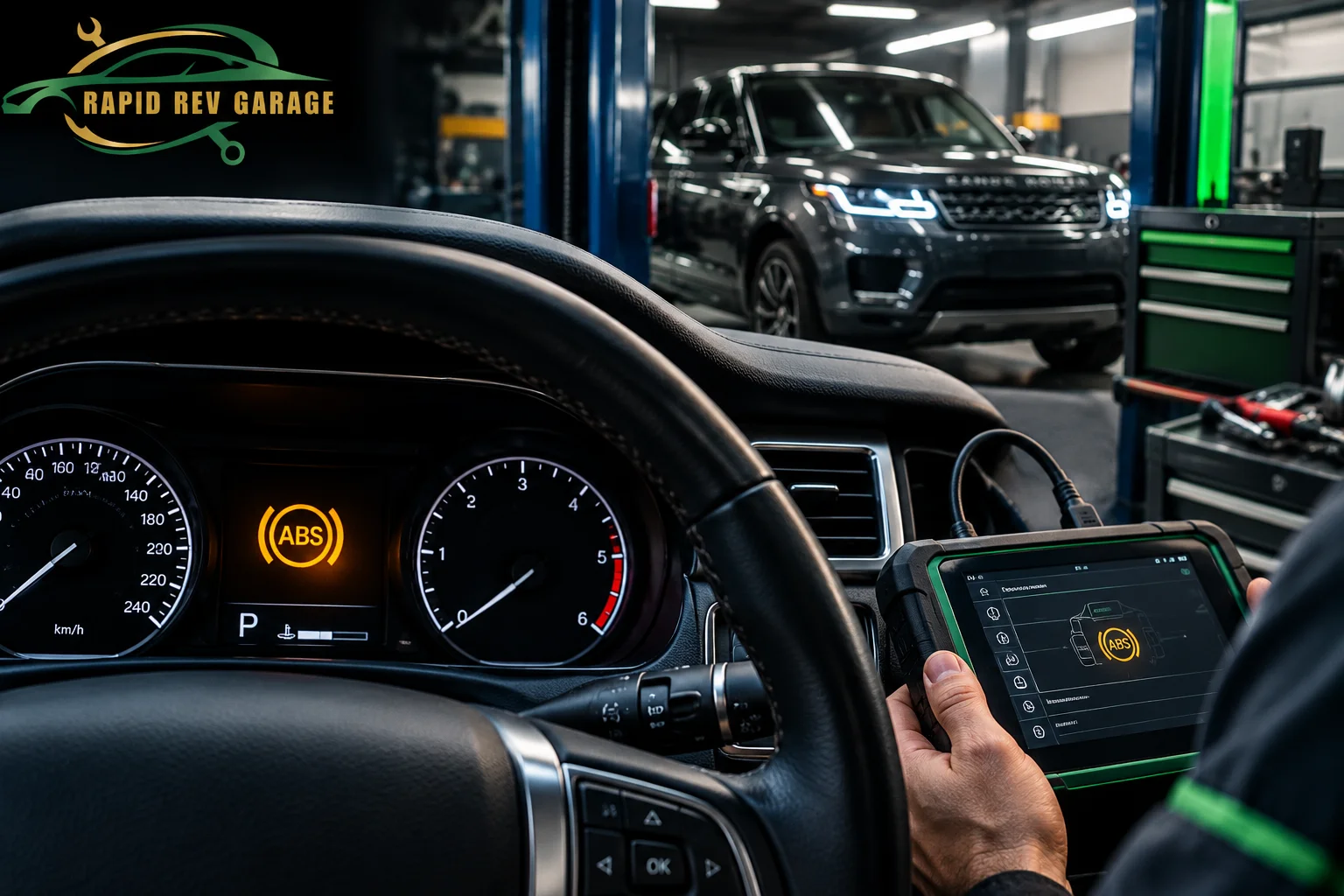
A complete vehicle scan covers every module on the car’s CAN bus network.
Engine module — misfire counts, fuel trim corrections, throttle adaptations, sensor range faults.
Transmission module — shift quality data, temperature readings, solenoid performance, slip events.
ABS and stability module — wheel speed sensor readings, brake pressure data, any stability intervention history.
Airbag module — deployment sensor status, crash data, circuit integrity.
Body control module — door lock faults, window regulator issues, lighting circuit problems.
HVAC module — blend door positions, compressor clutch faults, temperature sensor accuracy.
Power steering module — torque sensor readings, motor current data, calibration status.
Each module tells a different part of the story. A full scan takes 20–30 minutes. It produces a complete picture of every fault the car has stored — active, pending, or historical.
A driver whose workshop identify hidden problems scan uncovers more than the rough idle they came in for and leaves with a complete 10-module fault report knows far more than one who gets a single engine code printed on a receipt.
What Live Data Testing Finds That a Static Scan Misses
A scan reads stored codes. Live data reads what’s happening right now.
These are two different things. A component can pass a static test and fail under load. It can read correctly at idle and incorrectly at 3,000 RPM. A scan won’t show this. Live data does.
Oxygen sensor response time. A sensor that looks fine at idle might lag badly when the throttle is applied. This causes rich or lean spikes at every acceleration event. Live data shows the lag. A stored code might not exist yet.
Fuel pressure under load. A weak fuel pump maintains adequate pressure at idle — but drops under full demand. The engine stumbles on acceleration. Live data catches the pressure drop in real time.
MAF sensor accuracy across the rev range. A contaminated MAF reads correctly at low airflow and incorrectly at high airflow. This only shows up while the engine is under load. For any urgent assistance while faults are being investigated, our roadside assistance team covers Al Quoz and nearby Dubai areas.
The Ramp Inspection — What We Look for Underneath
Electronic testing finds electronic problems. The ramp finds everything else.
When a car goes up on the ramp, the technician can see and touch every component underneath. This is where many hidden problems live — components that are degrading but haven’t yet affected a sensor reading.
Brake condition. Pad thickness measured at all four corners. Disc surface and edge condition. Brake hose inspection for cracking or swelling.
Suspension and steering wear. Ball joints checked with a pry bar for play. Tie rod ends loaded in both directions. Sway bar end links and bushings deflected manually. Shock absorbers assessed for leaking or bottoming.
Fluid leaks. Engine oil, transmission fluid, coolant, power steering fluid, and brake fluid all leave traces. The ramp shows where each leak is coming from.
Exhaust system. Cracks, loose mountings, and failing rubber hangers — all visible from underneath.
Underbody protection. Corroded subframe brackets, cracked undertray panels, and loose heat shields — common in Dubai vehicles from road debris and Al Quoz industrial dust.
How We Spot Problems Specific to Dubai’s Conditions
Dubai creates specific failure patterns that a workshop familiar with the local environment recognises quickly.
Battery degradation. Batteries in Dubai last two to four years. Heat accelerates plate degradation. A battery that starts the car fine might fail a load test at 60% capacity — meaning it will strand the driver within months. This shows on a battery conductance test.
AC system refrigerant loss. Slow leaks from heat-stressed O-ring seals are common in Dubai vehicles. The AC cools adequately in winter and fails in July traffic. A pressure test before summer catches a borderline charge before it becomes a summer breakdown.
Cabin filter saturation. Dubai’s dust loads cabin filters faster than any other market. A filter blocked at 70% reduces HVAC airflow, causes musty smells, and loads the evaporator with particles. Inspection takes 30 seconds — and many drivers have no idea how bad theirs is.
Tyre age vs tread. Dubai UV and heat degrade tyre rubber compound independently of tread wear. A tyre with 4mm of tread remaining might be six years old with a brittle compound. The DOT date on the sidewall tells the age. Many workshops never check it. Our car service packages include a tyre age check at every major service.
Pre-Purchase Inspections — Finding Problems the Seller Didn’t Mention
Buying a used car in Dubai without a workshop inspection is a significant risk.
The car’s ECU stores historical fault codes even after they’ve been cleared. A seller can clear the codes before a test drive. But a full scan on fresh ECUs without fault history shows a car that has been recently cleared — which is itself a flag.
Beyond the scan, a pre-purchase inspection covers:
- Accident history visible in paint thickness variations across panels
- Suspension component wear that affects safety
- Tyre age and condition
- Fluid condition suggesting neglected maintenance
- Brake pad and disc condition across all four corners
- Any signs of oil, coolant, or transmission fluid leaks
A pre-purchase inspection typically costs AED 300–600. A hidden gearbox problem or a cracked chassis from an undisclosed accident can cost ten to twenty times that. The inspection pays for itself many times over when it finds something the seller chose not to mention. For exterior paint inspection during a pre-purchase check, our car painting team can assess accident repair history from panel paint thickness readings.
Identifying Battery and Charging Problems Before They Strand You
Battery failure is the number-one cause of breakdown calls in Dubai. It is also one of the most preventable.
A battery conductance test measures actual battery capacity against its rated capacity. A battery reading below 70% is approaching end of life. Below 50%, replacement should happen immediately.
The test takes three minutes. It doesn’t require the battery to be discharged first. It’s accurate on fully-charged and partially-discharged batteries.
At the same time, alternator output is measured — voltage under no load and under full electrical demand (AC on, lights on, all accessories running). A charging system producing less than 13.5V under full load is undercharging the battery with every drive.
These two tests together take five minutes and prevent the most common breakdown in Dubai. Every workshop identify hidden problems check should include these two tests automatically.
Fluid Condition Testing — What Colour and Smell Tell Us
Fluid condition tells a story about how a car has been maintained — and what’s happening inside systems the technician can’t see directly.
Engine oil. Dark but clean means it’s doing its job. Dark and gritty means metal particles are present from internal wear. Milky or foamy means coolant contamination — head gasket investigation needed.
Coolant. Fresh coolant is bright green, blue, or orange. Old coolant is brown or rust-coloured. A refractometer measures concentration — wrong concentration means the inhibitor package is depleted and aluminium components are at risk.
ATF (automatic transmission fluid). Fresh ATF is red and clean. Burnt ATF is dark brown with a burnt smell. This is the clearest indicator that the transmission has been running hot and the clutch pack life is shortened.
Brake fluid. A digital moisture tester confirms whether brake fluid has absorbed enough water to lower its boiling point. High moisture means longer pedal travel under heavy braking — a safety concern.
Power steering fluid. Dark, burnt-smelling power steering fluid attacks rack seals from the inside. Fluid condition predicts rack wear before any steering symptom appears.
How a Road Test Reveals What the Workshop Bay Can’t
Some problems only exist while the car is moving.
A vibration that appears at exactly 110 km/h and disappears above and below it — that’s a wheel balance resonance. It won’t appear sitting still.
A transmission that shifts smoothly at light throttle but slips at full load — that won’t show in a workshop bay.
A brake pedal that pulses specifically on motorway-speed stops — that needs a road test to feel.
An alignment pull that only appears above 80 km/h — invisible at slow speed, clear on the road.
The road test is part of identifying hidden problems because not every fault lives in the data or on the ramp. Some only reveal themselves when the car is doing what it was built to do. Our mobile car mechanic team covers Al Quoz and nearby Dubai areas for on-site initial assessments.
What to Expect From a Full Health Check at Rapid Rev Garage
Here is what a complete workshop identify hidden problems health check at our Al Quoz workshop covers:
- Full multi-module diagnostic scan across all ECUs
- Battery load test and alternator output check
- Tyre pressure, tread depth, and DOT age check at all four corners
- Brake pad thickness measurement at all four corners
- Fluid condition assessment — engine oil, coolant, ATF, brake fluid, power steering
- Cabin filter condition check
- Ramp inspection of all visible suspension, steering, and underbody components
- AC system pressure check where applicable
- Road test under conditions relevant to any reported symptom
Every finding is documented. The report is shown to the customer before any repair is recommended. We explain what we found, why it matters, and what leaving it unfixed leads to. Then the customer decides.
How Often You Should Get a Full Inspection in Dubai
Every 10,000 km or annually — whichever comes first.
Dubai’s heat and stop-start conditions degrade components faster than any European or North American schedule assumes. An annual scan and physical inspection catches the faults that a visual check misses.
For vehicles over five years old: every 6–8 months. Older vehicles with accumulated heat cycling have more components approaching end of life simultaneously. More frequent checks catch these earlier.
Before every summer: a specific AC system pressure test and battery load test. These two items are the most likely to fail in peak heat and the easiest to catch in advance.
What It Costs in Dubai
Full multi-module scan only: AED 150–300.
Complete health check including scan, battery test, brake measurement, fluid assessment, and ramp inspection: AED 300–600 depending on vehicle size and complexity.
Pre-purchase inspection: AED 300–600.
These are small costs compared to what a workshop identify hidden problems inspection can prevent. A hidden gearbox issue found early costs an ATF service. Found late, it costs a transmission rebuild. Our garage near me location in Al Quoz serves drivers from Business Bay, Jumeirah, Barsha, Satwa, Downtown, and the Sheikh Zayed Road corridor.
Why Rapid Rev Garage?
A workshop identify hidden problems inspection uses every available tool — not just a code reader. Scans across all modules. Live data under real conditions. Physical loading tests on suspension. Fluid condition analysis. Road testing.
We document every finding and show the report before recommending anything. A workshop identify hidden problems correctly when it shows findings before quoting repairs — not the other way around — it’s replaced a guess with a quote.
At Rapid Rev Garage, the inspection comes first. The findings get explained. Then the customer decides what to fix and when.
FAQ — Workshop Identify Hidden Problems
Here are the most common questions about how workshops find faults you didn’t know existed.
How can a problem be hidden if the car drives fine?
Many faults develop gradually — this is what makes a workshop identify hidden problems inspection so valuable. A battery at 65% capacity starts the car without hesitation — but will fail in peak summer heat. A bushing that's cracking doesn't affect the drive until it splits. A pending fault code hasn't triggered a warning light yet. "Drives fine" means no obvious symptom — not no problem.
Can a workshop find problems that the manufacturer's service missed?
Yes. Manufacturer service schedules are minimum intervals, not comprehensive inspections. They focus on consumables — oil, filters, spark plugs. A full workshop inspection includes everything the service schedule doesn't prioritise — component wear, fluid condition, electronic fault history, and safety system integrity.
What's the difference between a service and an inspection?
A service replaces items on a schedule regardless of condition. An inspection assesses everything and identifies what's actually degrading. Both are useful — but they answer different questions. A service asks "is this due?" An inspection asks "what's wrong?"
Will a scan find every hidden problem?
No. Scans find electronic faults. The ramp finds mechanical wear that hasn't affected sensor readings yet. Neither finds everything alone — that's why a full inspection uses both. Some faults only show during a road test. A complete inspection uses all three.
How do I know a workshop isn't inventing problems to sell repairs?
Ask for the printed scan report. Ask to see the physical finding — a worn ball joint should show measurable play with a pry bar. Ask why the fault matters and what happens if it's left alone. A workshop that can't or won't answer these questions clearly is not running a genuine inspection.
Conclusion
A workshop identify hidden problems check works through a structured process — not intuition. Full ECU scanning, live data testing, physical ramp inspection, fluid condition analysis, and a road test together find what the driver doesn’t know is there.
In Dubai, where heat speeds up every failure mechanism, a workshop identify hidden problems inspection finds issues early is the difference between a minor service and a major repair. Rapid Rev Garage in Al Quoz runs a complete inspection process on every vehicle — documenting every finding before recommending any repair.
Rapid Rev Garage is in Al Quoz, serving Business Bay, Jumeirah, Downtown, Barsha, Satwa, and the Sheikh Zayed Road corridor. Book your appointment on WhatsApp or find us on Google Maps.
Rapid Rev Garage — Workshop Identify Hidden Problems | Al Quoz, Dubai