Most car damage in Dubai doesn’t come from accidents — it comes from daily driving habits damage your car patterns. It comes from daily driving habits damage your car patterns that feel normal — things every driver does without thinking — that slowly destroy brakes, tyres, engines, and transmissions over months and years.
Dubai’s driving environment makes some of these habits particularly destructive. The speed bumps, stop-start traffic, and heat amplify the damage from daily driving habits damage your car patterns that feel routine.
At Rapid Rev Garage in Al Quoz, the results of daily driving habits damage your car patterns show up on almost every vehicle we service. Worn brakes from late heavy braking. Burnt clutches from incorrect gear use. Seized calipers from heat and neglect. Most of it is preventable.
Daily Driving Habits Damage Your Car — Quick Answer
The daily driving habits that damage your car most in Dubai are riding the brakes on descents instead of engine braking, resting a hand on the gear lever in manual vehicles, crossing speed bumps too fast, ignoring the warming-up period after a cold start, running the engine low on oil between services, driving with underinflated tyres, and revving the engine hard before it reaches operating temperature. Each of these daily driving habits damage your car in a specific, measurable way. In Dubai’s heat, that wear accumulates faster than in any cooler climate — because heat is already stressing every component, and the habits add additional load on top of that baseline.
Table of Contents
- Riding the Brakes — How It Destroys Pads and Discs
- Resting Your Hand on the Gear Lever
- Crossing Speed Bumps Too Fast
- Ignoring the Cold Start Warm-Up Period
- Running Low on Engine Oil Between Services
- Driving on Underinflated Tyres in Dubai’s Heat
- Hard Acceleration From Cold in Dubai’s Conditions
- Riding the Clutch at Traffic Lights
- Late Heavy Braking Instead of Early Gentle Braking
- Neglecting Warning Lights and Unusual Sounds
- How These Habits Compound in Dubai Specifically
- What Each Habit Costs You in Repairs
- Why Rapid Rev Garage?
- FAQ
- Conclusion
Riding the Brakes — How It Destroys Pads and Discs
Riding the brakes means keeping a foot lightly on the brake pedal while driving — either on descents or in slow-moving traffic. The brake pads maintain light contact with the disc continuously.
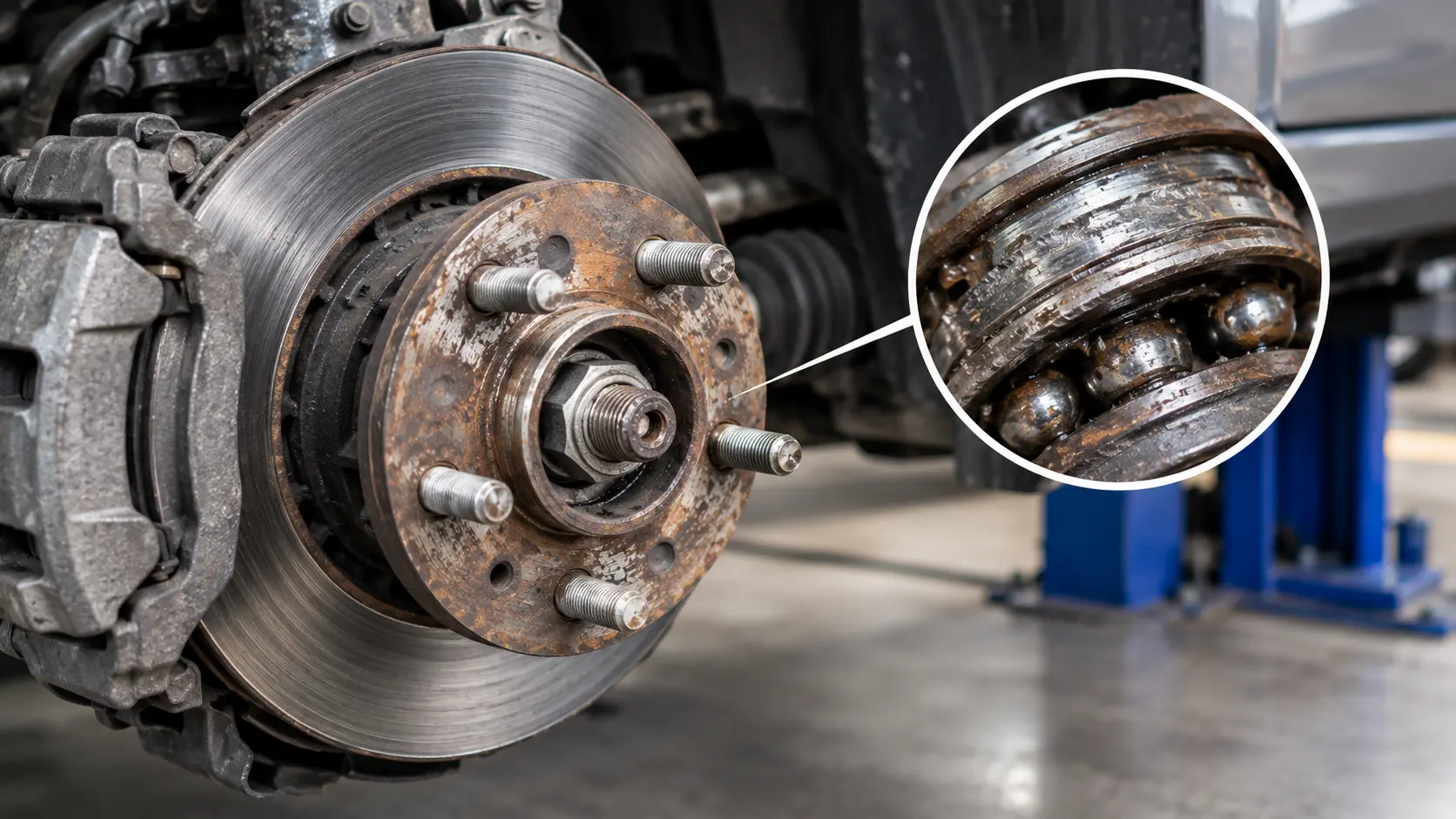
This continuous contact generates heat. The pads glaze — the friction material hardens from sustained heat exposure, reducing braking effectiveness. The discs warp from the uneven heat distribution of constant light contact rather than the brief firm contact of proper braking.
In Dubai, where many routes into Hatta and the Hajar Mountains involve long descents, this habit destroys a set of brake pads in a single long drive. On flat road traffic, continuous light brake contact in stop-start driving generates enough heat to accelerate glazing significantly.
The correct technique on descents: use engine braking by dropping to a lower gear. Apply the brakes firmly for brief intervals rather than lightly and continuously. The brakes cool between applications and the pads and discs last multiple times longer. Our car mechanic team inspects brake pad and disc condition on every vehicle visit — glazed pads and lightly-warped discs from riding the brakes are among the most common findings.
Resting Your Hand on the Gear Lever
On a manual transmission, the gear lever connects mechanically to the selector fork inside the gearbox. The selector fork presses against the rotating selector collar to change gears.
When a driver rests a hand on the gear lever — applying even light downward pressure — that pressure transmits to the selector fork. The fork stays in contact with the rotating collar continuously. Instead of making contact only during gear changes, it drags against the rotating component on every drive.
This selector fork wear is one of the most consistent findings in manual gearboxes from drivers with this habit. The symptom appears gradually — difficulty selecting specific gears, a crunching sound when changing. The repair is a gearbox rebuild. The cause was a habit the driver didn’t know was harmful.
Remove your hand from the gear lever between gear changes. Rest it on the steering wheel or the centre console. This single habit change extends manual gearbox life significantly.
Crossing Speed Bumps Too Fast
Dubai has more speed bumps per kilometre than almost any other major city. Every crossing at above-recommended speed is an impact event on the suspension, tyres, and wheel rims.
A speed bump crossed at 40 km/h applies a vertical impact force to the suspension components proportional to the vehicle’s weight and the square of the speed. This impact loads ball joints, control arm bushings, shock absorbers, and wheel bearings at forces significantly above their designed operating range.
Over hundreds of crossings per year at excessive speed, the accumulated impact damage shortens the life of every suspension component. Ball joints that would last six years with correct crossing speeds fail in three. Shock absorbers that would last 80,000 km wear out at 50,000 km.
The speed bump posted limit is typically 10–20 km/h. This is not excessive caution — it is the speed at which the impact force stays within the suspension’s design envelope. Crossing at 10 km/h instead of 40 km/h reduces the impact force by a factor of 16. This is the single most impactful daily driving habits damage your car habit to change in Dubai. Our car service packages include a suspension ramp inspection at every major service — catching speed bump damage before it becomes a breakdown.
Ignoring the Cold Start Warm-Up Period
When the engine starts cold, the oil is at ambient temperature — significantly thicker than at operating temperature. It takes 30–60 seconds for oil pressure to fully distribute through all bearing surfaces.
Starting the engine and immediately driving at speed or high load before the oil has circulated and the engine has warmed forces metal surfaces to run against each other with inadequate lubrication. The wear rate in the first 60 seconds of a cold start exceeds the wear rate for the entire subsequent drive in some engine designs.
In Dubai’s summer, the engine reaches operating temperature quickly — often within 2–3 minutes. In cooler months, it takes longer. Either way, the habit of starting the engine and immediately driving hard compounds with every cold start over the vehicle’s life.
The correct approach: start the engine, allow 30–60 seconds at idle, then drive gently for the first 2–3 minutes. No hard acceleration, no high RPM. The engine reaches operating temperature faster under light load than at idle — but the load should be light, not heavy.
Running Low on Engine Oil Between Services
Engine oil degrades from heat and use. It also burns off in small quantities on every drive on most engines. A vehicle that is low on oil — even by 500ml below the specified level — runs its oil film thinner than designed.
A thinner oil film at bearing surfaces increases metal-to-metal contact. At Dubai’s operating temperatures, this wear accumulates faster than in cooler climates. An engine that runs 1,000 km at 500ml below the minimum oil level in 45°C Dubai heat accumulates wear equivalent to several times that distance in a cooler climate.
Checking oil level monthly takes two minutes. Adding oil when needed costs AED 20–50 per litre. The alternative is accelerated bearing wear that shortens engine life by years.
In Dubai, check the oil level every month — not just at service intervals. The high operating temperatures and the AC load increase oil consumption on every engine.
Driving on Underinflated Tyres in Dubai’s Heat
An underinflated tyre flexes more than designed on every rotation. This flexing generates heat inside the tyre — additional heat on top of what Dubai’s road surface already produces.
A tyre running 10 PSI below specification in Dubai’s summer generates internal temperatures that degrade the tyre compound significantly faster and can cause belt separation — the internal steel belts delaminating from the surrounding rubber. A tyre that would last 40,000 km at correct pressure may develop belt separation at 25,000 km from sustained underinflation.
Underinflated tyres also wear unevenly — the shoulders wear faster than the centre. This produces a tyre that looks worn unevenly and reduces grip in emergency situations.
Check tyre pressure monthly, cold — before driving. Correct inflation is printed on the door jamb sticker of every vehicle. The correct pressure for a loaded vehicle (carrying passengers and luggage) is typically slightly higher than the unloaded specification. For any tyre emergency on the road, our roadside assistance team covers Al Quoz and nearby Dubai areas.
Hard Acceleration From Cold in Dubai’s Conditions
Revving the engine hard immediately after a cold start — before the oil has warmed and distributed — produces the maximum possible wear rate at bearing surfaces. The oil is thick, the clearances are at their maximum cold tolerance, and the metal is expanding toward its operating dimensions.
Hard acceleration from cold also loads the automatic transmission before the ATF has warmed and the clutch packs have reached their operating temperature. Cold ATF is more viscous and produces higher engagement forces on cold clutch material.
In Dubai’s winter months — when ambient temperatures drop to 15–20°C overnight — this matters more than in summer, when the engine bay never fully cools. Morning cold starts in winter are the highest-wear events the engine experiences all day. The habit of driving away hard immediately after the cold start start is one of the daily driving habits damage your car patterns with the most accumulated impact over a vehicle’s life.
Riding the Clutch at Traffic Lights
On manual transmission vehicles, holding the car stationary at a traffic light with the clutch partially engaged rather than in neutral with the clutch fully released causes continuous wear on the clutch release bearing.
The clutch release bearing is designed to rotate only during gear changes — when the clutch pedal is pressed. Riding the clutch at lights keeps this bearing rotating continuously under load. The bearing wears in months what should take years.
The correct technique at traffic lights on a manual vehicle: neutral, clutch fully released, foot on the brake. The clutch engages only to move away when the light turns green.
Late Heavy Braking Instead of Early Gentle Braking
Reading the road ahead and beginning to slow early — by lifting off the throttle and applying gentle progressive braking — is far less damaging than maintaining speed and then braking hard at the last moment.
Late heavy braking generates significantly more heat per stop than early gentle braking. The energy that needs to be dissipated is the same — but compressed into a shorter time. More heat per stop means faster pad and disc wear, and more thermal stress on the caliper seals.
In Dubai’s stop-start traffic, where a driver stops dozens of times per commute, the cumulative difference between early gentle braking and late heavy braking accumulates rapidly over a year of driving. Early braking also reduces the risk of rear-end contacts in heavy traffic — a significant secondary benefit.
Neglecting Warning Lights and Unusual Sounds
A warning light or unusual sound is the car communicating a fault. Ignoring it doesn’t make the fault go away — it allows the fault to progress.
An oil pressure warning light ignored for 30 minutes can cause catastrophic engine damage. A brake warning light ignored produces brake failure. A transmission temperature warning ignored ends with a seized gearbox.
Unusual sounds are earlier warnings than lights — they often appear before any sensor threshold has been reached. A new squeal from the brakes, a clunk from the suspension, a hiss from the engine bay. Each is the car identifying a fault before it becomes a breakdown.
Act on every warning light and every new sound within 24 hours. This is the most financially impactful of all daily driving habits damage your car changes — because it converts breakdowns into planned repairs. For any cosmetic repairs after stop-start parking damage, our car painting team handles colour-matched repairs at the same visit.
How These Habits Compound in Dubai Specifically
In a cooler climate, many of these habits produce damage at a rate that takes years to become visible. In Dubai, the heat multiplies the damage rate of every one of them.
Brake heat from riding the brakes is already starting from a higher baseline in 45°C ambient. Tyre heat from underinflation is already starting from hot road surfaces. Engine wear from cold starts is concentrated into a shorter window because the engine reaches operating temperature faster. Every habit that generates additional heat adds to a base that is already elevated.
This compounding effect is why daily driving habits damage your car faster here than in any cooler market. The same habits, in the same vehicle, cause more damage per kilometre here.
What Each Habit Costs You in Repairs
| Habit | Typical Damage | Typical Repair Cost |
| Riding the brakes | Glazed pads, warped discs | AED 500–2,000 per axle |
| Hand on gear lever | Selector fork wear, gearbox crunch | AED 2,000–6,000 rebuild |
| Fast speed bumps | Ball joints, bushings, shocks | AED 600–3,000 per fault |
| Hard cold starts | Bearing wear, increased oil use | AED 3,000–15,000 engine work |
| Low oil | Bearing seizure, engine damage | AED 5,000–25,000+ |
| Underinflated tyres | Belt separation, uneven wear | AED 250–800 per tyre |
Our mobile car mechanic covers Al Quoz and nearby Dubai areas for on-site assessment when a habit-related fault has developed. Our garage near me in Al Quoz serves drivers from Business Bay, Jumeirah, Barsha, Satwa, Downtown, and the Sheikh Zayed Road corridor.
Why Rapid Rev Garage?
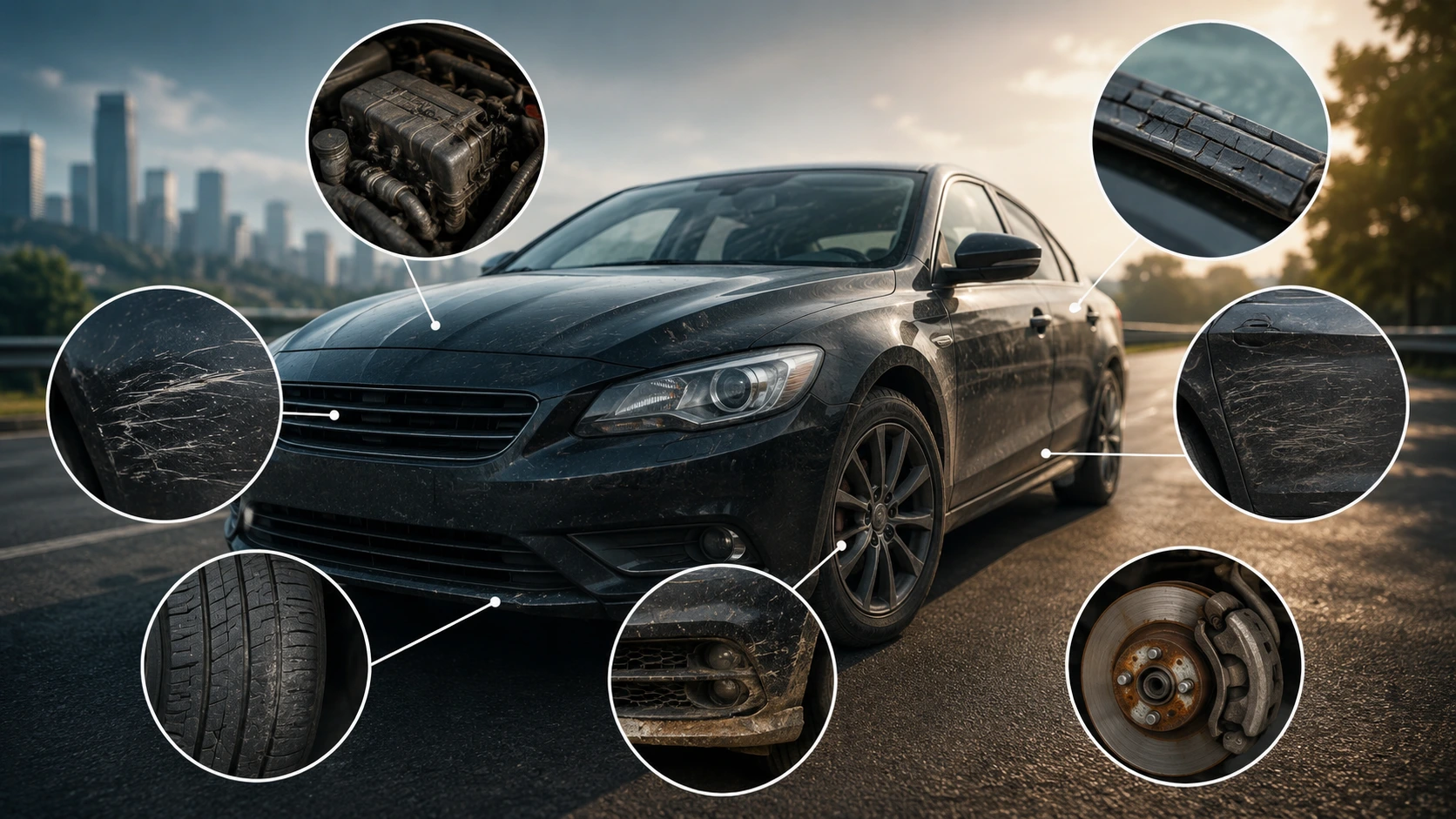
When we service a vehicle, we can usually see which daily driving habits damage your car pattern has been at work. Glazed brake pads. Worn selector forks. Suspension components damaged ahead of schedule. Tyres worn on the shoulders from chronic underinflation.
We document what we find and explain the habit that caused it — not to lecture the driver, but because the same habit that caused the current repair will cause the next one if it continues. Changing one habit often prevents AED 2,000–5,000 in future repairs.
FAQ — Daily Driving Habits Damage Your Car
Here are the questions Dubai drivers ask us most about damaging habits.
Does running the AC all the time damage the car?
Not if the system is maintained correctly. The AC compressor adds load to the engine and alternator — increasing fuel consumption and putting wear on the compressor clutch. But in Dubai, turning the AC off is not realistic. The wear from continuous AC use is manageable with correct service intervals. The bigger issue is when the AC runs on a leaking refrigerant charge — the compressor then runs dry and fails.
Is it bad to drive short distances every day?
Short trips in Dubai — school runs, mall trips, petrol stations — mean the engine never fully warms and the ATF never reaches optimal temperature. Each short trip is a cold start event with all the associated wear. If most driving is short trips, consider increasing service frequency — oil changes at 5,000 km rather than 8,000 km — to compensate for the higher wear rate per kilometre.
Does parking in direct sun damage the car?
Yes. UV degrades exterior plastic, interior dashboard surfaces, tyre sidewalls, and rubber seals. It also causes the vehicle to require a much longer AC cooling period to reach a comfortable interior temperature — meaning every drive from an outdoor park starts with the AC working at maximum load, which increases wear on the compressor and condenser fan. Covered parking is one of the most protective habits in Dubai.
How do I know if my driving habits have already damaged my car?
A full vehicle health check. The inspection covers brake condition, suspension wear, tyre condition, oil quality, ATF condition, and fluid levels. The findings tell you which habit has produced the most damage and what the current state of each system is.
Is it bad to leave the car in Drive at a traffic light?
For an automatic transmission, Drive at a traffic light is normal operation and causes no damage. The torque converter absorbs the standstill load efficiently. What causes wear is sustained creeping forward with minimal throttle in traffic — the torque converter clutch engaging and disengaging repeatedly at low speed. This is minimised by maintaining a clearance to the vehicle ahead that avoids the creeping pattern.
Conclusion
Daily driving habits damage your car gradually and invisibly — until the repair bill makes them visible. In Dubai, the heat, the speed bumps, and the stop-start driving amplify every harmful habit faster than any cooler market. Riding brakes, fast speed bump crossings, cold start hard acceleration, low oil, and underinflated tyres are the five habits responsible for the majority of preventable mechanical damage we see at Rapid Rev Garage.
Breaking the daily driving habits damage your car cycle costs nothing. Ignoring them costs thousands.
Rapid Rev Garage is in Al Quoz, serving Business Bay, Jumeirah, Downtown, Barsha, Satwa, and the Sheikh Zayed Road corridor. Book your appointment on WhatsApp or find us on Google Maps.
Rapid Rev Garage — Daily Driving Habits Damage Your Car | Al Quoz, Dubai