Your car is warning you before it breaks down through signals that are clear once you know what to look for. A sound you haven’t heard before. A smell that doesn’t belong. A light on the dashboard. A change in how the car drives.
The problem is that most Dubai drivers hear these warnings and keep going. They turn the music up. They attribute the smell to traffic. They tell themselves the warning light has been on for months and nothing has happened.
That reasoning works right up until the car stops on the hard shoulder of the E311 at midday in July.
At Rapid Rev Garage in Al Quoz, every car is warning you before it breaks down situation we see was preceded by a sign the driver missed. Almost every major breakdown we attend to was preceded by a warning the driver noticed but didn’t act on. This blog explains what those warnings are, what they mean, and how long you actually have before the situation becomes serious.
Car Is Warning You Before It Breaks Down — Quick Answer
Your car is warning you before it breaks down through seven main channels: dashboard warning lights that signal specific system faults, unusual sounds from the engine, brakes, or suspension, unfamiliar smells from burning, leaking fluids, or electrical issues, changes in how the car handles or responds, fluid leaks visible beneath the car after parking, increased fuel consumption without explanation, and vibrations that are new and specific to certain speeds or conditions. In Dubai, these warnings progress faster than in cooler climates — the heat accelerates every fault. A warning sign that would give a European driver three months of safe driving before breakdown may give a Dubai driver three weeks.
Table of Contents
- Dashboard Warning Lights That Should Never Be Ignored
- New Sounds That Mean Something Has Changed
- Unfamiliar Smells That Signal a Developing Fault
- Changes in Handling and Steering That Indicate Wear
- Fluid Leaks Under the Car After Parking
- Increased Fuel Consumption Without Explanation
- New Vibrations at Specific Speeds or Conditions
- Why Dubai’s Heat Makes Warning Signs Progress Faster
- What to Do When Your Car Is Warning You
- How We Assess Warning Signs at Rapid Rev Garage
- Why Rapid Rev Garage?
- FAQ
- Conclusion
Dashboard Warning Lights That Should Never Be Ignored
A dashboard warning light is the car’s most direct communication. The engine management system, the transmission module, the battery, the oil pressure system — all of them can trigger a light when something moves outside acceptable parameters.
Most drivers know what the lights look like. Fewer know what each one actually means.
The Lights That Require Immediate Action
Oil pressure warning (red oil can icon). This is the most urgent light on any dashboard. Low oil pressure means the engine’s bearing surfaces are not receiving lubrication. Driving further than the nearest safe stopping point risks catastrophic engine damage within minutes. Pull over. Switch off. Do not restart until the oil level has been checked and the cause identified.
Engine temperature warning (red thermometer icon). The engine is overheating. Pull over within two minutes. Continued driving at critical temperature warps cylinder heads and destroys head gaskets. Switch the AC off immediately to reduce engine load.
Battery / charging warning (red battery icon). The alternator is not charging the battery. The car is running on battery power only. Switch off every non-essential electrical accessory. The car may stop within 20–40 minutes depending on battery state.
The Lights That Require Same-Day Attention
Check engine / engine management (amber engine icon). A fault has been stored in the ECU. It may be minor — a sensor drift — or it may be a misfire that is destroying the catalytic converter with every kilometre. A scan the same day identifies which.
Brake warning (amber or red exclamation in circle). Either the handbrake is on — check first — or the brake fluid is low from a leak or worn pads. Both are safety concerns that need same-day assessment.
TPMS warning (amber flat tyre icon). One or more tyres are below the minimum safe pressure. Check and inflate before the next highway drive. Our car mechanic team reads every dashboard warning code with a full multi-module scan — not just the engine module — before any repair is recommended.
New Sounds That Mean Something Has Changed
A car that is running correctly is quiet in specific ways. When something changes mechanically, the sound changes. The new sound is the fault announcing itself.
Sounds From the Engine Bay
Knocking or tapping from the engine. A metallic knocking that follows engine speed — faster when you accelerate, present at idle — is bearing knock. The connecting rod or main bearings are worn and loose. This sound means oil pressure is not maintaining the required film thickness at the bearing surfaces. Stop driving and have the car assessed immediately.
A rattling on cold start that disappears after 30 seconds. Timing chain tensioner rattle. The tensioner is worn and cannot maintain chain tension when the oil is cold and thick. It disappears when oil pressure builds. Do not ignore it — a failed timing chain causes catastrophic engine damage.
A hissing from the engine bay. A vacuum hose has split or disconnected. The engine is running with unmetered air entering the intake. Fuel trim is affected. Performance drops. Have it found and repaired within the week.
Sounds From the Brakes
Squealing when braking. The brake pad wear indicators are in contact with the disc. Pad material is low. This is a designed warning — the pads have been built to squeal when they need replacement. Book within the week.
Grinding when braking. The pad material is completely gone. Metal is contacting metal. The disc is being scored. Every stop is damaging the disc further. Book the same day — this is a braking safety concern.
Sounds From the Suspension
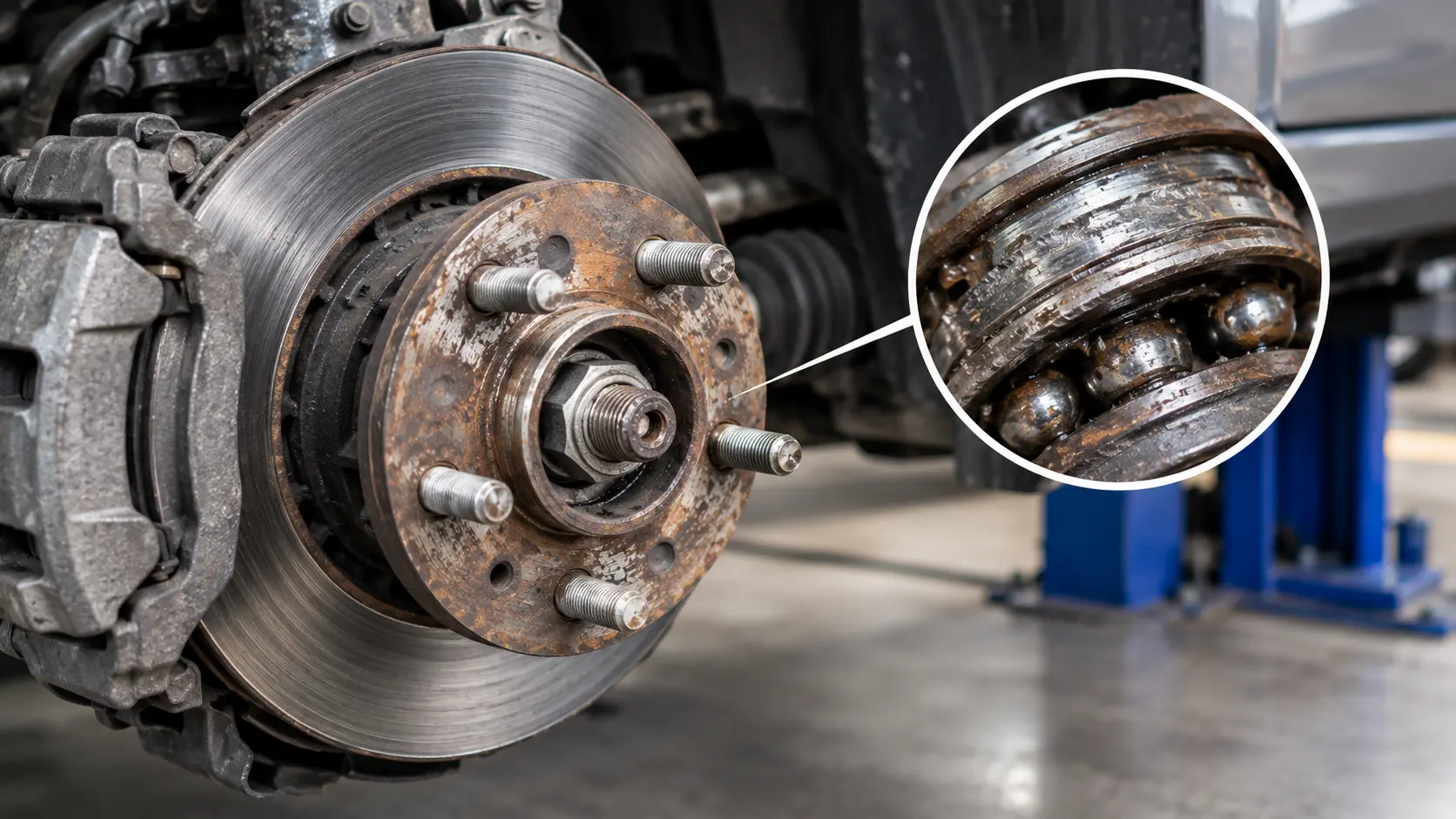
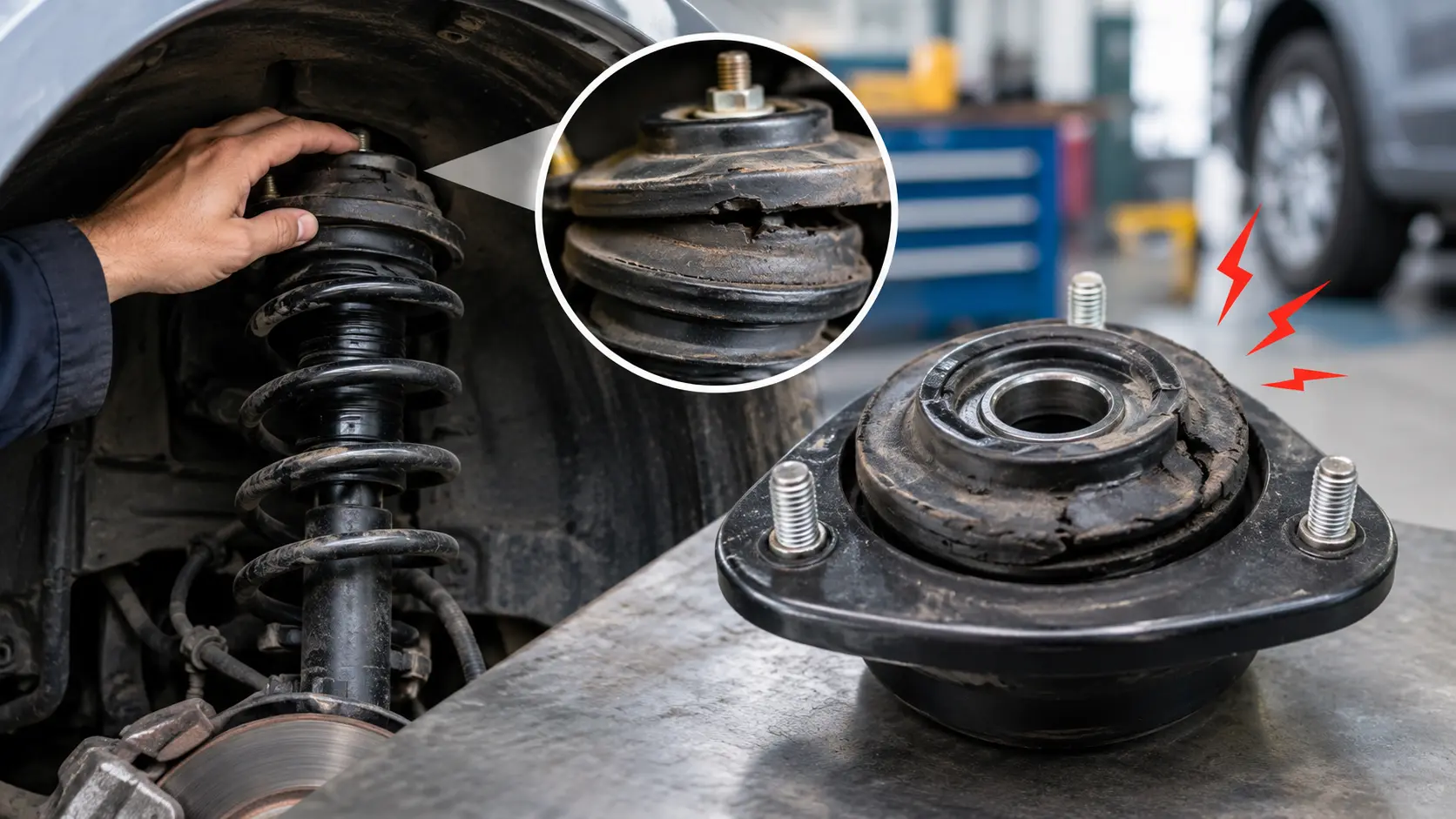
Clunking over speed bumps. A ball joint, end link, or control arm bushing has developed play. The clunk is the worn component moving beyond its designed range. Book within the week — ball joint separation at speed is a serious safety risk.
Knocking when turning in the car park. A CV joint is at advanced wear. The clicking at full lock is the worn joint at its maximum angle. Book within two weeks before the joint fails completely.
Unfamiliar Smells That Signal a Developing Fault
Smell is one of the earliest warning systems a driver has. Long before a dashboard light appears, a fault can produce a specific odour.
Burning Smells
Burning rubber. A brake caliper is seized and the pad is in continuous contact with the disc. Or a coolant hose is resting on the exhaust. Either way, something is burning that shouldn’t be. Stop and inspect.
Burning oil. Oil is leaking onto a hot component — typically the exhaust manifold. The source is a seal or gasket leak. It produces blue smoke from the engine bay in serious cases. Have the leak found and sealed before it reaches a heat source that causes a fire.
Sweet or syrupy smell. This is coolant. A coolant leak is present — a hose, a radiator fitting, or a head gasket. The sweet smell is the ethylene glycol in the coolant burning on the exhaust or the hot engine components. A head gasket leak produces this smell along with white steam from the exhaust.
Electrical Smells
Burning plastic or electrical smell. A wiring short circuit, an overloaded fuse, or a failing motor is overheating its insulation. This smell requires immediate investigation — electrical fires in vehicles are fast and severe. Our car service packages include an underbonnet inspection at every major service for leak and odour sources before they become emergencies.
Changes in Handling and Steering That Indicate Wear
The way a car drives is a direct indicator of its mechanical health. Changes that appear gradually are easy to miss — but they are the car is warning you before it breaks down signals that precede steering and suspension failures.
Pulling to one side. The car requires a constant small steering input to maintain a straight line. Cause: misaligned geometry from a worn component or a recent impact, or a tyre with significantly different pressure or wear on one side. Have the alignment checked.
Steering that feels loose or vague. Increased play in the steering wheel before the car responds. Cause: worn tie rod ends, a worn steering rack, or a failed steering column joint. All of these worsen with time. A loose steering feel at 120 km/h on the E11 is a genuine safety concern.
Braking that pulls to one side. The car steers toward one side when the brakes are applied. Cause: a stuck caliper or uneven brake pad wear. This worsens under heavy braking. Book within the week.
Bouncing or wallowing after bumps. The car settles slowly and continues to bounce after a speed bump. Cause: worn shock absorbers that cannot control rebound. At highway speed, this produces unstable handling in lane changes.
Fluid Leaks Under the Car After Parking
Finding a fluid patch under the car after it has been parked overnight is a car is warning you before it breaks down sign that is easy to confirm and easy to act on.
Clear or light water. AC condensate. Normal — the AC system produces water as it dehumidifies the cabin. No concern unless accompanied by a warm AC or a dripping inside the cabin.
Dark brown or black puddle. Engine oil. A gasket, seal, or drain plug is leaking. The leak will worsen under driving heat and pressure. Have the source identified and sealed.
Red or pinkish fluid. Transmission fluid or power steering fluid. Either is a significant leak requiring prompt attention. Transmission fluid loss leads to transmission failure. Power steering fluid loss leads to pump failure and heavy steering.
Green, orange, or blue fluid. Coolant. A coolant leak means the cooling system is losing capacity. In Dubai’s heat, a coolant system that is even slightly low on fluid can overheat within minutes of reaching operating temperature in traffic.
Clear or slightly yellow, near the wheels. Brake fluid from a caliper or brake hose leak. This is a safety emergency. A brake system losing fluid has reduced braking capacity. Book the same day. For any exterior paint damage identified during an underbody leak inspection, our car painting team handles colour-matched repairs at the same visit.
Increased Fuel Consumption Without Explanation
A car that is suddenly using noticeably more fuel — without a change in driving route or driving style — has a developing fault somewhere in the fuel, ignition, or air management system.
Common causes: a spark plug that is misfiring and sending unburned fuel through the exhaust, a MAF sensor providing incorrect data causing the ECU to inject excess fuel, a faulty oxygen sensor causing incorrect fuel trim, a stuck-open injector that is delivering more fuel than commanded, or a heavy braking habit that wastes kinetic energy.
Fuel consumption increase of 10–15% is noticeable when comparing weekly fuel costs. An increase of 20–25% confirms a mechanical or sensor fault. A scan with live fuel trim data identifies the cause quickly.
New Vibrations at Specific Speeds or Conditions
A vibration that appears at a specific speed, during braking, or at idle — that wasn’t there before — is the car is warning you before it breaks down signal of a component that has moved outside its design parameters.
Vibration at 90–110 km/h that reduces above and below. Wheel imbalance. A balancing weight has fallen off. Simple fix — dynamic wheel balance. If ignored, the imbalance loads the wheel bearings and suspension on every highway drive.
Vibration specifically when braking from highway speed. Warped brake discs. The disc surface is no longer flat. It will worsen with every heavy braking event. Book within the week.
Vibration at idle that wasn’t there last month. Engine misfire, failed engine mount, or throttle body carbon. All worsen with time. Book within two weeks. For any breakdown from a fault that escalated from a warning sign, our roadside assistance team covers Al Quoz and nearby Dubai areas 24 hours a day.
Why Dubai’s Heat Makes Warning Signs Progress Faster
Dubai’s heat compresses the timeline between warning sign and breakdown in every category.
A slight oil leak in a UK vehicle loses oil slowly over months — the level drops gradually and the driver notices at a routine check. The same leak on a Dubai vehicle loses oil faster in summer heat, and the oil that remains degrades faster from the heat. A warning sign that would give a European driver three months becomes a three-week window in Dubai.
A wear indicator squeal on a brake pad in a UK vehicle gives the driver weeks of advance notice. In Dubai’s summer, the brake pad material itself degrades faster from the heat of stop-start driving. The squeal appears and the pad is already closer to the metal backing than the same pad sound in a cooler climate.
This is why every car is warning you before it breaks down sign in Dubai warrants faster action than in any other market. The progression from warning to failure is accelerated by the same conditions the car operates in every day.
What to Do When Your Car Is Warning You
Red warning lights: Stop safely as soon as possible. Do not drive further than the nearest safe stopping point.
Amber warning lights: Book a diagnostic scan the same day or next morning. Do not defer to the next service.
New sounds: Book within three to five days. Identify the sound’s source before it progresses.
New smells: Investigate the same day. Burning smells cannot wait.
Fluid under the car: Identify the fluid type and book within 24 hours for anything other than AC water.
Handling changes: Book within the week. Do not drive on highways at high speed with a confirmed handling change until the cause is identified. Our mobile car mechanic covers Al Quoz and nearby Dubai areas for on-site assessment when driving the car to the workshop is not advisable.
How We Assess Warning Signs at Rapid Rev Garage
Every car is warning you before it breaks down assessment at Rapid Rev Garage starts with the full diagnostic scan — reading all modules, not just the engine, to capture every stored and pending fault code.
The scan is followed by a physical inspection based on the reported warning signs — a ramp inspection for sounds and leaks, an underbonnet inspection for fluid levels and smells, a road test for handling and vibration warnings.
Every finding is documented before any repair is recommended. The driver sees the scan report and the inspection findings before any quote is provided. Our garage near me in Al Quoz serves drivers from Business Bay, Jumeirah, Barsha, Satwa, Downtown, and the Sheikh Zayed Road corridor.
Why Rapid Rev Garage?
When your car is warning you before it breaks down, the most important thing is acting before the warning becomes a breakdown. A warning sign addressed early is almost always a minor repair. The same fault ignored for three more weeks in Dubai’s heat is frequently a major one.
We read every warning — scan codes, sounds, smells, fluid leaks — and identify the specific fault behind each one before recommending any repair. The diagnostic step costs far less than the breakdown it prevents.
FAQ — Car Is Warning You Before It Breaks Down
Here are the questions Dubai drivers ask us most about pre-breakdown warning signs.
How do I know if a warning light is urgent or can wait?
Red lights are urgent — stop as soon as safe. Amber lights are important — book within 24 hours. Blue and green lights are informational — no action required. A dashboard light that flashes rather than glows steadily is more urgent than the same light glowing steadily.
My check engine light has been on for six months and the car drives fine — should I still get it checked?
Yes. A check engine light that has been on for six months has a stored fault that the ECU has detected as persistent. "Drives fine" means no obvious performance change — it doesn't mean no damage. Common six-month check engine causes include oxygen sensors providing incorrect data and misfires that are slowly damaging the catalytic converter.
The car made a noise once and never again — is that something to worry about?
A one-off noise can be a transient cause — a stone hitting the undertray, a brief pressure spike. If it was a clear mechanical sound — a knock, a clunk, a squeal — and it hasn't repeated, mention it at the next service and have the likely area inspected. One-off sounds that repeat become patterns. Catching the pattern early is the goal.
Can I drive to work and then book the repair, or should I stop immediately?
It depends on the warning. Oil pressure or temperature warning: stop immediately. Brake grinding: drive very carefully to the nearest workshop — do not do any motorway driving. TPMS low pressure: inflate and then drive normally. Check engine with no performance change: drive to work, book the scan that day. When in doubt, call us and describe the warning — we'll advise whether driving is safe.
How often should I have a full diagnostic scan in Dubai?
Annually at minimum — regardless of whether any warning signs have appeared. Many faults store as pending codes months before any light appears. An annual scan catches these before they progress to active faults.
Conclusion
Your car is warning you before it breaks down through lights, sounds, smells, handling changes, leaks, and vibrations. Every one is a car is warning you before it breaks down signal — a specific fault communicating itself before it escalates. In Dubai’s heat, the window between warning and breakdown is shorter than anywhere else.
Rapid Rev Garage in Al Quoz provides a full multi-module scan, physical inspection, and road test for every car is warning you before it breaks down assessment — confirming the specific fault and the repair it requires before any work begins.
Rapid Rev Garage is in Al Quoz, serving Business Bay, Jumeirah, Downtown, Barsha, Satwa, and the Sheikh Zayed Road corridor. Book your appointment on WhatsApp or find us on Google Maps.
Rapid Rev Garage — Car Is Warning You Before It Breaks Down | Al Quoz, Dubai