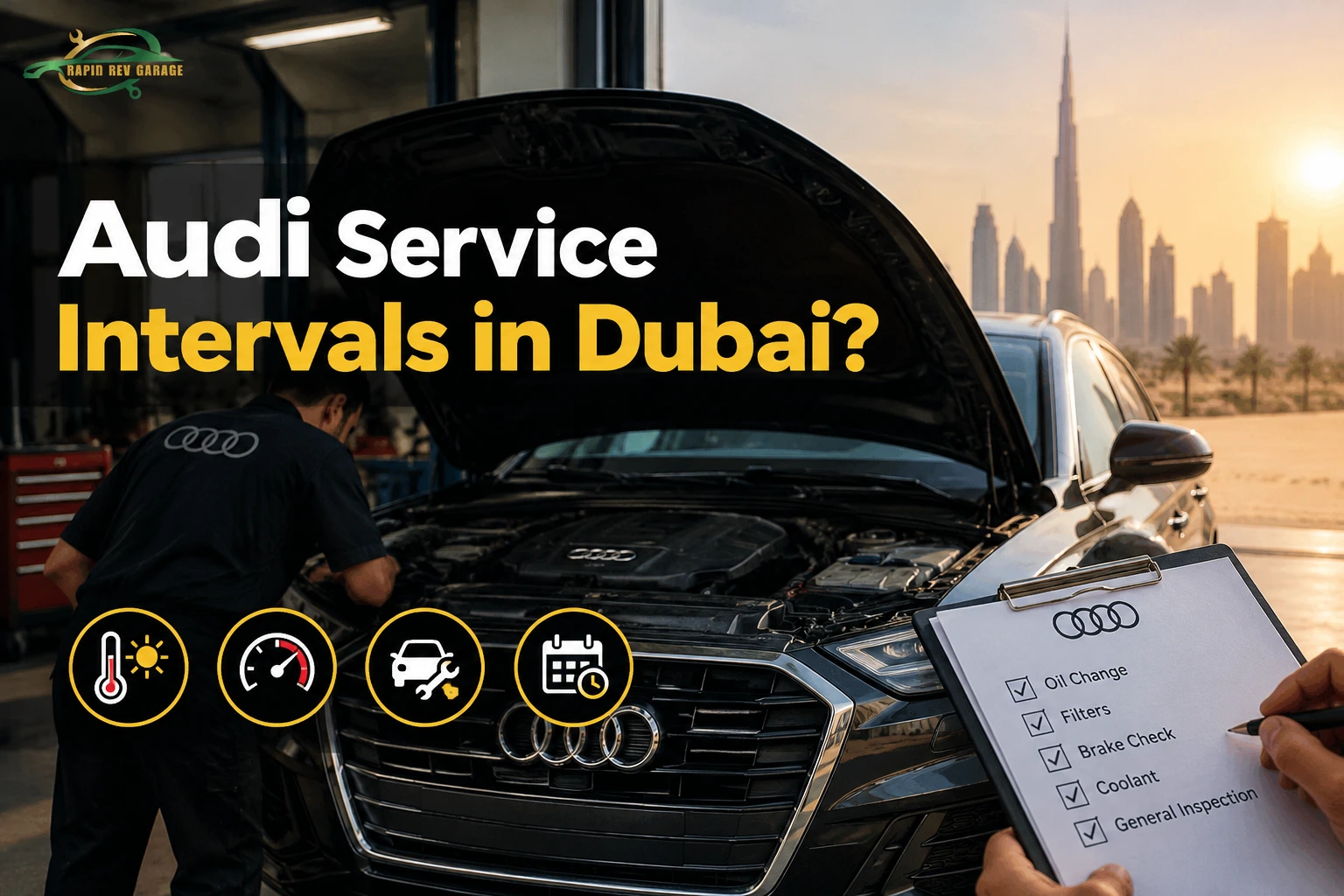
The question of why a car needs regular maintenance is asked implicitly by many drivers implicitly through their behaviour — deferring services, extending oil change intervals, and hoping that a car that is running fine today will continue to run fine indefinitely without intervention. The honest answer is that a car needss regular maintenance not because something is already wrong, but because every kilometre of driving accumulates wear and deposits that regular maintenance resets or manages. Without it, those accumulations reach the point where they cause failures — often suddenly, and always at higher cost than the maintenance that would have prevented them.
At Rapid Rev Garage in Al Quoz, we explain specifically why a car needs regular maintenance in Dubai — not just that it is important in general.
Car Needs Regular Maintenance — Quick Verdict
Your car needss regular maintenance because every engine combustion event deposits residue in the oil, every braking event wears the brake pads, every kilometre of operation degrades the lubricating film that protects bearings and gears, and every week of Dubai’s heat cycles hardens and degrades the rubber seals, hoses, and bushings that keep fluids in the right places. Maintenance resets these accumulations at defined intervals before they reach failure thresholds. A car that has not had its oil changed in 20,000 km is not running fine — it is running on oil that has lost its protective properties and is depositing varnish on engine surfaces with every start. A car that has not had its brake pads checked in two years may stop today — but less effectively than it should, and potentially not at all tomorrow.
Table of Contents
- What Actually Happens Inside an Engine Between Services
- Why Oil Doesn’t Last Forever — The Degradation Explanation
- What Happens to Brakes Without Regular Checks
- Why Cooling Systems Fail Without Maintenance
- What Suspension and Steering Components needs
- Why Tyres Require Regular Attention
- The Battery — Why Heat Kills It Without Monitoring
- What a Diagnostic Scan Finds That Nothing Else Does
- Why Dubai Makes Every Maintenance Item More Urgent
- The Cost Comparison — Maintenance vs Repair
- What Happens to a Car That Skips Regular Maintenance
- Building a Maintenance Habit That Works in Dubai
- Why Rapid Rev Garage?
- FAQ
- Conclusion
What Actually Happens Inside an Engine Between Services
Every explanation of why a car needs regular maintenance starts with understanding what is happening inside the engine during normal operation — because the engine does not run cleanly.
Combustion Is a Messy Process
Every combustion event in a petrol or diesel engine produces byproducts — partially burned hydrocarbons, soot particles, nitrogen oxides, and water vapour. Most of these exit through the exhaust, but a fraction finds its way past the piston rings into the crankcase where it contaminates the engine oil. The oil’s detergent and dispersant additives capture these contaminants — but the additive package is finite. Once depleted, the contaminants are no longer held in suspension. They begin depositing on engine surfaces: on piston ring grooves, in oil passages, on VVT actuator screens, on timing chain tensioner oilways.
What These Deposits Do to the Engine
Deposits in piston ring grooves cause the rings to stick — reducing their ability to seal the combustion chamber, increasing oil consumption, and reducing compression. Deposits in oil passages restrict flow to bearings and valve train components. Deposits on VVT actuator screens cause the actuators to operate sluggishly or not at all — producing the characteristic rough idle and power loss that is one of the most common complaints on high-mileage, under-maintained vehicles in Dubai.
Why Regular Oil Changes Are the Primary Reset
An oil change removes the contaminated oil — and with it all the contaminants it has collected — and replaces it with fresh oil whose additive package is fully intact. The deposits that have accumulated on engine surfaces are partially cleaned by the fresh detergent package on the first drive after the change. This is why an oil change is the single most important maintenance item for an engine — it is not just lubricating the engine, it is resetting the contamination accumulation that builds up between changes.
Why Oil Doesn’t Last Forever — The Degradation Explanation
Many drivers believe that synthetic oil, in particular, lasts indefinitely or close to it. This is a misconception that regular maintenance is specifically designed to prevent from causing engine damage.
What Engine Oil Actually Does
Engine oil simultaneously lubricates, cools internal components, cleans by carrying debris to the filter, and seals the microscopic gaps between moving parts. It does all four simultaneously, with a specific additive package that provides each function. The additive package — which includes viscosity index improvers, detergents, dispersants, anti-wear additives, and antioxidants — is consumed over time.
How Synthetic Oil Degrades in Dubai
Synthetic base oil does not degrade from heat as rapidly as conventional oil — this is one of the genuine advantages of synthetic oil in Dubai’s conditions. However, synthetic oil’s additive package degrades from heat and combustion byproduct accumulation at a similar rate to conventional oil. The viscosity index improvers that maintain consistent viscosity across the operating temperature range deplete first — producing oil that becomes thinner at high temperatures than it should, reducing its film-forming ability at the bearing surfaces where it matters most.
The Dubai Specific Degradation Timeline
In Dubai’s stop-start summer heat, even the best synthetic oil’s additive package is meaningfully depleted by 8,000–10,000 km for city drivers. This is not a conservative estimate — it is the practical observation of oil analysis across the Dubai driving pattern. A driver who extends their oil change interval to 15,000 km or more in this environment is running on oil that has lost a significant portion of its protective capability for thousands of kilometres. Our car mechanic team recommends specific intervals for each vehicle and driving pattern rather than a single universal number.
What Happens to Brakes Without Regular Checks
Brakes are not a set-and-forget component. They wear with every application — and in Dubai’s speed bump-heavy stop-start environment, they wear faster per kilometre than in smooth-motorway driving.
The Wear Rate That Regular Maintenance Tracks
Brake pads on a typical Dubai vehicle doing city driving may last 25,000–35,000 km. On the same vehicle doing aggressive stop-start driving, this reduces to 15,000–20,000 km. Without regular maintenance checks that measure pad thickness, a driver has no way of knowing which point in this range they have reached — until the metal backing plate contacts the disc and the grinding that signals emergency replacement begins.
Why Caliper Slides needs Regular Lubrication
Beyond pad wear, caliper slide pins require regular cleaning and lubrication to maintain even pad application. In Dubai’s dust, slide pins accumulate debris that restricts their movement. A caliper with seized slide pins applies uneven pressure across the brake pad — wearing one side faster than the other, generating heat that warps discs, and eventually producing the pulling under braking that indicates the caliper fault has reached the point of affecting safety. Regular maintenance catches this at the lubrication stage, before it becomes a caliper and disc replacement.
Why Cooling Systems Fail Without Maintenance
The cooling system does not announce its decline through a dashboard warning until it has already failed. Regular maintenance is what monitors it before the failure.
Coolant Doesn’t Last Forever
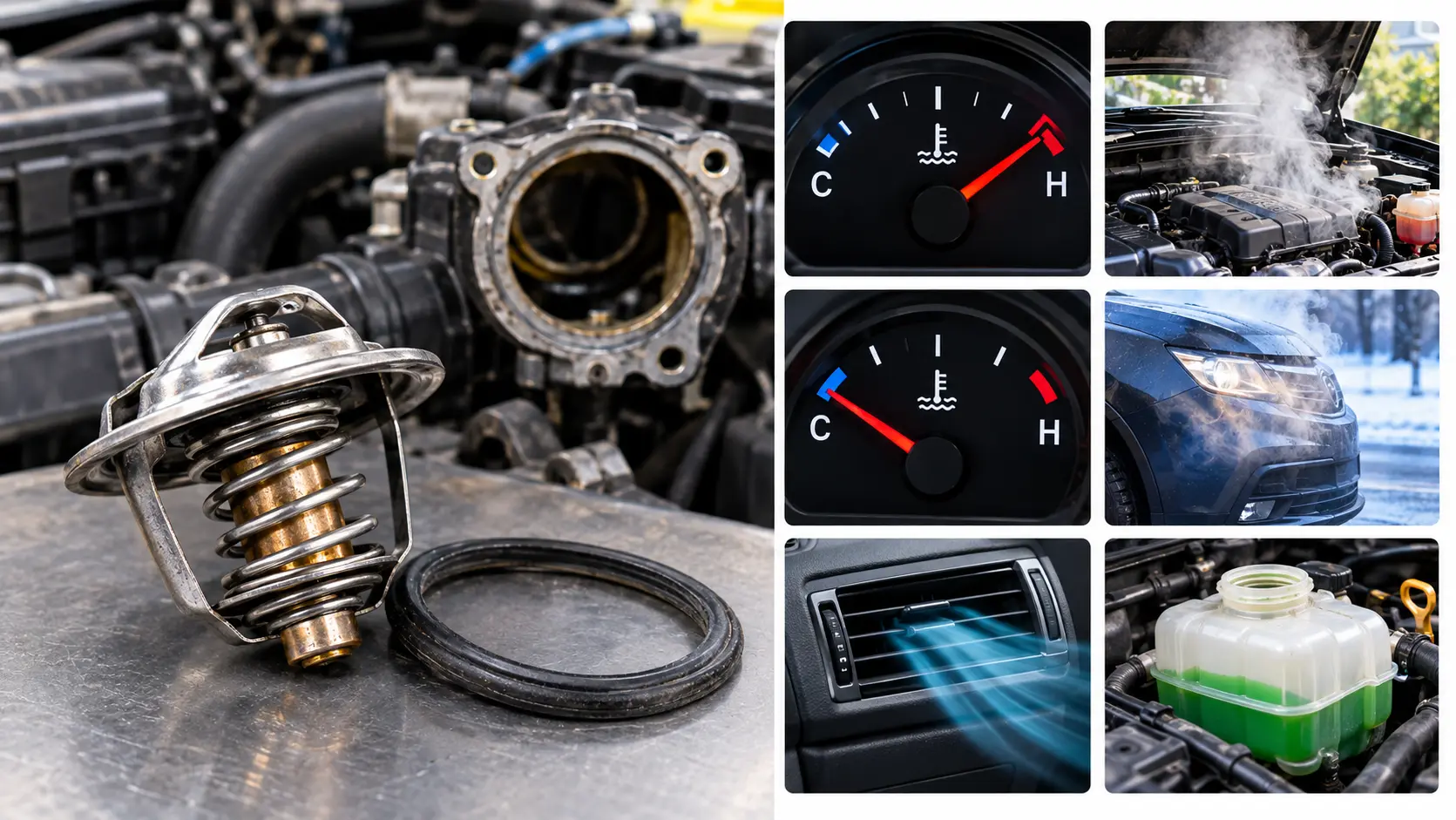
Coolant — antifreeze mixed with water — has a finite additive life. The corrosion inhibitors that protect aluminium cylinder heads, coolant passages, and the heater core are consumed over time and temperature exposure. Coolant that has exceeded its additive life becomes acidic. Acidic coolant attacks the aluminium components it is supposed to protect — producing the internal corrosion that blocks coolant passages, degrades the radiator, and damages the head gasket sealing surface from the inside. None of this is visible externally until the damage is already significant. Two-year coolant replacement prevents it entirely.
What Regular Pressure Testing Catches
A cooling system pressure test as part of regular maintenance identifies developing leaks — at hose connections, through the radiator, from the water pump — before they produce the coolant loss that causes an overheating event. A hose that is weeping slightly at its connection point fails completely under the sustained pressure of Dubai’s summer traffic. Catching it at the weeping stage is a hose replacement. Catching it after it has failed is an overheating event with potential head gasket damage. For any cooling system emergency on the road, our roadside assistance covers Al Quoz and nearby Dubai areas.
What Suspension and Steering Components needs
Suspension and steering components are often thought of as needsing replacement only when they fail — but regular maintenance is what identifies when failure is approaching.
Shock Absorbers Wear Gradually
A shock absorber that is declining from its original damping capacity does not announce itself dramatically. The vehicle’s ride quality degrades gradually — the driver adapts — and the worn shocks continue to allow more wheel bounce and less body control with each passing month. Regular maintenance bounce testing identifies shock absorbers that have declined below their effective performance threshold before the handling consequences become obvious.
Bushings Harden Before They Crack
Rubber suspension bushings in Dubai’s UV and heat environment harden progressively over years of ownership. Hardened bushings transmit road harshness more directly than flexible bushings — and eventually they crack and fail, causing sudden geometry changes that affect handling. Regular visual inspection during major services identifies bushings approaching end of life — typically when surface cracking is visible but before structural failure.
Why Tyres Require Regular Attention
Tyres are the vehicle’s only contact with the road — and their condition directly determines the effectiveness of every braking and steering input.
Pressure Maintenance Is Not Optional
Tyre pressure in Dubai’s heat fluctuates significantly between cold and hot conditions. A tyre that is correctly inflated in underground parking reads significantly differently after 20 minutes of sun-heated driving. Systematic under-inflation — one reason a car needs regular maintenance focus on tyres matters — accelerates tyre wear, reduces fuel economy, and degrades handling. Regular pressure checks — at least monthly — are the minimum tyre maintenance that Dubai’s conditions require.
Age Limits Regardless of Tread
Tyres age from heat and UV exposure regardless of how much tread remains. A tyre with 5mm of tread remaining but six years of Dubai sun exposure has degraded rubber that is more prone to sudden failure than a three-year-old tyre with 3mm of tread. Regular maintenance checks that include tyre age assessment — from the DOT code on the sidewall — catch this before the risk becomes unacceptable. Our car service packages include tyre age confirmation alongside tread depth measurement at every major service.
The Battery — Why Heat Kills It Without Monitoring
Batteries in Dubai fail faster and with less warning than in cooler markets. Regular maintenance is the only way to stay ahead of battery decline.
Heat Accelerates Internal Battery Degradation
Lead-acid and AGM batteries both suffer from accelerated internal plate degradation in sustained heat. The electrochemical processes that reduce battery capacity happen faster at higher temperatures. A battery that would maintain 80% capacity for five years in a European climate may decline to the same capacity level in two and a half to three years in Dubai’s conditions. Without regular capacity testing, this decline is invisible until the battery fails to start the vehicle.
The One Warning Before Failure
The only reliable warning most Dubai drivers receive before a battery failure is slow engine cranking — the starter motor struggling to spin the engine at the same speed it used to. This warning appears hours to days before complete failure. Regular battery load testing identifies the declining capacity months before any symptom appears.
What a Diagnostic Scan Finds That Nothing Else Does
Modern vehicles monitor their own systems continuously and store fault codes for every anomaly detected. A regular maintenance diagnostic scan is the only way to read these stored codes.
Faults That Don’t Trigger Warning Lights Yet
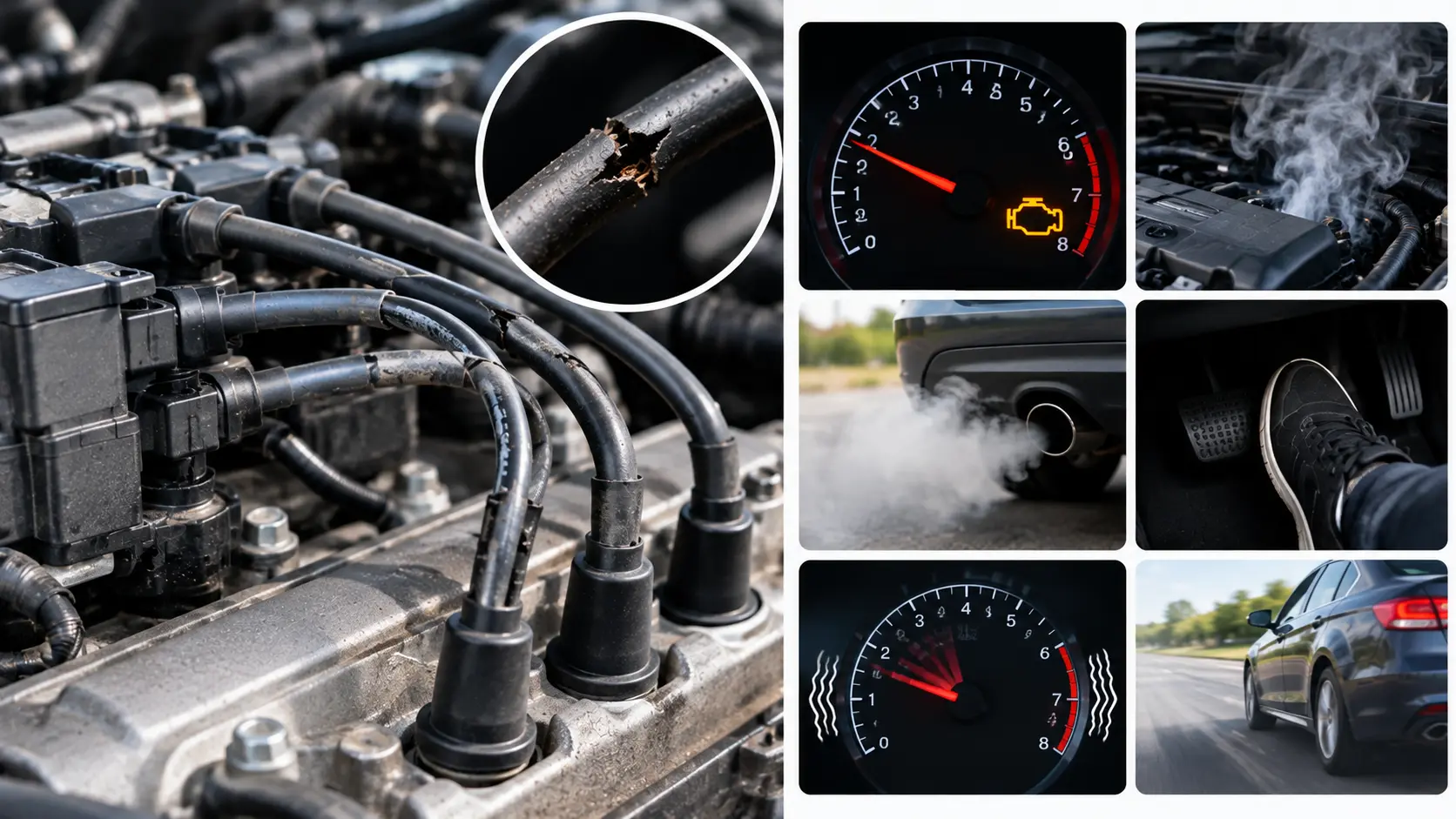
The engine management system stores pending fault codes — anomalies that have been detected but haven’t yet reached the threshold for a dashboard warning light. A pending oxygen sensor fault, a VVT timing correlation that is drifting, a misfire counter accumulating on one cylinder — these are all detectable by a diagnostic scan months before they produce a warning light or a driveable symptom. Finding them during a regular maintenance scan allows planned, lower-urgency repair rather than emergency diagnosis.
Why Scanning All Modules Matters
A full multi-module scan covers ABS, airbags, body control, power steering, and transmission modules — not just the engine. These modules store faults that affect safety system function. An ABS module with a stored wheel speed sensor fault may prevent ABS activation in an emergency stop — while showing no dashboard warning light. For exterior repairs needsed alongside any maintenance visit, our car painting team handles colour-matched work at the same visit.
Why Dubai Makes Every Maintenance Item More Urgent
Dubai’s specific conditions make every maintenance deferral more consequential than the same deferral would be in a moderate climate.
The Narrow Thermal Margins
In cooler climates, the gap between a system operating correctly and a system failing is wide enough that deferred maintenance has months to accumulate before reaching a failure threshold. In Dubai’s heat, this margin is narrower. An oil at 80% of its additive capacity is fine in 20°C ambient. The same oil in 45°C summer stop-start driving is under more stress — and the remaining 20% of capacity depletes faster. Every deferred maintenance item reaches its failure threshold sooner here than anywhere else.
The Combination Effect
Multiple deferred maintenance items combine their effects. A vehicle with degraded oil, a clogged air filter, and a declining battery is more likely to develop a temperature-related engine fault than the same vehicle with any one of these items alone. Regular maintenance prevents the combination that makes Dubai driving genuinely hard on vehicles from becoming the combination that causes multiple simultaneous failures.
The Cost Comparison — Maintenance vs Repair
The financial case for why a car needs regular maintenance in Dubai is straightforward when specific costs are compared.
Regular Oil Change Cost vs Bearing Replacement Cost
An oil change in Dubai costs AED 250–700 depending on the vehicle and specification. A connecting rod bearing replacement from oil neglect costs AED 3,500–10,000+. One bearing replacement pays for 5–14 oil changes at any point in the oil’s service life. The oil changes prevent the bearing replacement.
Cabin Filter Cost vs Evaporator Treatment Cost
A cabin filter replacement costs AED 150–450. A professional evaporator mould treatment — from a filter that was left too long and allowed evaporator mould to establish — costs AED 300–600 on top of the filter replacement. The filter replacement prevents the mould treatment.
Battery Load Test and Replacement vs Towing and Inconvenience
A battery replacement when identified as failing during a load test: AED 400–1,200. A breakdown tow from a failed battery in Dubai’s summer, added to the emergency replacement cost, and the disruption of a non-start at a mall or highway: significantly more in total cost and inconvenience.
What Happens to a Car That Skips Regular Maintenance
The consequences of systematically deferring maintenance follow a predictable pattern over time.
First Two to Three Years Without Issues
A newer vehicle with correctly-specified factory fluids and tight tolerances from the assembly process runs for two to three years without obvious symptoms from deferred maintenance. The components are within their specifications and the tolerance accumulation is not yet producing symptoms.
Years Three to Five — Developing Symptoms
By years three to five of deferred maintenance, the oil-related carbon buildup begins producing idle roughness. The battery approaches failure without warning. The brake pads reach minimum thickness undetected. The cooling system’s depleted coolant begins causing internal corrosion. None of these produce the dramatic failure that forces immediate action — but all are developing.
Years Five Plus — Accelerating Repair Frequency
Beyond five years of deferred maintenance, the combination of worn components, depleted fluids, and accumulated deposits produces repairs with increasing frequency. Each repair is now more expensive because the contributing maintenance factors were not addressed when they were cheap — and the vehicle has developed multiple simultaneous issues rather than the sequential single issues that a maintained vehicle develops. Our mobile car mechanic covers Al Quoz and nearby Dubai areas for on-site urgent assessments when component failure has already occurred.
Building a Maintenance Habit That Works in Dubai
Understanding why a car needs regular maintenance is the first step — building the specific habit for Dubai’s conditions is the second.
The Minimum Monthly Habit
Oil level check. Coolant level check. Tyre pressure at all four corners. These three checks support the fundamental reason a car needs regular maintenance — catching changes before emergencies before they become emergencies.
The Service Schedule for Dubai Conditions
Mid-year oil and filter change at 8,000–10,000 km for city drivers. Full major service annually with all checklist items. Battery load test every six months on vehicles over three years old. Air and cabin filter inspection at every oil change. This is the schedule that maintains a Dubai vehicle — not a generic once-per-year event. Our garage near me location in Al Quoz serves drivers from Business Bay, Jumeirah, Barsha, Satwa, Downtown, and the Sheikh Zayed Road corridor.
Why Rapid Rev Garage?
We explain specifically what regular maintenance prevents for each vehicle — not a generic “it’s important” statement. A diesel Ranger doing construction site access roads needss specific maintenance attention at different intervals from a BMW 5 Series doing Abu Dhabi highway commuting. The specific vehicle, specific driving pattern, and specific Dubai conditions determine the maintenance schedule that actually protects that vehicle. That specificity is what we provide.
FAQ — Car Needs Regular Maintenance
These are the questions most frequently asked about maintenance frequency and necessity.
How do I know when my car is due for maintenance?
The manufacturer's service reminder — either a dashboard indicator or a mileage-based schedule in the owner's manual — provides the baseline. In Dubai, add a mid-year oil change for any vehicle doing city stop-start driving. Monthly fluid level checks are the minimum between-service monitoring habit.
Can modern cars go longer between services than older ones?
Modern engines are more tolerant of extended intervals than older designs — but not indefinitely. The oil, filters, and mechanical components still degrade over time and mileage. Modern vehicles with condition monitoring alerts use oil degradation calculations to indicate when a change is needsed — but these are calibrated for the manufacturer's target market conditions, which are not Dubai's.
What happens if I only do an oil change and skip everything else?
The oil change addresses the most critical single item — but leaves brake condition, cooling system health, battery capacity, and filter condition unmonitored. A vehicle with fresh oil and worn brakes or a declining battery is not a maintained vehicle.
Is it worth maintaining an older high-mileage car in Dubai?
Yes — if the vehicle is structurally sound and the owner plans to continue using it, maintaining it reduces the repair frequency and cost over the ownership period. A vehicle that is maintained consistently at high mileage is more reliable than one that receives maintenance only reactively.
What is the single most important maintenance item in Dubai?
Engine oil change at the correct interval with the correct specification. It is the single most consequential maintenance item for engine longevity — and the single most commonly deferred maintenance item in Dubai.
Conclusion
A car needs regular maintenance because every kilometre of operation degrades its fluids, components, and filters toward their failure thresholds — and maintenance resets those accumulations before they reach the point of failure. In Dubai’s heat, dust, and stop-start driving conditions, every degradation mechanism is accelerated beyond what a factory schedule designed for European conditions accounts for. Rapid Rev Garage in Al Quoz addresses why a car needs regular maintenance with schedules specific to each vehicle and driving pattern — not a generic once-per-year recommendation that may be adequate for some Dubai drivers and insufficient for many others.
Rapid Rev Garage is in Al Quoz, serving drivers across nearby Dubai areas — Business Bay, Jumeirah, Downtown, Barsha, Satwa, and the Sheikh Zayed Road corridor. Book your appointment on WhatsApp or find us on Google Maps.
Rapid Rev Garage — Car needs Regular Maintenance | Al Quoz, Dubai