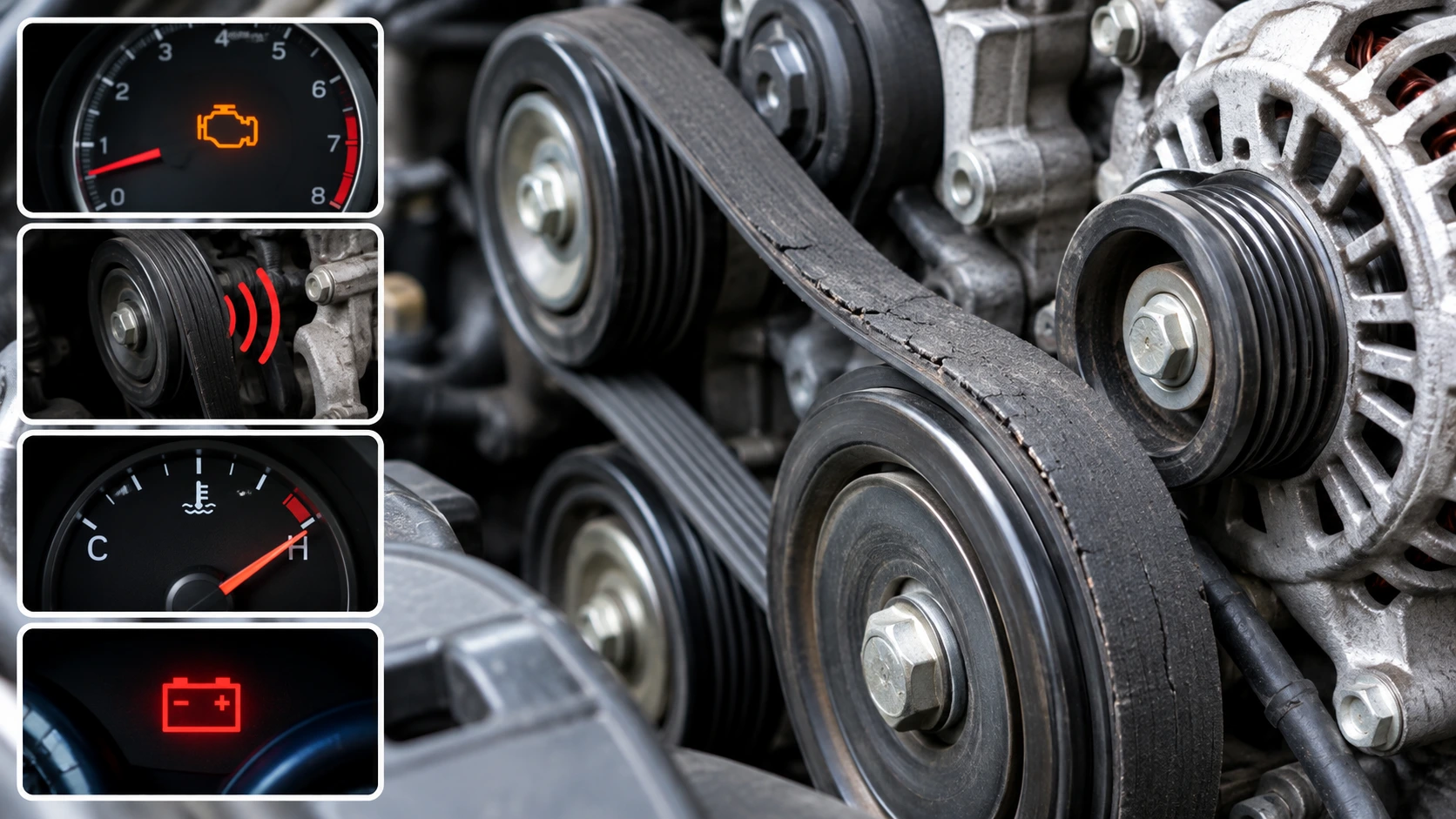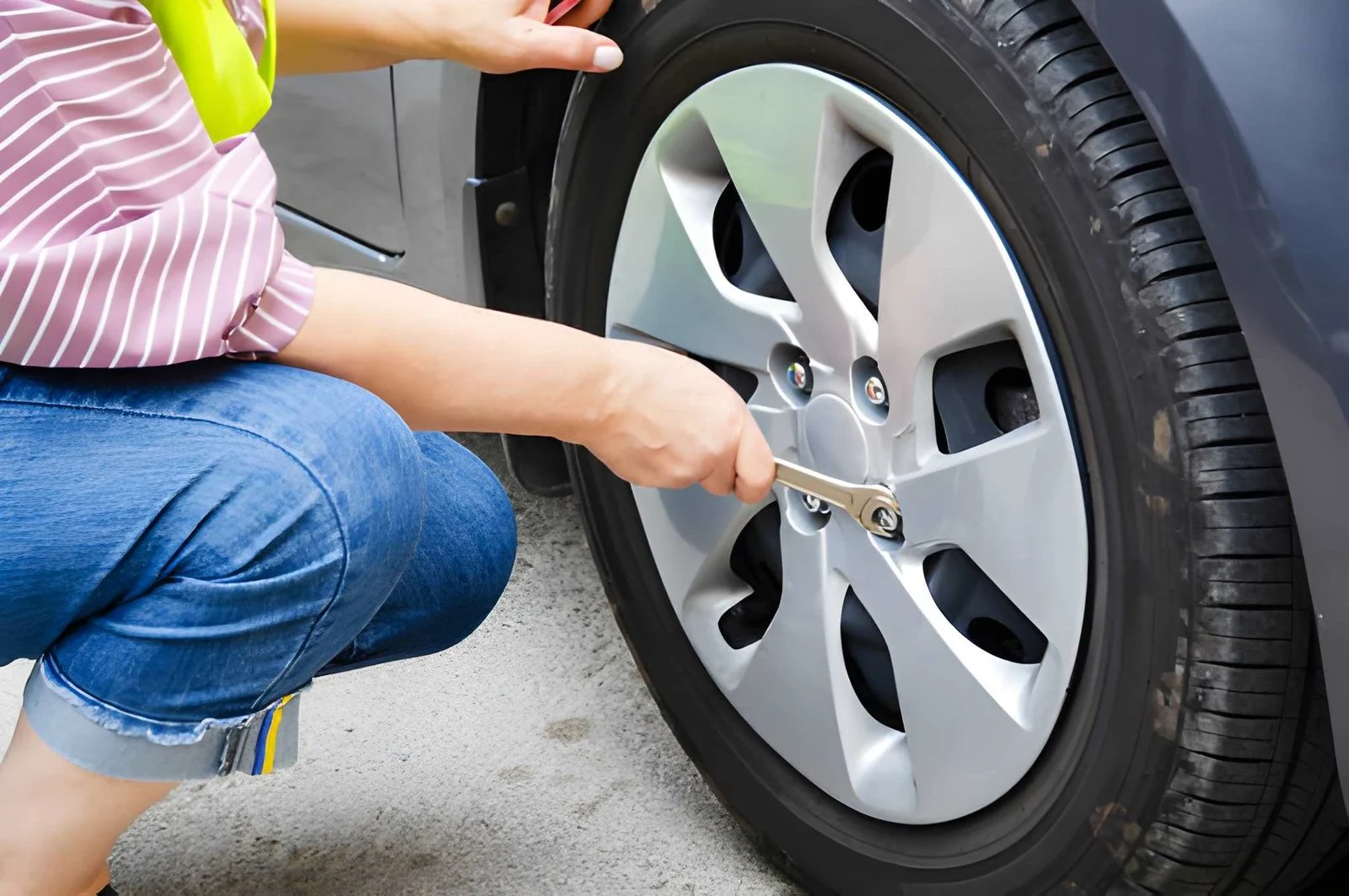
When a vehicle feels different after tire replacement — steering heavier, ride bumpier, the handling feels less precise, or a new vibration has appeared — is a legitimate complaint that deserves a proper explanation.
New tyres should make a car feel better — when a vehicle feels different after tire replacement in a negative way, something went wrong. If the vehicle feels noticeably different after a tyre change, something has changed that shouldn’t have — or something that needed to change was not done alongside the tyre replacement.
At Rapid Rev Garage in Al Quoz, this is one of the most common post-service complaints we investigate. The cause is almost always one of five things — and all of them are fixable.
Vehicle Feels Different After Tire Replacement — Quick Answer
A vehicle feels different after tire replacement for several reasons. The most common are incorrect tyre pressure set after fitment — too high or too low for the vehicle’s specifications; incorrect tyre specification fitted — wrong size, load rating, or speed rating that changes the vehicle’s handling characteristics; the balancing was not done or not done correctly — producing a vibration that wasn’t there before; the alignment was disturbed during tyre removal and was not checked or reset after fitment; or the new tyres have a different compound and tread pattern than the old ones, producing a change in feel that requires a short adaptation period. Each cause produces a distinct character of difference and each has a clear resolution.
Table of Contents
- Why New Tyres Should Feel Better, Not Worse
- Incorrect Tyre Pressure After Fitment
- Wrong Tyre Specification Fitted
- Balancing Not Done or Done Incorrectly
- Alignment Disturbed During Tyre Removal
- Different Compound and Tread Pattern — Normal Adaptation
- Valve Stem Not Replaced During Fitment
- TPMS Sensor Issues After Tyre Change
- How Dubai’s Road Environment Magnifies Fitment Errors
- How We Assess Vehicle Feels Different After Tire Replacement
- The Services That Fix Each Confirmed Cause
- What Does the Correction Cost in Dubai?
- Why Rapid Rev Garage?
- FAQ
- Conclusion
Why New Tyres Should Feel Better, Not Worse
A correctly-specified, correctly-fitted, correctly-balanced tyre on a correctly-aligned vehicle produces better handling, better ride quality, and more precise steering response than worn tyres. The tread compound is fresh and grippy. The structure is undamaged. The profile is exactly as designed.
When a vehicle feels different after tire replacement in a negative way — worse handling, new vibration, heavier steering — the difference is from a fitment error or a specification mismatch. The tyres themselves are not the problem. How they were fitted or what was fitted is.
Understanding which change occurred tells us exactly what to check and what to correct. Our car mechanic team checks tyre pressure, specification, and balancing data on every vehicle reported as feeling different after a tyre change.
Incorrect Tyre Pressure After Fitment
This is the most common cause of vehicle feels different after tire replacement — and the simplest to fix.
When tyres are fitted, the fitting machine inflates them to a standard pressure — often 35–40 PSI — to seat the bead on the rim. This pressure must then be corrected to the vehicle’s specification, which is printed on the door jamb sticker and is different for every vehicle. Many tyre fitting centres do this correctly. Some don’t.
Overinflated tyres feel noticeably firmer. The ride quality deteriorates — every road imperfection transmits directly. The steering feels more sensitive and responsive but less controlled. The contact patch is reduced to the centre of the tread.
Underinflated tyres feel soft and vague. The steering has less precision. The vehicle may feel like it is wallowing or rolling more than before.
The first thing to check after any tyre replacement: confirm all four pressures against the door jamb specification — cold, before driving. A five-minute check that resolves the majority of post-replacement complaints.
Wrong Tyre Specification Fitted
A tyre that is the wrong size, load rating, or construction type for the vehicle produces handling differences that no adjustment can correct — because the tyre itself is the wrong specification.
Wrong size. A tyre with a different aspect ratio — a 55-profile fitted where a 45-profile was specified — produces a taller sidewall. A taller sidewall provides more cushioning but reduces steering precision and changes the vehicle’s effective gearing. The speedometer may also read slightly incorrectly.
Wrong load rating. A tyre with a lower load rating than specified cannot safely carry the vehicle’s weight at the rim. Under load — full passengers and luggage — it deflects more than designed, changing handling characteristics. Under highway speed, it may overheat.
Wrong speed rating. A tyre with a lower speed rating than specified has a softer construction designed for lower maximum speeds. At UAE highway speeds, this tyre has different handling characteristics — typically softer and less responsive — than the specified higher-rated tyre.
Wrong construction. A standard road tyre where an all-season or reinforced tyre was specified produces different sidewall stiffness and different load response.
Check the tyre sidewall against the vehicle’s tyre placard specification. The size code — for example 225/45R18 — and the load and speed rating index must match the specification exactly or be an approved upgrade.
Balancing Not Done or Done Incorrectly
Wheel balancing ensures that the combined wheel-and-tyre assembly rotates without vibration at speed. It is a mandatory step after every tyre replacement.
If the balancing was not done — or if the balancing machine was poorly calibrated, or if the balancing weights were placed incorrectly — the vehicle develops a vibration at highway speed that was absent before the tyre change. This is a vehicle feels different after tire replacement complaint that appears specifically above 80 km/h and may be felt as a steering wheel vibration, a seat vibration, or a general whole-vehicle tremor.
In Dubai, where every drive involves time at highway speed on the E311, E611, or Sheikh Zayed Road, an imbalanced tyre is immediately obvious and uncomfortable.
The fix is a return to a balancing machine. A dynamic balance on all four wheels, including the newly-fitted tyres, corrects the imbalance. If a tyre fitting centre does not offer to balance the tyres automatically with every change, it is not performing the complete service. Our car service packages include dynamic balancing with every tyre replacement — it is not an optional add-on.
Alignment Disturbed During Tyre Removal
During tyre removal, the wheel is removed from the hub. On most standard tyre changes, this doesn’t affect the alignment — the suspension components are not disturbed.
However, on some vehicles where the tyre fitter needed to remove a hub cap, sensor cover, or other component to access the wheel, something in the steering or suspension path may have been disturbed. On vehicles with independent rear suspension, an incorrectly re-torqued hub nut can affect the rear toe. A suspension component accidentally knocked during removal can shift the alignment slightly.
The alignment-disturbed vehicle feels different after tire replacement presents as a pull to one side, a steering wheel that is no longer centred, or a rear instability that wasn’t present before. A four-wheel alignment check after any tyre change that produced these symptoms confirms or rules out alignment change.
Many workshops recommend an alignment check after tyre replacement as standard practice — because new tyres reveal existing alignment faults that worn tyres were masking. A vehicle that was pulling slightly with old tyres pulls more noticeably with new tyres because the new tyre’s grip makes the alignment fault more significant. For any exterior repairs needed alongside tyre work, our car painting team handles colour-matched repairs at the same visit.
Different Compound and Tread Pattern — Normal Adaptation
Not all feeling differences after a tyre replacement indicate a fault. A new tyre of the correct specification but a different brand or model has a different compound hardness, a different tread block pattern, and a different sidewall stiffness than the old tyre.
These differences produce legitimate changes in handling character. A change from a touring-oriented tyre to a performance-oriented tyre of the same size produces more precise steering but a firmer ride. A change in the opposite direction produces a more comfortable ride but slightly less steering precision.
If the new specification matches the vehicle’s requirement exactly and the pressure, balancing, and alignment are confirmed correct — but the vehicle still feels different — the driver is adapting to a new tyre model’s character. This typically resolves within 200–500 km of normal driving as the driver’s muscle memory adjusts.
New tyres also have a release compound on the tread surface from the manufacturing process. This compound reduces grip slightly for the first 100–200 km. Many tyre manufacturers advise a break-in period of gentle driving before relying on the tyre’s full grip capability.
Valve Stem Not Replaced During Fitment
The valve stem is the small fitting through which air is added to the tyre. It has a rubber seal that ages with heat and UV exposure.
When a new tyre is fitted on an old rim with an old valve stem, the aged stem may not seal correctly at the new, higher inflation pressure. The new tyre appears correctly inflated after fitting but slowly loses pressure through the aging stem seal over the following days.
The vehicle feels different after tire replacement in this case is actually the tyre pressure dropping gradually — the vehicle felt fine the day after the change and progressively changed feel over the following week.
Valve stems should be replaced every time a tyre is replaced. They cost under AED 20 each. Many tyre fitting centres include this automatically. Others charge separately. Either way, confirm it was done.
TPMS Sensor Issues After Tyre Change
Modern vehicles have TPMS sensors inside the wheels that transmit pressure data to the dashboard. When a tyre is removed and refitted, the TPMS sensor must be handled carefully to avoid damage.
If a sensor was damaged during fitment — dropped, struck by the tyre machine, or its rubber seal was disturbed — it may give incorrect pressure readings. The dashboard shows an incorrect pressure, the TPMS warning light may appear, and the driver may feel confused about what the correct inflation is.
On some vehicles, the TPMS sensors must be relearned after a tyre rotation or change — the vehicle’s computer must be told which sensor is at which corner. An unlearned TPMS shows incorrect positions or triggers a warning light that wasn’t present before the change.
A TPMS scan confirms each sensor’s function, battery status, and pressure reading — identifying whether a sensor was damaged during the change or simply needs to be relearned to the new tyre position.
How Dubai’s Road Environment Magnifies Fitment Errors
Dubai’s road environment makes tyre fitment errors more obvious than in most markets.
Highway speed exposure. UAE highway speed limits and driving patterns mean every vehicle reaches 100–120 km/h regularly. An imbalanced tyre that would be barely noticeable at 80 km/h in a lower-speed market produces a clear vibration at Dubai highway speeds.
Heat amplification of pressure errors. A tyre fitted at the wrong pressure expands further in Dubai’s heat — the final hot pressure is even further from specification than the cold pressure error. An overinflated tyre feels significantly harder in summer heat than the same overinflation in a cooler climate.
Road surface quality variation. Dubai’s main roads are smooth. Side roads and access roads are variable. The difference between the smooth E11 and a rough Al Quoz industrial road amplifies the feel of an incorrect specification tyre — it handles well on the smooth highway and poorly on the rough road surface. For any roadside help from a tyre issue that developed after replacement, our roadside assistance team covers Al Quoz and nearby Dubai areas.
How We Assess Vehicle Feels Different After Tire Replacement
Pressure check at all four corners. Cold pressure at every corner compared against the door jamb specification. The most common fix is correcting an incorrect inflation.
Tyre specification verification. The size code, load index, and speed rating on each tyre is compared against the vehicle’s specification. Any mismatch is documented.
Dynamic balancing on the balancing machine. All four wheels are spin-balanced. Any imbalance is corrected and the specific imbalance amount per wheel is recorded.
Four-wheel alignment measurement. All alignment angles at all four corners. Post-replacement alignment is confirmed or corrected.
TPMS scan. Each sensor’s function, pressure reading, and position is confirmed. Sensors that were damaged or need relearning are identified.
The Services That Fix Each Confirmed Cause
- Tyre pressure correction. Immediate — all four tyres corrected to specification. AED 0–50.
- Tyre replacement for wrong specification. Incorrect tyres returned and replaced with correct specification. AED 250–800 per tyre.
- Dynamic balancing. All four wheels balanced to specification. AED 150–300 for all four.
- Four-wheel alignment. Geometry corrected to specification. AED 200–400.
- Valve stem replacement. New stems fitted at each corner. AED 20–60 per stem.
TPMS sensor replacement or relearn. Damaged sensor replaced. Relearn procedure performed where needed. AED 50–600 depending on whether replacement or relearn is required. Our mobile car mechanic covers Al Quoz and nearby Dubai areas for on-site pressure check and initial assessment. Our garage near me in Al Quoz serves drivers from Business Bay, Jumeirah, Barsha, Satwa, Downtown, and the Sheikh Zayed Road corridor.
What Does the Correction Cost in Dubai?
| Service | Cost Range |
| Tyre pressure correction | AED 0–50 |
| Tyre replacement (wrong spec) | AED 250–800 per tyre |
| Dynamic balancing (all four) | AED 150–300 |
| Four-wheel alignment | AED 200–400 |
| Valve stem replacement | AED 20–60 per stem |
| TPMS relearn or replacement | AED 50–600 |
All costs confirmed after the pressure, specification, and balancing assessment.
Why Rapid Rev Garage?
A vehicle feels different after tire replacement because something changed that shouldn’t have — pressure, specification, balancing, or alignment. The systematic check — pressure first, specification second, balancing third, alignment fourth — identifies the specific cause without guesswork.
We confirm all four parameters after every tyre change at our workshop before the car leaves. The balancing is included. The pressure is set to the door jamb specification, not a standard shop pressure. The TPMS sensors are checked. The vehicle is road-tested before the driver collects it.
FAQ — Vehicle Feels Different After Tire Replacement
Here are the questions Dubai drivers ask us most about post-replacement handling changes.
Can new tyres feel harder than old tyres even at the same pressure?
Yes. A fresh tyre compound is stiffer than an aged, heat-hardened compound. The new tyre transmits road texture more clearly initially. This stiffness reduces over the first few hundred kilometres as the compound breaks in. If the pressure is confirmed correct and the ride still feels unusually hard, check the specification — the tyre profile or load rating may differ from the previous set.
My steering feels heavier after new tyres — what could cause that?
Two common causes. First, overinflated tyres — too high a pressure reduces the contact patch and changes how the steering feels by altering the tyre's cornering force distribution. Second, a wider tyre than the previous set — a wider contact patch requires more effort from the power steering. Check the tyre size — if it's wider than the previous set, the additional effort is from the specification change, not a fault.
The car vibrates at exactly 110 km/h after the tyre change — was the balancing done wrong?
Almost certainly. A speed-specific vibration that appears after a tyre change and wasn't there before is the clearest indicator of incorrect balancing. The resonant frequency of the imbalanced wheel is being excited at 110 km/h. Return for a rebalance — the tyre fitting centre should redo this at no charge.
Do I need an alignment after every tyre change?
Not necessarily after every change — but after any change where the vehicle then feels different (pulling, wandering) or where the previous alignment was not recent. New tyres reveal existing alignment faults that worn tyres were masking. If the vehicle pulls after new tyres, an alignment check is the first step.
My TPMS light came on after a tyre change — is that from the new tyres?
Either the sensors were not relearned to the new tyre positions, a sensor battery is low, or a sensor was damaged during the change. A TPMS scan identifies which. Don't assume the light is a false alarm — it may indicate a genuine pressure issue on one corner from an incorrectly sealed valve stem.
Conclusion
Every vehicle feels different after tire replacement complaint traces to a fitment error or specification mismatch — not because new tyres are inherently worse. Incorrect pressure, wrong tyre size, missed balancing, disturbed alignment, or a TPMS issue covers the vast majority of post-replacement complaints. All of these are identifiable and fixable.
Rapid Rev Garage in Al Quoz resolves every vehicle feels different after tire replacement complaint through pressure, specification, balance, alignment, and TPMS checks — confirming the specific cause before any additional service is recommended.
Rapid Rev Garage is in Al Quoz, serving Business Bay, Jumeirah, Downtown, Barsha, Satwa, and the Sheikh Zayed Road corridor. Book your appointment on WhatsApp or find us on Google Maps.
Rapid Rev Garage — Vehicle Feels Different After Tire Replacement | Al Quoz, Dubai