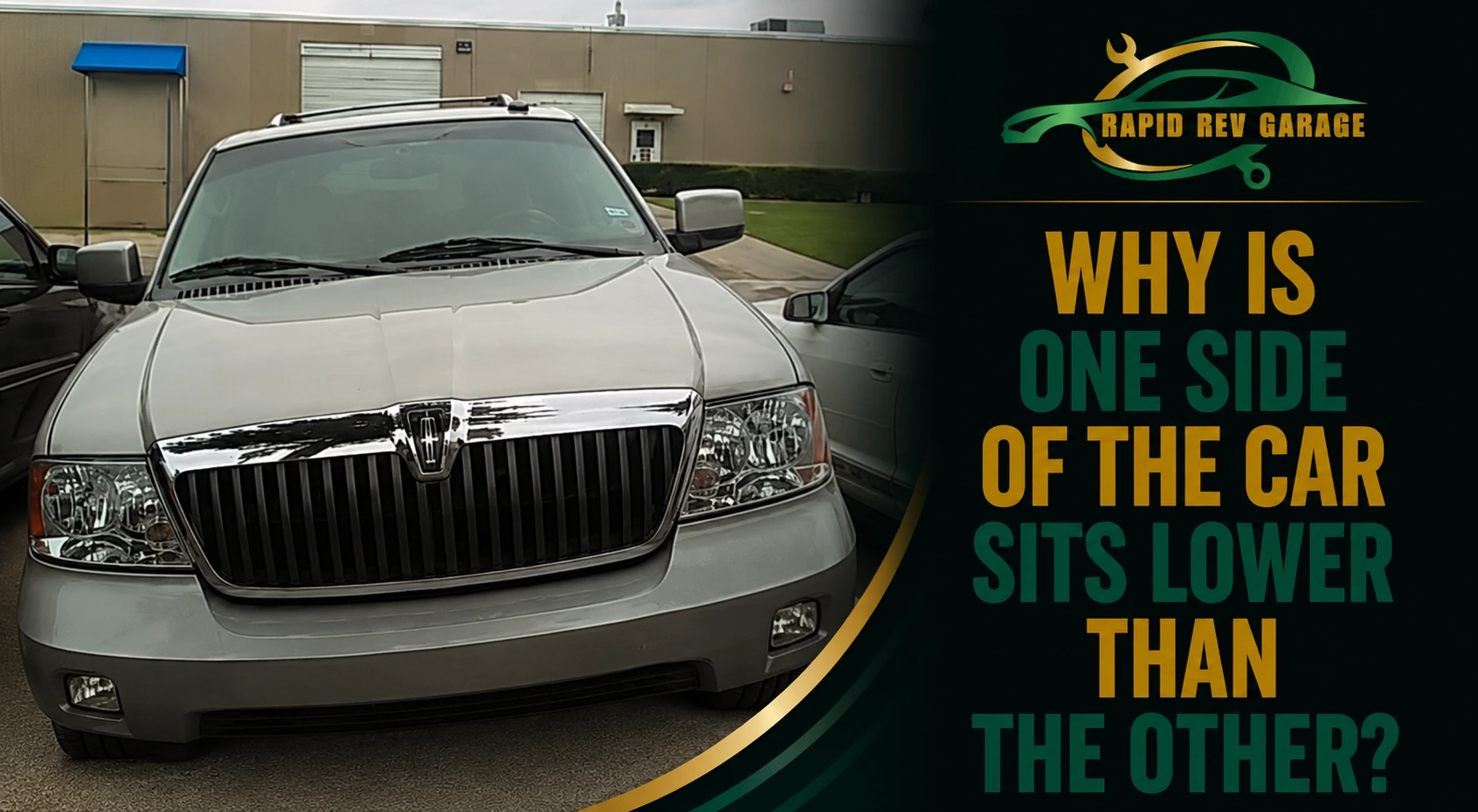
If one side of the car sits lower than the other, the suspension may have a damaged spring, leaking air strut, worn shock, or another suspension fault. A broken coil spring is a common cause of a car sagging on one corner. Air suspension cars can also drop when an air strut or air line leaks. In some cases, a bent suspension part can make the car lean. Do not ignore a clear height difference. It can affect handling, tire wear, braking, and ride comfort. A proper suspension inspection can find the faulty part and prevent further damage.
Table of Contents
- Problem Overview
- Symptoms to Watch For
- Common Causes
- Diagnostic Process
- Repair and Service Process
- Risks of Ignoring the Problem
- Can You Continue Driving?
- Repair and Service Time
- Cost Factors
- Estimated Repair Cost
- Prevention Tips
- Dubai-Specific Advice
- Why Choose Rapid Rev Garage for Suspension Repair?
- FAQs
- Related Services
- Final Thoughts
Problem Overview: Why Your Car May Lean to One Side?
A car should normally sit at a fairly even height on both sides. A small difference can happen because of road conditions, tire pressure, fuel load, or the way the vehicle is parked.
However, a clear lean is not something to ignore. If you notice that one wheel arch is much closer to the tire than the other, there may be a suspension problem.
When one side of the car sits lower than the other, the problem may be limited to one corner. It can also point to a wider suspension issue.
The first step is to check whether the difference is real. Park the car on level ground and compare the wheel-to-fender gap on both sides.
Symptoms to Watch For
A low corner is often easy to see. Other signs can also help identify the problem.
Look for:
- ⚠️ Car leaning when parked on level ground
- ⚠️ Uneven wheel arch or fender clearance
- ⚠️ A car that feels unstable in corners
- ⚠️ Steering that feels different from normal
- ⚠️ Car pulls to one side uneven height
- ⚠️ Clunking or knocking from the suspension
- ⚠️ Uneven tire wear
- ⚠️ Inner tire wear on the affected corner
- ⚠️ One corner dropping after the car sits overnight
- ⚠️ A rough or bouncy ride
- ⚠️ Visible spring damage
If your car sags on driver side broken spring, the driver-side spring should be checked before assuming the shock absorber is the problem.
Common Causes of Uneven Ride Height
Broken or Weak Coil Spring
Coil springs carry much of the vehicle’s weight. They can weaken over time or break due to age, corrosion, or impact. A broken spring can cause a sudden drop on one corner. This is one of the first things a technician should inspect.
Leaking Air Suspension
Luxury vehicles with air suspension can develop leaks. A damaged air strut, air line, valve, or compressor system can cause the vehicle to drop. An air strut leaking one side lower can create a noticeable height difference. The affected corner may also become lower after the vehicle has been parked for several hours.
Worn or Damaged Shock Absorber
A shock absorber controls suspension movement. A worn shock can cause poor handling and bouncing. A blown shock absorber sagging on one corner is possible, but shocks usually control movement rather than support the vehicle’s full weight. A low corner should therefore be checked for spring and air-suspension problems too.
Bent Suspension Component
A serious pothole, curb strike, or road accident can damage suspension parts. A bent suspension component car leaning problem may involve a control arm, strut, knuckle, or another part. Driving with a damaged component can be unsafe.
Uneven Tire Pressure or Tire Size
Not every height difference is caused by the suspension. Low tire pressure can change the vehicle’s apparent height. Different tire sizes can also create an uneven stance. Always check tire pressure before arranging major repairs.
Diagnostic Process: How Technicians Find the Fault
A proper inspection is more useful than guessing which part has failed.
A technician may follow these steps:
- Park the vehicle on a level surface.
- Check all four tire pressures.
- Compare the vehicle’s ride height.
- Inspect springs for cracks or breaks.
- Check shocks and struts for leaks.
- Inspect air suspension components.
- Check control arms and other suspension parts.
- Look for signs of impact damage.
- Inspect tire wear.
- Check wheel alignment if required.
Measuring car lean fender clearance can help show whether the difference is outside the normal range.
There is no single acceptable side to side height difference car value for every vehicle. Factory specifications vary by model, suspension type, tire size, and load.
Repair and Service Process
Step 1: Identify the Fault
Once the fault is found, the repair depends on the failed component.
Step 2: Replace a Broken Spring
For a broken spring, the damaged spring is replaced. In many cases, replacing springs in pairs on the same axle is recommended to keep the suspension balanced.
Step 3: Inspect the Air Suspension System
For air suspension, the technician may test the air strut, air line, valve block, and compressor system. A leaking component must be repaired or replaced.
Step 4: Replace Bent Suspension Parts
If an impact has bent a suspension part, that component may need replacement.
Step 5: Check Wheel Alignment
Wheel alignment may also be required after the repair to ensure proper handling and prevent uneven tire wear.
Step 6: Arrange a Professional Suspension Inspection
A professional suspension inspection is especially important when one side of the car sits lower than the other without an obvious reason.
Risks of Ignoring the Problem
Driving with an uneven suspension can create more problems.
Possible risks include:
- Uneven tire wear
- Poor cornering
- Reduced ride comfort
- Steering instability
- Extra stress on suspension parts
- Incorrect wheel alignment
- Reduced braking stability
- Damage to tires or other components
A sagging corner causing inner tire wear is a warning sign that should not be ignored.
If the vehicle suddenly drops, makes loud suspension noises, or becomes difficult to control, consider using roadside assistance rather than driving it to a workshop.
Can You Continue Driving?
It depends on the cause and how severe the problem is.
A very small difference may not require immediate towing. However, a visibly low corner, broken spring, leaking air strut, damaged suspension component, or severe handling problem needs prompt attention.
Do not continue driving if:
- A spring is broken
- The tire is rubbing against the body
- The vehicle is extremely low
- Steering feels unsafe
- The car pulls strongly
- You hear severe suspension noises
- A suspension component is visibly damaged
If you are unsure, roadside assistance is the safer option.
Repair and Service Time
The repair time depends on the fault and vehicle.
A basic inspection may take around 30–60 minutes. A spring or shock replacement can often take a few hours. Air suspension repairs may take longer if the technician needs to find a slow leak.
Alignment can add extra time after suspension repairs.
Complex European and luxury vehicles may require additional diagnostic work.
Cost Factors for Suspension Repair
Suspension repair prices in Dubai vary from one vehicle to another.
The final cost depends on:
- Vehicle make and model
- Suspension type
- Coil spring condition
- Shock or strut condition
- Air suspension components
- Genuine or aftermarket parts
- Labor time
- Wheel alignment requirements
- Damage from an accident or pothole
If one side of the car sits lower than the other because of a broken spring, the repair may be much simpler than a complete air suspension fault.
Prevention Tips for Uneven Suspension
You cannot prevent every suspension failure, but regular checks can reduce the risk.
Suspension Maintenance Checklist
- ✅ Check tire pressure regularly
- ✅ Inspect tires for uneven wear
- ✅ Have suspension checked during routine service
- ✅ Avoid hitting potholes at high speed
- ✅ Do not overload the vehicle
- ✅ Check for oil leaks around shocks
- ✅ Watch for changes in ride height
- ✅ Listen for new suspension noises
- ✅ Check air suspension if a corner drops overnight
- ✅ Get wheel alignment after major suspension work
Regular maintenance can catch worn components before they cause a larger problem.
Dubai-Specific Advice for Uneven Car Height
Dubai roads are generally well maintained, but potholes, road edges, speed bumps, and curb impacts can still affect suspension components. Heat also places extra demands on vehicles. Rubber suspension parts can become harder and less flexible as they age.
Luxury cars with air suspension need special attention. A small air leak may not be obvious at first. The car may only become lower after sitting overnight. If one side of the car sits lower than the other in Dubai’s hot conditions, do not assume that the heat alone caused it. Have the suspension system checked.
Why Choose Rapid Rev Garage for Suspension Repair?
Rapid Rev Garage can inspect suspension problems and identify the cause of uneven ride height. A proper inspection can help determine whether the issue comes from a coil spring, shock absorber, air suspension system, or damaged suspension component.
Rapid Rev Garage can also check related problems such as wheel alignment and uneven tire wear. This is useful when one side of the car sits lower than the other and the vehicle also feels different while driving.
For Dubai drivers looking for the ‘best suspension repair shop near me’, choosing a workshop like Rapid Rev Garage that checks the complete suspension system is better than replacing parts based only on symptoms.
FAQs
Why is my car lower on the driver side?
If your car is lower on the driver side, a weak or broken spring is one possible cause. Uneven tire pressure, suspension damage, or air suspension faults can also cause the problem.
Why does my car lean to one side?
A car can lean because of a broken spring, damaged suspension component, weak suspension parts, or an air suspension leak. Check the vehicle on level ground before judging the height.
Why is my car sitting low on one side?
A broken spring, worn suspension part, low tire pressure, or air suspension leak can make your car sit low on one side.
Why does one side of my car look lower?
One side may look lower due to a weak spring, damaged suspension component, uneven tire pressure, or an air suspension fault.
Why does one side of my car sit higher than the other?
Uneven suspension height can result from a broken spring, worn suspension parts, different tire pressures, or an air suspension problem.
Can you drive with low suspension?
It is not recommended. Low suspension can affect handling, tire wear, and safety, so get the car inspected as soon as possible.
Is it normal if the passenger side is sitting lower than the driver side?
A small difference can occur because of vehicle load and design. A clear or sudden difference should be inspected, especially if the passenger side sitting lower than driver side problem appeared recently.
Can a broken spring make a car sit uneven?
Yes. A broken or badly weakened coil spring can reduce ride height at one corner and make the vehicle look uneven.
Can an air suspension fault lower only one side?
Yes. A leak in one air strut, air line, or related component can cause one corner to drop. The vehicle may rise again temporarily after the air suspension compressor runs.
Can uneven ride height cause tire wear?
Yes. An uneven suspension can affect wheel alignment and tire contact. This can contribute to abnormal or inner-edge tire wear.
Should I drive if my car is leaning?
If the lean is severe, appears suddenly, or comes with steering problems, rubbing, or loud suspension noises, avoid driving and arrange roadside assistance.
How can I measure the height difference?
Park on level ground and measure from the wheel center to the fender edge on both sides. Use the same points on each side. Compare the measurements with the vehicle manufacturer's specifications.
When should I visit a suspension repair shop?
Visit a workshop when the lean is obvious, gets worse, appears suddenly, or comes with unusual tire wear, steering changes, or suspension noise.
Relevant Service Page
If your vehicle is leaning or one side sits lower than the other, visit our car suspension repair service page to learn more about the inspection and repair options available. Rapid Rev Garage can help identify the cause and recommend the right solution for your vehicle.
Related Services for Suspension Problems
Depending on the inspection results, related services may include:
- Car suspension repair
- Coil spring replacement
- Shock absorber replacement
- Strut repair and replacement
- Air suspension repair
- Wheel alignment
- Tire inspection
- Control arm replacement
- Steering inspection
- Car leaning side to side inspection in Dubai
- Roadside assistance
Final Thoughts: Get Your Suspension Checked
A leaning car is not something to guess about. The cause could be a simple tire-pressure issue, but it could also be a broken spring, damaged suspension part, or air suspension leak.
If one side of the car sits lower than the other, get the vehicle inspected before the problem affects tires, steering, or handling.
For professional suspension inspection and repair in Dubai, contact Rapid Rev Garage and have the problem diagnosed before it becomes more expensive.
You can also visit us at our Al Quoz, Dubai branch,
Rapid Rev Garage: https://maps.app.goo.gl/wjK13vovXTKx5SsH8