You start the car on a hot afternoon in Business Bay, switch the AC on and nothing comes out of the vents. Or the fan only works on its highest setting, roaring at full blast with no way to turn it down. These are common bad AC blower motor symptoms, and in Dubai they turn a short drive into a very uncomfortable one.
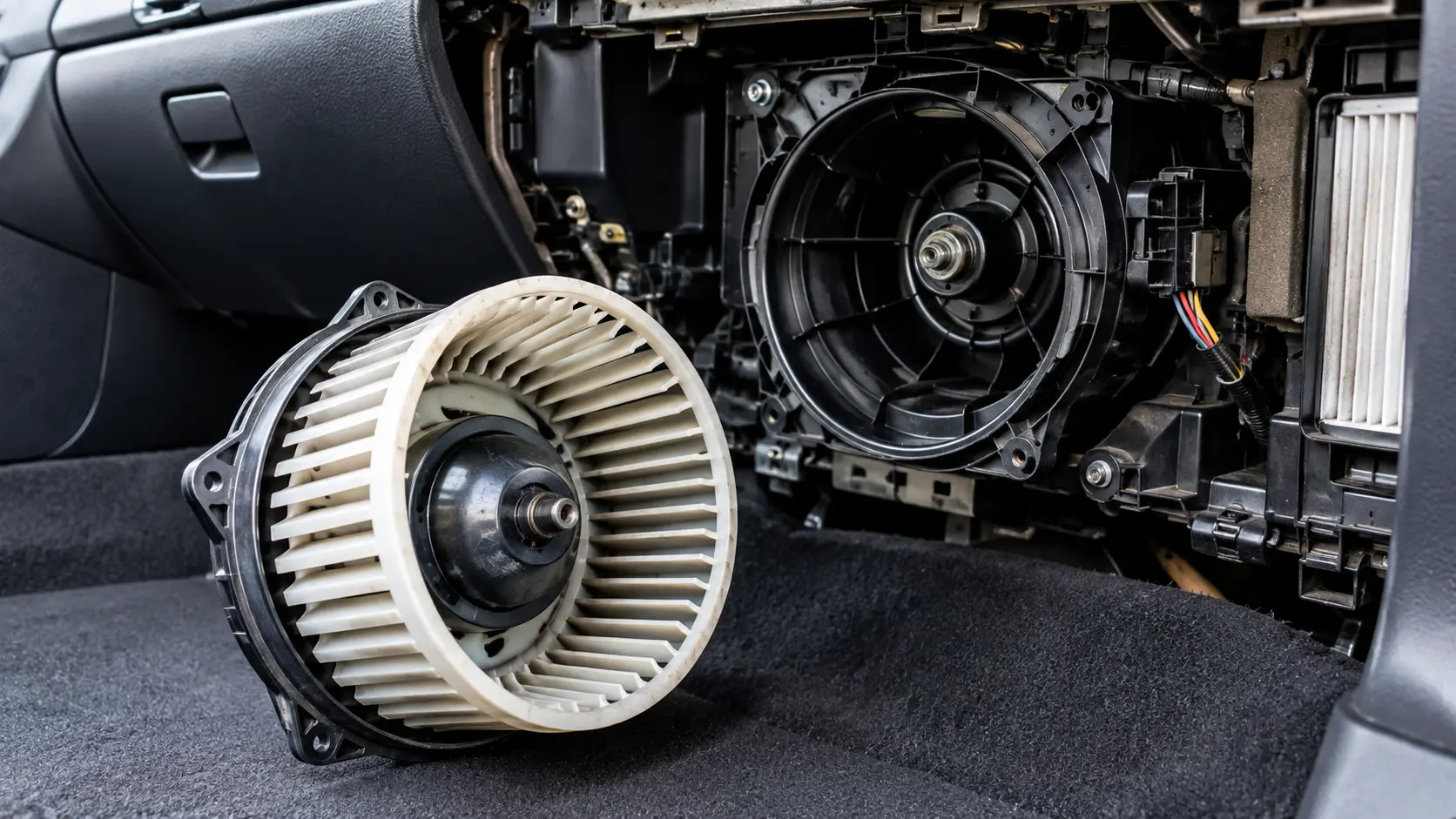
The blower motor is the fan behind the dashboard that pushes air across the evaporator and out of the vents. Without it, the AC may be producing cold air that never reaches you. Its speed is controlled by a resistor or a control module, which fails just as often as the motor itself.
Because the AC system can be cold while the fan has stopped, an AC repair specialist checks the blower and its controls before looking at gas or the compressor. This guide explains how the blower works, the signs of failure, why it fails in Dubai, how it is tested and what replacement involves.
Bad AC Blower Motor Symptoms: Quick Answer
The main bad AC blower motor symptoms are no air from the vents, a fan that only works on the highest speed, weak airflow at every setting, squealing, grinding or rattling from behind the dashboard, a fan that works on and off, a burning smell from the vents and a fan that keeps running with the car switched off.
Samarins explains that a fan working only on its highest setting usually points to a failed blower motor resistor, while no airflow can come from the resistor, the motor or the control module. A mechanic tests the voltage at the motor, the resistor’s resistance and whether the motor spins freely.
Table of Contents
- How the Blower Motor and Resistor Work
- Why Blower Motors Fail Faster in Dubai
- No Air From the Vents
- Fan Works Only on the Highest Speed
- Weak Airflow at Every Setting
- Squealing, Grinding or Rattling From the Dashboard
- Fan That Works On and Off
- Burning Smell From the Vents
- Fan That Keeps Running With the Car Off
- Windscreen That Will Not Clear
- Faults That Look Like a Bad Blower Motor
- How a Workshop Tests a Blower Motor
- What Blower Motor and Resistor Replacement Involves
- Should the Motor and Resistor Be Replaced Together?
- Can You Change a Blower Motor Yourself?
- How to Make the Blower Motor Last Longer
- What Is a Blend Door Actuator?
- Why Does My AC Fan Change Speed by Itself?
- FAQ
- Conclusion
How the Blower Motor and Resistor Work
Samarins describes the blower motor as the motor that runs the fan in the heating and AC system. It sits in a housing behind the dashboard, usually on the passenger side, behind or below the glovebox. It pulls air in, pushes it across the evaporator and sends it to the vents.
Samarins explains that a blower motor resistor is a simple electric resistor that lowers the voltage to the motor to give fixed lower speeds. On the highest setting, the resistor is bypassed and the motor gets full voltage.
Cars with automatic climate control often use a control module instead. Samarins notes that the module sets the speed more gradually and often supplies the ground for the motor. When it fails, the motor may not work at all.
Why Blower Motors Fail Faster in Dubai
In Dubai, the AC runs almost every day of the year, often on high, for long periods. The blower motor runs far more hours than in cooler countries. Its bearings and brushes wear with use, and heat inside the dashboard adds to the strain.
Dust is another cause. Samarins explains that leaves, twigs, nuts and pieces of a ripped cabin filter can jam the blower fan. A jammed or worn motor draws extra current, which overheats the resistor. Fine dust that gets past a worn cabin filter also builds up on the fan blades.
Samarins also notes that resistors usually fail from corrosion or overheating. On a summer afternoon when the air passes 45°C, the inside of a parked car gets very hot, which stresses the resistor and the motor’s electronics.
No Air From the Vents
No airflow at all is the most obvious sign. Samarins notes that in some cars, a failed resistor can stop the fan completely, and that with a failed control module, the blower motor does not work at all. A seized motor, a blown fuse or a broken wire can also stop it.
You may hear the AC compressor click on in the engine bay, but nothing comes out of the vents. Changing the fan speed or the vent setting makes no difference.
Start with the simple check. Look up the blower fuse in your owner’s manual and check it. A blown fuse often means the motor is drawing too much current, so the motor should be checked too.
Fan Works Only on the Highest Speed
Samarins describes this as the classic symptom of a failed blower motor resistor: the fan only runs at the highest setting and does not work at lower speeds. On the top speed, the resistor is bypassed, so the motor still runs.
Drivers often live with this for a while, switching the fan on full and off again. In Dubai summer, full speed may be bearable, but in the cooler months it is loud and uncomfortable.
The resistor is usually a cheap part, often behind the glovebox. A worn motor may have caused it to overheat, though, so the motor should be checked at the same time.
Weak Airflow at Every Setting
Weak airflow at all speeds can come from the motor, but it more often comes from a blockage. A clogged cabin filter is the most common cause. Debris or a dirty evaporator can also block the air path.
A worn motor that spins slowly also gives weak airflow. You may hear the fan running but feel little air at the vents.
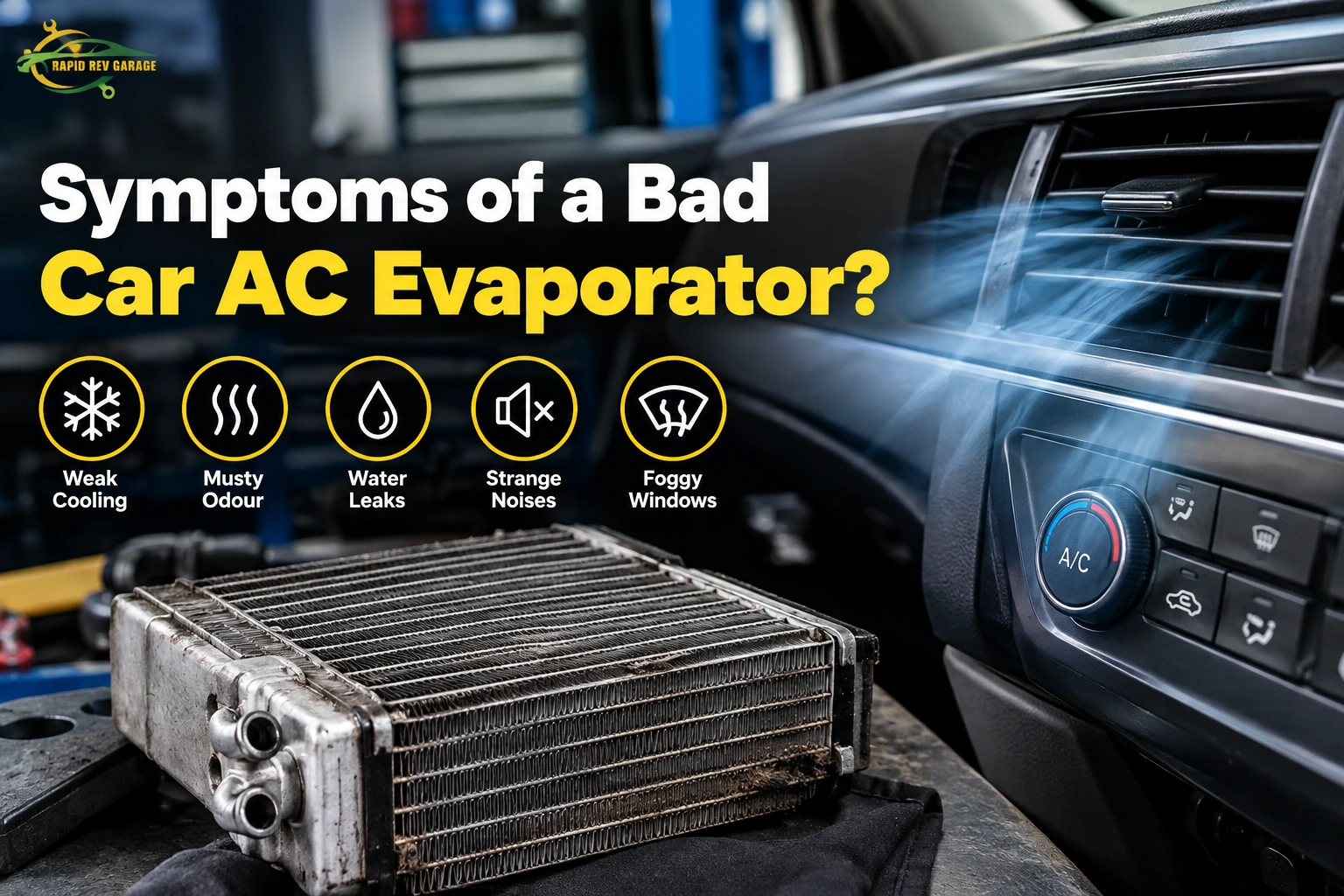
Check the cabin filter first. If it is clogged with dust, leaves or insects, a cabin filter change often restores airflow straight away. The guide on bad AC evaporator symptoms explains blockages inside the AC box.
Squealing, Grinding or Rattling From the Dashboard
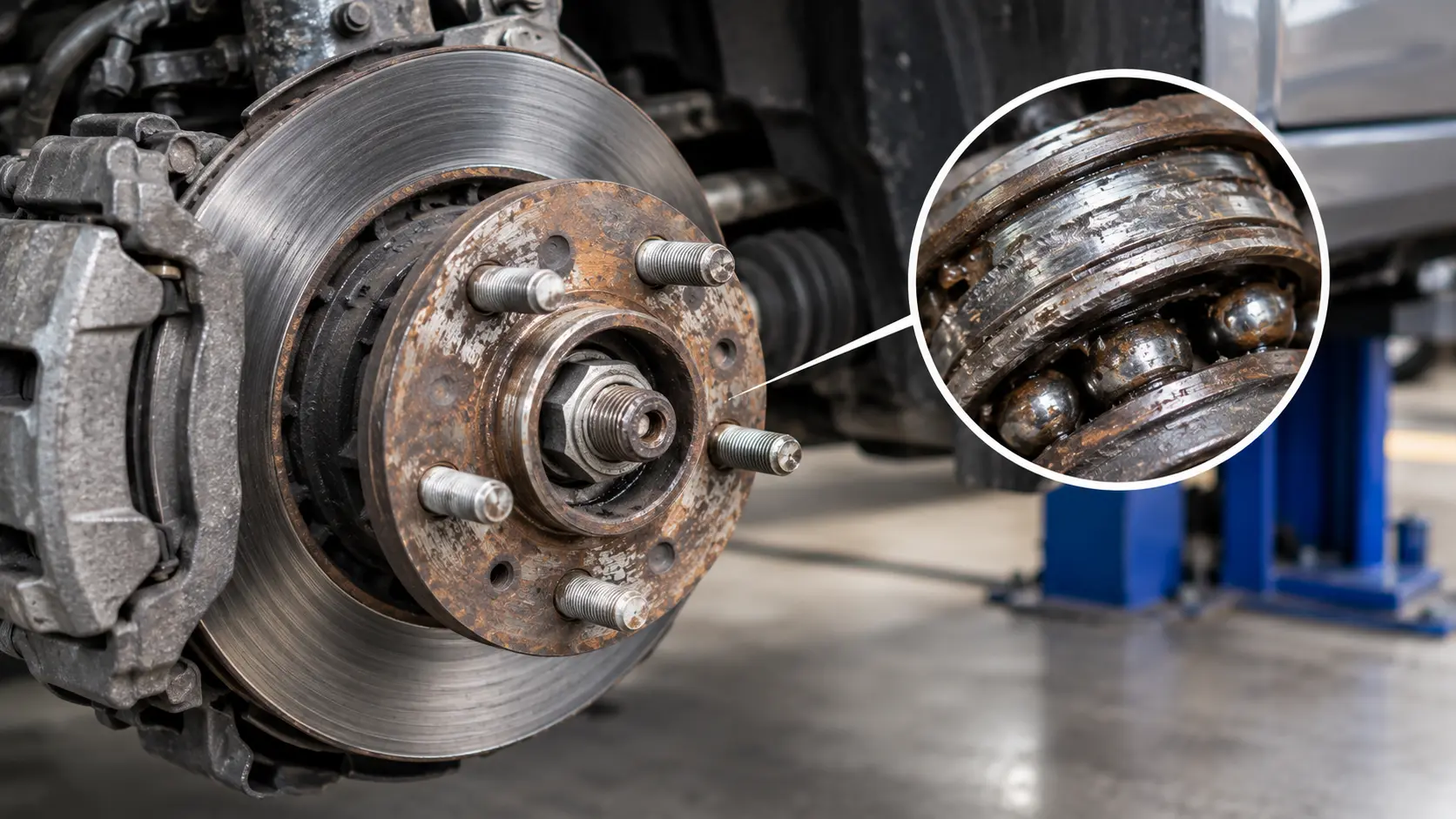
Samarins notes that a worn blower motor can intermittently produce a loud screeching noise when running. The noise comes from worn bearings inside the motor.
A rattling or ticking noise often means debris has got into the fan cage, such as leaves, a pen cap or part of a torn cabin filter. The sound usually changes with fan speed.
A grinding noise means the fan is rubbing on its housing or the bearings are badly worn. Samarins notes that a motor with worn bearings that does not spin freely can cause the resistor to fail, so noise should not be ignored.
Fan That Works On and Off
A fan that cuts out and comes back, or only works after a tap on the dashboard, often has a worn motor. As the brushes wear, the motor can stop in a dead spot where it does not make good contact.
Loose or corroded connections at the motor or the resistor cause the same symptom. Heat can make a weak connection lose contact, so the fan may stop on hot afternoons.
A failing control module on automatic climate systems can also cause the fan to change speed by itself or cut out. A scan tool can check the module on many cars.
Burning Smell From the Vents
A burning smell from the vents is a warning sign. It can come from an overheating motor, a melting resistor or a burnt connector. Samarins notes that a jammed motor draws excess current, which overheats the resistor.
Switch the fan off if you smell burning plastic or electrical burning. If you see smoke from the vents, pull over safely and switch the car off.
A burnt connector or wiring needs repair as well as the part that failed. An auto electrical check finds damaged wiring before it causes another failure.
Fan That Keeps Running With the Car Off
On some cars, a failed control module or a shorted resistor can leave the blower running after the ignition is off. The fan keeps blowing in the parked car and drains the battery overnight.
If you hear the fan still running after you lock the car, or the battery goes flat after a night parked, have the blower circuit checked. A battery that keeps going flat with no other cause is a common sign.
Some cars run the fan briefly after switch off to dry the evaporator. That is normal on those models, but it should stop within a few minutes.
Windscreen That Will Not Clear
The blower also clears the windscreen. On humid mornings in Dubai, especially near the coast, the inside of the windscreen can fog when the AC first starts. Without the blower, the fog will not clear.
Driving with a fogged windscreen is dangerous. If the glass fogs up and the fan does not work, pull over safely and wipe it before continuing.
If visibility drops on a highway, move to the hard shoulder rather than stopping in a live lane, which brings a AED 1,000 fine and six black points under Article 98 of the UAE Federal Traffic Law. If you smell burning or see smoke from the vents, stop and call roadside assistance.
Faults That Look Like a Bad Blower Motor
Several faults cause the same symptoms. A blown fuse stops the fan. A failed relay stops power reaching the motor.
A clogged cabin filter cuts airflow. A blend door or mode door actuator stuck in the wrong position sends air to the wrong place, so the vents seem weak.
A blocked evaporator or ice on the evaporator also cuts airflow. A faulty control panel can fail to send the right signal.
Samarins advises checking the voltage at the motor first. If voltage is present but the motor does not run, the motor is at fault. If there is no voltage, the fault is earlier in the circuit.
How a Workshop Tests a Blower Motor
Samarins describes a clear process. Start with a visual check of the resistor, because corrosion is often visible. Then measure the resistance across the resistor terminals and compare it with the service manual. An open reading means the resistor has failed.
Next, check the voltage at the motor with the blower switched on. Samarins gives a guide of at least 4 to 6 volts at low speed and about 12 volts at high speed. If voltage is present but the motor does not run, the motor is faulty or jammed. If there is no voltage, the circuit is tested from the fuse.
Control modules can be checked with a scan tool or a self test mode on many cars. The mechanic also spins the motor by hand to check for rough bearings and looks for debris in the fan cage. Book these tests with an experienced car mechanic near you.
What Blower Motor and Resistor Replacement Involves
Samarins notes that in many cars, the blower motor is behind the glovebox and held by three or four screws. The glovebox and a lower trim panel come out, the connector is unplugged and the motor drops out. The new motor goes in the same way.
In other cars, Samarins notes the motor sits inside the dashboard, which makes the job longer. The resistor is often next to the motor and held by two screws, although some older cars mount it on the firewall under the bonnet.
After fitting, the mechanic checks every fan speed, listens for noise and confirms airflow at each vent setting. A new cabin filter is usually fitted at the same time.
Should the Motor and Resistor Be Replaced Together?
Often, yes. Samarins advises replacing a worn motor along with the resistor, because a worn motor can cause a new resistor to fail again. A motor with tight bearings draws more current, which overheats the resistor.
If only the resistor has failed and the motor spins freely and quietly, the resistor alone may be enough. Samarins advises checking that the motor spins freely and runs quietly after replacing a resistor.
Replacing a resistor without checking the motor is a common reason for a repeat failure within months.
Can You Change a Blower Motor Yourself?
On many cars, the resistor and motor are reachable behind the glovebox and can be changed with basic tools. Disconnect the battery first, remove the glovebox and trim, and take photos of each step.
Use the exact part for your car, because motors and resistors vary between models and climate systems. Do not force connectors, which can break.
If the motor sits deep inside the dashboard, or the car has automatic climate control with a module, a workshop is the safer choice. Some trim clips and panels break easily, and cowl panels at the base of the windscreen must be removed carefully to avoid scratching the paint, which would need paint and panel repair.
How Long Does a Blower Motor Usually Last?
There is no fixed life for a blower motor. Many last for years, but in Dubai, where the fan runs most days on high settings, they often wear sooner than in cooler climates.
Bearings and brushes are the parts that wear out. A motor that starts to squeal or works on and off is usually near the end of its life.
Changing the cabin filter on time and keeping debris out of the fan cage both reduce strain on the motor and help it last longer.
How to Make the Blower Motor Last Longer
Replace the cabin filter on time, and more often if you park outside or drive in dusty areas. A clean filter keeps debris out of the fan and reduces load on the motor.
Clear leaves and debris from the cowl area at the base of the windscreen, where the fresh air intake usually sits. Avoid running the fan on full all the time if a lower setting is comfortable.
A regular car service in Dubai includes a cabin filter check. If the fan stops working at home, a mobile mechanic can test the fuse, resistor and motor in your parking space, and a car garage near you can test the control module on automatic systems.
What Is a Blend Door Actuator?
A blend door is a flap inside the heating and AC box that mixes cold and warm air to set the temperature. A small electric motor called an actuator moves it. Other doors, called mode doors, send air to the face vents, the footwell or the windscreen.
When an actuator fails, the blower may work but the air comes out at the wrong temperature or from the wrong vents. A clicking or tapping noise behind the dashboard, especially when you change the temperature, is a common sign of a broken actuator gear.
Because the blower still runs, drivers often think the AC itself has failed. A mechanic checks the doors and actuators along with the blower.
Why Does My AC Fan Change Speed by Itself?
On cars with automatic climate control, the system changes fan speed on its own to reach the set temperature. That is normal, especially just after starting on a hot day.
If the fan speeds up and slows down randomly, or ignores the controls, the control module or the cabin temperature sensor may be faulty. A blocked sensor vent, often a small grille on the dashboard, can also confuse the system.
A scan tool can read fault codes from the climate system on many cars. Testing the module and sensor finds the cause before the blower motor is replaced.
FAQ
Here are the questions Dubai drivers most often ask about AC blower motors.
Why does my blower only work on high?
The blower motor resistor has usually failed. On the highest setting, the resistor is bypassed, so the motor still runs. Replacing the resistor fixes it, but the motor should be checked too, because a worn motor can burn out a new resistor.
What does a bad blower motor sound like?
It often squeals or screeches from worn bearings, or grinds if the fan rubs on its housing. Rattling or ticking usually means debris in the fan cage. The noise usually changes with fan speed.
Can a dirty cabin filter affect airflow?
Yes. A clogged cabin filter blocks the air the blower pushes through, so airflow is weak at every setting. A torn filter can also let debris into the fan. Changing the filter is the first check.
How do mechanics test a blower motor?
They check the fuse, measure the resistor's resistance and measure the voltage at the motor with the fan on. Voltage with no movement means a faulty or jammed motor. No voltage means a fault earlier in the circuit.
Is it safe to drive without a blower?
The car will drive, but the AC cannot reach the cabin, and the windscreen may not clear on humid mornings. In Dubai summer heat, a car with no airflow can become dangerously hot. Fix it soon.
Conclusion
A bad AC blower motor shows up as no air from the vents, a fan that only works on high, weak airflow, squealing or grinding from the dashboard, a fan that cuts in and out, burning smells and a fan that keeps running with the car off. Heavy use, heat and dust make blower problems common in Dubai. Testing the fuse, the resistor and the voltage at the motor confirms the fault before any part is replaced.
Rapid Rev Garage is a full workshop open 24 hours at Al Khail Gate, 12th Street, Al Quoz Industrial Area 2, serving passenger cars across Al Quoz, Business Bay, Jumeirah, Al Barsha, Satwa, Downtown and the Sheikh Zayed Road corridor. Visit https://rapidrevgarage.com, send your car model and AC symptoms on WhatsApp, or get directions on Google Maps.
Rapid Rev Garage | Bad AC Blower Motor Symptoms | Al Quoz, Dubai