You pull away from the lights on Sheikh Zayed Road and the gearbox refuses to change up. The engine revs climb, the car crawls along in one gear, and a warning light appears on the dashboard. Or every shift lands with a bang. These are common bad transmission solenoid symptoms, and catching them early can save a gearbox that would otherwise need a full rebuild.
Solenoids are small electrically controlled valves inside an automatic gearbox. The transmission computer switches them on and off to send fluid to the clutches that select each gear. When a solenoid sticks, burns out or loses its signal, the gearbox cannot shift properly, and it often protects itself by locking into a single gear.
This guide explains how shift solenoids work, the signs they are failing, why Dubai driving is hard on them, how a workshop tests them and what the repair involves. It also covers the other gearbox faults that cause the same symptoms.
Bad Transmission Solenoid Symptoms: Quick Answer
The main bad transmission solenoid symptoms are a gearbox stuck in one gear or limp mode, harsh or delayed shifts, a delay before Drive or Reverse engages, missed or skipped gears, higher engine revs than normal, poor fuel economy and a check engine or transmission warning light with codes such as P0750 to P0770.
Carista explains that P0750 flags an electrical fault at shift solenoid A, and that the car may enter limp mode and stay in one gear, usually third or fourth. A mechanic reads the codes, commands each solenoid with a scan tool, measures coil resistance and checks the wiring and fluid before replacing parts.
Table of Contents
- What Transmission Solenoids Do
- Shift Solenoids and Pressure Control Solenoids
- Why Solenoids Fail Faster in Dubai
- Gearbox Stuck in One Gear or Limp Mode
- Harsh or Banging Shifts
- Delay Before Drive or Reverse Engages
- Missed, Skipped or Wrong Gears
- High Revs and Poor Fuel Economy
- Warning Lights and Solenoid Fault Codes
- Shifting Problems That Come and Go
- Faults That Look Like a Bad Solenoid
- How a Workshop Tests Transmission Solenoids
- What Solenoid Replacement Involves
- Can a Fluid Change Fix Solenoid Problems?
- Is It Safe to Drive With a Bad Solenoid?
- How Long Do Transmission Solenoids Last?
- Can a Bad Solenoid Damage the Gearbox?
- How to Protect Your Gearbox Solenoids
- What Happens if the Gearbox Drops Into Limp Mode in Traffic?
- FAQ
- Conclusion
What Transmission Solenoids Do
An automatic gearbox uses pressurised fluid to engage clutches and bands that select each gear. The transmission computer, often called the TCM, decides when to shift based on speed, throttle position and engine load.
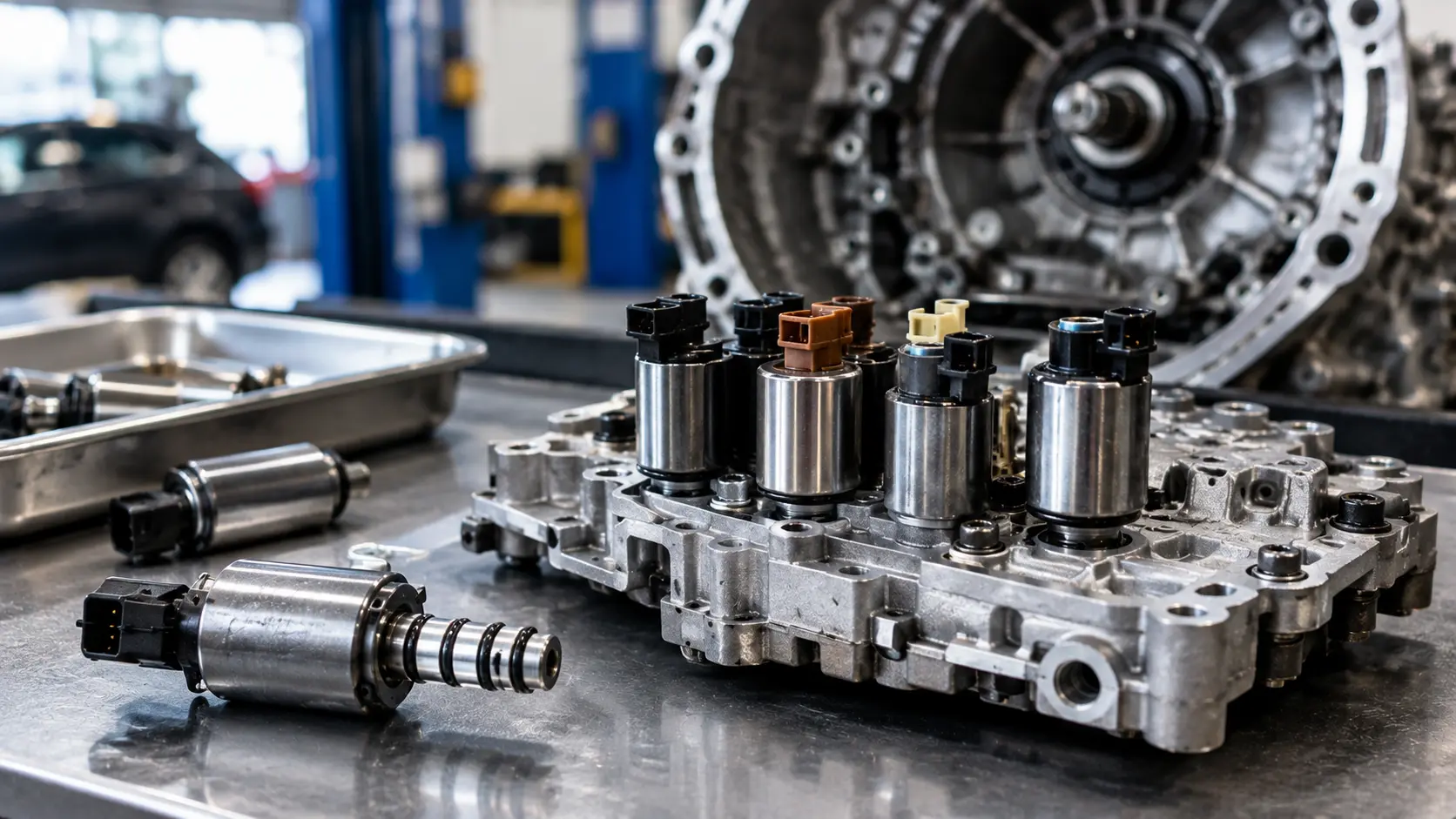
The computer cannot move fluid itself, so it uses solenoids. Each solenoid is a small electric coil with a plunger or valve. When the computer sends current, the coil opens or closes the valve, letting fluid flow to a particular clutch.
Most modern gearboxes have between four and ten solenoids, mounted in or on the valve body inside the gearbox pan. Some are grouped into a single solenoid pack or are part of a combined control unit.
Shift Solenoids and Pressure Control Solenoids
Gearboxes use different kinds of solenoids. Shift solenoids switch between gears by directing fluid to the right clutch. They are often labelled A, B, C and so on in fault codes.
Pressure control solenoids, also called line pressure or EPC solenoids, set how hard each clutch is applied. A faulty pressure solenoid causes harsh or soft shifts in every gear rather than a problem with one gear.
A torque converter clutch solenoid controls the lockup clutch inside the torque converter. The guide on bad torque converter symptoms explains that fault. Knowing which solenoid has failed helps explain the exact symptoms.
Why Solenoids Fail Faster in Dubai
Heat is the main enemy of gearbox fluid and solenoids. Stop and start traffic on Al Khail Road and Sheikh Zayed Road keeps the gearbox shifting and working hard, while the engine bay heat and the hot road surface raise fluid temperature. On a summer afternoon when the air passes 45°C, gearbox fluid runs hotter for longer.
Hot fluid breaks down faster and loses its ability to protect parts. Old fluid carries tiny metal and friction particles that can jam a solenoid’s small valve. Carista lists contaminated fluid among the causes of solenoid problems for the torque converter clutch.
Electrical faults are the other cause. Carista lists damaged wiring or a corroded connector at the solenoid pack as a common cause of P0750. Heat cycles crack wiring insulation and connectors over time.
Gearbox Stuck in One Gear or Limp Mode
A gearbox that stays in one gear is the clearest sign of a solenoid fault. Carista notes that with P0750, the car may enter limp mode and stay in one gear, usually third or fourth, to protect the transmission.
Limp mode is a self protection setting. When the computer sees a serious solenoid fault, it stops shifting and holds a gear that lets the car move at moderate speed. The car accelerates slowly from a stop and the engine revs high at highway speed.
Some cars return to normal after switching off and restarting, then go back into limp mode when the fault reappears. That pattern often points to a wiring or connector fault.
Harsh or Banging Shifts
Harsh shifts are a common symptom. Carista lists harsh shifts among the signs of a shift solenoid A fault. A pressure control solenoid that sticks can send too much pressure to the clutches, so every shift lands with a jolt.
You may feel a bang as the gearbox changes gear, especially from first to second or when slowing down. Harsh shifts put heavy stress on the clutches, driveshafts and mounts.
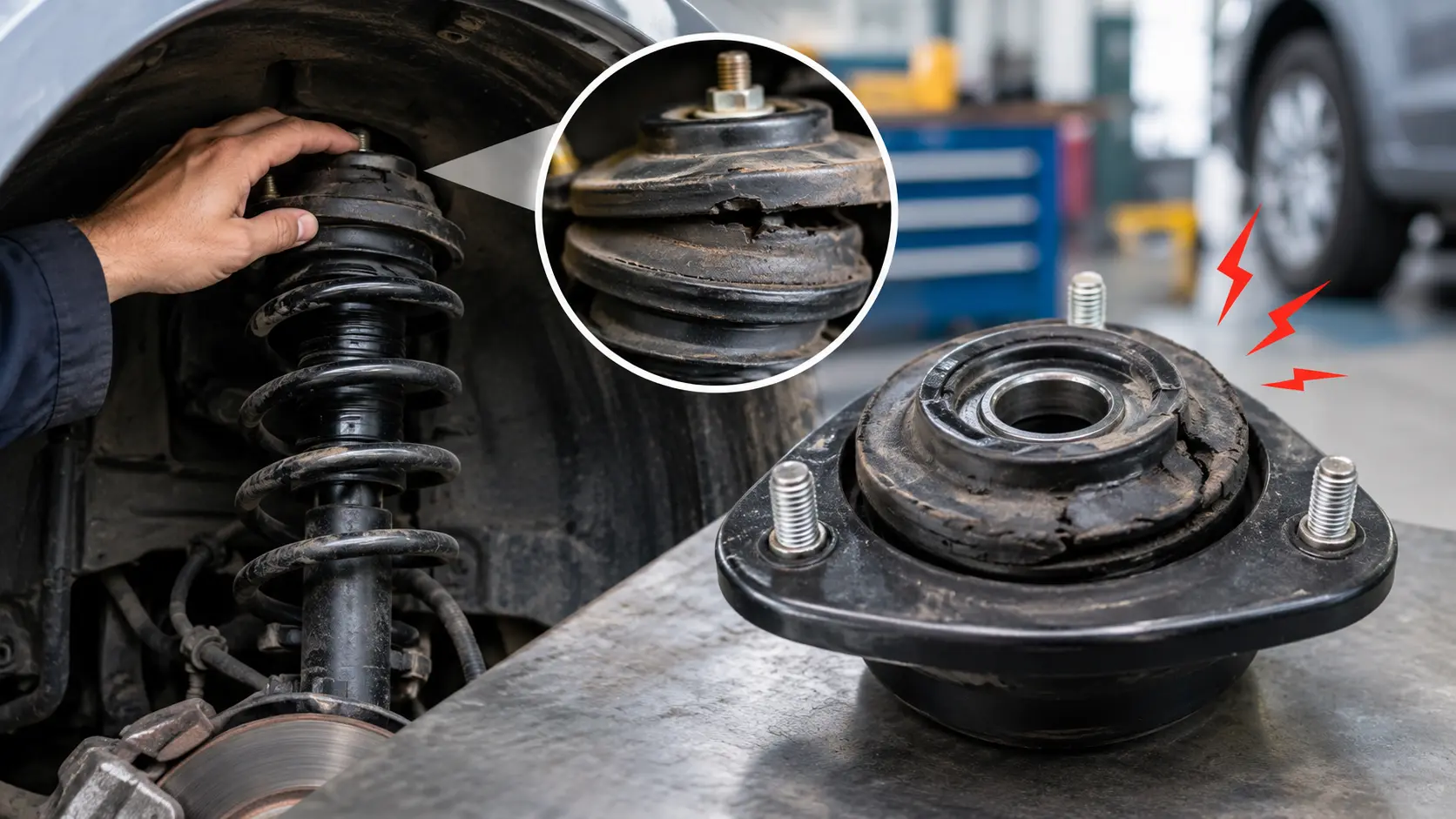
Harsh shifts can also come from old fluid, low fluid or worn engine and transmission mounts. The guide on bad transmission mount symptoms explains how worn mounts can make normal shifts feel worse.
Delay Before Drive or Reverse Engages
Carista notes that engagement into Drive or specific gears may be delayed or rough with a shift solenoid fault. You select Drive at the lights and nothing happens for a second or two, then the gearbox engages with a thump.
A delay happens when fluid cannot reach the right clutch quickly enough. A sticking solenoid, low fluid or a clogged filter can all cause it.
Delayed engagement is dangerous in traffic and car parks, because the car may lurch forward unexpectedly. The guide on clogged transmission filter symptoms covers another common cause of this delay.
Missed, Skipped or Wrong Gears
A faulty shift solenoid can make the gearbox skip a gear or select the wrong one. The car may go from first straight to third, or refuse to shift into a higher gear on the highway.
You may notice the engine revs drop more than expected during a shift, or the car feels sluggish because it is in a higher gear than it should be. Downshifts may also be missed when you slow down or press the accelerator to overtake.
Many cars show the selected gear on the dashboard. Watching the gear number while driving can help you describe the problem to a mechanic.
High Revs and Poor Fuel Economy
When a gearbox cannot shift up, the engine runs at higher revs for a given speed. On the highway, the rev counter may sit much higher than usual, and the engine sounds busy.
Higher revs mean more fuel used. Drivers often notice they are filling up more often before they notice the gearbox problem.
A torque converter clutch solenoid fault also causes higher revs at cruise. Carista notes that a torque converter that fails to lock up keeps engine speed higher than normal in top gear, which hurts highway fuel economy.
Warning Lights and Solenoid Fault Codes
A solenoid fault usually turns on the check engine light or a dedicated transmission warning light. Many cars also show a message such as gearbox fault or transmission malfunction.
Common codes include P0750 for shift solenoid A, P0755 for solenoid B, P0760 for solenoid C, P0765 for solenoid D and P0770 for solenoid E. Carista describes P0750 as an electrical fault at shift solenoid A. Pressure control solenoid faults often use codes in the P0960 to P0970 range.
A code points to a circuit, not always a failed solenoid. Wiring, connectors and the computer can all set the same codes, so testing comes before replacement.
Shifting Problems That Come and Go
Many solenoid faults start as intermittent problems. The gearbox shifts normally for days, then has a harsh shift or goes into limp mode, then returns to normal after a restart.
Intermittent faults often come from a sticking valve that frees itself, a loose connector or a wire that loses contact when hot. They usually get more frequent over time.
Keep a note of when the problem happens, such as on hot afternoons, after long drives or over speed bumps. That information helps a mechanic find the fault faster.
Faults That Look Like a Bad Solenoid
Several faults cause the same symptoms. Low or old fluid causes harsh, delayed and slipping shifts.
A clogged filter restricts fluid flow. A worn valve body sticks or leaks pressure. Worn clutches inside the gearbox slip.
Electrical problems are common too. A weak battery, a poor ground or a failing transmission computer can cause erratic shifting and codes. Speed sensor faults confuse the computer about when to shift.
The guides on bad transmission valve body symptoms and clogged transmission filter symptoms explain those faults. Testing before replacing parts avoids paying for a solenoid when the problem is elsewhere.
How a Workshop Tests Transmission Solenoids
Carista describes a clear process. First, use a scan tool to command the solenoid on and off.
Then measure the solenoid’s coil resistance, which Carista says is typically 20 to 40 ohms for shift solenoid A. Then test the wiring between the computer and the solenoid. Replace the solenoid pack if the coil resistance is out of specification.
The mechanic also checks the fluid level and condition, because low or burnt fluid causes many shifting problems. Live data from the transmission computer shows commanded and actual gears, fluid temperature and line pressure.
A road test confirms when the fault happens. Book these tests with an experienced car mechanic near you so the right part is replaced the first time.
What Solenoid Replacement Involves
On many gearboxes, the solenoids are mounted on the valve body inside the gearbox pan. The fluid is drained, the pan is removed and the solenoid or solenoid pack is unbolted and replaced. The filter and pan gasket are usually replaced at the same time.
On some gearboxes, the solenoids are part of a combined control unit, often called a mechatronic unit, which contains the computer, the valve body and the solenoids together. A fault there may need the whole unit replaced or reprogrammed.
After replacement, the gearbox is refilled with the correct fluid to the exact level, often checked at a set fluid temperature. Many gearboxes also need an adaptation reset with a scan tool so they relearn shift timing.
Can a Fluid Change Fix Solenoid Problems?
Sometimes. Carista notes that a fluid and filter change is a cheap first step that resolves many torque converter clutch solenoid cases, because contaminated fluid can make solenoids stick.
Fresh fluid can free a solenoid that is sticking because of varnish or debris. It will not fix a solenoid with a burnt coil or a broken wire.
A transmission fluid service should use the exact fluid type your manufacturer specifies. The wrong fluid can cause harsh shifts and solenoid problems of its own.
Is It Safe to Drive With a Bad Solenoid?
A gearbox in limp mode will usually still move, but it is not safe to drive far. The car accelerates slowly, struggles to keep up on highways and may change gear unexpectedly. Driving on can also damage the clutches inside the gearbox.
If the gearbox goes into limp mode on a highway, turn on your hazard lights and move to the hard shoulder or the nearest exit. Stopping in a live lane because of a breakdown brings a AED 1,000 fine and six black points under Article 98 of the UAE Federal Traffic Law. Once safe, call roadside assistance.
A car with a serious gearbox fault should go to the workshop on a flatbed tow truck, because towing an automatic with its wheels on the road can damage the gearbox. If the car is parked at home and the fault is intermittent, a mobile mechanic can read the gearbox codes before you drive it.
How Long Do Transmission Solenoids Last?
There is no fixed life for a solenoid. Many last as long as the gearbox, while others fail early because of heat, contaminated fluid or wiring damage.
In UAE conditions, gearboxes run hot for much of the year, which shortens fluid life. Old fluid carries the particles and varnish that make solenoids stick. Regular fluid changes are the best protection.
A solenoid that has started to stick usually gets worse. Fixing it early can stop it damaging clutches inside the gearbox.
Can a Bad Solenoid Damage the Gearbox?
Yes. A solenoid that sends the wrong pressure can make clutches slip or engage too harshly. Slipping clutches wear quickly and overheat the fluid, which damages other parts.
A gearbox stuck in one gear and driven for long periods can overheat as well. The longer a solenoid fault is left, the more likely the repair grows from a solenoid to a full rebuild.
That is why a warning light or harsh shift should be checked within days, not weeks.
How to Protect Your Gearbox Solenoids
Change the gearbox fluid at the interval in your owner’s manual for severe conditions. Many gearboxes are described as filled for life, but heat, stop and start traffic and towing count as severe use in most service books.
Avoid towing loads heavier than your car’s rating, such as boats or jet skis on summer trips to the beach. Let the car idle for a moment before shifting from Park on a hot day, and avoid shifting between Drive and Reverse while the car is still moving.
A regular car service in Dubai includes a check for gearbox leaks and stored codes. If you notice harsh shifts or a warning light, choose a car garage near you that tests solenoids and wiring before replacing the gearbox. Wiring faults can often be fixed through an auto electrical repair.
What Happens if the Gearbox Drops Into Limp Mode in Traffic?
Limp mode often arrives without warning. The car is cruising on Sheikh Zayed Road or Al Khail Road, and suddenly the gearbox holds a high gear. The car loses pace, and traffic behind closes in fast.
Stay calm and keep the car moving if you can. Switch on your hazard lights and ease toward the right lane. Most cars in limp mode can still crawl at a steady speed, so take the next exit or reach a safe hard shoulder.
Avoid hard braking where you can. A sudden drop in speed on a busy road is a common cause of rear end collisions. Watch your mirrors and slow down in stages.
Once you are parked safely, switch the engine off and wait a few minutes. Some cars clear limp mode after a restart, but the fault code stays stored. A restart is a way to get home or to a workshop, not a repair.
If the car was hit from behind, Dubai Police need to issue a report before any garage can repair the damage. You can file minor accident reports through the Dubai Police app. After the gearbox is fixed, dents and scratches from the bump can go to paint and panel repair as a separate job.
Write down what happened just before limp mode began. Note the speed, the outside heat, whether the warning light came on and whether the car had just shifted. These details help a technician match the fault code to the right solenoid. Freeze frame data in the gearbox computer records similar details, but your notes fill the gaps.
Limp mode protects the gearbox from further damage. Treat it as a clear sign to book a check soon, even if the car seems normal again the next morning.
FAQ
Here are the questions Dubai drivers most often ask about transmission solenoids.
What happens when a shift solenoid fails?
The gearbox may stick in one gear, shift harshly, delay engaging Drive or skip gears. Carista notes the car may enter limp mode, usually holding third or fourth gear. A warning light and codes such as P0750 usually appear.
Can a bad solenoid cause limp mode?
Yes. When the transmission computer sees a serious solenoid fault, it stops shifting and holds one gear to protect the gearbox. The car moves slowly from a stop and revs high on the highway.
How do mechanics test transmission solenoids?
They command each solenoid on and off with a scan tool, measure its coil resistance and test the wiring to the computer. Carista gives a typical range of 20 to 40 ohms for shift solenoid A.
Will a fluid change fix a solenoid?
Sometimes. Fresh fluid can free a solenoid sticking from varnish or debris, and Carista calls it a cheap first step for torque converter clutch faults. It will not fix a burnt coil or broken wiring.
What does code P0750 mean?
P0750 means the transmission computer has found an electrical fault at shift solenoid A. The cause may be the solenoid itself, damaged wiring or a corroded connector, or less often the computer's driver circuit.
Conclusion
A bad transmission solenoid shows up as a gearbox stuck in one gear, limp mode, harsh or delayed shifts, missed gears, high revs, poor fuel economy and codes from P0750 to P0770. Heat, old fluid and wiring damage are the usual causes in Dubai. Commanding the solenoids with a scan tool, measuring coil resistance and checking the wiring and fluid confirms the fault before the gearbox is opened.
Rapid Rev Garage is a full workshop open 24 hours at Al Khail Gate, 12th Street, Al Quoz Industrial Area 2, serving passenger cars across Al Quoz, Business Bay, Jumeirah, Al Barsha, Satwa, Downtown and the Sheikh Zayed Road corridor. Visit https://rapidrevgarage.com, send your car model and gearbox symptoms on WhatsApp, or get directions on Google Maps.
Rapid Rev Garage | Bad Transmission Solenoid Symptoms | Al Quoz, Dubai