You turn into a residential street in Mirdif and the front of the car knocks as it rolls over the first speed bump. On Sheikh Zayed Road the steering feels a little vague, and the front tyres are wearing on their inside edges. These are typical bad ball joint symptoms, and they deserve attention because a ball joint holds the wheel to the car.
A ball joint is a ball and socket that connects the steering knuckle to the control arm. It lets the wheel move up and down with the suspension and turn left and right with the steering, all at the same time. When the ball and socket wear, the joint gets loose, and that looseness shows up as noise, vague steering and tyre wear.
This guide explains what ball joints do, the signs they are wearing, why Dubai roads wear them faster, how a workshop checks them and what the repair involves. It also covers the other front end faults that make similar noises.
Bad Ball Joint Symptoms: Quick Answer
The main bad ball joint symptoms are a faint clunk from one corner over bumps, dips and turns, steering that feels loose, wandering or stiff, vibration through the steering wheel or floor, front end shimmy, uneven wear on the inner or outer edge of a front tyre and a torn rubber boot leaking grease.
MOOG explains that the clunk usually gets louder and more often as the joint wears, and that a badly worn joint can separate and cause an immediate loss of control. A technician checks the joint with the weight taken off it, measures play with a pry bar or dial gauge, looks at any wear indicator and inspects the boot before recommending replacement.
Table of Contents
- What a Ball Joint Does
- Upper, Lower, Load Carrying and Follower Ball Joints
- Why Ball Joints Wear Faster in Dubai
- Clunking or Knocking From One Corner
- Loose, Wandering or Stiff Steering
- Vibration and Front End Shimmy
- Uneven Front Tyre Wear
- Torn Boot and Leaking Grease
- Squeaking When Turning or Over Bumps
- Faults That Sound Like a Bad Ball Joint
- How a Workshop Checks Ball Joints
- What Ball Joint Replacement Involves
- Is It Safe to Drive With a Bad Ball Joint?
- Should Ball Joints Be Replaced in Pairs?
- Will Worn Ball Joints Fail the Vehicle Inspection?
- How Long Do Ball Joints Last?
- Can Bad Ball Joints Affect Braking?
- How to Make Ball Joints Last Longer
- FAQ
- Conclusion
What a Ball Joint Does
Each front wheel hangs on a steering knuckle. The knuckle must move up and down as the suspension works and swivel as you steer. A ball joint lets it do both.
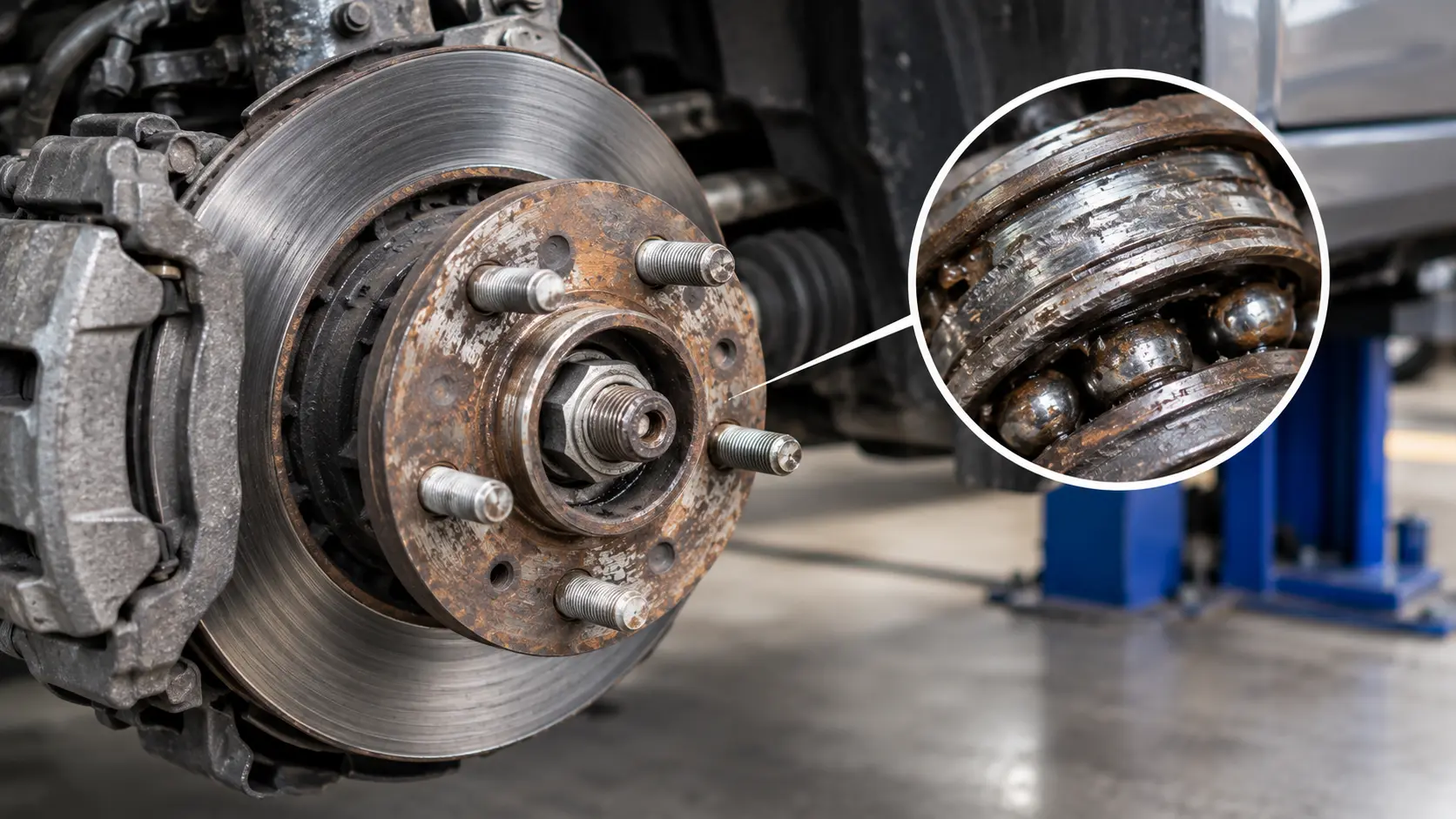
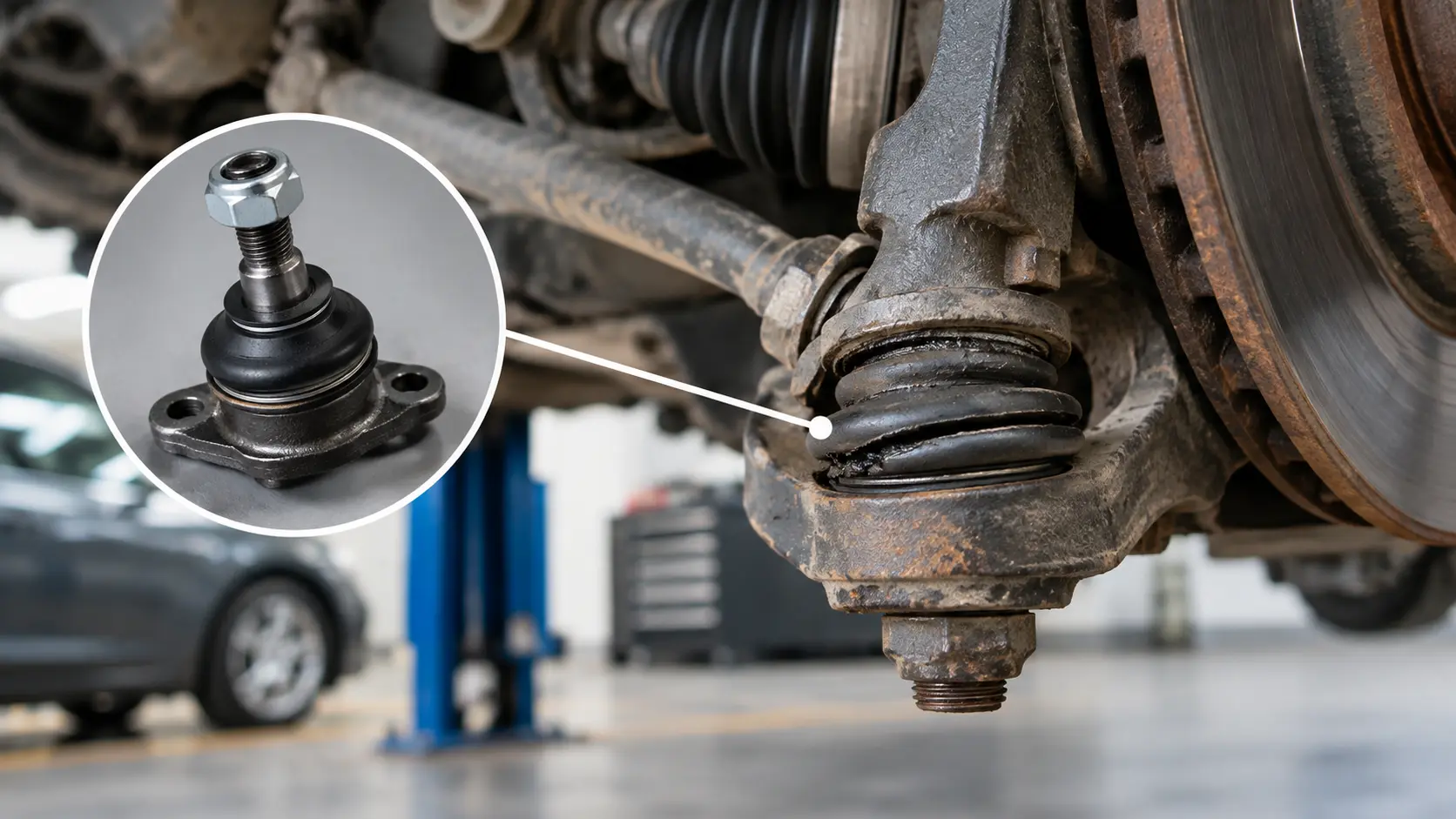
Inside the joint, a polished steel ball sits in a socket lined with a bearing surface and grease. A stud from the ball bolts into the knuckle, and the housing is pressed or bolted into the control arm. A rubber boot keeps grease in and dirt out.
MOOG explains that the ball and socket have a close tolerance when new. As they wear, that gap grows, and the joint loosens over time. Even a small amount of play lets the wheel shift under braking, cornering and bumps.
Upper, Lower, Load Carrying and Follower Ball Joints
Many cars sold in the UAE use MacPherson strut front suspension, found on models such as the Toyota Corolla, Nissan Sunny and Hyundai Elantra. These have one lower ball joint on each side. The strut takes the place of an upper joint.
Larger SUVs and pickups, such as the Toyota Land Cruiser, Nissan Patrol and many American models, often use double wishbone suspension. These have an upper and a lower ball joint on each side.
In each corner, one joint usually carries the car’s weight and the other acts as a follower. MOOG notes that newer joints are often loaded in a different direction from older designs, so many no longer have wear indicators. That changes how they are checked.
Some cars have ball joints pressed into the control arm, while others come as part of a complete arm. On those cars, a worn joint means a new arm.
Why Ball Joints Wear Faster in Dubai
Speed bumps are the biggest factor. Residential areas such as Al Barsha, Jumeirah Village Circle, Arabian Ranches and Mirdif have many of them, and each one sends a sharp load through the lower ball joints. Taking them quickly multiplies that load.
Dust and sand attack the joint once the boot splits. MOOG notes that ball joint life depends on driving habits, road conditions and exposure to road splash. In Dubai, fine sand mixes with grease and turns into a grinding paste inside the socket.
Heat shortens boot life. The rubber boot sits close to the brake disc, and summer afternoons when the air passes 45°C, plus brake heat in stop and start traffic, harden the rubber until it cracks.
Heavy loads add stress. Large SUVs carrying families and luggage on trips to Hatta or Fujairah, and cars driven on gravel tracks near Al Qudra, put extra force on the joints. Kerb strikes in tight car parks and lowered sports cars hitting ramps cause sudden damage too.
Clunking or Knocking From One Corner
A clunk is usually the first thing drivers notice. MOOG describes a faint, intermittent clunk from one corner of the car, most noticeable over bumps, dips and corners. As the joint wears, the noise grows louder and comes more often.
The clunk happens because the loose ball moves inside its socket before it hits the end of its travel. You may hear it when you drive over a speed bump at an angle, turn into a driveway or brake hard at the end of a slip road.
Many drivers notice it first in an underground car park, where the ramps and tight turns load each wheel in turn. A clunk that you can feel through the floor or the steering wheel is worth checking within days.
Loose, Wandering or Stiff Steering
A worn ball joint can make the steering feel loose. The car may wander on a straight road, and you may need small corrections to keep it in lane on Al Khail Road. MOOG notes that a car drifting left or right over bumps can point to ball joint wear.
The opposite can also happen. MOOG explains that steering can feel stiff when a joint has worn in a different way, for example when it has lost its grease and the ball binds in the socket.
Stiff steering after a car wash or a drive through water can come from a joint with a split boot that has taken in water. The steering may also not return to centre as easily after a turn.
Vibration and Front End Shimmy
MOOG lists excessive vibration through the seat, steering wheel or brake pedal as a sign of a failing ball joint. The loose joint lets the wheel shake slightly as the tyre rolls, and that movement travels into the cabin.
Some drivers feel it as a shimmy at a certain speed. Others notice the steering wheel vibrating on a straight, level road, which MOOG also mentions as a warning sign.
Vibration has many causes, including unbalanced wheels, bent rims and worn tyres. A ball joint becomes more likely when the vibration comes with a clunk over bumps or vague steering.
Uneven Front Tyre Wear
MOOG lists uneven wear on the inner or outer edge of the front tyres as a sign of ball joint wear. A loose joint lets the wheel tilt slightly, which changes the camber angle and loads one edge of the tread more than the other.
Check your front tyres for wear that is much heavier on one edge. MOOG notes that if both edges wear faster than the centre, the cause is more likely low tyre pressure than a ball joint.
Uneven wear also comes from poor alignment, worn tie rod ends and worn control arm bushes. A technician checks the ball joints before setting the alignment, because a loose joint will undo the alignment within weeks.
Torn Boot and Leaking Grease
The rubber boot is easy to inspect and often shows a problem before you hear it. A split, cracked or missing boot lets grease escape and lets sand and water in.
Look behind each front wheel with a torch. A boot that is wet with grease, covered in a dark paste or torn open needs attention. On some joints, grease thrown from a split boot shows as spots on the inside of the wheel rim.
A torn boot does not always mean the joint is already worn. But once dirt gets in, wear speeds up quickly. Many technicians replace the joint rather than just the boot, because the inside may already be damaged.
Squeaking When Turning or Over Bumps
A dry ball joint can squeak or creak as the suspension moves. You may hear it when turning the wheel at low speed in a car park or when rolling slowly over a speed bump.
Squeaks are common when a joint has lost its grease through a split boot. Some older joints have a grease fitting, and greasing them can quiet the noise. Most modern joints are sealed for life and cannot be greased.
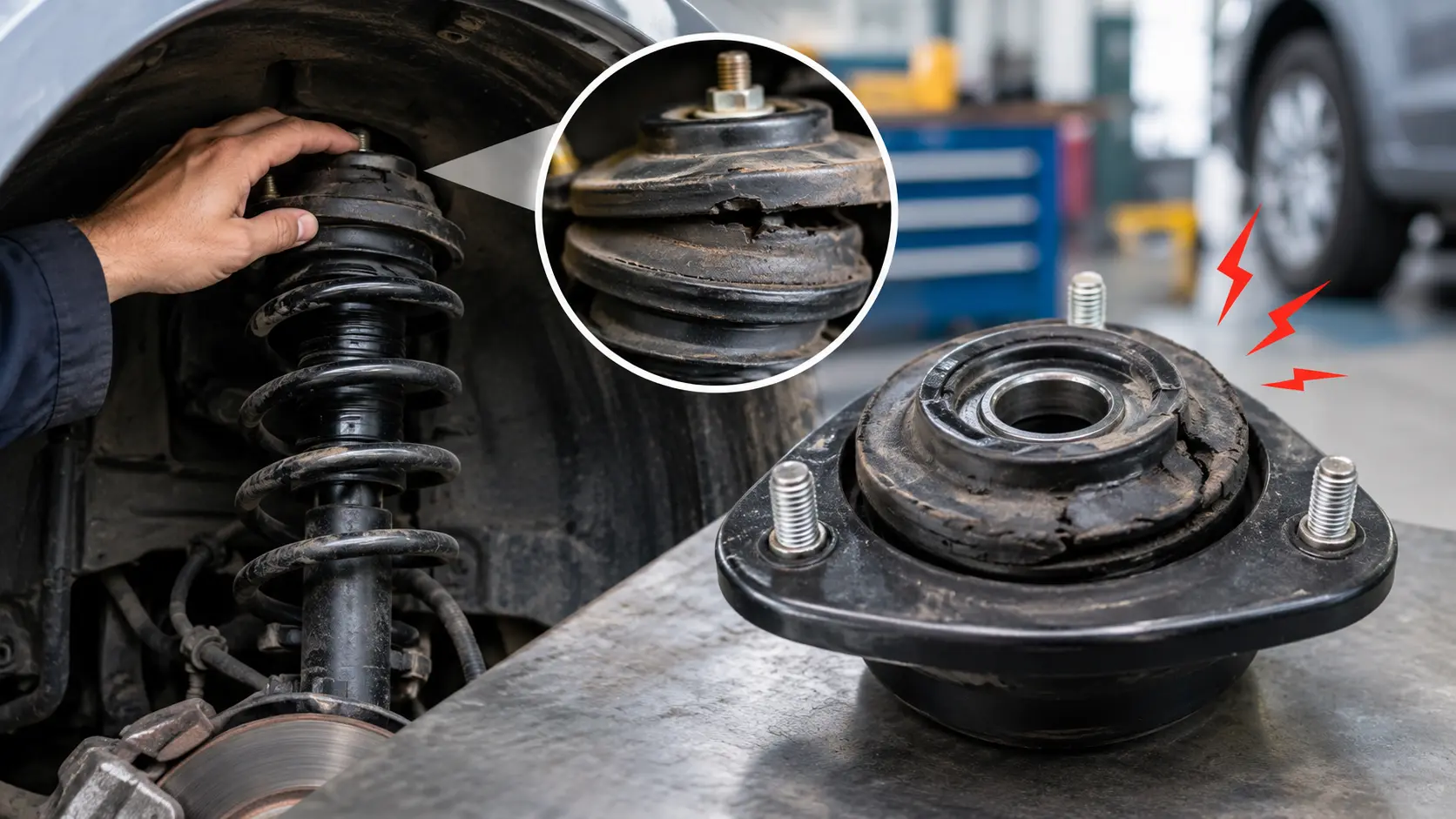
Creaks from the front can also come from strut mounts, sway bar bushes and control arm bushes. The guide on bad strut mount symptoms explains how to tell a top mount noise apart from a lower joint noise.
Faults That Sound Like a Bad Ball Joint
Several front end parts make similar noises. A careful technician checks them all:
- Sway bar links. Worn links rattle or clunk over small bumps. The guide on bad sway bar link symptoms covers this fault.
- Tie rod ends. Worn tie rod ends cause loose steering and a knock when turning at low speed.
- Control arm bushes. Worn rubber bushes let the arm move and cause clunks under braking.
- Strut mounts. A worn top mount clunks over bumps and creaks when turning.
- CV joints. A worn outer CV joint clicks when turning on full lock.
- Wheel bearings. A worn bearing hums or growls and can let the wheel rock.
A ball joint fault shows up as play between the knuckle and the control arm when the joint is unloaded. That simple test separates it from most other parts.
How a Workshop Checks Ball Joints
A trained car mechanic near you starts with a road test over bumps and turns to hear where the clunk comes from.
Next, the car is raised and the weight is taken off the joint being tested. On a MacPherson strut car, that usually means lifting the car by the body so the wheel hangs. On some double wishbone cars, a jack goes under the lower arm instead, depending on which joint carries the load.
The technician then checks for play. Gripping the tyre at the top and bottom and rocking it shows vertical movement. A pry bar under the wheel lifts it slightly to check for up and down movement at the joint. A dial gauge measures the play exactly against the maker’s limit.
On joints that have a wear indicator, MOOG explains two common types. On the grease fitting type, the joint should be replaced when the collar around the fitting is flush with or below the housing. On the pin type, the joint is fine while the pin is visible and should be replaced when the pin is flush or no longer visible.
The boot, the stud and the control arm are also inspected. A helper may turn the wheel and apply the brakes while the technician watches the joint, to separate ball joint play from wheel bearing play.
What Ball Joint Replacement Involves
The repair depends on the design.
On pressed in joints, the technician separates the joint from the knuckle, then uses a press tool to push the old joint out of the control arm and press a new one in. On bolted joints, the joint unbolts from the arm. On cars where the joint is part of the arm, the whole control arm is replaced, which also brings new bushes.
The stud nut is torqued to the maker’s figure and a new cotter pin or locking nut is fitted. Any heat shield or ABS wire moved during the job is put back in place.
A wheel alignment is usually needed after the repair, because the new joint changes the wheel position slightly. Many brand specialists such as Toyota wheel alignment services set the angles to the maker’s figures using a computer alignment rig.
A full suspension repair visit also checks the bushes, links and mounts around the joint, so one new part is not paired with several worn ones.
Is It Safe to Drive With a Bad Ball Joint?
A slightly worn ball joint is not an emergency, but it should be checked soon. A badly worn joint is dangerous. MOOG warns that severe wear can let the stud separate from the housing, causing an immediate loss of control.
When a lower ball joint separates, the wheel can fold under the car or turn outwards. At highway speed, the car can swerve suddenly. This is one of the few suspension faults that can cause a crash without warning.
If the clunk turns into a loud bang, the steering suddenly feels wrong or one wheel looks tilted, stop driving. On a highway, turn on your hazard lights and move to the hard shoulder.
Stopping in a live lane because of a breakdown brings a AED 1,000 fine and six black points under Article 98 of the UAE Federal Traffic Law. Once safe, call roadside assistance.
If the car is parked at home and you hear a new clunk, a mobile mechanic can do a quick play check before you drive it further.
Should Ball Joints Be Replaced in Pairs?
Not always, but it often makes sense. Ball joints on the left and right sides share the same age, roads and loads. When one is worn, the other is often close behind.
Replacing both sides at once means the car only needs one alignment. It also keeps the steering feel the same on both sides.
If the other joint tests healthy with no play and an intact boot, it can stay. A technician should show you the play on the worn joint and explain the condition of the other side.
Will Worn Ball Joints Fail the Vehicle Inspection?
Excess play in a ball joint is a common reason for a car to fail a roadworthiness test. Testing centres check steering and suspension joints for looseness and torn boots.
Gulf News reported that almost 25 per cent of vehicles in Dubai failed the annual roadworthiness test in one year, and that 15.8 per cent of the failed vehicles had defects in axles, wheels, tyres and suspension systems.
A vehicle inspection before your registration renewal, or before buying a used car, includes a check of the ball joints so you can fix them before the official test.
How Long Do Ball Joints Last?
MOOG gives a possible life of 70,000 miles or more, which is about 112,000 km, and notes that real life varies a lot. Driving habits, road conditions and how well the boots survive all change the figure.
In Dubai, cars that cross many speed bumps every day, carry heavy loads or drive on sand tracks often need joints sooner. Cars driven mostly on smooth highways can last much longer.
A ball joint check at every service is the best way to catch wear early. The test takes a few minutes with the car on a lift.
Can Bad Ball Joints Affect Braking?
Yes. A loose ball joint lets the wheel shift backwards slightly when you brake. The car can pull to one side, and the steering wheel may jerk under hard braking.
The movement can also make the brake pedal feel like it vibrates, which drivers sometimes blame on warped discs. MOOG mentions vibration through the brake pedal as one of the signs of ball joint wear.
If your car pulls under braking and clunks over bumps, ask for the ball joints to be checked along with the brakes.
How to Make Ball Joints Last Longer
Slow down for speed bumps and cross them straight on rather than at an angle. Each hard hit adds wear to the lower joints.
Ask for the boots to be checked at every service. Replacing a joint when the boot first splits is cheaper than waiting for a separated joint and a damaged arm.
Avoid kerb strikes when parking, especially in tight underground car parks. A hard hit can bend an arm and stress the joint in one moment.
Keep tyres at the correct pressure and have the alignment checked once a year or after any hard hit. Correct alignment reduces uneven load on the joints. Look after the tyres too, because a damaged tyre can send extra vibration into the suspension.
If a kerb strike also scuffed a bumper corner or alloy wheel, the body damage can be handled through paint and panel repair once the suspension is checked.
A regular car service in Dubai should include a suspension check on the lift. If you hear a new clunk or feel the steering wander, take the car to a car garage near you that tests each joint with the weight off before replacing parts.
FAQ
Here are the questions Dubai drivers most often ask about ball joints.
What does a bad ball joint sound like?
It usually sounds like a faint clunk or knock from one front corner over bumps, dips or turns. MOOG notes the noise gets louder and more frequent as wear increases. Dry joints can also creak or squeak.
Can a bad ball joint cause vibration?
Yes. A loose joint lets the wheel shake as it rolls, and you can feel it through the steering wheel, seat or brake pedal. MOOG lists front end shimmy and vibration among the signs of wear.
How do mechanics check ball joints?
They raise the car to take the weight off the joint, then check for play by rocking the wheel and using a pry bar or dial gauge. They also look at any wear indicator and inspect the rubber boot.
Is driving with bad ball joints dangerous?
It can be. MOOG warns that a badly worn joint can separate, causing an immediate loss of control. A slight clunk should be checked within days, and a loud bang or sudden steering change means stop driving.
How long do ball joints usually last?
MOOG gives a possible life of 70,000 miles or more, about 112,000 km, but real life varies. Speed bumps, heavy loads, sand and torn boots can shorten it a lot.
Conclusion
A bad ball joint shows up as a clunk from one corner over bumps, loose or stiff steering, vibration, uneven front tyre wear and a torn boot. Speed bumps, sand, heat and heavy loads wear joints faster in Dubai. Checking each joint with the weight off, measuring the play and inspecting the boot confirms the fault, and early replacement prevents a joint from separating.
Rapid Rev Garage is a full workshop open 24 hours at Al Khail Gate, 12th Street, Al Quoz Industrial Area 2, serving passenger cars across Al Quoz, Business Bay, Jumeirah, Al Barsha, Satwa, Downtown and the Sheikh Zayed Road corridor. Visit https://rapidrevgarage.com, send your car model and where the clunk comes from on WhatsApp, or get directions on Google Maps.
Rapid Rev Garage | Bad Ball Joint Symptoms | Al Quoz, Dubai