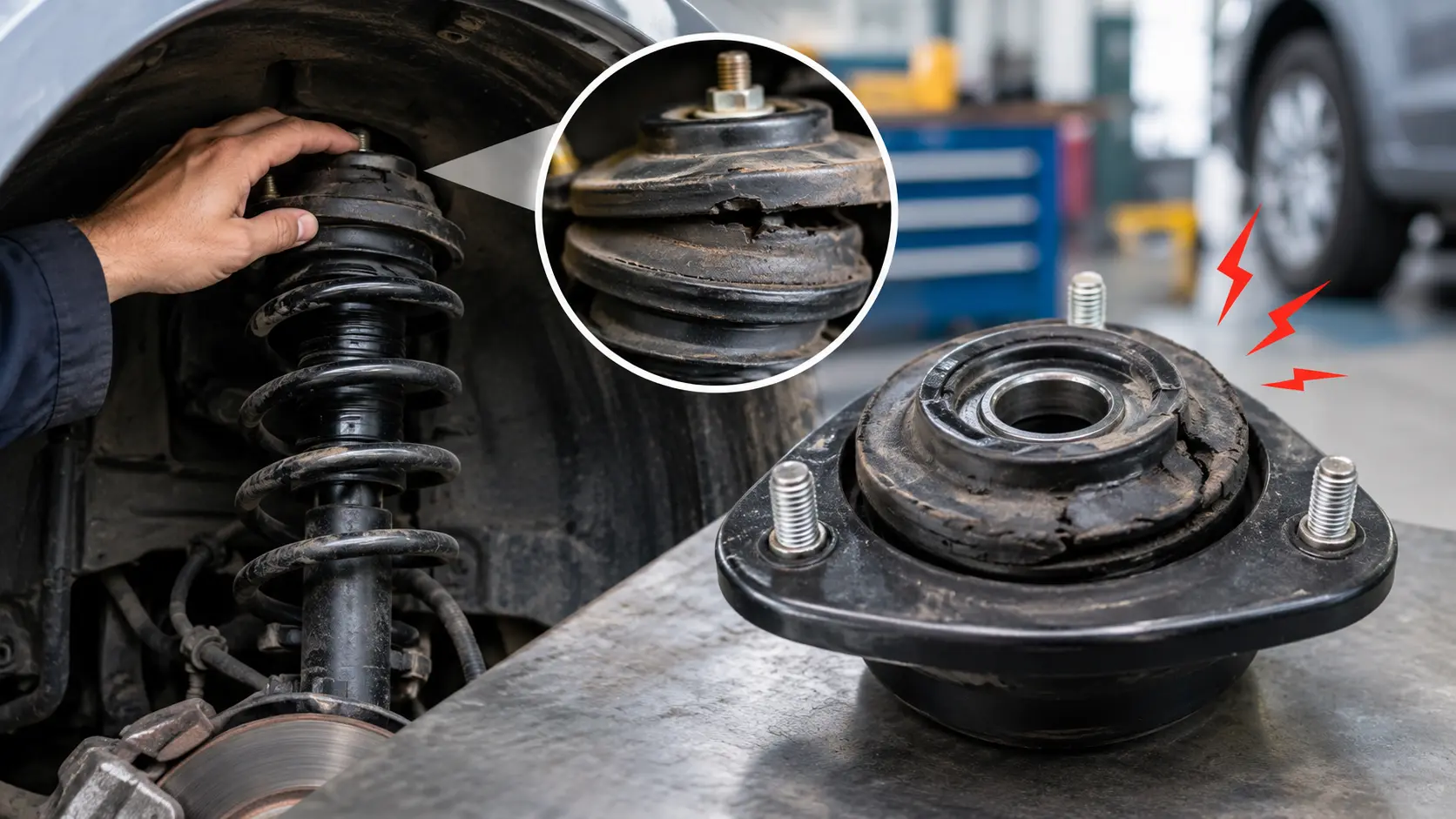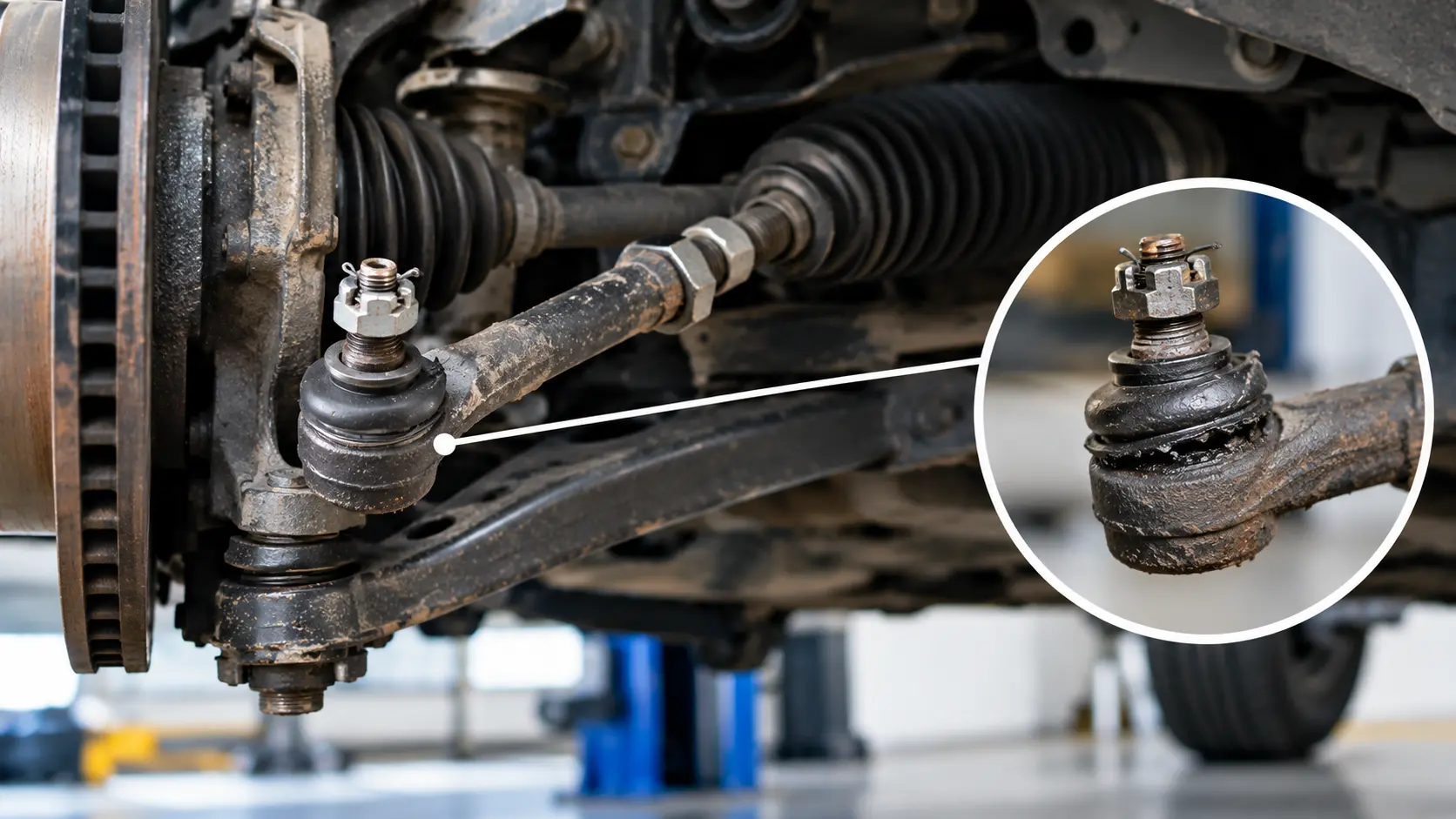
You turn the steering wheel slightly on Sheikh Zayed Road and nothing happens for a moment before the car responds. At low speed in a Business Bay car park, a knock comes from the front when you turn. When the tyres come off, the front ones are worn on one edge. These are classic bad tie rod ends symptoms, and they point to the joints that connect your steering to your wheels.
Tie rods link the steering rack to the steering knuckle at each front wheel. When you turn the steering wheel, the rack moves sideways and the tie rods push or pull the wheels to turn them. Each tie rod has a small ball joint at its end. When those joints wear, the steering gets loose, the wheels lose their alignment and the tyres scrub.
This guide explains what tie rods do, the signs they are worn, why Dubai roads wear them faster, how a workshop tests them and what the repair involves. It also covers the other faults that cause loose steering and uneven tyre wear.
Bad Tie Rod Ends Symptoms: Quick Answer
The main bad tie rod ends symptoms are loose steering with free play in the wheel, the car wandering on a straight road, a knock or clunk from the front when turning at low speed, steering wheel vibration, uneven wear on one edge of the front tyres, an alignment that will not hold and a torn tie rod boot.
MOOG lists uneven tyre wear, front end misalignment, steering wheel vibration or looseness and knocking when turning at low speeds as the main signs. A technician checks each inner and outer tie rod for play with the wheels off the ground, inspects the boots and then sets the alignment after any replacement.
Table of Contents
- What Tie Rod Ends Do
- Inner and Outer Tie Rod Ends
- Why Tie Rod Ends Wear Faster in Dubai
- Loose Steering and Free Play
- Car Wanders or Pulls on a Straight Road
- Knocking or Clunking When Turning
- Steering Wheel Vibration
- Uneven Tyre Wear on One Edge
- Alignment That Will Not Stay Set
- Torn Boots and Grinding When Steering
- Faults That Feel Like Bad Tie Rod Ends
- How a Workshop Tests Tie Rod Ends
- What Tie Rod End Replacement Involves
- Why Alignment Is Needed After Tie Rod Work
- Is It Safe to Drive With Bad Tie Rod Ends?
- Will Worn Tie Rods Fail the Vehicle Inspection?
- How Long Do Tie Rod Ends Last?
- Can a Kerb Strike Damage Tie Rods?
- How to Protect Tie Rod Ends
- FAQ
- Conclusion
What Tie Rod Ends Do
Most cars sold in the UAE use rack and pinion steering. The steering wheel turns a small gear, called the pinion, which moves a toothed bar, called the rack, from side to side. The rack sits across the front of the car, behind the engine.
A tie rod connects each end of the rack to the steering arm on the wheel knuckle. When the rack moves left, one tie rod pushes one wheel and the other pulls the other wheel, so both turn together.
The joints at each end let the tie rod move as the suspension rises and falls, while still holding the wheel at the correct angle. Firestone explains that the inner end passes the rack’s movement to the outer end, and the outer end passes that movement to the wheel.
Inner and Outer Tie Rod Ends
Firestone notes that each tie rod assembly usually has one inner and one outer end.
The inner tie rod screws onto the end of the steering rack. It sits under a rubber bellows boot that keeps dirt out of the rack. Its joint is a ball and socket that lets the rod swing up and down.
The outer tie rod end screws onto the inner rod with a threaded adjuster and a lock nut. It has a tapered stud that fits into the steering knuckle. The thread between the two is how the toe angle of the wheel is set during an alignment.
Either end can wear. Outer ends are more exposed to water and sand, and they are usually cheaper and quicker to replace. Inner ends often wear on cars that carry heavy loads or hit kerbs often.
Why Tie Rod Ends Wear Faster in Dubai
Speed bumps and kerbs are the main cause. Each speed bump in areas such as Al Barsha, Mirdif and Jumeirah Village Circle sends a jolt through the tie rods. A kerb strike while parking, or hitting a high kerb in a tight underground car park, can bend a tie rod or crack a joint in one moment.
Turning at full lock adds stress. Tight car parks, three point turns and U turns load the tie rods at their limits. Turning the wheel while the car is stationary, which many drivers do when parking, puts the most force through them.
Sand and heat damage the boots. Fine sand from desert winds and building sites mixes with the joint grease once a boot splits. Summer afternoons when the air passes 45°C harden the rubber boots and make them crack sooner.
Large tyres and heavy SUVs add load. Big SUVs common in Dubai, such as the Nissan Patrol and Toyota Land Cruiser, place more force through the steering parts, especially with wide aftermarket tyres.
Loose Steering and Free Play
Loose steering is the most common sign. MOOG describes a steering wheel that may have excess play. You turn the wheel a little and the car does not respond straight away.
On the highway, this feels like the car needs constant small corrections to stay in lane. Firestone describes steering that feels loose or shaky, especially during sharp turns or quick manoeuvres.
Some free play is normal in every steering system, but it should be small and the same as it always was. If you notice the wheel moving more before the car responds, the tie rods are a likely cause.
Car Wanders or Pulls on a Straight Road
A loose tie rod lets the wheel change direction slightly as the road surface changes. The car may wander between lane markings or drift to one side on a straight, level road. Firestone notes that a car may begin to pull unexpectedly to one side.
MOOG explains that a worn, loose tie rod can knock the front end out of alignment, causing poor handling. A small change in the toe angle is enough to make a car feel unsettled at 100 km/h.
Pulling also comes from uneven tyre pressure, worn tyres and brake faults. A technician checks those quickly before blaming the tie rods.
Knocking or Clunking When Turning
MOOG lists a knocking or clunking noise from the front when turning at low speeds as a sign of loose tie rods. You may hear it while turning into a parking space or making a U turn.
Firestone describes clunking or popping during tight turns or over bumps that you can feel as a jolt through the steering wheel. The noise comes from the worn ball moving inside its socket as the load on the rod changes direction.
A knock that you feel through the steering wheel, rather than just hear, points more strongly to the steering parts than to the suspension.
Steering Wheel Vibration
A worn tie rod lets the wheel shake slightly as it rolls. MOOG notes the wheel may shake or vibrate, often worse when accelerating or turning. Firestone notes the shaking is more noticeable at higher speeds or on uneven roads.
The vibration can feel like a shimmy at a certain speed. It can also appear after hitting a bump, when the loose wheel oscillates for a moment before settling.
Vibration also comes from unbalanced wheels and worn tyres. A balance check at a tyre service is a quick way to rule those out before replacing steering parts.
Uneven Tyre Wear on One Edge
Tie rods set the toe angle, which is whether the front of each tyre points slightly in or out. When a tie rod wears, the toe angle drifts and the tyre scrubs sideways as it rolls.
MOOG explains that excessive wear on one side of a tyre, more than the other side, may point to a failing tie rod. Firestone describes the wear as feathering, where the tread blocks are worn sharp on one side and rounded on the other.
Run your hand across the tread. If it feels smooth one way and rough the other way, the toe is wrong. Catching it early saves the tyres, which in Dubai heat already wear faster than in cooler climates.
Alignment That Will Not Stay Set
A car with worn tie rods may come back out of alignment a few weeks after the alignment was set. The rig set the toe correctly with the car standing still, but the loose joints let the wheels move once the car is driving.
If your car needs an alignment more often than once a year with no kerb strikes, ask for the tie rods to be checked. Good alignment centres check for play before they adjust anything, because setting the angles on loose parts wastes the customer’s money.
Firestone recommends regular inspections, especially when alignment is checked, to catch early signs of wear.
Torn Boots and Grinding When Steering
The outer tie rod end has a small rubber boot. The inner tie rod sits under a larger bellows boot on the end of the rack. Both keep dirt out and grease in.
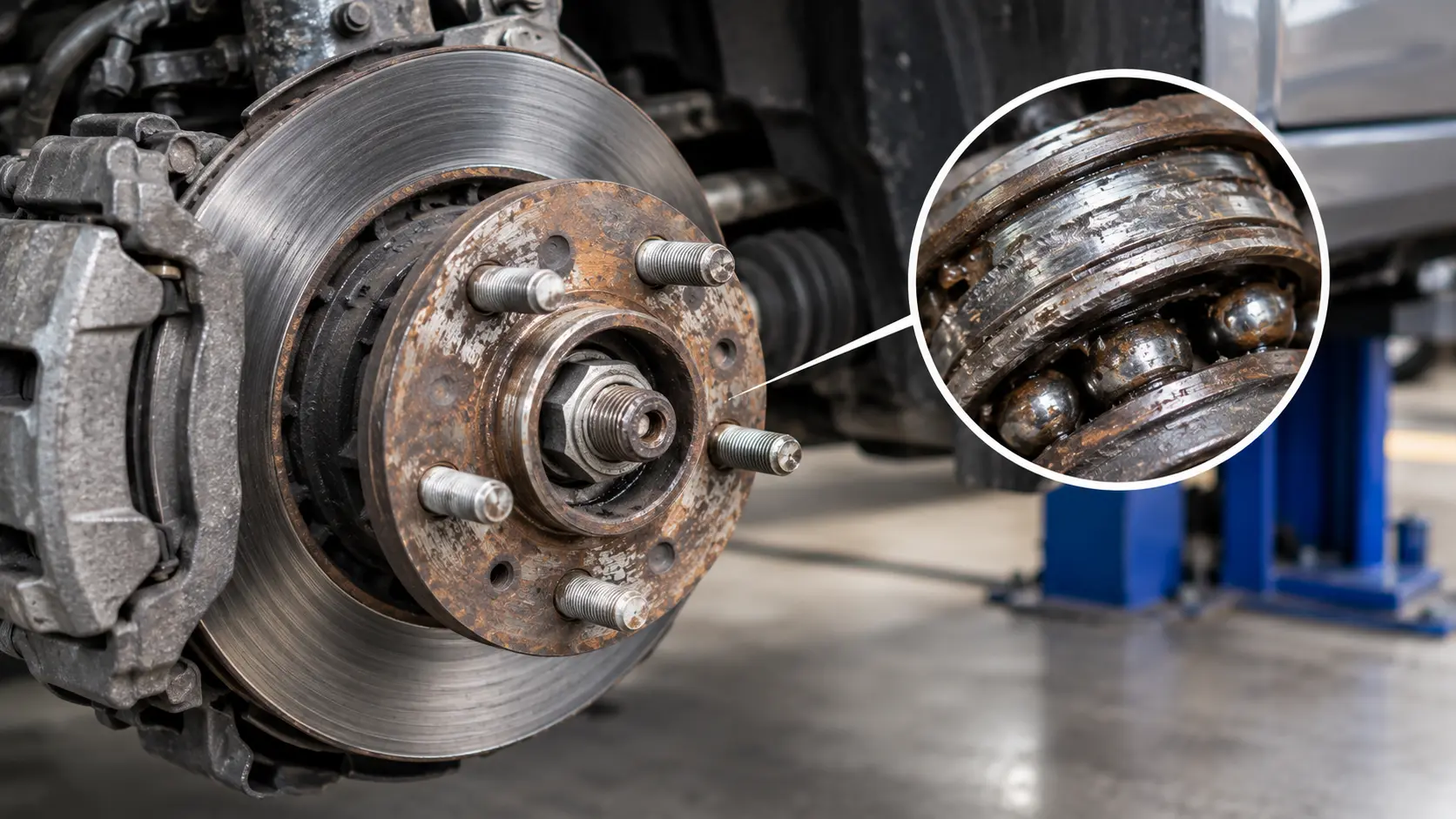
MOOG notes that a grinding sound while steering can point to a damaged boot that has let in dirt and debris. Once sand gets in, the joint wears quickly.
A torn rack boot is more serious than it looks. Sand and water can reach the inner tie rod and the rack seals. On hydraulic racks, that can lead to a leak. The guide on bad steering rack symptoms covers that fault.
Faults That Feel Like Bad Tie Rod Ends
Several faults cause loose steering, knocks and uneven wear:
- Worn ball joints. These cause clunks over bumps and wandering, and are checked at the same time.
- Worn steering rack. Play in the rack’s own gears or mounting bushes feels like loose tie rods.
- Worn control arm bushes. These let the wheel move under braking and cornering.
- Wheel alignment out of specification. A kerb strike can bend a part without any joint wear.
- Worn or mismatched tyres. These cause pulling and vibration.
- Wheel bearing play. A loose bearing lets the wheel rock.
The guide on bad ball joint symptoms explains how ball joint play differs from tie rod play.
How a Workshop Tests Tie Rod Ends
A trusted car mechanic near you starts with a short road test, feeling for free play, wander and knocks when turning.
With the front wheels off the ground, the technician grips each tyre at the left and right sides, the 3 and 9 o’clock positions, and pushes and pulls. Movement at those points usually means steering play. Movement at the top and bottom points more to ball joints or bearings.
While a helper rocks the steering wheel back and forth, the technician watches and feels each joint. A worn outer end shows movement between the stud and the housing. For the inner end, the technician squeezes the rack boot and feels for a clunk as the rod moves.
The boots are inspected for splits, and the tie rods are checked for bends. A bent rod often follows a kerb strike and may not show any play at all, only a change in alignment.
What Tie Rod End Replacement Involves
To replace an outer tie rod end, the technician loosens the lock nut, marks or measures its position on the thread, separates the tapered stud from the knuckle and unscrews the old end. The new end is screwed on to the same position, the stud is fitted and torqued, and a new cotter pin or locking nut is fitted.
Replacing an inner tie rod takes longer. The rack boot is removed, the inner rod is unscrewed from the rack using a special tool and the new rod is fitted with a new lock washer or thread locker as the maker specifies. A new boot and clips are fitted.
Some workshops replace the inner and outer ends together when both are close to worn, because much of the labour overlaps.
Why Alignment Is Needed After Tie Rod Work
Any time a tie rod end is replaced, the toe angle changes. Even careful measuring cannot set it exactly by eye. A wheel alignment is needed straight after the repair.
Skipping the alignment can ruin a new set of tyres within weeks. On SUVs with large tyres, that is a costly mistake.
A computer alignment rig measures toe, camber and caster at each wheel and compares them with the maker’s figures. Brand specialists such as Nissan wheel alignment services set the angles to the exact figures for each model. The steering wheel should also be centred when the car drives straight.
Is It Safe to Drive With Bad Tie Rod Ends?
Slight play is not an emergency, but worn tie rods should be fixed soon. A tie rod that breaks or separates leaves one wheel free to turn on its own. The car can swerve and become very hard to control.
The risk grows quickly once a joint knocks loudly or the steering feels very loose. Heavy braking, high speed and hitting a speed bump fast all put large loads through a weak joint.
If the steering suddenly feels very loose or the car will not steer straight, stop driving. On a highway, turn on your hazard lights and move to the hard shoulder. Stopping in a live lane because of a breakdown brings a AED 1,000 fine and six black points under Article 98 of the UAE Federal Traffic Law. Once safe, call roadside assistance.
If the car is at home and the steering only feels slightly loose, a mobile mechanic can check the tie rods for play before you drive to a workshop.
Will Worn Tie Rods Fail the Vehicle Inspection?
Yes, excess play in steering joints is a common reason to fail a roadworthiness test. Testing centres check the steering for free play and look for torn boots and loose joints.
Gulf News reported that almost 25 per cent of vehicles in Dubai failed the annual roadworthiness test in one year, with steering among the key test areas and 15.8 per cent of failed vehicles showing defects in axles, wheels, tyres and suspension.
Booking a vehicle inspection before your renewal, or before buying a used car, lets you find worn tie rods before the official test.
How Long Do Tie Rod Ends Last?
Firestone says tie rod ends typically last several years. The real figure depends on roads, loads and how often the car hits kerbs or speed bumps.
Cars that drive many speed bumps every day, park in tight underground car parks or wear large tyres usually need tie rods sooner. Cars driven mostly on smooth highways can last much longer.
The best guide is a steering check at every service. Catching a torn boot early often saves the joint.
Can a Kerb Strike Damage Tie Rods?
Yes. A hard kerb strike can bend a tie rod or damage its joint in one moment. The steering wheel may sit off centre afterwards, or the car may pull to one side.
A bent tie rod does not always knock or feel loose. It changes the toe angle, which shows up as uneven tyre wear and an off centre steering wheel.
If you hit a kerb hard, have the steering and alignment checked within a few days. If the strike also scuffed an alloy wheel or bumper corner, that can be fixed through paint and panel repair after the steering is checked.
How to Protect Tie Rod Ends
Avoid turning the steering wheel while the car is completely stopped. Let the car roll slightly as you turn, which cuts the load on the tie rods.
Slow down for speed bumps and avoid hitting kerbs when parking. Approach car park ramps straight and slowly.
Ask for the tie rod and rack boots to be checked at every service. A split boot replaced early is far cheaper than a worn joint or a damaged rack.
Check your front tyres every month for wear on one edge. It is often the first sign that the steering geometry has changed.
A regular car service in Dubai should include a steering check on the lift. If you feel loose steering or hear a knock when turning, take the car to a car garage near you that checks both the inner and outer tie rods before replacing parts.
FAQ
Here are the questions Dubai drivers most often ask about tie rod ends.
What does a bad tie rod sound like?
It usually sounds like a knock or clunk from the front when turning at low speed, such as when parking. MOOG notes a grinding sound while steering can mean a torn boot has let in dirt.
Can bad tie rods cause uneven tyre wear?
Yes. Worn tie rods change the toe angle, so the tyre scrubs sideways. MOOG and Firestone describe wear on one edge of the tyre, often called feathering, as a common sign.
How do mechanics test tie rod ends?
They lift the front wheels, push and pull each tyre at the left and right sides, and watch each joint while a helper rocks the steering wheel. They also squeeze the rack boot to check the inner tie rod.
Is driving with bad tie rods safe?
Slight play is not an emergency, but it should be fixed soon. A tie rod that breaks leaves one wheel free to turn on its own, which can cause a loss of control.
Does tie rod replacement need an alignment?
Yes. Replacing a tie rod end always changes the toe angle. A wheel alignment straight after the repair protects the tyres and keeps the steering wheel centred.
Conclusion
Bad tie rod ends show up as loose steering, wandering, a knock when turning at low speed, steering wheel vibration, uneven wear on one edge of the front tyres and an alignment that will not hold. Speed bumps, kerbs, full lock turns and sand wear them faster in Dubai. A play test with the wheels off the ground and a boot inspection confirm the fault, and an alignment after the repair protects the tyres.
Rapid Rev Garage is a full workshop open 24 hours at Al Khail Gate, 12th Street, Al Quoz Industrial Area 2, serving passenger cars across Al Quoz, Business Bay, Jumeirah, Al Barsha, Satwa, Downtown and the Sheikh Zayed Road corridor. Visit https://rapidrevgarage.com, send your car model and a photo of your front tyre tread on WhatsApp, or get directions on Google Maps.
Rapid Rev Garage | Bad Tie Rod Ends Symptoms | Al Quoz, Dubai