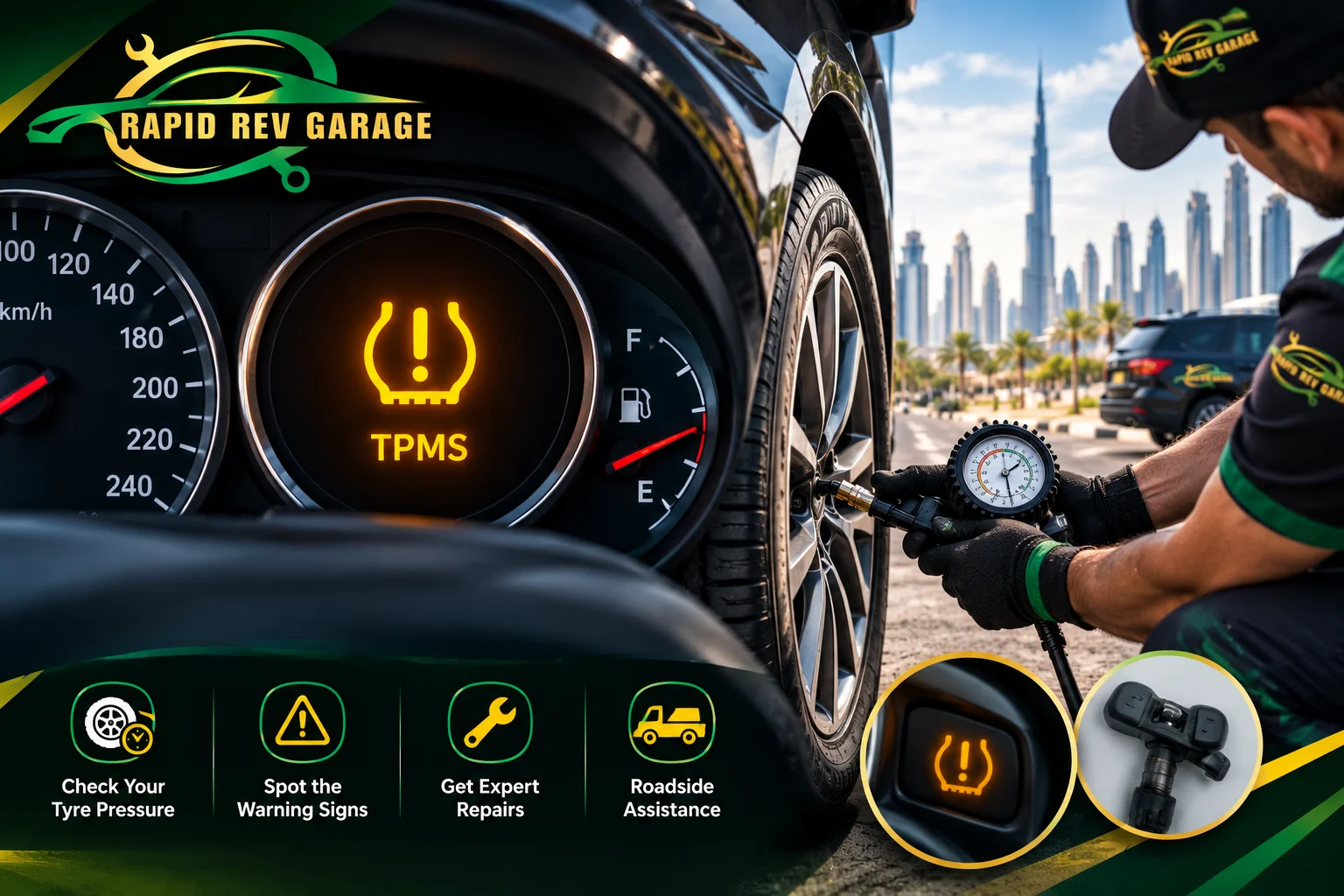
The Tyre Pressure (TPMS) warning light indicates that one or more tyres may have low air pressure. TPMS stands for Tyre Pressure Monitoring System. It checks Tyre Pressure and alerts you when it falls below a set level. Cold weather, a slow puncture, a damaged valve or a faulty sensor can trigger the warning. Check your Tyre Pressure when the tyres are cool and follow the pressure listed in your car’s manual or on the door sticker. If a tyre looks flat or the car feels unstable, stop safely and get help before driving further.
Table of Contents
- Problem Overview: What Does the TPMS Warning Light Mean?
- Symptoms: How Can You Tell Your Tyre Pressure Is Too Low?
- Common Causes: Why Does the TPMS Light Turn On?
- Diagnostic Process: How Do Mechanics Check TPMS Problems?
- Why Is My Car Temperature Gauge Going Up While Driving?
- Repair Process: How Is a TPMS Warning Light Fixed?
- Risks of Ignoring a Tyre Pressure Warning
- Can You Continue Driving With the TPMS Light On?
- Repair Time: How Long Does TPMS Repair Take?
- Cost Factors: What Affects TPMS Repair Costs?
- Prevention Tips: How to Avoid Tyre Pressure Warnings
- Dubai-Specific Advice for Drivers
- Why Choose Rapid Rev Garage for Roadside Assistance?
- Frequently Asked Questions
- Related Services
- Final Call-to-Action
Problem Overview: What Does Tyre Pressure (TPMS) Warning Light Mean?
Your car’s tyres need the correct air pressure to work safely. When the pressure drops too low, the tyres may not grip the road as well. They may also wear out faster and use more fuel.
The Tyre Pressure (TPMS) warning light alerts you when the system detects a pressure problem. Most cars show a symbol that looks like a flat tyre with an exclamation mark inside.
Some vehicles use direct TPMS sensors inside the wheels. These sensors measure Tyre Pressure. Other vehicles use an indirect system that estimates pressure changes through wheel-speed sensors.
The warning does not always mean you have a puncture. A faulty sensor or a recent tyre change can also trigger it. Still, you should never ignore the light.
Check all four tyres as soon as it is safe. If your car has a spare tyre monitored by the system, check that too. Use the pressure recommended by the vehicle maker, not the maximum pressure printed on the tyre sidewall.
Symptoms: How Can You Tell Your Tyre Pressure (TPMS) Is Too Low?
The warning light is often the first sign of a Tyre Pressure problem. However, your car may show other signs.
The TPMS Symbol Stays On
If the warning light stays on, one or more tyres may be underinflated. Check each tyre with a reliable pressure gauge.
Don’t rely only on how the tyres look. A tyre can be underinflated without looking flat.
The Warning Light Flashes
On many vehicles, a flashing TPMS light points to a system fault. The problem may involve a sensor, its battery or the system itself.
Check your owner’s manual because warning patterns can vary by vehicle.
Your Car Pulls to One Side
Low pressure in one tyre can affect handling. Your car may pull to one side or feel less stable when turning.
If steering feels unusual, slow down carefully and stop in a safe place. Do not continue driving if the car feels unsafe.
You Notice Uneven Tyre Wear
Underinflated tyres can wear more along their outer edges. Overinflated tyres may wear more in the center.
Uneven wear can also result from wheel alignment or suspension problems. A tyre inspection can help identify the cause.
You Hear a Hissing Sound
A hissing sound may indicate escaping air from a puncture or a damaged valve. You may also notice a nail or screw in the tyre.
Do not remove an object stuck in the tyre. It may be slowing the air leak. Have a professional check the tyre.
Common Causes: Why Does the Tyre Pressure (TPMS) Light Turn On?
Several problems can trigger a Tyre Pressure warning.
- Low Tyre Pressure: Air can escape over time, even without a visible puncture.
- Punctured tyre: A nail, screw or sharp object may cause a slow leak.
- Temperature changes: Cooler air can lower Tyre Pressure and trigger the warning.
- Damaged valve stem: A worn or damaged valve may allow air to escape.
- Faulty TPMS sensor: A sensor can fail or stop sending accurate readings.
- Weak sensor battery: Some direct TPMS sensors have batteries that wear out over time.
- Recent tyre service: A tyre change or rotation may require a system reset or relearning procedure.
- Incorrect tyre inflation: Pressure that does dont match the vehicle’s recommended setting may trigger a warning.
The Tyre Pressure (TPMS) warning should always prompt a pressure check first. If all tyres have the correct pressure but the light remains on, the system may need further testing.
Diagnostic Process: How Do Mechanics Check TPMS Problems?
A proper inspection helps find the real cause instead of clearing the warning without fixing the problem.
Step 1: Check All Tyres
The mechanic checks the pressure in each tyre. They compare the readings with the recommended values listed in the owner’s manual or on the vehicle’s tyre-pressure label.
Step 2: Inspect for Leaks
Check each tyre, valve and wheel area for damage. A leak test may help find a puncture or air escaping around the valve.
Step 3: Scan the TPMS System
A compatible diagnostic tool can read sensor information and fault codes. This helps the mechanic identify sensors that aren’t responding or sending unusual readings.
Step 4: Inspect the Sensors
The mechanic checks sensor condition and confirms whether the vehicle needs a sensor replacement, reset or relearning procedure.
Step 5: Test the System Again
After repairs, the mechanic sets the tyres to the correct pressure. The system is then tested to confirm that the warning has cleared and the sensors are working as expected.
Rapid Rev Garage can help drivers enquire about tyre-related checks and vehicle repair services in Dubai. Proper testing matters if the warning returns after inflation.
Why Is My Car Temperature Gauge Going Up While Driving?
A rising engine temperature gauge is a separate issue from a Tyre Pressure warning. However, both warning signs need attention.
If the temperature gauge moves above its normal range, the engine may be overheating. Common causes include low coolant, a coolant leak, a faulty thermostat or a cooling fan problem.
If the engine temperature rises while the TPMS light is on, don’t assume one problem caused the other.
Follow these steps:
- Pull over in a safe place if the engine temperature enters the danger zone.
- Switch off the engine if it is overheating.
- Never open a hot radiator or coolant cap.
- Check the tyres only when it is safe to do so.
- Arrange professional help if either problem remains unresolved.
An overheating engine can suffer serious damage if you keep driving. A tyre with very low pressure can also become unsafe. Treat each warning as a separate problem until a mechanic confirms the cause.
Repair Process: How Is a TPMS Warning Light Fixed?
The correct repair depends on what caused the warning. Simply resetting the light may not solve the problem.
Inflate the Tyres Correctly
If the tyres are underinflated but undamaged, adding air to the recommended pressure may solve the issue. Check the pressure when the tyres are cool.
Repair or Replace a Damaged Tyre
A puncture may be repairable if it meets recognized safety guidelines. Sidewall or shoulder damage often means the tyre needs replacement.
A tyre specialist should decide whether repair is safe.
Fix a Leaking Valve
A damaged valve stem or seal can cause repeated pressure loss. The mechanic may replace the faulty part and check for leaks.
Replace a Faulty Sensor
If a TPMS sensor has failed, it may need to be replaced. The new sensor must be compatible with the vehicle and correctly programmed or paired where required.
Reset or Relearn the System
Some vehicles need a TPMS reset after pressure adjustments or tyre changes. Others require a relearning process so the car recognizes the sensor locations.
The Tyre Pressure (TPMS) warning should clear only after you address the pressure issue or system fault. If the light returns, arrange another inspection instead of repeatedly resetting it.
Risks of Ignoring a Tyre Pressure (TPMS) Warning
Driving with incorrect Tyre Pressure can affect safety, comfort and running costs.
- Reduced handling: The car may feel less stable when turning or braking.
- Longer stopping distances: Poor tyre condition and reduced grip can affect braking performance.
- Tyre overheating: Underinflated tyres can build up excess heat, especially on long drives.
- Faster tyre wear: Incorrect pressure can shorten tyre life.
- Higher fuel use: Underinflated tyres can increase rolling resistance.
- Sudden tyre failure: Severe underinflation can increase the risk of tyre damage or failure.
- Unexpected breakdowns: A slow leak can become a flat tyre while driving.
A TPMS warning is an early alert, not a problem to put off until your next service. Check the tyres promptly and get help if you find damage or ongoing pressure loss.
Can You Continue Driving With the Tyre Pressure (TPMS) Light On?
Your next step depends on how the tyres look and how the car handles.
If the warning appears but the tyres look normal, drive carefully, only as needed, to reach a safe place for a pressure check. Don’t assume the pressure is correct just because the tyres look fine.
If a tyre is visibly flat, the car pulls strongly to one side or you hear a loud leak, stop in a safe location. Driving on a flat tyre can damage the tyre and wheel.
If the TPMS light flashes and then stays on, the monitoring system may be faulty. Check the pressure manually and arrange a diagnostic inspection.
Use a “garage near me” search to find help nearby or contact roadside assistance if the tyre is unsafe to drive on.
Never check Tyre Pressure on the roadside unless you can do so safely away from moving traffic. Your safety comes first.
Repair Time: How Long Does Tyre Pressure (TPMS) Repair Take?
Repair time depends on the cause and your vehicle’s design.
- Tyre Pressure check and inflation: Around 10–20 minutes.
- Puncture inspection: Around 15–30 minutes, depending on the damage.
- TPMS diagnostic scan: Around 15–30 minutes.
- Sensor replacement: Around 30–60 minutes or longer.
- System reset or relearning: Around 10–30 minutes, depending on the vehicle.
- Tyre replacement: Often around 30–60 minutes per vehicle visit, depending on the number of tyres and the work required.
These are general estimates, not guaranteed service times. Some vehicles need extra programming, special parts or additional checks.
Cost Factors: What Affects Tyre Pressure (TPMS) Repair Costs?
The cost of fixing a Tyre Pressure warning depends on the fault. A simple pressure adjustment may cost much less than replacing a sensor or tyre.
Important cost factors include:
- Type of problem: Low pressure is usually simpler to address than an electronic fault.
- tyre damage: A repairable puncture may cost less than a new tyre.
- Sensor type: Sensor prices vary by vehicle and system.
- Vehicle make and model: Some cars need special sensors or programming.
- Labor time: Accessing and fitting a sensor may take extra work.
- System programming: Some vehicles need a reset or relearning procedure.
- Additional repairs: Damaged valves, wheels or wiring can increase the total.
Ask the garage to explain the fault and provide a cost estimate before approving the repair. This helps you understand whether you are paying for a tyre repair, sensor replacement or diagnostic work.
Prevention Tips: How to Avoid Tyre Pressure (TPMS) Warnings
Regular tyre care can reduce the chance of unexpected warnings and help your tyres last longer.
- Check pressure every month: Also check before long trips.
- Measure pressure when tyres are cool: Driving heats tyres and changes the pressure reading.
- Use the correct pressure: Follow the vehicle maker’s recommended values.
- Inspect tyres for damage: Look for cuts, nails, bulges and unusual wear.
- Check the spare tyre: Keep it ready if your vehicle has one.
- Look after the valves: Damaged valve stems can cause slow leaks.
- Service TPMS sensors when needed: Replace failed sensors with compatible parts.
- Do not ignore repeat warnings: Repeated pressure loss needs an inspection.
Avoid letting air out of hot tyres just because the pressure reading is higher after driving. Check them when cool and follow the manufacturer’s guidance.
Dubai-Specific Advice for Drivers About Tyre Pressure (TPMS)
Dubai’s road conditions and hot climate make regular tyre checks especially important. High temperatures can heat the tyres further during long drives, while heavy loads and high speeds add stress.
Follow these practical tips:
Check tyres before long journeys. Inspect pressure and tyre condition before traveling between Dubai and other emirates.
Use the correct pressure for your vehicle. Don’t use a random pressure value from another car or the maximum value on the tyre sidewall.
Check pressure when tyres are cool. Early morning or after the car has been parked for several hours is often a suitable time.
Watch for road hazards. Construction areas, debris and sharp objects can damage tyres and cause slow leaks.
Do not ignore warning lights. If the TPMS light returns after inflation, get the tyres and sensors checked.
Plan for a breakdown. If a tyre loses pressure quickly, pull over safely and call for help. Avoid changing a tyre beside fast-moving traffic.
The Tyre Pressure (TPMS) warning is particularly useful before a long drive because it can alert you to a pressure problem before it becomes more serious. Still, the system does not replace regular visual checks and pressure measurements.
Why Choose Rapid Rev Garage for Roadside Assistance?
A Tyre Pressure warning can appear at an inconvenient time, including during a commute or a long drive. If a tyre is damaged or losing air quickly, you may need professional help instead of continuing your journey.
Rapid Rev Garage serves drivers in Dubai and can help you enquire about vehicle checks, tyre-related repairs and available roadside assistance.
Here are some reasons to seek professional support:
- Tyre inspection: Find out whether the tyre has a puncture or visible damage.
- Pressure checks: Confirm whether the tyres match the recommended pressure.
- TPMS diagnosis: Investigate sensor faults and warning lights.
- Repair advice: Find out whether the tyre can be repaired safely or needs replacement.
- Roadside assistance inquiries: Ask about available help if your vehicle is unsafe to drive.
When contacting the garage, explain whether the warning light is steady or flashing and whether the car feels different to drive. This information can help the team understand the issue.
If you need a garage near me in Dubai, contact Rapid Rev Garage to ask about the service you need and confirm availability before traveling.
Frequently Asked Questions
1. What does the TPMS warning light mean?
It means the system has detected low Tyre Pressure or a possible monitoring fault. Check all tyres with a pressure gauge and consult your owner’s manual.
2. Can I drive with the TPMS light on?
If the tyres are safe and correctly inflated, you may be able to drive carefully to get the system checked. Do not drive on a flat or badly damaged tyre.
3. Why does my TPMS light stay on after adding air?
The pressure may still be too low or the system may need time to update or be reset. A faulty sensor can also keep the light on.
4. How much does TPMS sensor replacement cost in Dubai?
The cost depends on your car, sensor type, labor and programming needs. Ask a garage for a quote based on your vehicle.
5. Who should I contact if my tyre loses air on the road?
Stop somewhere safe and contact roadside assistance if the tyre is unsafe to drive on. Rapid Rev Garage can help you enquire about available assistance in Dubai.
Related Services
If your Tyre Pressure (TPMS) warning light appears, you may also need one of these services:
- Tyre puncture repair: Find and repair a suitable puncture.
- Tyre replacement: Replace a damaged or worn tyre.
- Tyre Pressure inspection: Check pressure and identify leaks.
- Wheel alignment: Fix alignment issues that may cause uneven tyre wear.
- Wheel balancing: Help reduce vibration caused by wheel imbalance.
- TPMS sensor replacement: Replace a failed pressure sensor.
- Roadside assistance: Get help if a tyre issue makes your car unsafe to drive.
Choose the service based on the warning’s cause. A correct diagnosis helps avoid unnecessary repairs.
Final Call-to-Action: Get Your Tyre Pressure Warning Checked
Never ignore a Tyre Pressure (TPMS) warning. Low pressure can affect handling, tyre life and road safety. A faulty sensor can also hide a real pressure problem if you don’t check the tyres manually.
If your Tyre Pressure (TPMS) warning light stays on, check the pressure when the tyres are cool and look for visible damage. If the light returns, arrange a professional inspection. If a tyre is flat or the car feels unsafe, stop in a safe place and request roadside assistance.
Contact Rapid Rev Garage to enquire about tyre checks, TPMS diagnosis and available roadside assistance in Dubai. Get the problem checked before it affects your next journey.
Rapid Rev Garage location: