You leave the Mall of the Emirates car park and the first shift lands with a bang. On the way up Sheikh Zayed Road, the engine revs hang between third and fourth before the next gear catches. By the time you reach Jumeirah, the gearbox drops into the wrong gear at a roundabout. These are typical bad transmission valve body symptoms, and they tend to get worse as the gearbox heats up.
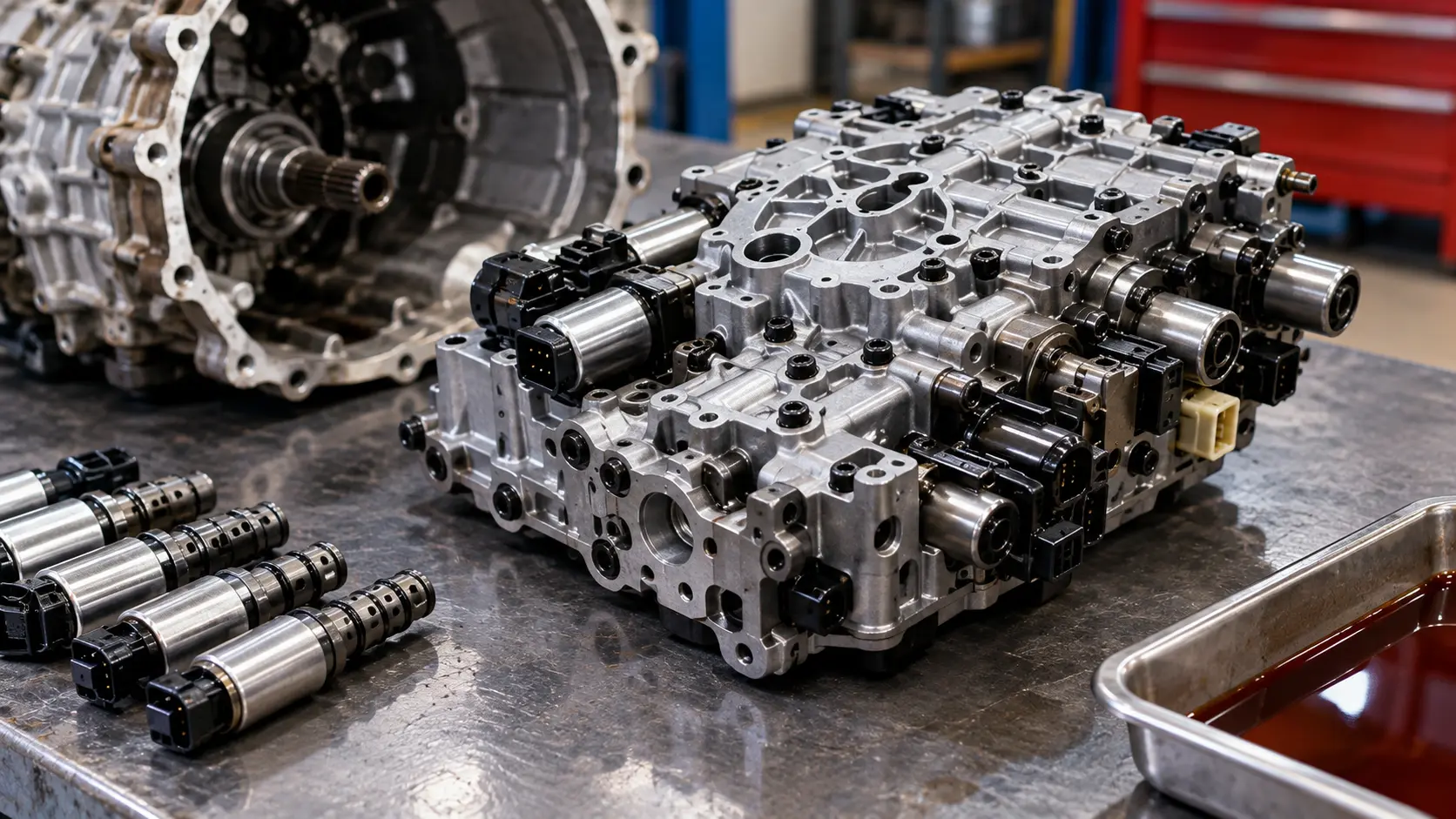
The valve body is the hydraulic control centre of an automatic gearbox. It is a block of aluminium full of channels, spool valves, springs and check balls. The transmission computer sends signals to solenoids mounted on it, and the valve body routes fluid to the right clutch at the right pressure for each shift. When its bores wear or its valves stick, shifts lose their timing and feel.
This guide explains what the valve body does, the signs it is failing, why Dubai heat speeds up wear, how a workshop separates it from solenoid or fluid problems and what the repair options are. It also covers whether a rebuild or a replacement suits your car.
Bad Transmission Valve Body Symptoms: Quick Answer
The main bad transmission valve body symptoms are harsh or banging shifts, delayed or late shifts, shifts into the wrong gear, slipping, engine revs that flare between gears, knocking when slowing down or selecting Reverse, poor fuel economy and a check engine light. Symptoms often get worse as the fluid heats up.
Innova lists gear slippage, incorrect shifting, harsh or delayed shifts and a warning light among the main signs, and names debris, solenoid faults and pressure loss as common causes. Dubizzle notes that the symptoms become more noticeable as the gearbox heats up, and that rebuilding the valve body is often the least expensive fix.
Table of Contents
- What the Valve Body Does
- Valve Bodies and Mechatronic Units
- Why Valve Bodies Wear Faster in Dubai
- Harsh or Banging Shifts
- Late or Delayed Shifts
- Shifting Into the Wrong Gear
- Slipping and Revs Flaring Between Gears
- Knocking When Slowing or Selecting Reverse
- Symptoms That Get Worse When Hot
- Warning Lights and Fault Codes
- Poor Fuel Economy
- Valve Body, Solenoid or Fluid?
- How a Workshop Diagnoses a Valve Body
- Rebuild, Replace or Repair the Gearbox?
- Can a Fluid Change Fix a Valve Body?
- Is It Safe to Drive With a Bad Valve Body?
- How Long Does a Valve Body Last?
- Is a Valve Body Repair Worth It on an Older Car?
- Can a Bad Valve Body Damage the Torque Converter?
- How to Protect the Valve Body
- FAQ
- Conclusion
What the Valve Body Does
An automatic gearbox changes gear by applying and releasing clutches and bands. Each one is applied by fluid pressure. The valve body decides where that pressure goes.
Inside the valve body, fluid flows through a maze of passages cut into the aluminium. Spool valves slide back and forth in precise bores to open and close those passages. Springs hold the valves in position, and check balls stop fluid from flowing the wrong way. A thin steel separator plate with small holes sits between the valve body halves and controls how quickly fluid reaches each clutch.
Solenoids bolted to the valve body turn the computer’s electrical signals into hydraulic action. In older gearboxes, the valve body did more of the work through mechanical valves. In modern gearboxes, the solenoids and the computer control almost every shift, but the valve body still carries all the fluid.
Because the passages and valves are so precise, small amounts of wear or debris can change how a shift feels.
Valve Bodies and Mechatronic Units
Many modern European cars use a mechatronic unit. This combines the valve body, the solenoids and the transmission computer into one assembly that sits inside the gearbox.
Mechatronic units are found on many dual clutch gearboxes and on several eight and nine speed automatics. When one fails, the fault may be hydraulic, electrical or inside the computer. Some can be repaired, and some must be replaced as a complete unit and then programmed to the car.
Japanese and Korean cars common in the UAE, such as the Toyota Camry, Nissan Patrol and Hyundai Sonata, more often have a separate valve body with the computer mounted elsewhere. On these gearboxes, the valve body and solenoids can usually be serviced on their own.
Knowing which design your car has helps set expectations for the repair and the cost.
Why Valve Bodies Wear Faster in Dubai
Heat is the biggest factor. Hot fluid thins out and breaks down, and broken down fluid leaves varnish on valves and bores. On a summer afternoon when the air passes 45°C, the gearbox spends long periods at high temperature, especially in slow traffic.
Debris adds to the wear. Clutch material and metal particles that pass the filter flow through the valve body. Over time they score the bores, which lets fluid leak past the valves. Steel valves sliding in aluminium bores also wear the bores slowly, even with clean fluid.
Stop and start driving keeps the valve body busy. A commute through Business Bay or along Al Khail Road means hundreds of shifts. Each one moves the valves and adds a little wear.
Long service gaps make every one of these problems worse. Gearboxes described as filled for life often go years without a fluid change, and in UAE heat that fluid ages much faster than the label suggests.
Harsh or Banging Shifts
When a valve sticks or a bore leaks, the clutch for the next gear may apply too quickly or at too high a pressure. The shift lands with a bang instead of a smooth change.
Innova describes shifts that feel jarring or abrupt, sometimes with a sudden clunk. The first shift of the day, from first to second, is often the worst. Harsh shifts may also appear when slowing down, as the gearbox changes down through the gears.
Harsh shifts put extra strain on the clutches, driveshafts and mounts. They are worth checking early.
Late or Delayed Shifts
A worn valve body can also make shifts happen late. The engine revs climb higher than normal before the gearbox changes up, or there is a pause between gears.
Delays happen when fluid leaks past worn valves and pressure builds slowly. The computer commands the shift, but the clutch takes longer to apply.
Dubizzle lists slow gear changes, including slow engagement of Reverse, among the signs of a bad valve body. You may notice it most when joining a highway, where the gearbox holds a gear too long before changing up.
Shifting Into the Wrong Gear
A sticking valve can send fluid to the wrong clutch. The gearbox may jump from second to fourth, skip a gear when changing down or hold a gear it should leave.
Innova lists shifting into the wrong gear or at the wrong time among the main symptoms. This is one of the more worrying signs, because a sudden downshift at speed can make the car lurch.
In some cases, the computer detects the wrong ratio and puts the gearbox into limp mode, holding a single gear to protect itself.
Slipping and Revs Flaring Between Gears
When pressure is low, a clutch cannot grip fully. The engine revs rise without the car speeding up to match. This is slipping.
A related sign is revs that flare during a shift. Dubizzle describes engine revs that fail to drop between gears, such as from third to fourth, as a symptom of a bad valve body. The engine briefly races because neither gear is fully applied.
Innova notes that the gearbox may slip out of gear or struggle to stay in gear, especially under acceleration. Slipping creates heat and wears clutches quickly, so it should not be ignored.
Knocking When Slowing or Selecting Reverse
Some valve body faults show up as a knock rather than a shift problem. Dubizzle lists knocking noises during gear changes, when slowing down or when shifting into Reverse.
The knock comes from a clutch applying too hard as the gearbox changes down or engages Reverse. It is easy to confuse with a worn transmission mount, which makes a similar clunk when selecting a gear.
A mount clunk usually happens once as drive takes up. A valve body knock tends to happen during downshifts while the car is still moving, and often comes with other shift problems.
Symptoms That Get Worse When Hot
This is one of the clearest clues. Dubizzle notes that valve body symptoms become more noticeable as the gearbox heats up.
Cold fluid is thick and seals small leaks. As it warms and thins, it slips past worn bores more easily, and pressure falls. A gearbox that shifts well first thing in the morning and badly after half an hour in traffic on Al Khail Road fits this pattern.
In Dubai, this means symptoms are often worse in summer and in heavy traffic. Mention the pattern to the workshop, because it points toward internal wear rather than an electrical fault.
Warning Lights and Fault Codes
A failing valve body often triggers a check engine or transmission warning light. Innova notes that the light can have several causes, so a scan tool is needed to find the specific issue.
Dubizzle lists codes such as P0751, P0783, P0829 and P2707 among those linked to valve body faults. These codes describe a shift solenoid performance problem or a shift that did not happen as expected. They show what the gearbox is doing wrong, not always which part is to blame.
A shift performance code can come from a sticking solenoid, a worn valve bore, low fluid or worn clutches. A technician reads the code along with live data and the fluid condition before deciding.
Poor Fuel Economy
When the gearbox shifts late, slips or holds low gears, the engine works harder for the same speed. Innova lists reduced fuel economy among the effects of a faulty valve body.
You may notice more frequent trips to the petrol station before you notice the shift problem itself. A sudden drop in economy with no change in driving habits is worth mentioning to a workshop.
Valve Body, Solenoid or Fluid?
These three cause many of the same symptoms, and a good workshop checks them in order:
- Fluid. Low, old or wrong fluid causes harsh, late and slipping shifts. It is the cheapest thing to check and fix.
- Solenoids. An electrical fault in a solenoid usually sets a clear code, and its resistance can be measured. A sticking solenoid may set a performance code instead.
- Valve body. When the fluid is correct and the solenoids test well but the shift problems remain, especially when hot, the valve body becomes the likely cause.
Other faults can mimic a valve body as well. A failing torque converter causes shudder and slipping at steady speeds.
A clogged filter starves the pump of fluid. Worn clutches slip no matter how good the valve body is. A worn input or output speed sensor can confuse the computer and cause odd shifts.
This is why replacing a valve body without proper testing is a risky way to spend money.
How a Workshop Diagnoses a Valve Body
A skilled car mechanic near you begins with a road test, cold and then hot. The way each shift feels, and how it changes as the fluid warms, gives the first clues.
Next, the fluid level and condition are checked. Burnt fluid, metal particles or clutch material show internal wear that may affect the decision.
Then the codes and live data are read. Innova recommends using a scan tool to view live data such as pressure solenoid current, to check whether the solenoid is working as expected. If the computer sends the right current but the shift is still wrong, the problem is likely hydraulic.
On many gearboxes, a pressure gauge fitted to a test port shows whether line pressure is correct. Pressure that falls as the fluid heats up points to leakage in the valve body or elsewhere.
The solenoids and their wiring are tested as well. Damaged wiring or a corroded connector can be repaired through an auto electrical repair, which is far cheaper than replacing hydraulic parts.
When the valve body comes out, a rebuilder inspects the bores, valves and separator plate. Specialist rebuilders often use a vacuum test, which checks how well each valve seals in its bore.
Rebuild, Replace or Repair the Gearbox?
There are three main paths once a valve body fault is confirmed.
Rebuild the valve body. The valve body is stripped, cleaned and inspected. Worn valves and bores are repaired with oversize valves and sleeves made for that purpose. Springs, check balls and gaskets are replaced. Dubizzle notes that rebuilding is the least expensive option and suits cases where most parts are not damaged.
Replace the valve body. A new or remanufactured unit is fitted. This is quicker but usually costs more. On many modern gearboxes, the new valve body or mechatronic unit must be programmed or have its adaptations reset with a scan tool.
Repair the whole gearbox. If the fluid shows heavy clutch wear or metal, the valve body may not be the only problem. Fitting a new valve body to a gearbox with worn clutches can leave the symptoms in place. In that case, a full rebuild may be the better choice.
A workshop should explain which path fits your car and why. After any valve body work, the gearbox gets fresh fluid and a new filter, because old debris would quickly damage the repaired parts.
Can a Fluid Change Fix a Valve Body?
Sometimes it helps. If a valve is sticking because of varnish or fine debris, fresh fluid with the correct friction properties can free it. Shift quality may improve within a few drives.
A fluid change will not fix worn bores, broken springs or a damaged separator plate. If the symptoms return or remain after fresh fluid, the valve body needs repair.
A professional transmission fluid service is often the first step, because it is cheap compared with hydraulic repairs and it gives the technician a clean baseline for testing.
Is It Safe to Drive With a Bad Valve Body?
Dubizzle advises stopping driving as soon as a valve body fault is suspected and having it checked promptly to avoid damage to other parts. Each harsh shift and each slip wears the clutches and heats the fluid.
There is also a safety side. A sudden downshift at speed can make the car lurch, and a gearbox that slips when you pull out at a junction can leave you exposed to traffic.
If the gearbox loses drive or locks into limp mode on a highway, turn on your hazard lights and move to the hard shoulder. Stopping in a live lane because of a breakdown brings a AED 1,000 fine and six black points under Article 98 of the UAE Federal Traffic Law. Once safe, call roadside assistance.
A car with a serious gearbox fault should travel on a flatbed tow truck, since towing an automatic with its drive wheels on the road can damage the gearbox. If the car is at home and the fault comes and goes, a mobile mechanic can read the codes and check the fluid before you drive it.
How Long Does a Valve Body Last?
There is no fixed life. Many valve bodies last as long as the gearbox. Others start to show wear after several years of heat and short trips, especially where the fluid has never been changed.
Some gearbox models are known among rebuilders for valve body wear at higher mileage. A workshop that sees many gearboxes can tell you whether your model has a known weak point.
The best protection is clean fluid. Fluid that stays fresh carries less debris and less varnish, and the valves stay free.
Is a Valve Body Repair Worth It on an Older Car?
It depends on the car’s value and overall condition. A valve body rebuild is usually much cheaper than a full gearbox rebuild or a replacement gearbox, so on many cars it makes sense.
Before deciding, ask the workshop about the condition of the fluid and the clutches. A valve body repair on a gearbox with healthy clutches can give years of service. A repair on a worn out gearbox may only buy time.
Look at the rest of the car too. If it also needs suspension work, tyres or paint and panel repair for faded or scratched panels, add those to the total and compare the result with the car’s value. That helps you decide whether to repair or sell.
Can a Bad Valve Body Damage the Torque Converter?
Yes, it can. The valve body controls the fluid that applies the torque converter clutch. If that control is unstable, the converter clutch may slip or shudder, which creates heat and wears its lining.
The debris from a slipping converter then flows back through the valve body. This cycle can damage both parts.
That is why a torque converter shudder and valve body symptoms sometimes appear together. A technician will check both before deciding which part to repair first.
How to Protect the Valve Body
Change the gearbox fluid at the severe service interval in your owner’s manual. In Dubai heat, most driving counts as severe.
Use the exact fluid the maker specifies. Valve bodies are designed around a specific fluid, and the wrong one can cause sticking and harsh shifts.
Fix leaks quickly, and keep the fluid at the correct level. A low level lets the pump draw air, which causes pressure drops and heat.
Avoid shifting between Drive and Reverse while the car is still rolling. Come to a full stop first.
Avoid towing beyond your car’s rating, and give the gearbox time to cool on long, heavy trips.
Book a regular car service in Dubai that includes a gearbox fluid check and a code scan. If you notice harsh, late or wrong shifts, take the car to a car garage near you that tests the fluid, solenoids and wiring before recommending a new gearbox.
FAQ
Here are the questions Dubai drivers most often ask about valve bodies.
What are the main valve body warning signs?
The main signs are harsh or banging shifts, late or delayed shifts, shifts into the wrong gear, slipping, revs flaring between gears, knocking when slowing or selecting Reverse and a warning light. Symptoms often get worse when the gearbox is hot.
Can a valve body cause harsh shifting?
Yes. A sticking valve or worn bore can make a clutch apply too quickly or at too high a pressure, so the shift lands with a bang. Innova lists harsh, jarring shifts among the main symptoms.
How is a bad valve body diagnosed?
A technician road tests the car cold and hot, checks the fluid, reads codes and live data, tests the solenoids and wiring and may fit a pressure gauge. A rebuilder can vacuum test the valve bores once it is removed.
Will a rebuild cost less than replacement?
Usually, yes. Dubizzle notes that rebuilding the valve body is the least expensive option and suits cases where most parts are not damaged. Replacement is quicker but generally costs more.
Does a fluid change help valve body problems?
Sometimes. Fresh fluid can free a valve sticking from varnish or debris. It will not fix worn bores, broken springs or a damaged separator plate.
Conclusion
A bad transmission valve body shows up as harsh, late or wrong shifts, slipping, revs flaring between gears, knocking when slowing down and a warning light, with symptoms that grow worse as the fluid heats up. Heat, old fluid and debris wear valve bodies faster in Dubai. Checking the fluid, testing the solenoids and reading live data separates a valve body fault from cheaper causes, and a rebuild often fixes it without replacing the whole gearbox.
Rapid Rev Garage is a full workshop open 24 hours at Al Khail Gate, 12th Street, Al Quoz Industrial Area 2, serving passenger cars across Al Quoz, Business Bay, Jumeirah, Al Barsha, Satwa, Downtown and the Sheikh Zayed Road corridor. Visit https://rapidrevgarage.com, send your car model and a description of the shift problem on WhatsApp, or get directions on Google Maps.
Rapid Rev Garage | Bad Transmission Valve Body Symptoms | Al Quoz, Dubai