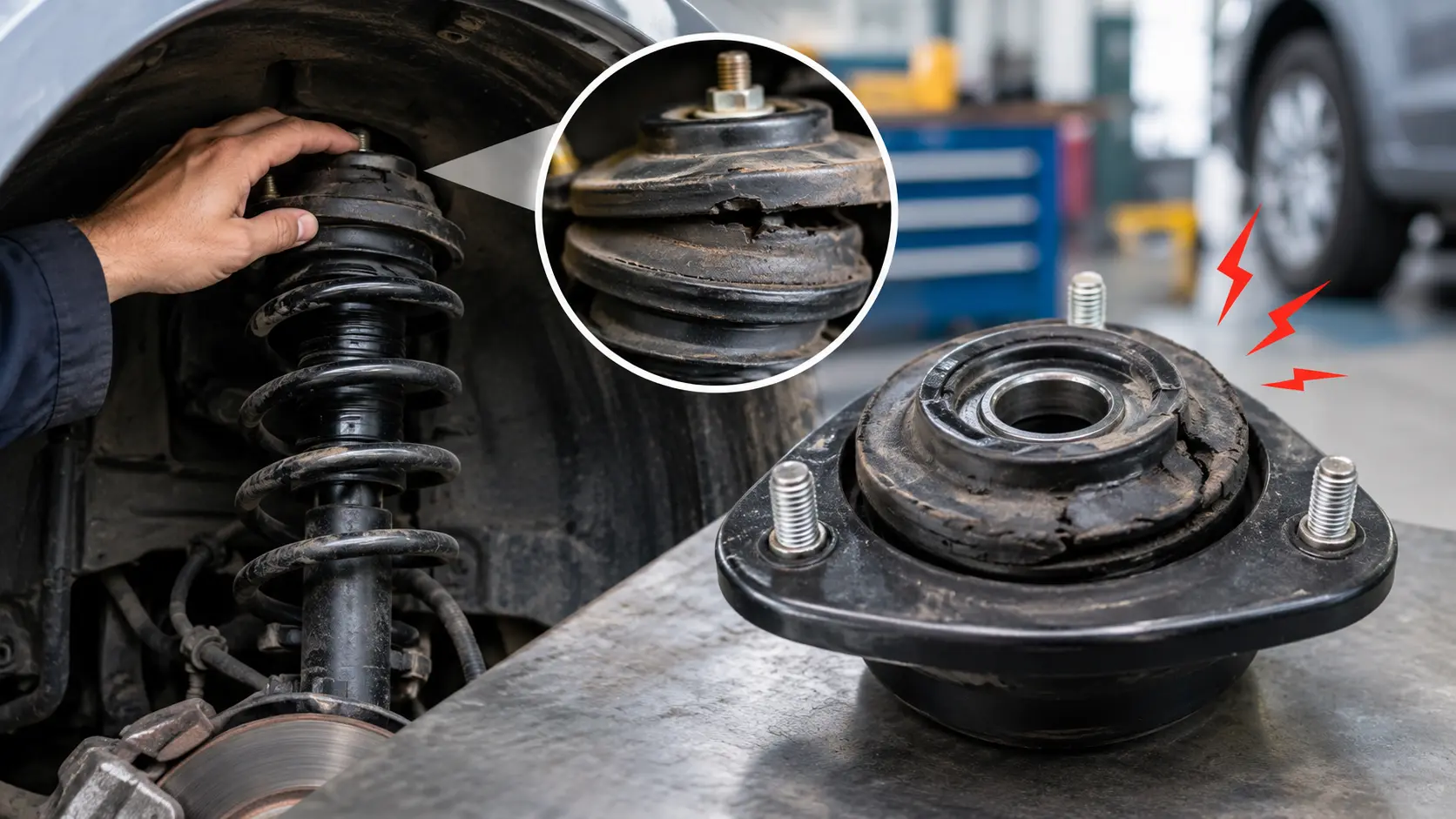
You select Drive at a red light in Al Barsha, the light turns green and the car pauses before it moves. A faint whine rises with the engine revs. Later on Sheikh Zayed Road, the gearbox seems to slip for a moment before a shift lands. These are common clogged transmission filter symptoms, and they often point to a fluid and filter service that is overdue.
An automatic gearbox runs on fluid under pressure. A pump draws that fluid from the pan through a filter, which traps metal particles, clutch material and sludge before they reach the valve body and solenoids. When the filter blocks up, the pump struggles to draw enough fluid, pressure falls and the gearbox cannot shift cleanly.
This guide explains what the filter does, the signs it is clogging, why Dubai traffic and heat speed up the problem, how a workshop confirms it and what the service involves. It also covers the faults that cause the same symptoms, so you know what to ask for.
Clogged Transmission Filter Symptoms: Quick Answer
The main clogged transmission filter symptoms are a delay before Drive or Reverse engages, hesitation or slipping during shifts, a whine or buzz that rises with engine revs, harsh or rough shifts, overheating fluid with a burnt smell, fluid leaks, weak acceleration and a warning light.
Mister Transmission lists hesitation, slipping, whining or grinding noises, a burnt odour, fluid leaks, a warning light and weak acceleration among the signs of a failing filter. It states that manufacturers generally recommend a filter change every 30,000 to 60,000 miles, about 48,000 to 96,000 km, or every two to four years, and sooner in severe conditions.
Table of Contents
- What the Transmission Filter Does
- Types of Transmission Filters
- Why Filters Clog Faster in Dubai
- Delay Before Drive or Reverse Engages
- Hesitation and Slipping During Shifts
- Whining or Buzzing That Rises With Revs
- Harsh or Rough Shifts
- Overheating and a Burnt Smell
- Fluid Leaks Around the Pan
- Weak Acceleration
- Warning Lights and Pressure Codes
- Faults That Look Like a Clogged Filter
- How a Workshop Confirms a Clogged Filter
- What a Filter and Fluid Service Involves
- Is a Flush Better Than a Filter Change?
- Is It Safe to Drive With a Clogged Filter?
- How Often Should the Gearbox Filter Be Changed?
- Can a New Filter Make Things Worse?
- Why Does My Car Shift Badly Only When Hot?
- How to Keep the Gearbox Filter Clean
- FAQ
- Conclusion
What the Transmission Filter Does
Inside the gearbox, clutches and bands wear a little every time the car shifts. Gears and bearings shed fine metal. Over time, this debris builds up in the fluid.
The filter sits between the pan, where the fluid collects, and the pump, which pressurises it. Every drop the pump sends to the valve body passes through the filter first. That protects the small passages, valves and solenoids that control each shift.
A gearbox needs a steady supply of clean fluid at the right pressure. The fluid cools the gearbox, lubricates its parts and provides the hydraulic force that applies each clutch. When the filter restricts flow, all three jobs suffer.
Types of Transmission Filters
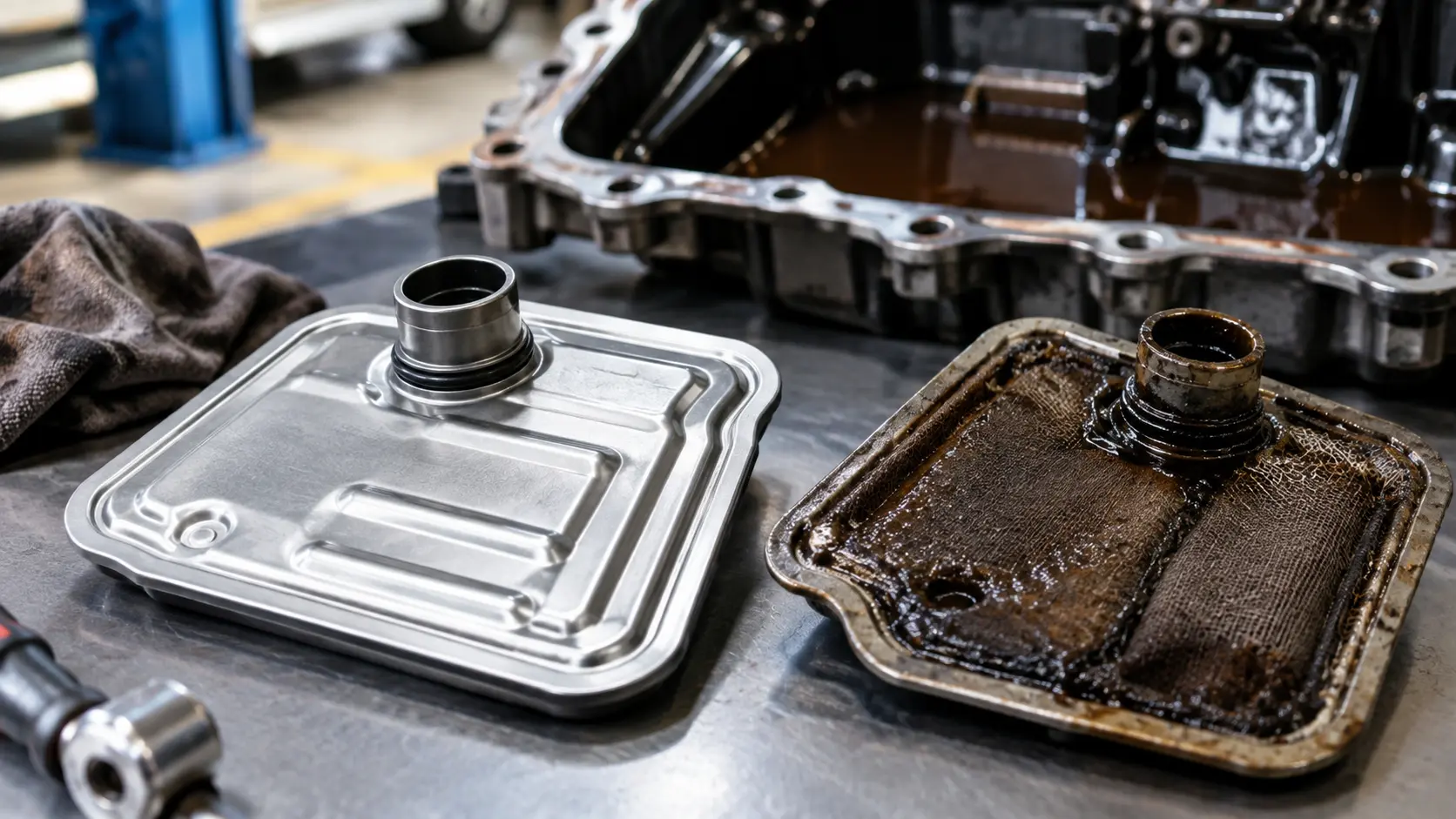
Most automatic gearboxes use an internal filter that sits inside the pan. Older designs used a fine metal screen. Most modern gearboxes use a felt or synthetic fibre filter that traps much smaller particles.
On many modern gearboxes, such as the eight speed units in many German cars, the filter is built into a plastic pan. The pan and filter are replaced together as one part.
Some gearboxes also have an external filter in the cooler line, and a few use a spin on filter similar to an engine oil filter. Continuously variable gearboxes, or CVTs, found in many Nissan and Toyota models, use filters as well, and some have more than one.
Your owner’s manual or a workshop can confirm which type your car uses and whether it is serviceable.
Why Filters Clog Faster in Dubai
Heat is the main cause. Fluid that runs hot breaks down faster, forming varnish and sludge. On a summer afternoon when the air passes 45°C, the gearbox has less chance to cool, and the fluid ages quickly.
Stop and start traffic adds to the load. A commute along Al Khail Road or through Downtown Dubai means constant pulling away and stopping. Each pull away loads the torque converter and clutches, which creates heat and wear particles.
Towing and heavy loads count too. A boat trailer on the way to the marina or a full family load on a drive to Fujairah puts extra strain on the gearbox and speeds up wear.
Long service gaps are the final piece. Many gearboxes are sold as filled for life, so owners never change the fluid. In UAE conditions, most service books list this kind of driving as severe use, which calls for shorter fluid and filter intervals.
Delay Before Drive or Reverse Engages
When you select Drive, the pump must build enough pressure to apply the clutch for first gear. A clogged filter slows that process, so you wait a second or two before the car moves.
The delay is often worse first thing in the morning, when the fluid has drained into the pan overnight, and again when the fluid is very hot and thin. It can also be worse in Reverse, which on many gearboxes needs higher pressure.
A short delay may seem harmless, but it means the gearbox is running short of pressure. Clutches that apply slowly slip as they engage, which creates wear and more debris.
Hesitation and Slipping During Shifts
On the move, a clogged filter can make the gearbox hesitate between gears. The engine revs flare up for a moment before the next gear catches.
Mister Transmission lists hesitation, difficulty shifting and slipping among the first signs of a failing filter. Slipping is most noticeable under load, such as accelerating hard to join Sheikh Zayed Road or climbing the ramp of a multi storey car park.
If you notice the revs climbing without the car speeding up, the gearbox is slipping. This needs attention soon, because slipping clutches overheat the fluid and wear quickly.
Whining or Buzzing That Rises With Revs
A pump that struggles to draw fluid through a blocked filter often makes a whine or buzz. The pitch rises as engine revs rise, because the pump turns with the engine.
The noise is usually most obvious in Park or Neutral with the engine running and when pulling away. Mister Transmission lists whining, rattling and grinding noises from the gearbox as signs of a failing filter.
A whine can also mean the pump is drawing air. This happens when the fluid level is low or the filter seal has failed. Either way, the pump is not getting the flow it needs.
Harsh or Rough Shifts
When pressure is unstable, the gearbox computer struggles to control each shift. Some shifts land with a bump, while others feel soft and slow.
Rough shifts also come from fluid that has broken down. Old fluid loses the friction properties the clutches rely on, so the shift quality changes. A clogged filter and old fluid usually go together.
Overheating and a Burnt Smell
Restricted flow means less fluid passes through the cooler. At the same time, slipping clutches create more heat. The fluid temperature climbs.
Mister Transmission links a burnt odour to overheated fluid. You may smell it after a long drive in traffic or a climb up Jebel Jais. On some cars, a gearbox temperature warning appears on the dashboard.
Burnt fluid is a sign of damage already happening inside the gearbox. It needs checking promptly.
Fluid Leaks Around the Pan
A clogged filter does not usually cause a leak on its own. But Mister Transmission lists fluid leaks among the signs of filter trouble, because leaks and filter problems often appear together.
A leaking pan gasket or a loose pan bolt can let fluid escape, which lowers the level. A low level makes the pump draw air through the filter, causing the same whine and slipping as a blockage. Red or brown drips under the middle of the car point to a gearbox leak.
Leaks also show up after a poorly done filter change, when the pan gasket was not seated correctly.
Weak Acceleration
When the gearbox slips or shifts late, the engine’s power does not reach the wheels properly. The car feels sluggish, even with your foot down. Mister Transmission lists weak acceleration and reduced power as signs of a failing filter.
This symptom is easy to confuse with an engine fault. If the revs climb normally but the car does not speed up to match, the problem is in the gearbox. If the revs themselves climb slowly, the engine may be the cause.
Warning Lights and Pressure Codes
A clogged filter does not have its own fault code. But the effects of low pressure often trigger one. Codes for gear ratio errors, slipping torque converter clutch or line pressure problems can all appear.
Mister Transmission notes that a check engine or transmission warning light can come on with filter problems. A scan tool reads the stored code and the freeze frame data, which shows what the car was doing when the fault happened.
A code points to where the gearbox is struggling, not always to the cause. A technician reads it alongside the fluid condition and the symptoms.
Faults That Look Like a Clogged Filter
Several faults cause delays, slipping and whining. A good workshop checks them all:
- Low fluid level. This causes the same symptoms as a blocked filter and is far simpler to fix.
- Old or burnt fluid. Worn out fluid causes slipping and rough shifts even with a clean filter.
- A sticking solenoid. A solenoid that sticks causes harsh, late or missed shifts.
- A worn valve body. Worn bores let pressure leak, causing delays and slipping.
- A failing torque converter. This causes shudder and slipping at steady speeds.
- A worn pump. A tired pump cannot build pressure, even with a clean filter.
- Worn clutches. Clutches worn down by age and heat slip no matter how clean the fluid is.
Because so many faults share the same symptoms, a filter change is a sensible first step on a gearbox with old fluid, but it is not a cure for every problem.
How a Workshop Confirms a Clogged Filter
A careful car mechanic near you starts with the fluid. On cars with a dipstick, the level and colour are checked hot and cold. On sealed gearboxes, the level is checked through a fill plug at a set temperature using a scan tool.
Healthy fluid is usually red and clear. Dark brown or black fluid, a burnt smell or a milky look all point to problems. The technician also looks for fine metal particles or clutch material in the fluid.
Next, the codes and live data are read. Many scan tools show fluid temperature, line pressure and gear ratio. Low or unstable pressure supports a restriction.
On some gearboxes, the technician fits a pressure gauge to a test port and compares the reading with the maker’s figure. A low reading that improves after a filter change confirms the filter was the problem.
Finally, when the pan comes off, the filter and pan tell their own story. A heavy layer of sludge, metal flakes or clutch material shows how much wear the gearbox has suffered.
What a Filter and Fluid Service Involves
A filter service starts with draining the fluid from the pan. The technician removes the pan, takes out the old filter and cleans the pan and its magnets.
A new filter and seal go in, followed by a new pan gasket. On gearboxes with an integrated pan, the whole pan is replaced. The pan bolts are tightened to the correct torque to stop leaks.
The gearbox is then refilled with the exact fluid the maker specifies. Using the wrong fluid can cause slipping and harsh shifts, even with a new filter.
On many modern gearboxes, the level must be set at a specific fluid temperature with the engine running. The technician uses a scan tool to read the temperature and adjusts the level through the fill plug.
A pan drop only replaces part of the fluid, because some stays in the torque converter and cooler. A second fluid change after a short interval brings the fluid closer to fully fresh.
A professional transmission fluid service follows these steps for your model. If the engine air, cabin or oil filters are also due, a filter change at the same visit saves a second trip.
Many owners combine the visit with other jobs too, from routine checks to paint and panel repair for parking scrapes, so the car is off the road only once.
Is a Flush Better Than a Filter Change?
A flush machine pushes new fluid through the gearbox and cooler, replacing more of the old fluid in one go. But most flush machines do not change the filter.
If the filter is clogged, a flush alone leaves the restriction in place. It may also push loosened debris toward the filter and valve body.
On a gearbox with very old fluid that has never been serviced, some technicians prefer a gentler approach. A filter change and partial fluid change, repeated over a short period, refreshes the fluid without a sudden change.
The right choice depends on the gearbox, its age and the condition of the fluid. A workshop that knows your model can advise which method suits it.
Is It Safe to Drive With a Clogged Filter?
Driving short distances is usually possible, but the gearbox is at risk every time it slips or overheats. Each slip wears the clutches, and each overheat ages the fluid further.
The longer a clogged filter is ignored, the more likely the repair grows from a service into a rebuild. A filter change is a small bill compared with a new gearbox.
If the car stops moving in Drive, loses drive on a highway or shows a gearbox overheat warning, stop as soon as it is safe. Turn on your hazard lights and move to the hard shoulder. Stopping in a live lane because of a breakdown brings a AED 1,000 fine and six black points under Article 98 of the UAE Federal Traffic Law. Once safe, call roadside assistance.
A car that will not move under its own power should travel on a flatbed tow truck, because towing an automatic with its drive wheels on the road can damage the gearbox. If the car is at home and you want the fluid checked before driving, a mobile mechanic can inspect the level and condition on site.
How Often Should the Gearbox Filter Be Changed?
The answer depends on the gearbox and how the car is used. Mister Transmission states that manufacturers generally recommend a filter change every 30,000 to 60,000 miles, about 48,000 to 96,000 km, or every two to four years. It adds that severe driving conditions may call for sooner changes.
Most daily driving in Dubai fits the severe category. Heat, stop and start traffic and short trips all count. Many owners and workshops in the UAE plan for the shorter end of the range.
Gearboxes described as filled for life are a special case. The maker may not list an interval, but heat still ages the fluid. Many specialists suggest a fluid and filter change on these gearboxes as a precaution, especially on cars kept beyond their warranty.
Your owner’s manual is the starting point. A workshop can then adjust the interval based on your driving and the fluid’s condition.
Can a New Filter Make Things Worse?
Owners sometimes hear that changing fluid on a high mileage gearbox can cause it to fail. The concern is that old fluid full of friction particles may be helping worn clutches grip, and fresh fluid removes that grip.
In most cases, the gearbox was already worn before the service. Fresh fluid does not cause wear, but it can reveal wear that the old fluid was masking.
That is why the fluid and filter condition matters. If the pan holds large amounts of clutch material and metal, the gearbox may already need a rebuild. A technician can explain the risk before starting the service, so there are no surprises.
Why Does My Car Shift Badly Only When Hot?
Fluid thins as it heats. Thin fluid flows through a partly blocked filter more easily, but it also leaks past worn seals and valves more easily, which lowers pressure.
A gearbox that shifts well in the morning and badly after an hour in traffic often has a combination of old fluid, a restricted filter and some internal wear. Heat brings all three to the surface.
This pattern is especially common in Dubai during the summer. If your gearbox misbehaves only when hot, mention it to the workshop, because it narrows down the possible causes.
How to Keep the Gearbox Filter Clean
Change the fluid and filter at the severe service interval in your owner’s manual, not the normal one. In UAE heat, that is usually the safer schedule.
Use the exact fluid the maker specifies. The wrong fluid can break down faster and cause shift problems.
Fix leaks promptly. A low fluid level makes the pump draw air and heat up the fluid faster.
Drive gently in traffic where you can. Smooth pull aways and less creeping in Drive reduce heat and wear.
Avoid towing loads beyond your car’s rating. On long trips with a heavy load, give the gearbox breaks to cool.
Book a regular car service in Dubai that includes a gearbox fluid check. If you notice delays, whining or slipping, take the car to a car garage near you that checks the fluid and filter before recommending bigger repairs.
FAQ
Here are the questions Dubai drivers most often ask about gearbox filters.
What are the signs of a clogged filter?
The main signs are a delay before Drive or Reverse engages, hesitation and slipping during shifts, a whine that rises with revs, rough shifts, overheating with a burnt smell, weak acceleration and a warning light.
How often should a gearbox filter change?
Mister Transmission says makers generally suggest every 30,000 to 60,000 miles, about 48,000 to 96,000 km, or every two to four years. Severe conditions, such as heat and heavy traffic, call for the shorter end.
Can a clogged filter cause slipping?
Yes. A blocked filter restricts the flow to the pump, which lowers pressure. Low pressure means clutches apply slowly and slip, especially under load when accelerating or climbing a ramp.
Will a flush clean the gearbox filter?
No. Most flush machines replace the fluid but leave the filter in place. If the filter is clogged, it still needs to be changed by removing the pan.
Does a clogged filter cause whining?
Yes. A pump struggling to draw fluid through a blocked filter often whines, and the pitch rises with engine revs. A low fluid level can cause the same noise.
Conclusion
A clogged transmission filter shows up as a delay before Drive engages, hesitation and slipping, a whine that rises with revs, rough shifts, overheating and weak acceleration. Heat, stop and start traffic and long service gaps clog filters faster in Dubai. Checking the fluid, reading live data and inspecting the pan confirms the fault, and a filter and fluid service often restores smooth shifting before wear spreads.
Rapid Rev Garage is a full workshop open 24 hours at Al Khail Gate, 12th Street, Al Quoz Industrial Area 2, serving passenger cars across Al Quoz, Business Bay, Jumeirah, Al Barsha, Satwa, Downtown and the Sheikh Zayed Road corridor. Visit https://rapidrevgarage.com, send your car model, mileage and gearbox symptoms on WhatsApp, or get directions on Google Maps.
Rapid Rev Garage | Clogged Transmission Filter Symptoms | Al Quoz, Dubai