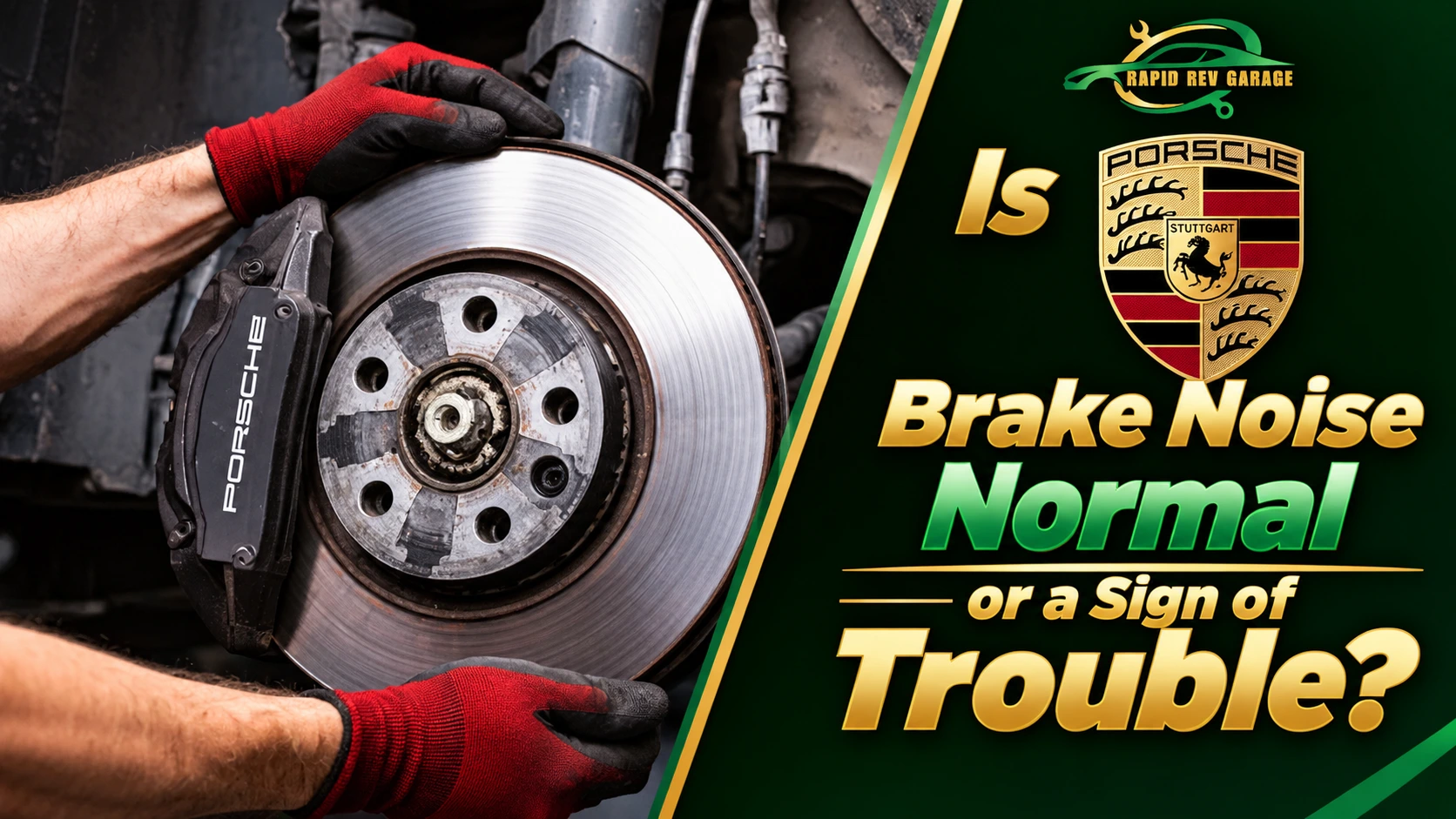
Porsche brake noise can be normal in some cases, but it can also point to a problem. A light squeak may happen after rain, during cold starts, or when the brakes are cold. However, loud squealing, grinding, or repeated noise needs attention. Worn brake pads, damaged brake discs, dust and stuck brake parts are common causes. If your Porsche shakes, pulls to one side, or takes longer to stop, get the brakes checked soon. In Dubai, heat and stop-and-go traffic can put extra stress on your braking system. A professional inspection can help keep your car safe.
Table of Contents
- Understanding the Problem
- Common Symptoms to Watch For
- Common Causes
- Diagnostic Process
- Repair and Service Process
- Risks of Ignoring Brake Noise
- Can You Continue Driving?
- How Long Does Repair Take?
- Factors That Affect Repair Costs
- Estimated Repair Cost
- Prevention Tips
- Dubai-Specific Advice
- Why Choose Rapid Rev Garage for Porsche Brake Repair in Dubai?
- Relevant Service Page
- Related Services
- FAQs
- Final Thoughts
1. Understanding Porsche Brake Noise
Porsche cars are built for strong performance and smooth braking. Their braking systems must handle high speeds, quick stops and daily traffic. So, any new sound from the brakes deserves attention.
Some brake sounds are harmless. For example, a brief squeak after rain may come from moisture on the brake discs. The sound should usually fade after a few normal stops.
But noise that keeps coming back may mean something is wrong. If your Porsche makes a sharp squeal, a rough scraping sound, or a deep grinding noise, do not ignore it.
The key is to notice when the sound starts, how long it lasts and whether the car still stops as it should.
2. Common Symptoms to Watch For
Different sounds can point to different brake problems. Pay attention to changes in noise, pedal feel and stopping power.
Signs Your Porsche Brakes Need Attention
- ⚠️ High-pitched squealing: This may point to worn brake pads, dust, or vibration between brake parts.
- ⚠️ Grinding while braking: This can mean the pads are badly worn or metal parts are rubbing together.
- ⚠️ Clicking or knocking: Loose parts or worn brake hardware may cause these sounds.
- ⚠️ Noise at low speed: Porsche brakes making noise at low speed may be linked to pad vibration, surface rust, or uneven wear.
- ⚠️ Steering wheel vibration: Warped or uneven brake discs may cause shaking during braking.
- ⚠️ Brake pedal changes: A soft, hard, or vibrating pedal can signal a brake system fault.
- ⚠️ Vehicle pulling to one side: This may mean uneven braking or a stuck caliper.
A single brief squeak is not always a major fault. Repeated noise, grinding, or changes in braking feel need a closer inspection.
3. Common Causes of Porsche Brake Noise
Several parts can create unwanted brake sounds. The exact cause depends on the noise, the car model and the condition of its braking system.
1. Worn Brake Pads
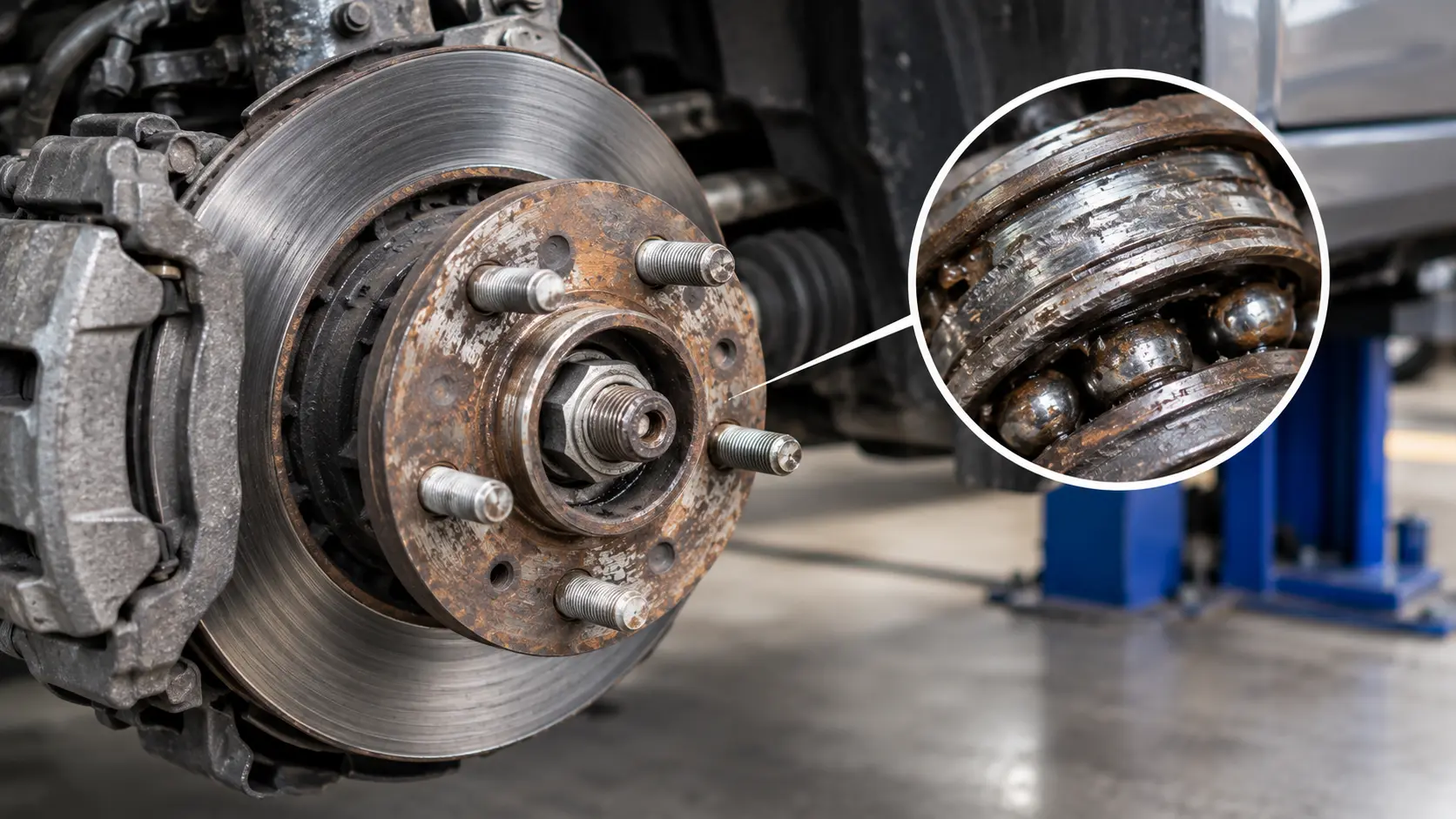
Brake pads wear down with use. When they become too thin, they may produce a warning squeal or allow metal parts to touch the disc.
Porsche brakes squeaking when stopping can be an early sign of pad wear. A technician should check the remaining pad material before deciding whether replacement is needed.
2. Worn or Damaged Brake Discs
Brake discs can develop grooves, uneven surfaces, or heat damage. These problems may cause scraping, vibration, or rough braking. Common Porsche brake disc wear symptoms include steering wheel shake, repeated noise and an uneven feel when slowing down.
3. Dust and Small Stones
Brake dust can build up around the pads and discs. A small stone may also become trapped between brake parts. This can cause a sudden squeal or scraping sound. Cleaning and inspection may solve the issue, but the parts must be checked for damage first.
4. Moisture and Surface Rust
Dubai can have humid mornings, coastal moisture and occasional rain. A thin layer of rust may form on exposed brake discs while the car is parked. This can cause brief noise during the first few stops. If the sound continues, a technician should check for deeper rust or uneven wear.
5. Sticking Brake Calipers
A brake caliper presses the pads against the disc. If it sticks, the pads may stay in contact with the disc for too long. This can cause heat, uneven pad wear, noise and a burning smell. A sticking caliper needs prompt attention.
6. Performance Brake Components
Some Porsche models use performance brake systems, including large discs or special pad materials. These parts may make more noise than standard brakes, especially when cold.
A small amount of noise may be normal for some setups. However, grinding, severe vibration, or reduced stopping power is not normal.
4. Diagnostic Process: How Experts Find the Cause
Finding the cause of Porsche brake noise starts with a careful check. A mechanic should not replace parts based on sound alone.
Ask When the Noise Happens
The mechanic will ask if the sound starts when braking, turning, reversing, or driving slowly. This helps narrow down the possible cause.
Inspect the Brake Pads
The mechanic checks the pad thickness and looks for cracks, uneven wear, or other damage. Thin pads may need replacement.
Check the Brake Discs
The discs are checked for deep grooves, heat marks, rust and uneven wear. The mechanic also checks whether the discs meet the manufacturer’s limits.
Inspect Calipers and Other Parts
The mechanic checks the calipers, clips, springs and other brake hardware. Stuck or loose parts can cause noise and uneven braking.
Test the Braking System
If safe, the mechanic performs a controlled road test. They check braking response, vibration and unusual sounds. The final repair plan depends on the inspection results.
5. Porsche Brake Repair and Service Process
Porsche brake repair in Dubai should follow the correct procedure for your model. Here is how a typical service works.
Step 1: Initial Inspection
The technician listens to the noise and checks your braking concerns.
Step 2: Brake system check
The pads, discs, calipers and related parts are inspected.
Step 3: Fault identification
The technician explains what caused the noise and which parts need attention.
Step 4: Repair approval
You receive a repair plan and cost estimate before work begins.
Step 5: Part replacement or repair
Worn pads, damaged discs, or faulty hardware are repaired or replaced as needed.
Step 6: Brake system testing
The technician checks the completed work and confirms that the brakes operate correctly.
Step 7: Final safety check
The car is checked for leaks, warning lights and any remaining problems.
The exact steps depend on the Porsche model and the fault. Some cars may also need electronic checks or special service procedures.
6. Risks of Ignoring Brake Noise
A small brake problem can become a costly repair if you leave it too long.
Here are the main risks:
- More expensive repairs: Worn pads can damage brake discs and increase replacement costs.
- Reduced stopping power: Damaged parts may affect how quickly your Porsche stops.
- Uneven braking: A faulty caliper can cause the car to pull to one side.
- Excess heat: A brake that stays engaged can overheat and damage nearby parts.
- Damage to other components: Continued driving with worn or damaged brakes can lead to further repairs.
- Safety concerns: Poor braking can increase the risk of an accident.
Grinding sounds deserve special attention. They may mean the brake pads are worn down to the metal backing. Get the car checked before driving again.
Brake Noise and Possible Causes
| Noise or symptom | Possible cause | What to do |
|---|---|---|
| Brief squeak after rain | Moisture or light surface rust | Monitor whether it clears |
| High-pitched squeal | Pad wear or vibration | Arrange a brake inspection |
| Deep grinding | Severe pad wear or disc damage | Stop driving and seek help |
| Noise at low speed | Dust, pad vibration, or surface rust | Check if the sound repeats |
| Shaking during braking | Uneven disc surface or other brake fault | Get the system inspected |
| Burning smell or excess heat | Sticking caliper or dragging brake | Stop safely and seek assistance |
7. Can You Continue Driving?
It depends on the sound and how your car behaves. A brief squeak after rain may not require an emergency stop if the brakes feel normal and the sound quickly disappears. However, repeated noise should still be checked.
Stop driving and seek help if you notice:
- A deep grinding sound.
- Weak or delayed braking.
- A soft or sinking brake pedal.
- A strong burning smell.
- Smoke or unusual heat near a wheel.
- Severe shaking or the car pulling sharply to one side.
- A red brake warning light or a brake fluid warning.
Do not test damaged brakes at high speed. If the car feels unsafe, park in a safe place and arrange roadside assistance. A recovery service may be safer than driving to a workshop.
8. How Long Does Porsche Brake Repair Take?
Repair time depends on the fault, the parts required and the Porsche model.
| Service | Estimated time |
|---|---|
| Basic brake inspection | 30–60 minutes |
| Brake cleaning and minor adjustments | 30–90 minutes |
| Brake pad replacement | 1–2 hours |
| Brake disc and pad replacement | 2–4 hours |
| Caliper repair or replacement | 2–4 hours or longer |
| Complex brake system diagnosis | Several hours or more |
These are general estimates, not fixed service times. Parts availability, electronic systems and additional damage can affect the total time.
9. Factors That Affect Porsche Brake Repair Costs
The cost depends on more than the noise itself. A basic cleaning job can cost much less than replacing discs and pads on a high-performance Porsche.
Important cost factors include:
- Porsche model: A Cayenne, Macan, 911 and Panamera may use different brake parts.
- Brake type: Standard brakes and performance or carbon-ceramic systems have very different costs.
- Part quality: Genuine Porsche parts and other compatible parts can have different prices.
- Damage level: Replacing pads alone costs less than replacing pads and discs.
- Labour charges: Repair time and the complexity of the work affect labour costs.
- Extra repairs: Damaged calipers, sensors, or brake hardware may add to the bill.
Always request an itemised quote before approving the repair.
10. Estimated Porsche Brake Repair Cost in Dubai
The following figures are broad planning estimates in UAE dirhams (AED). They are not confirmed prices from Rapid Rev Garage. Actual costs depend on your car, parts and inspection results.
| Brake service | Estimated cost (AED) |
|---|---|
| Brake inspection and diagnosis | 150–400 |
| Brake cleaning and minor service | 150–400 |
| Brake pad replacement, one axle | 600–1,800 |
| Brake pads and discs, one axle | 1,500–4,000 |
| Caliper repair or replacement | 800–3,500+ |
| Performance or carbon-ceramic brake work | 5,000–20,000+ |
These are indicative market-planning ranges, not a live price list. Carbon-ceramic components and certain performance models can cost much more. Confirm the exact price after a vehicle inspection.
11. Prevention Tips: Keep Your Porsche Brakes in Good Condition
Regular checks can help prevent noise and reduce repair costs.
Checklist: Simple Brake Care
Use this checklist to keep track of your brake condition.
- ✅ Listen for new squealing, scraping, or grinding sounds.
- ✅ Check for vibration when slowing down.
- ✅ Arrange regular brake pad and disc inspections.
- ✅ Check brake fluid at the recommended service intervals.
- ✅ Avoid harsh braking when it is not needed.
- ✅ Keep the wheels and brake areas free from excessive dirt where practical.
- ✅ Replace worn parts before they damage other components.
- ✅ Follow the maintenance schedule for your Porsche model.
- ✅ Have repeated brake warning lights checked by a qualified technician.
- ✅ Ask for a brake inspection before a long road trip.
Never spray general cleaning products or oils on brake pads or discs. These products can reduce braking performance.
12. Dubai-Specific Advice for Porsche Owners
Driving in Dubai can put extra demands on your brakes. Heavy traffic, frequent stops, high road temperatures and long drives can increase brake wear.
Here are a few local points to keep in mind.
Heat and Stop-and-Go Traffic
Repeated braking in traffic creates heat. Over time, this can increase wear and may cause vibration or changes in brake performance. Leave enough space between your car and the vehicle ahead. This allows smoother braking and reduces unnecessary pressure on the brakes.
Sand and Road Dust
Dust and fine sand can collect around the wheels and brake parts. If you hear scraping after driving through dusty areas, arrange an inspection rather than assuming the sound is harmless.
Humidity and Coastal Driving
Moisture can form a thin layer of rust on brake discs while your car is parked. A brief sound that disappears after a few normal stops may be caused by surface rust. Noise that continues needs attention.
Choose a Suitable Porsche Workshop
Look for a garage that understands Porsche braking systems and uses suitable parts and service procedures. If you search ‘garage near me’, ask whether the workshop can inspect your exact model and explain the repair costs before starting work, like Rapid Rev Garage.
13. Why Choose Rapid Rev Garage for Porsche Brake Repair in Dubai?
Your Porsche needs brakes that work correctly in both daily traffic and demanding driving conditions. Finding the cause of unusual noise is the first step towards safe and reliable braking.
Rapid Rev Garage offers car repair and maintenance services in Dubai. When arranging a brake inspection, ask the team to assess your Porsche’s pads, discs, calipers and other related parts. A clear diagnosis helps you understand which repairs are needed and which can wait.
Choose a repair plan based on the actual condition of your brakes, not just the sound they make. This can help you avoid unnecessary part replacements and prevent minor faults from becoming larger problems.
For persistent squealing, grinding, or vibration, contact Rapid Rev Garage to discuss a suitable inspection and repair.
14. Relevant Service Page
If your Porsche is making unusual brake sounds, our expert team can help identify the issue and recommend the right repair. Check out our Porsche mechanic services in Dubai for professional brake inspections, brake pad replacement, and disc repairs.
15. Related Services
Depending on the inspection results, these services may also be useful for Porsche owners in Dubai:
- Brake pad replacement: For worn pads that no longer provide safe braking.
- Brake disc inspection and replacement: For discs with excessive wear, grooves, or damage.
- Brake caliper repair: For sticking calipers and uneven pad wear.
- Brake fluid service: To help maintain proper hydraulic braking performance.
- Computer diagnostics: For electronic brake warnings or related system faults.
- Roadside assistance: For vehicles that develop serious brake problems while on the road.
- General Porsche maintenance: For routine checks and other repair needs.
Rapid Rev Garage can help you explore suitable repair options for your vehicle. Ask which services are available for your Porsche model before booking.
16. FAQs
Is Porsche Brake Noise normal?
Sometimes. A brief squeak after rain or when the brakes are cold may be normal. Repeated squealing, grinding, or vibration can indicate worn pads, disc damage, or another fault.
Why does my Porsche make noise when braking?
Common causes include worn brake pads, damaged discs, dust, trapped stones and loose brake hardware. A sticking caliper can also cause noise. An inspection is the best way to identify the exact cause.
Why are my Porsche brakes squeaking when stopping?
Squeaking may come from worn pads, brake dust, moisture, or pad vibration. Some performance brake systems can also make noise when cold. If the sound keeps returning, have the brakes checked.
What causes Porsche brake grinding noise?
Grinding can occur when the pads are severely worn or metal parts rub against the brake discs. It may also result from trapped debris or damaged components. Stop driving if the grinding is heavy or braking performance changes.
Why are my Porsche brakes making noise at low speed?
Low-speed noise may come from pad vibration, light surface rust, dust, or the brake pad material. If the sound continues after the brakes warm up or happens on every stop, arrange an inspection.
How do I know if my Porsche brake discs need replacing?
Warning signs include deep grooves, cracks, vibration, uneven wear and persistent scraping. A mechanic must measure disc thickness and compare it with the manufacturer's limits before recommending replacement.
How much does Porsche brake pad replacement cost in Dubai?
A broad estimate for pad replacement on one axle is AED 600–1,800. The final cost depends on the model, part type and labour. Performance brake systems may cost more.
Can I drive my Porsche if the brakes are squeaking?
A brief squeak with normal braking may not be urgent, but repeated noise should be inspected. Do not drive if you hear severe grinding, feel weak braking, notice smoke, or experience a soft pedal. Arrange recovery if the car is unsafe.
When should I call roadside assistance for a brake problem?
Call for assistance if the brakes feel weak, the pedal sinks, a wheel appears to overheat, or you hear severe grinding. Avoid driving a car with a suspected serious brake fault.
Where can I get Porsche brake repair in Dubai?
Choose a workshop that can inspect your Porsche model, explain the fault and provide a clear estimate. You can contact Rapid Rev Garage to ask about brake inspection and repair options in Dubai.
17. Final Thoughts: Get Your Porsche Brakes Checked
Unusual brake sounds should never be ignored for too long. A brief squeak may have a simple cause, but grinding, repeated squealing, or vibration can point to a more serious issue.
If your Porsche is making new or persistent brake noise, arrange an inspection before the problem gets worse. Rapid Rev Garage can help you explore car repair options in Dubai. Contact us today to ask about Porsche brake inspection and repair.
You can also visit us at our Al Quoz, Dubai branch,
Rapid Rev Garage: https://maps.app.goo.gl/wjK13vovXTKx5SsH8