You park in Dubai Marina after a drive along Sheikh Zayed Road and notice a sharp burning smell from one front wheel. The car felt sluggish on the way, and the steering kept drifting to one side. When you walk past the wheel, you can feel the heat coming off it. These are classic seized brake caliper symptoms, and they should be checked before the car goes much further.
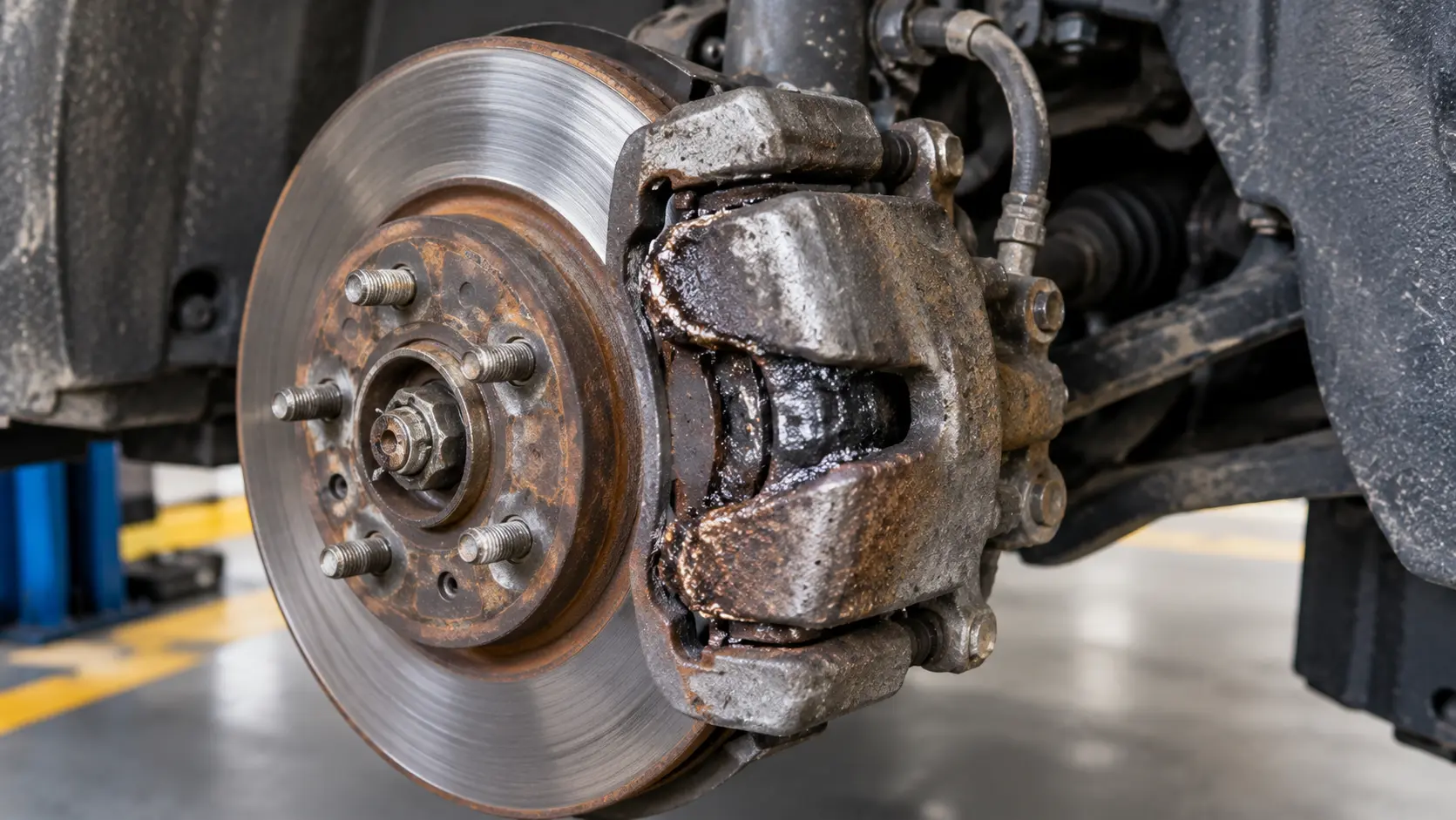
A brake caliper is the clamp at each wheel that squeezes the brake pads against the disc. When you press the pedal, a piston inside the caliper pushes out. When you release it, the piston and pads should back off slightly so the wheel turns freely. A seized caliper fails to release, either fully or partly, so the pads keep rubbing the disc as you drive.
This guide explains how calipers work, the signs one is sticking, why cars in Dubai are prone to it, how a mechanic confirms it and what the repair involves. It also covers the other faults that cause pulling and hot wheels, so you know what to ask for.
Seized Brake Caliper Symptoms: Quick Answer
The main seized brake caliper symptoms are the car pulling to one side, one wheel much hotter than the others, a burning smell after driving, a sluggish car that feels like the handbrake is on, grinding or squealing noises, uneven pad wear, brake fluid leaks and worse fuel economy.
Kwik Fit lists a sluggish car, pulling to one side, an overheating wheel and grinding noises as the key signs. Rick’s Free Auto Repair Advice names corroded slide pins as the most common cause and suggests comparing disc temperatures on each side with an infrared thermometer. A large difference between left and right points to a sticking caliper.
Table of Contents
- How a Brake Caliper Works
- Floating and Fixed Calipers
- Why Calipers Seize in Dubai
- Car Pulls to One Side
- One Wheel Much Hotter Than the Others
- Burning Smell After Driving
- Sluggish Car That Feels Held Back
- Grinding, Squealing or Scraping Noises
- Uneven Pad Wear
- Brake Fluid Leak at One Wheel
- Worse Fuel Economy
- Faults That Look Like a Seized Caliper
- How a Mechanic Confirms a Seized Caliper
- What Seized Caliper Repair Involves
- Is It Safe to Drive With a Seized Caliper?
- Can a Seized Caliper Fix Itself?
- Why Do Calipers Seize After the Summer Holidays?
- How Long Do Brake Calipers Last?
- Does a Sticking Caliper Affect Accident Repairs?
- How to Stop Calipers From Seizing
- FAQ
- Conclusion
How a Brake Caliper Works
Each wheel with disc brakes has a caliper that sits over the edge of the brake disc. Inside the caliper are one or more pistons and two brake pads, one on each side of the disc.
When you press the pedal, brake fluid pushes the pistons out. The pistons press the pads against the disc, and friction slows the wheel.
When you release the pedal, a square rubber seal around each piston pulls it back a tiny amount. That small retraction lets the pads move just clear of the disc. The pads should barely touch the disc while you drive.
If the piston sticks, the slide pins seize or the pads jam in their bracket, the pads stay pressed against the disc. That is a seized or sticking caliper.
Floating and Fixed Calipers
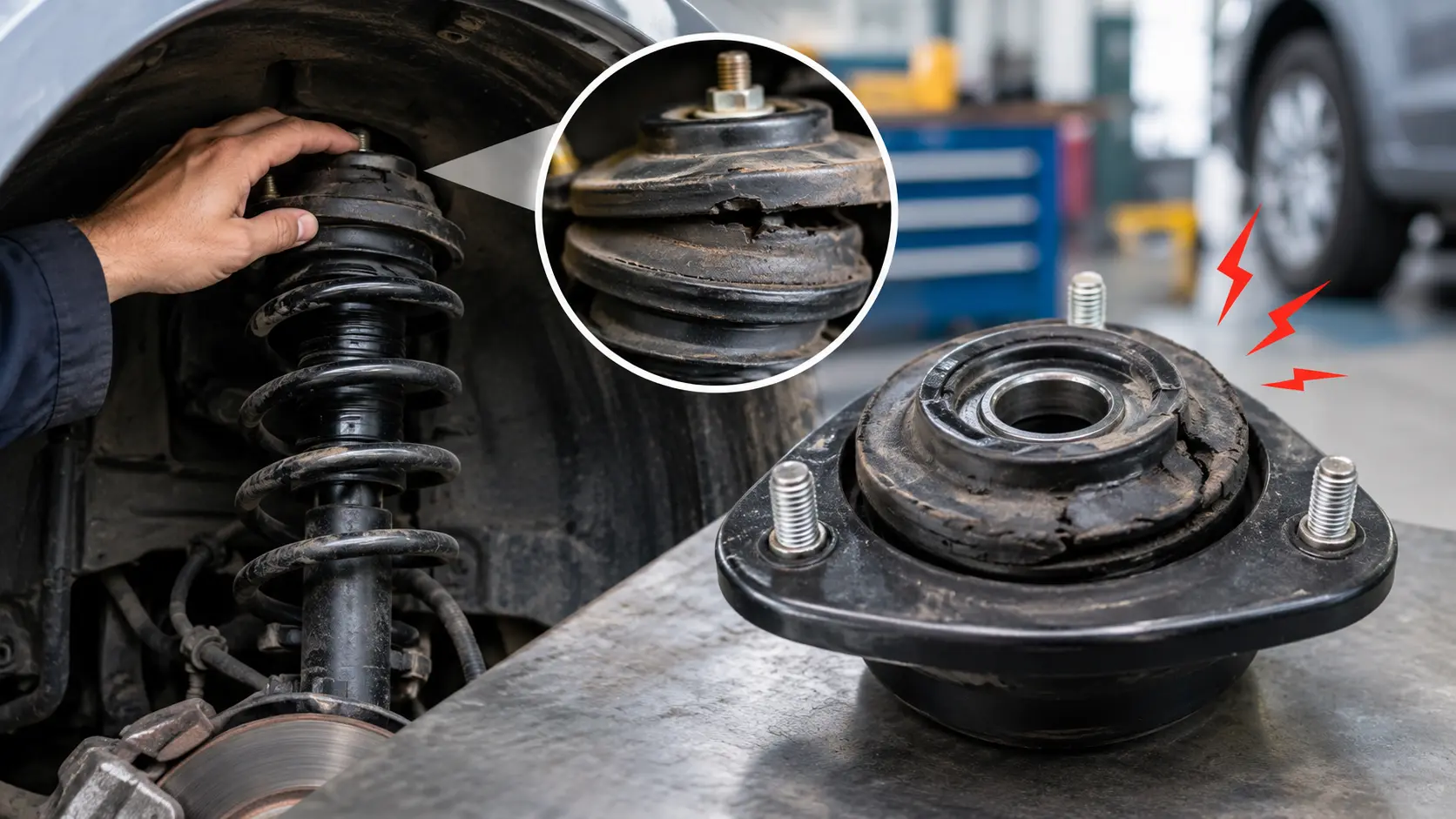
Most everyday cars in the UAE, such as the Toyota Corolla, Nissan Sunny and Kia Sportage, use floating calipers. These have pistons on one side only. The caliper body slides on two pins so it can pull the outer pad against the disc. If those pins seize, the caliper cannot slide, and one pad drags or both pads wear unevenly.
Performance and luxury cars often use fixed calipers with pistons on both sides. These do not slide, so pin problems do not apply, but any of the pistons can stick.
Many modern cars also have rear calipers with an electronic parking brake. A small motor on the caliper applies the handbrake. If that motor or its mechanism sticks, the rear brake may not fully release.
Why Calipers Seize in Dubai
Long periods parked are a major cause. Many residents travel abroad in the summer and leave cars parked for weeks. Kwik Fit lists corrosion from long periods of inactivity with the brakes engaged as a cause of stuck calipers. Leaving the handbrake on during that time makes the problem more likely.
Humidity adds to the problem. Areas near the coast, such as Dubai Marina, Jumeirah and Palm Jumeirah, see high humidity, especially in late summer. Moisture condenses on brake parts overnight and starts surface rust on the discs, pins and brackets.
Heat ages rubber. On a summer afternoon when the air passes 45°C, brakes that are already hot from traffic run even hotter. The rubber boots that protect the slide pins and pistons harden and crack. Rick’s Free Auto Repair Advice explains that heat and age can stop the piston seal from retracting and can crack it.
Dust and sand get into every gap. Once a boot is split, fine sand and grime enter and mix with grease to form a paste that binds the pins. Kwik Fit lists grime and debris among the causes.
Frequent car washing and water from sprinklers or puddles after rare rain can also reach calipers and speed up corrosion where boots are damaged.
Car Pulls to One Side
When one caliper drags, that wheel has more braking force than the opposite wheel. The car pulls toward the side with the sticking caliper.
Kwik Fit notes that you may need to keep bringing the steering wheel back to centre on a straight, level road. The pull may be gentle while cruising and stronger when you brake.
Rick’s Free Auto Repair Advice says the pull during braking can be strong enough to move the steering wheel noticeably. A pull only when braking can also mean one caliper is not applying properly, which a mechanic checks as well.
One Wheel Much Hotter Than the Others
A dragging caliper turns movement into heat all the time, not just when you brake. That wheel gets far hotter than the others.
Kwik Fit lists an overheating wheel as a key sign. After a drive, you can carefully hold your hand near each wheel, without touching it, and compare the heat. A wheel that feels much hotter than the matching wheel on the other side points to a dragging brake.
Never touch the disc, caliper or wheel directly after driving. They can be hot enough to burn skin.
Burning Smell After Driving
As the pads rub constantly, the friction material overheats. Rick’s Free Auto Repair Advice explains that the pad material burns when it stays in contact with the disc, which causes a strong smell.
The smell is sharp and acrid, different from the smell of burning oil or coolant. You may notice it when you park after a long drive or after a run through stop and start traffic in Downtown Dubai.
Some light smoke from the wheel is possible in bad cases. That means the brake is very hot and needs attention now.
Sluggish Car That Feels Held Back
A dragging brake works against the engine all the time. The car feels heavy, slow to pick up speed and reluctant to coast.
Kwik Fit describes this as a car that takes surprisingly long to get going. It advises checking that the engine is healthy and the handbrake is fully released before blaming a caliper.
A simple sign is coasting. On a level road, a car with free brakes rolls a fair distance in Neutral. A car with a dragging caliper slows quickly.
Grinding, Squealing or Scraping Noises
A sticking caliper keeps the pads in contact with the disc. This can cause squealing, a constant scraping sound or a grind that rises and falls with speed.
Rick’s Free Auto Repair Advice lists squealing, chatter and vibration as signs that the pads are overheating against the disc. Kwik Fit suggests driving slowly with the windows down to listen for a constant grinding sound.
If the pad wears down to its metal backing plate, the grind becomes harsh and loud. At that point the disc is being damaged with every turn of the wheel.
Uneven Pad Wear
When the pads are inspected, a sticking caliper often shows up as uneven wear. One pad may be much thinner than the other on the same wheel, or the pads on one side of the car may be far more worn than the other side.
A pad that has worn at an angle, thick at one end and thin at the other, points to a caliper that is not sliding evenly on its pins.
This is why a good brake service checks the thickness of every pad, not just the outer ones that are visible through the wheel.
Brake Fluid Leak at One Wheel
Rick’s Free Auto Repair Advice notes that a cracked piston seal can leak brake fluid and lower the reservoir level. You may see fluid on the inside of the wheel or tyre, or a damp patch on the ground under one wheel.
A leaking caliper is serious. Brake fluid on the pads ruins them, and losing fluid reduces braking power at every wheel.
If the brake fluid level drops or a warning light comes on, have the brakes checked before driving further.
Worse Fuel Economy
A dragging brake makes the engine work harder to keep the car moving. Fuel consumption rises, sometimes enough to notice over a week of commuting.
A sudden drop in fuel economy, together with a pull or a hot wheel, points strongly to a dragging brake.
Faults That Look Like a Seized Caliper
Several faults cause pulling, heat or noise. A careful mechanic checks them first:
- Wheel alignment. Kwik Fit notes that pulling can come from the brakes or from alignment and tracking.
- Uneven tyre pressure or worn tyres. A soft tyre on one side makes the car pull.
- Collapsed brake hose. A flexible brake hose can fail inside and trap pressure at the caliper, acting like a one way valve. The caliper then stays applied even though it is healthy.
- Sticking handbrake cable or electronic parking brake. These hold the rear brakes on.
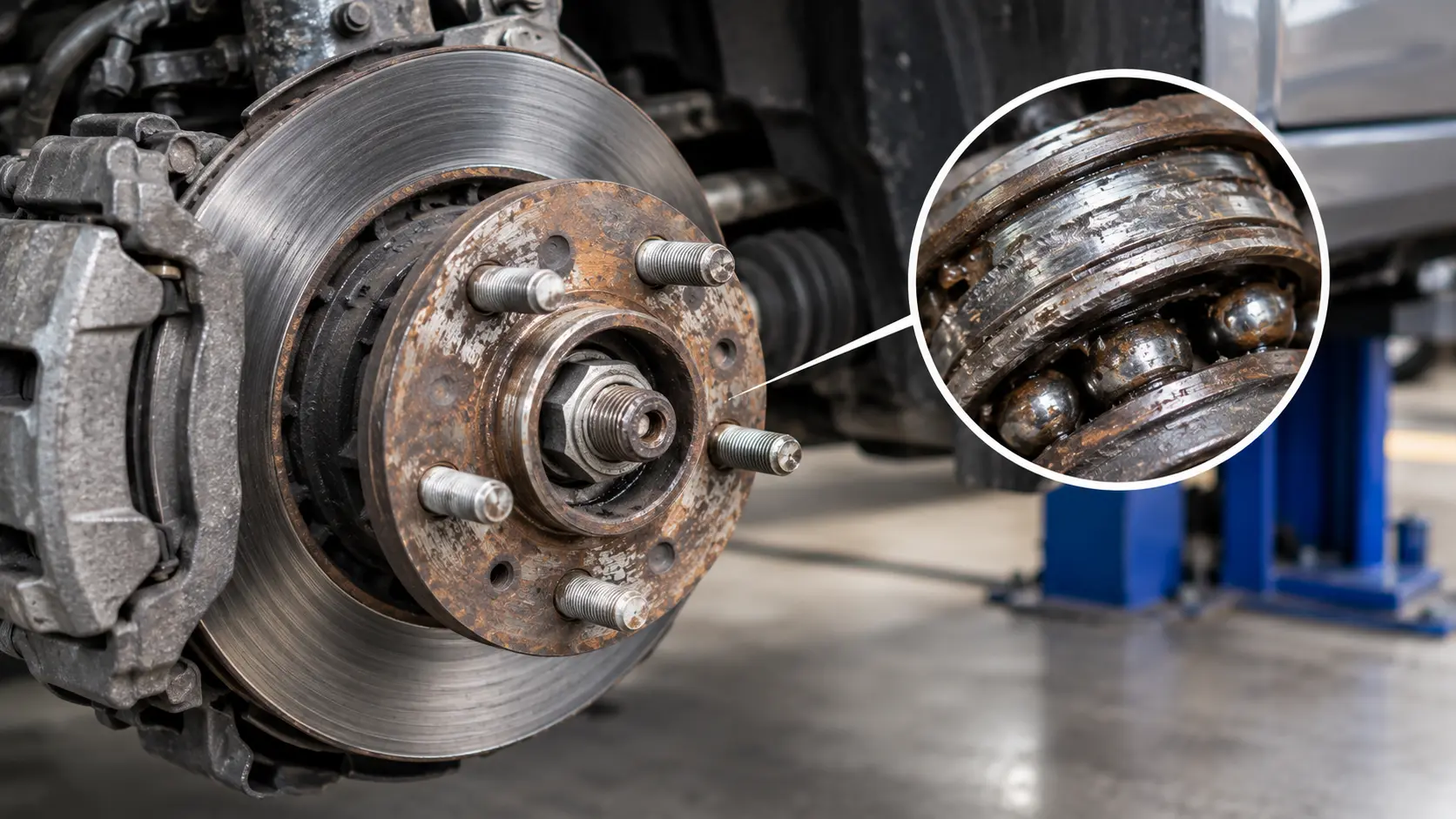
- Worn wheel bearing. This can make a wheel hot and noisy, usually with a hum that changes with speed.
- Warped or worn discs. These cause vibration through the pedal or steering when braking.
The collapsed hose is easy to miss. If the caliper releases once the bleed screw is opened, the hose may be the real cause.
How a Mechanic Confirms a Seized Caliper
A trusted car mechanic near you starts with a short test drive. The mechanic feels for a pull while cruising and braking, listens for noise and checks how the car coasts.
Next comes a temperature check. Rick’s Free Auto Repair Advice recommends using an infrared thermometer on each disc and comparing left and right. The temperatures should be close. A large difference suggests a sticking caliper on the hotter side.
Then the car goes up on a lift. Each wheel is spun by hand. A wheel that is hard to turn or stops quickly is dragging.
The wheel is removed and the caliper inspected. The mechanic checks the slide pins for corrosion and the rubber boots for splits. Rick’s Free Auto Repair Advice also points to rust under the pad anti rattle clips, which can expand and jam the pads against the disc.
The piston is checked for free movement and for a damaged dust boot. The brake hose is inspected for swelling or cracking, and the fluid level and condition are checked.
What Seized Caliper Repair Involves
The repair depends on what has seized.
Slide pins. If the pins are corroded but the caliper is otherwise healthy, the pins are cleaned or replaced, lubricated with high temperature grease and fitted with new boots. Rick’s Free Auto Repair Advice recommends replacing the pin boots on every brake job, because they are cheap and protect the pins.
Pad bracket. Rust under the anti rattle clips is cleaned off, the contact points are coated with brake grease and new clips are fitted.
Piston. A piston that has seized because of corrosion or a failed seal usually means the caliper is replaced. Rebuilding with a new seal and piston is possible on some calipers, but replacement is more common.
Hose. A collapsed or swollen brake hose is replaced.
The pads and discs are often damaged by the heat. Glazed or worn pads and heat marked discs are replaced, usually in pairs across the same axle, so braking stays even.
If the caliper or hose is replaced, the brake system is bled to remove air. The car is then road tested to confirm the pull and drag have gone.
A full brake repair service covers the calipers, pads, discs, hoses and fluid together, so one weak part does not undo the repair.
If the dragging brake wore one tyre unevenly or caused flat spots, a tyre check at the same visit is worth doing.
Is It Safe to Drive With a Seized Caliper?
It is not safe to drive far. A dragging brake overheats, and heat spreads to the brake fluid, the wheel bearing and the tyre. Brake fluid can boil, which causes a sudden loss of braking at that wheel.
Kwik Fit advises not to continue driving if a wheel gets excessively hot, because it can cause a fire. In Dubai summer heat, the margin is even smaller.
A seized caliper also makes the car pull under braking, which can be dangerous in an emergency stop on a busy road.
If the car pulls hard, smells strongly of burning or a wheel is smoking, stop as soon as it is safe. On a highway, turn on your hazard lights and move to the hard shoulder. Stopping in a live lane because of a breakdown brings a AED 1,000 fine and six black points under Article 98 of the UAE Federal Traffic Law. Once safe, call roadside assistance.
A car with a fully seized brake should travel on a flatbed tow truck rather than be driven. If the car is parked at home and only feels slightly off, a mobile mechanic can check the wheels for drag and heat on site.
Can a Seized Caliper Fix Itself?
Sometimes a lightly sticking caliper seems to free up after a few drives. The pin or piston breaks loose, and the drag fades.
The cause is still there. Corroded pins, split boots and rust under the clips do not repair themselves. The caliper will usually stick again, often at a worse moment.
Tapping the caliper or pumping the brakes may free it briefly, but this is not a repair. The caliper needs cleaning, lubrication or replacement.
Why Do Calipers Seize After the Summer Holidays?
Workshops in Dubai often see a rise in sticking brakes when residents return from long summer trips. Cars that sat for weeks in humid air with no movement develop rust on the discs and corrosion in the pins and pistons.
The handbrake makes it worse. If it was left on, the rear pads may have stuck to the discs. The first drive can free them with a loud bang, or one wheel may stay partly applied.
Before a long trip, many owners leave the car in Park with the handbrake off on level ground, where safe and allowed. Some arrange for a family member to move the car a short distance every week or two. On return, drive gently for the first few kilometres and brake lightly a few times to clean the surface rust from the discs.
How Long Do Brake Calipers Last?
Many calipers last for many years and several sets of pads. Their life depends on heat, moisture and how well the pins and boots are looked after during brake services.
Calipers on cars that sit unused for long periods tend to stick sooner. Calipers on cars driven daily and serviced regularly often last much longer.
The cheapest protection is a proper brake service that cleans and greases the pins and replaces the boots each time the pads are changed.
Does a Sticking Caliper Affect Accident Repairs?
A caliper that pulls the car to one side under braking can play a part in a minor collision. If a bump happens, Dubai Police need to issue a report before any garage can repair accident damage. Once the brakes are fixed, scratches and small dents can go to paint and panel repair.
Mention any recent brake problems to the workshop handling the repair. A pull under braking is a mechanical fault that should be fixed before the car goes back on the road.
How to Stop Calipers From Seizing
Have the slide pins cleaned and greased, and the pin boots replaced, every time the pads are changed. Rick’s Free Auto Repair Advice describes these boots as a low cost part that prevents the most common cause of seizing.
Change the brake fluid at the interval in your owner’s manual. Old fluid absorbs moisture, which corrodes pistons from the inside.
Avoid leaving the car parked for long periods with the handbrake on, where it is safe to do so.
Drive the car regularly. Brakes that are used often stay cleaner and are less likely to rust.
Listen and feel for early signs. A new pull, a burning smell or a hot wheel after a drive deserves a quick check.
Book a regular car service in Dubai that includes a full brake inspection. If you notice pulling, heat or noise from one wheel, take the car to a car garage near you that checks the pins, hoses and pistons before replacing the whole brake system.
FAQ
Here are the questions Dubai drivers most often ask about seized calipers.
What are the signs of a seized caliper?
The main signs are the car pulling to one side, one wheel much hotter than the others, a burning smell after driving, a sluggish feel, grinding or squealing, uneven pad wear and a brake fluid leak.
Can a seized caliper cause a fire?
It can in extreme cases. Kwik Fit warns that an excessively hot wheel can cause a fire and advises not to continue driving. The heat can also boil brake fluid and damage the tyre and wheel bearing.
How do mechanics test for a seized caliper?
They road test the car, compare disc temperatures with an infrared thermometer, spin each wheel by hand on a lift and inspect the slide pins, boots, pistons and brake hose for corrosion and damage.
Will greasing the slide pins fix it?
If corroded or dry slide pins are the cause, cleaning, greasing and fitting new boots often fixes it. If the piston has seized, the caliper usually needs replacing.
Does a seized caliper damage the discs?
Yes. Constant rubbing overheats the disc and can glaze, warp or score it. The pads also wear quickly. Discs and pads are often replaced in pairs when a seized caliper is repaired.
Conclusion
A seized brake caliper shows up as a pull to one side, one wheel much hotter than the rest, a burning smell, a sluggish feel, grinding noises and uneven pad wear. Long summer parking, coastal humidity, heat and sand all help calipers seize in Dubai. A temperature check, a hand spin of each wheel and a close look at the pins, boots and hose confirm the fault, and early repair saves the pads, discs and tyre.
Rapid Rev Garage is a full workshop open 24 hours at Al Khail Gate, 12th Street, Al Quoz Industrial Area 2, serving passenger cars across Al Quoz, Business Bay, Jumeirah, Al Barsha, Satwa, Downtown and the Sheikh Zayed Road corridor. Visit https://rapidrevgarage.com, send your car model and which wheel feels hot on WhatsApp, or get directions on Google Maps.
Rapid Rev Garage | Seized Brake Caliper Symptoms | Al Quoz, Dubai