Your car has a shock absorber near each wheel. Its job is simple. It stops the springs from bouncing after the car hits a bump. Without shocks, your car would keep rising and falling like a boat on waves.
Shocks also press your tires onto the road. That grip is what lets you steer, brake, and change lanes safely. That makes shocks as much about safety as comfort.
The trouble is that shocks wear out slowly. The change happens over months, so most drivers get used to it. By the time the ride feels wrong, bad shock absorbers may have already worn out tires, mounts, and bushings. Learning the signs of failing shock absorbers early saves money and keeps the car stable.
Quick Overview: What Are the Most Common Bad Shock Absorber Symptoms?
If a car bounces after a jolt, bad shock absorbers are a sure sign. You may also notice grease on the exterior of the shock body, or hear clunks when going over speed bumps. Tires often wear in a cupped, uneven manner. The car can lean hard in corners, dip its nose under braking, and squat at the rear when you speed up. The ride feels loose and jarring over bad roads. These indicators develop over time, so compare the car to how it felt when it was new. Two or more symptoms together indicate you should have the suspension checked.
- Excessive bouncing after bumps
- Oil leaking from the shock absorber.
- Clunking or knocking noises
- Uneven tire wear
- Poor handling and excessive body roll
- Nose-diving during braking
- Rear-end squatting during acceleration.
- A rough or uncomfortable ride
1. Does Your Car Keep Bouncing After Hitting a Bump?
Excessive vehicle bouncing is the most common sign of a worn shock. A healthy car rises once over a speed bump, settles, and stops. A car with weak shocks bobs two or three more times before it calms down.
The reason sits inside the shock. Each one holds a piston that moves through oil. Tiny valves in the piston slow the oil down, and that resistance soaks up the spring’s energy. Over time, the oil thins, the valves wear, and the seals leak. The shock then gives little resistance, so the spring keeps moving.
You can feel it in a few ways. The car floats or wallows at highway speed. It keeps moving after a dip in the road. Passengers in the back may feel sick on long drives. A car bouncing over bumps at low speed in a car park is another clear clue.
The old trick of pushing down hard on one corner still has some use. If that corner bounces more than once or twice, the shock is weak. Modern cars have stiff springs, though, so this test can miss early wear. A mechanic’s road test will tell you more.
2. Are Your Shock Absorbers Leaking Oil?
Leaking shock absorbers have a failed seal, and oil that should stay inside is now leaking out. Grab a torch and look at the shock body behind each wheel. Look for a wet, oily coat running down the tube.
Not all marks are a concern. A small dry coating near the top seal on many shocks is common. Sweating, some makers say. Dust can attach to it, so it may look dirty but not be serious.
An actual shock absorber oil leak looks different. The body is moist to the touch. Oil spills down in streaks or drops on the spring seat or lower arm. A thick brown crust of dirt covers the damp spot. Eventually enough oil leaks so that the shock is no longer damped and the car bounces.
Seals fail for several reasons. Rubber gets firm as it ages and as it’s heated. The chrome piston rod gets scored with grit. Each stroke pulls the grit through the seal. A heavy knock on a pothole can snap the rod. Most passenger cars use sealed shocks. A leak means replacement, not repair.
3. Do You Hear Clunking or Knocking Noises Over Bumps?
A clunking noise over bumps usually comes from the suspension, but the shock is only one possible source. A shock that has lost its oil can knock inside as the piston hits the end of its travel. A loose shock bolt can also clunk.
Other worn parts make very similar sounds:
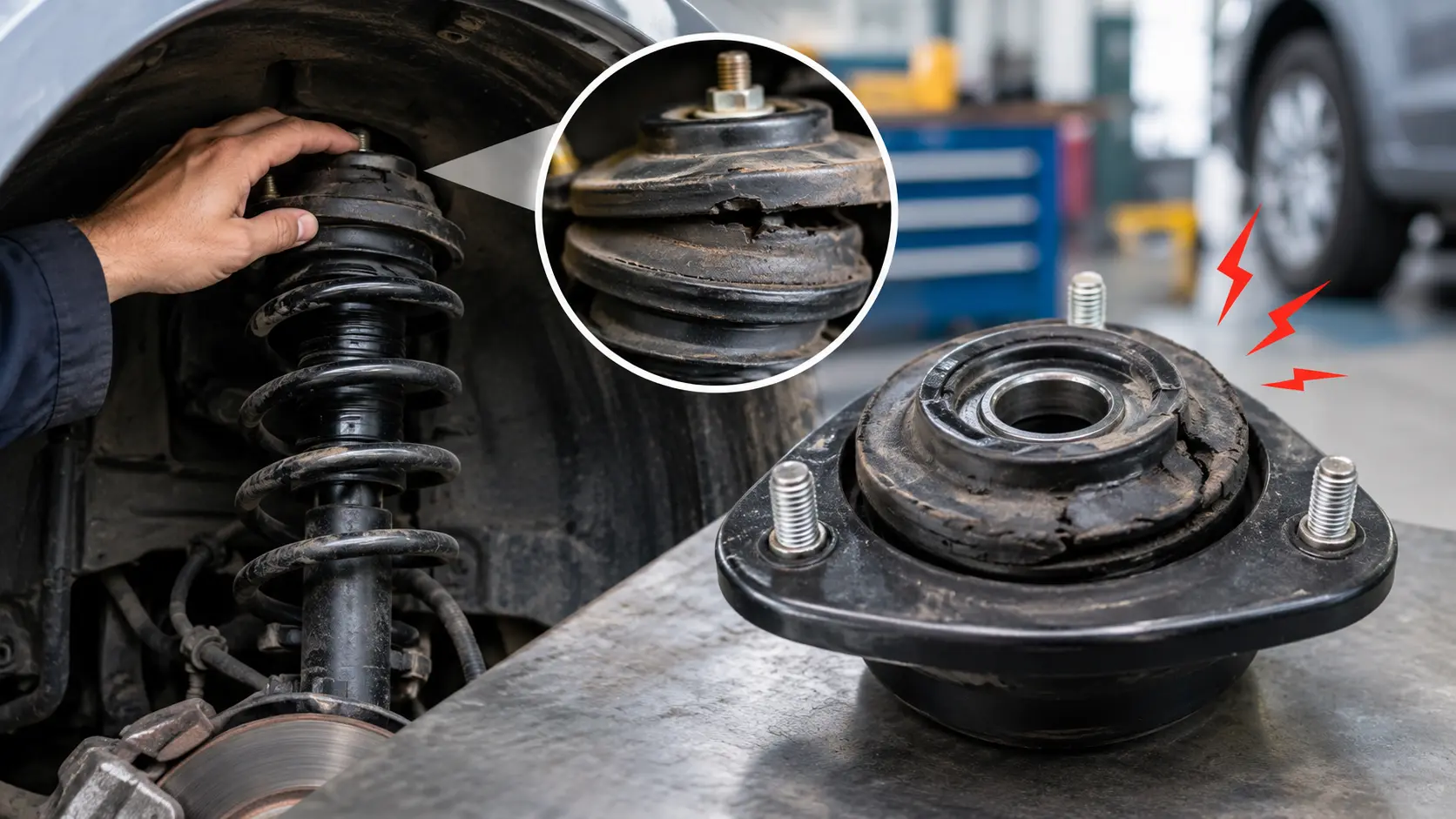
- Strut top mounts often clunk or creak when you turn the wheel in a car park.
- Cracked rubber bushings let metal parts shift and knock.
- Anti-roll bar links rattle over small bumps and rough patches.
- Worn ball joints can knock when you brake or turn.
That is why a knocking noise from the suspension needs a proper check. Swapping the shocks on a guess can leave the real fault in place. Before your visit, note when the noise happens. It might be over speed bumps, while turning, when braking, or on rough roads. That detail helps the mechanic find the fault faster.
4. Can Bad Shock Absorbers Cause Uneven Tire Wear?
Yes, and their trail is rather easy to follow once you know what to look for. The shock can’t keep the tire on the ground, so the wheel jumps. Each time it lands it touches a patch of rubber. This means you get cupped tire wear over thousands of kilometers, also known as scalloped wear.
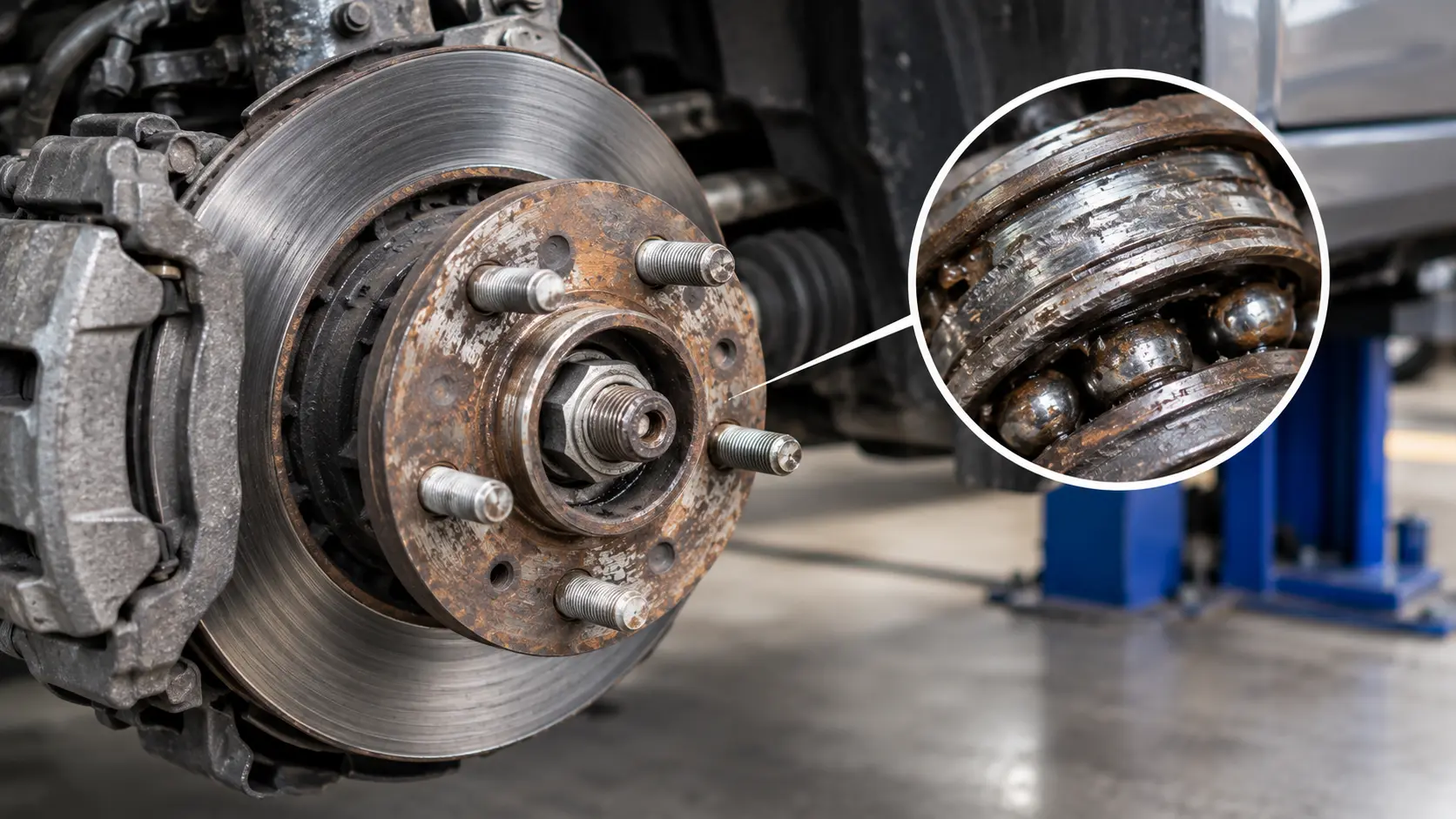
Feel the tread with your hand. Cupped wear feels like little waves or dips scattered around the tire. You may also hear a humming sound that rises in pitch as speed increases. Many drivers think that’s a wheel bearing going bad.
More than only shocks can cause uneven tire wear, so a mechanic checks for others, too:
- Wheel alignment problems wear the inner or outer edge, often with a feathered feel.
- Wrong tire pressure wears the center or both edges.
- Unbalanced wheels can also cause cupping.
Fitting new tires on top of worn shocks wastes money. The new tires start cupping too, often within months.
5. Does Your Car Feel Unstable When Turning?
Every car leans a little in a corner. Worn shocks let the body lean further and faster. The car may feel like it rolls onto its outer tires before it settles into the turn.
Poor vehicle handling shows up in other ways too. The car sways during quick lane changes. It feels slow to respond when you steer. A gust of wind or a passing truck can push it around more than before. SUVs and tall vans feel this most because they sit higher.
Shocks aren’t always the only cause. Weak anti-roll bar links, tired springs, and worn bushings are common car suspension problems that add to body roll. A full suspension check looks at all of them together.
6. Does Your Car Dip Forward When You Apply the Brakes?
Nose-diving is when the front of the car drops sharply as you brake. Some dip is normal, since weight shifts forward every time you slow down. Front shocks are meant to slow that shift so it happens gently.
When the front shocks wear out, the nose drops fast and hard. At the same time, the rear lifts, so the rear tires press on the road with less force. Tires that bounce or lift lose grip for brief moments. Less grip means the car can take longer to stop, especially in an emergency stop.
You may also feel the car rock back and forth after you stop. If your brakes feel strong but the car still feels unsettled under braking, the shocks deserve a look.
7. Does the Rear of Your Car Squat During Acceleration?
Squatting is contrary to nose-diving. When you pull away strongly, the weight goes to the back. Healthy rear shocks control that movement. Worn ones will let the back sink and the nose lift more than it should.
Knowing the difference between shocks and springs is helpful. The springs hold the weight of the car. Shocks only determine the speed of movement. So if your butt drops when you accelerate then pops back up, it’s the shocks.
A rear end that sits low all the time is a different problem. That usually means a sagging or broken spring, or simply too much load in the boot. Park on level ground and look at the car from the side. If one corner sits lower than the others, mention it to the mechanic.
8. Does Your Car Ride Roughly on Uneven Roads?
It sounds odd, but worn shocks can make a car feel both bouncy and harsh. When a shock loses control, the suspension travels further on each bump. On a big bump, it hits the rubber bump stop with a hard bang. Small ripples in the road also come through the cabin more clearly.
Faulty shock absorbers are only one cause of a rough ride. Other common causes include:
- Tire pressure set too high.
- Worn or cracked suspension bushings
- A broken or sagging coil spring
- Low-profile tires or larger aftermarket rims
If the ride has become harsher slowly over time, and not right after a tire or rim change, worn shocks are a likely reason.
Shock Absorber Symptoms vs Other Causes: Quick Comparison Table
This table compares common shock absorber failure symptoms with other faults that feel the same. Use it to judge what to mention at the workshop.
| Symptom | Points to the Shocks When | Could Be Something Else If |
| Bouncing after bumps | The car bobs 2 or more times and floats at speed | Tyre pressure is very low |
| Oil on the shock body | The tube is wet with streaks or drips | It is only a light, dry film near the seal |
| Clunk over bumps | The noise comes from the shock area on bumps | It clunks when turning (top mount) or rattles on small bumps (anti-roll bar links) |
| Cupped tyre wear | Dips appear around the tread | The edges are worn (alignment) or the centre is worn (pressure) |
| Body roll in turns | The car leans further than it used to | Anti-roll bar links or bushings are worn |
| Nose-dive when braking | The front drops hard and the car rocks after stopping | The car pulls to one side (brake fault) |
| Rear squat | The rear dips on acceleration, then rises | The rear sits low even when parked (springs or load) |
| Harsh ride | The harshness built up slowly | It started after new tyres or rims |
Why Shock Absorbers Wear Out: The Main Causes
Shocks are wear parts, just like brake pads. Every bump moves the piston, and a car makes thousands of small movements in a single drive. Over the years, that adds up. The main reasons damaged shock absorbers fail early are:
- Age and distance, which break down the oil and wear the valves
- Heat, which thins the oil and hardens the rubber seals
- Dirt and sand on the piston rod, which cut the seal each time it moves
- Hard impacts from potholes, curbs, and fast speed bumps, which can bend the rod or crack a mount
- Heavy loads in the boot or on the roof, which make the rear shocks work harder
- Low-quality parts that don’t match the car’s springs
A torn rubber dust boot speeds all of this up. The boot covers the piston rod. Once it splits, sand and dirt reach the seal directly.
Why Bad Shock Absorbers Wear Out Faster in Dubai
Dubai roads look smooth, but local conditions are hard on suspension. Residential areas and malls have many speed bumps. Each one sends a big hit through the shocks, especially when drivers take them fast.
The second element is heat. On a warm day of 45 degrees C, the oil in the shock thins, and the rubber seals and bushings age faster. Underground parking ramps are steep, as are the high curbs around the mall entrances.
Sand and fine dust are the third factor. Industrial areas and desert roads coat a car’s underside with grit. Weekend dune trips are even harder on shocks, since the suspension works at full travel for hours. Stock shocks on a family SUV are not built for that kind of use.
Try This 5-Minute Driveway Check Before You Book an Inspection.
Most guides tell you to see a mechanic and stop there. This quick check lets you walk in with real details. The inspection goes faster, and you can follow what the mechanic finds. You only need a torch and your phone.
- Park on flat ground and look at the car from the side and the back. Note any corner that sits lower than the rest.
- Shine the torch behind each wheel. Look for a wet, oily shock body or a torn rubber boot.
- Run your palm around each tire’s tread. Note any tire that feels wavy or cupped.
- Push down hard on each corner and let go. Count how many times it bounces.
- Ask someone to film one wheel from the pavement as you drive over a speed bump at about 20 km/h. A healthy wheel settles at once. A weak one keeps bouncing.
Write down which corner showed which sign. Show the notes and the video at the workshop. It turns a vague “it feels bouncy” into a clear starting point.
How Do Mechanics Check for Bad Shock Absorbers?
A good check covers the whole suspension, not only the shocks. That matters because many symptoms overlap, as the table above shows. When you book with a car mechanic near you, the check usually follows these steps:
- Visual inspection for leaks and damage. The mechanic looks for oil on the shock body, a bent or pitted rod, dents, and torn dust boots.
- Inspect mounts, bushings, and springs. With the car on a lift, they check top mounts, rubber bushings, anti-roll bar links, ball joints and coil springs for cracks or play.
- Tire wear and suspension movement assessment. Cupping, edge wear, and uneven ride height show which corner is weak.
- Road test and further checks where needed. The mechanic drives over bumps, brakes firmly, and turns to check for bounce, roll, dive, and noise. Some workshops also use a suspension tester that measures how fast each wheel settles.
The result should tell you which shocks are worn, which related parts are worn, and what can wait. Ask to see the leak or the damaged part yourself.
How a Workshop Repairs Worn Shock Absorbers
Once the faulty corners are confirmed, the repair follows a set order. A proper job includes these steps:
- Replace the shocks in pairs on the same axle. A new shock on one side and an old one on the other makes the car lean and brake unevenly.
- Check the top mounts, dust boots, and bump stops, and replace any that are worn. They cost little next to the shock, but cracked ones cause noise and early failure.
- For struts, use a spring compressor to move the coil spring onto the new strut. A compressed spring holds a lot of force, so this is not a home job.
- Tighten the bushing bolts with the car’s weight on its wheels. Doing it with the wheels hanging can twist the rubber and shorten its life.
- Do a wheel alignment after any strut replacement, since struts set the wheel angle.
- Check tire wear and balance the wheels. Cupped tires may need to be rotated or replaced.
- Road test the car to confirm the bounce, noise, and roll are gone.
Services That Fix the Problem and Stop It Coming Back
Fixing worn shocks properly often means more than one service. These are the jobs a workshop may recommend after the inspection:
- Shock absorber or strut replacement, in axle pairs
- Strut mount, bushing and dust boot replacement
- Anti-roll bar link replacement if the links have play
- Coil spring replacement if a spring is sagging or broken
- Wheel alignment, balancing and tire rotation
- A suspension check at each routine service from then on
What Happens If You Ignore Worn Shock Absorbers?
Ignoring worn shocks costs more than comfort. The risks build over time:
- Longer stopping distances, because bouncing tires lose grip.
- Weaker control in emergency swerves and fast lane changes
- Cupped tires that need replacing early
- Extra wear on mounts, bushings, ball joints, and springs, as they take hits the shocks should absorb
- A higher bill later, when one worn part has damaged several others
Bad shock absorbers also make the car more tiring to drive. On a long highway run between Emirates, that fatigue adds up.
Can You Drive With Bad Shock Absorbers?
You can usually drive short distances with mildly worn shocks, but you should not put off the repair. Bad shock absorbers rarely fail in one dramatic moment. They weaken slowly so that the car may feel fine even as its grip declines.
Until the inspection, drive with more care. Leave a bigger gap to the car ahead. Slow down for speed bumps and corners. Avoid heavy loads and high speeds.
Stop driving if any of these happen:
- The car wanders in its lane or is hard to keep straight.
- The steering shakes or pulls hard over bumps.
- You hear a loud bang and the car suddenly leans or sits low on one corner.
- A shock or spring looks broken or loose.
In those cases, park somewhere safe and call roadside assistance instead of driving to the workshop.
When Should Shock Absorbers Be Replaced?
There is no single mileage when every shock must be changed. Replacement depends on condition, the carmaker’s service schedule, the distance driven, and what an inspection finds. Two cars with the same kilometers can have very different shocks.
As a rough guide, many shock makers suggest checking around 80,000 km, then at every service. Cars driven on rough roads, with heavy loads or in desert sand may need new shocks sooner. A gently driven car on smooth roads may go well past that.
Replace the shocks when you see any of these:
- An oil leak from the shock body
- A bent rod, broken mount, or damaged body
- Clear bouncing in a road test
- Cupped tire wear linked to the shocks
Your owner’s manual or service book may list a suspension check interval. Follow it alongside what the inspection shows.
How Long Does Shock Absorber Replacement Take?
Most shock jobs take a few hours. A pair of rear shocks on a typical sedan often takes about 1 to 2 hours. Front struts take longer, often 2 to 3 hours, because the spring must be moved over and the wheels aligned afterward.
Doing all four corners with an alignment can take most of a day. Air or electronic suspension takes longer. If your model’s parts aren’t in stock, they may need a day or two to arrive.
How Much Does Shock Absorber Replacement Cost in Dubai?
Prices vary so much that a single figure would mislead you. These are the main things that change the bill:
- Make and model. Shocks for a common Japanese sedan cost far less than those for a German luxury car or a large SUV.
- Suspension type. Air suspension and adaptive electronic dampers cost much more than standard gas or oil shocks.
- Parts quality. OEM parts from the carmaker, OE-equivalent aftermarket brands, and budget parts cost very different amounts.
- Front or rear. Front struts usually cost more than rear shocks and take more labor.
- Number of corners. One axle pair costs roughly half of a full set of four.
- Related repairs. Worn mounts, bushings, springs, alignment, and new tires all add to the total.
Ask for a written, itemized quote. It should list the part brand, whether it is OEM or aftermarket, the labor, and whether alignment is included. That makes it easy to compare two quotes fairly.
How to Make Your Shock Absorbers Last Longer
Good habits can add years to a set of shocks, and most of them cost nothing.
- Slow down for speed bumps and cross them straight, not at an angle.
- Steer around potholes and avoid hitting curbs when parking.
- Keep tire pressure at the level shown on the driver’s door sticker.
- Don’t keep heavy loads in the boot or on the roof for long periods.
- Ask for a suspension check at every service once the car passes 80,000 km.
- Replace torn dust boots early, before grit reaches the seal.
- Choose shocks matched to your car and driving, not just the cheapest set.
Dubai-Specific Advice for Protecting Your Suspension
Driving in Dubai calls for a few extra steps. Get the suspension checked before summer starts, since heat speeds up seal wear. May or early June is a good time. Pair it with your regular car service to save a separate trip.
After a desert or dune trip, wash the underbody and wheel arches. Ask the shop to examine dust boots and shock bodies for sand damage. Also reset your tire pressures since many people lower them for sand driving.
Underground parking ramps, villa speed bumps at walking speed. If you’ve installed lowering springs, ask whether your shocks are rated for it. Stock shocks, reduced springs, go fast. Families with seven-seater SUVs should watch the rear end, as a loaded car adds stress to the rear shocks.
Where Can You Get Shock Absorbers Checked in Dubai?
For bad car shock absorbers in Dubai, Rapid Rev Garage in Al Quoz is a strong place to start. It offers suspension repair for passenger cars, along with the tire and steering work that often comes with a shock replacement. If you are searching for a garage near me that can inspect and replace shocks, it is worth a call.
Why Rapid Rev Garage Suits Shock Absorber Repair in Dubai
The reasons below explain why this workshop is a sensible choice for the job.
Open 24 Hours as a Full Workshop
Many 24-hour car services in Dubai are mobile roadside units. They can help with a flat battery, but they cannot lift a car and change struts at the roadside. This garage runs a full workshop around the clock. A shock inspection or replacement does not have to wait for your day off.
Easy to Reach in Al Quoz Industrial Area 2
The workshop is at Al Khail Gate, 12th Street, in Al Quoz Industrial Area 2. Al Quoz lies between Sheik Zayed Road and Al Khail Road, so it is a short drive from much of the city.
Suspension, Steering and Tire Work in One Visit
Shock problems often come with worn tires or steering parts. The garage offers suspension repair, steering repair, and tire services. The garage can also address related faults found during the inspection in the same visit.
Frequently Asked Questions
Q1: What happens when shock absorbers go bad?
The car stops settling quickly after bumps. It bounces, leans more in corners, and dips under braking. Tires lose grip briefly, which can lengthen stopping distances and weaken handling.
Q2: How long do car shock absorbers usually last?
Many last around 80,000 to 100,000 km in normal driving. Rough roads, heavy loads, heat, and sand can shorten that. Condition matters more than distance, so have them checked at each service.
Q3: Should shock absorbers be replaced in pairs?
Yes. Replace both shocks on the same axle (front or rear) at the same time. A new shock on one side and a worn one on the other makes the car lean and brake unevenly.
Q4: What is the difference between bad shocks and bad struts?
A shock only controls movement. A strut does that job too, but it also holds the coil spring and forms part of the steering and suspension structure. Worn struts can affect wheel alignment, so always follow a strut replacement with an alignment.
Q5: Can bad shock absorbers damage tires?
Yes. A weak shock lets the wheel hop, and each landing scrubs the tread. This leaves cupped wear that shortens tire life and causes a humming noise.
Q6: How do I know if my shock absorbers need replacing?
Look for oil leaks, bouncing after bumps, cupped tires, nose-dive, or a harsh ride. Any one of these is a reason to book an inspection. A mechanic can confirm it with a visual check, a lift check and a road test.
Related Services to Book With a Shock Absorber Repair
A shock replacement is a good time to sort out connected jobs. These services are often paired with it:
- Wheel alignment after strut replacement, so the tires wear evenly
- Wheel balancing and tyre rotation to deal with cupped wear
- Bushing, mount and anti-roll bar link replacement when the inspection finds play
- A mobile car mechanic for a first look if you can’t get to the workshop
- Car painting to treat stone chips and rust on the wheel arches before they spread
Book a Suspension Check Before Worn Shocks Cost You New Tires
If your car bounces, leaks, or clunks over bumps, get it checked before the damage spreads to your tires. If your passenger car has bad shock absorbers, book an inspection with Rapid Rev Garage. The workshop is open 24 hours at Al Khail Gate, 12th Street, Al Quoz Industrial Area 2.
Message us on WhatsApp, call, or find the workshop on Google Maps. Bring your driveway check notes and video so the inspection starts with a clear picture.