You are cruising along Al Khail Road at a steady 70 km/h when a vibration runs through the car, like driving over rumble strips. It stops when you speed up or slow down, then comes back. The rev counter also sits higher than it used to on the highway. These are common bad torque converter symptoms, and they often start mildly long before the gearbox fails.
The torque converter connects the engine to an automatic gearbox. It lets the engine keep running while the car is stopped in Drive, and it multiplies torque when you pull away. At cruising speed, a clutch inside it locks up to stop slipping and save fuel. When that clutch or the converter itself wears, the car shudders, slips or overheats.
This guide explains how a torque converter works, the warning signs, why Dubai driving is hard on it, how a workshop diagnoses it and what the repair involves. It also covers the faults that feel similar but have cheaper fixes.
Bad Torque Converter Symptoms: Quick Answer
The main bad torque converter symptoms are shudder or vibration at steady speeds around 50 to 90 km/h, engine revs higher than normal on the highway, slipping or weak acceleration from a stop, a car that stalls when you stop in Drive, overheating gearbox fluid, whining or grinding noises and a warning light with code P0741.
Carista explains that P0741 shows the torque converter clutch has failed to lock up when commanded, which keeps engine speed higher in top gear and can overheat the fluid. A mechanic reads live lockup and slip data on a road test, checks the fluid and often changes the fluid first before deciding on a solenoid, valve body or converter repair.
Table of Contents
- What the Torque Converter Does
- How the Torque Converter Clutch Works
- Why Torque Converters Wear Faster in Dubai
- Shudder or Vibration at Steady Speeds
- High Engine Revs on the Highway
- Slipping or Weak Acceleration From a Stop
- Car Stalls When You Stop in Drive
- Overheating Gearbox Fluid
- Whining, Grinding or Rattling Noises
- Dark or Burnt Smelling Fluid With Debris
- Warning Light and Code P0741
- Faults That Look Like a Bad Torque Converter
- How a Workshop Diagnoses a Torque Converter
- What Torque Converter Repair Involves
- Can a Fluid Change Fix Torque Converter Shudder?
- Is It Safe to Drive With a Bad Torque Converter?
- How Long Does a Torque Converter Usually Last?
- Why Does the Shudder Feel Worse When Hot?
- How to Protect the Torque Converter
- Does a Torque Converter Fault Hurt Resale Value?
- FAQ
- Conclusion
What the Torque Converter Does
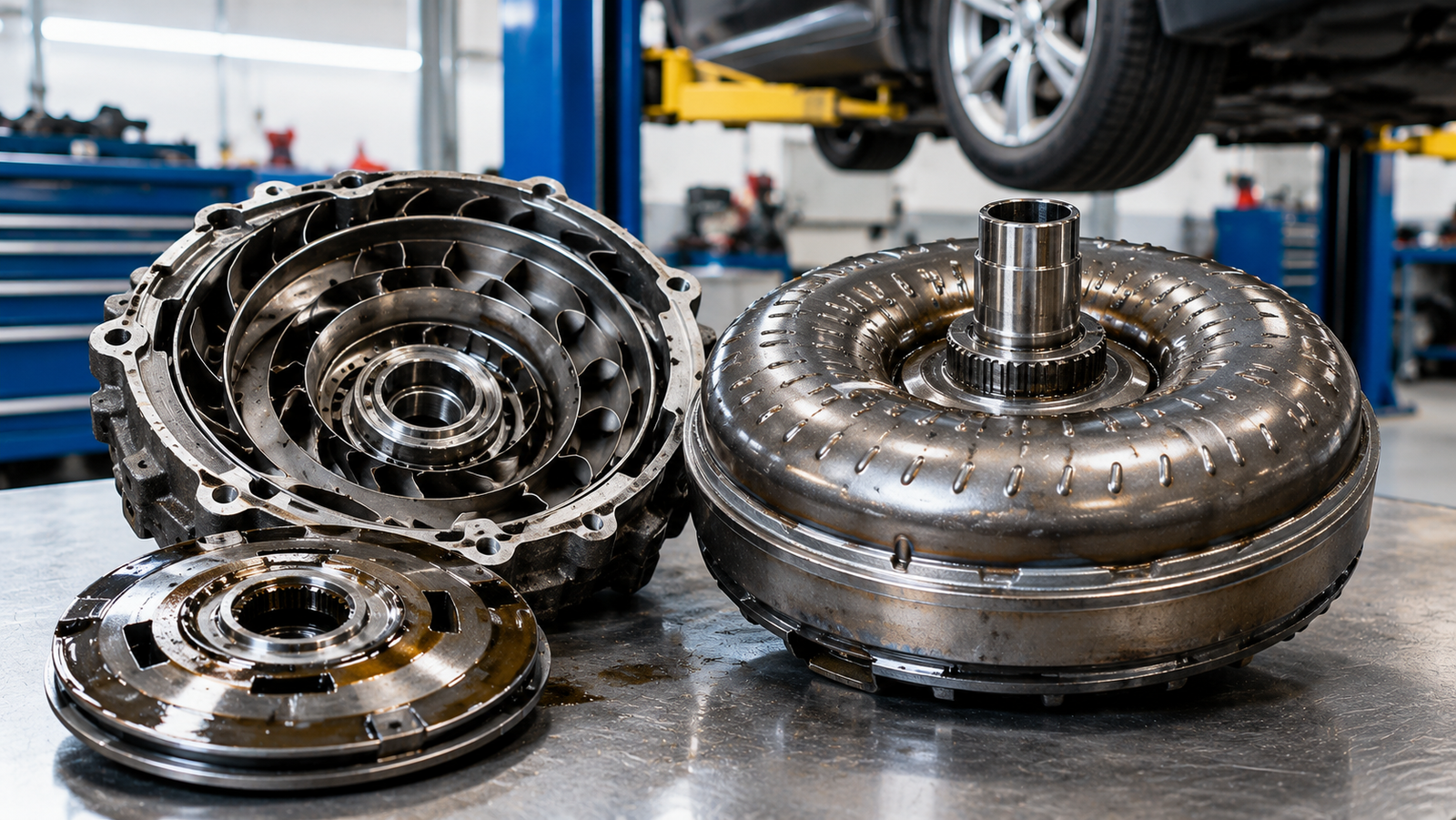
The torque converter sits between the engine and the gearbox, inside the bell housing. It is a sealed, doughnut shaped unit filled with gearbox fluid. Inside are three main parts: a pump driven by the engine, a turbine connected to the gearbox and a stator between them.
When the engine turns the pump, it throws fluid at the turbine, which turns the gearbox. Because the connection is through fluid rather than a solid clutch, the engine can idle while the car is stopped in Drive.
The stator redirects fluid to multiply torque when you pull away from a stop. That is why automatic cars pull smoothly from the lights without a clutch pedal.
How the Torque Converter Clutch Works
A fluid connection always slips a little, which wastes fuel and creates heat. To stop this at cruising speed, most modern converters have a lockup clutch, called the torque converter clutch or TCC. When the car reaches a steady speed, the gearbox computer applies the clutch, locking the engine directly to the gearbox.
A solenoid in the valve body controls the lockup clutch. Carista notes that a failed TCC solenoid is the most common cause of lockup faults.
When the lockup clutch wears, it grabs and releases unevenly, causing shudder. When it fails to apply, the converter keeps slipping, raising revs and fluid temperature.
Why Torque Converters Wear Faster in Dubai
Heat is the biggest factor. Stop and start traffic on Sheikh Zayed Road keeps the converter slipping at low speed, which generates heat. On a summer afternoon when the air passes 45°C, the gearbox fluid has less chance to cool, and hot fluid breaks down faster.
Old fluid loses its friction properties and protection. Carista lists contaminated fluid among the causes of lockup clutch problems and notes that a worn torque converter is most common on high mileage cars with poor fluid maintenance.
Heavy loads add to it. Towing boats or jet skis, driving fully loaded SUVs on desert trips and climbing steep car park ramps all increase converter slip and heat.
Shudder or Vibration at Steady Speeds
Shudder is the most common symptom. It feels like driving over rumble strips or a rough road, usually at steady speeds between about 50 and 90 km/h with light throttle. It happens as the lockup clutch applies and releases.
The shudder often stops if you press the accelerator harder or ease off, because the computer releases the lockup clutch. It may be worse when the gearbox is hot.
Many drivers mistake converter shudder for an engine misfire or unbalanced tyres. A misfire usually shows in more conditions and sets misfire codes. Tyre vibration usually rises with speed and does not stop when you change throttle.
High Engine Revs on the Highway
Carista notes that with P0741, engine speed stays higher than normal at a given road speed in top gear, and fuel economy is poor at highway speeds because the converter keeps slipping.
If you know your car normally cruises at around 2,000 rpm at 100 km/h and it now sits at 2,300 or 2,500 rpm, the lockup clutch may not be applying. The engine sounds busier, and fuel use rises.
Some cars show the effect as a small rise and fall in revs at steady speed, as the clutch slips in and out.
Slipping or Weak Acceleration From a Stop
A failing stator or worn internal parts reduce how much the converter can multiply torque. The car feels weak pulling away from the lights, and the engine revs rise without the car accelerating as it should.
This slip feels similar to a slipping gearbox clutch. The difference is that a converter problem shows most from a stop, while a clutch problem often shows during shifts.
A converter with a seized stator can cause the opposite: good pull from a stop but very poor acceleration at higher speeds and an engine that struggles to rev.
Car Stalls When You Stop in Drive
If the lockup clutch stays applied when it should release, the engine is locked to the gearbox as the car slows down. Like a manual car stopped in gear without the clutch, the engine stalls.
This often happens as you brake to a stop at the lights or in a car park. The car may restart and drive normally until the next stop.
A sticking TCC solenoid or a valve body fault usually causes this. The guide on what causes a car to stall on the road covers other faults that cause stalling.
Overheating Gearbox Fluid
Carista notes that fluid may overheat from excess slip, which can eventually damage the clutches. A slipping converter turns engine power into heat in the fluid instead of driving the car.
Some cars show a gearbox temperature warning or go into a protection mode. Others give no warning until the fluid is burnt.
Overheated fluid loses its protection and damages every part of the gearbox. That is why a slipping converter should be fixed quickly.
Whining, Grinding or Rattling Noises
A failing converter can make a whining noise that changes with engine speed, especially when pulling away. Worn bearings inside the converter can whirr or grind.
A rattling noise at idle can come from a broken stator, a damaged flex plate or loose converter bolts. The flex plate connects the converter to the engine and can crack.
Noises from the gearbox area need checking quickly, because internal damage can spread debris through the whole gearbox.
Dark or Burnt Smelling Fluid With Debris
Healthy gearbox fluid is usually red or pink and smells oily. Fluid that looks dark brown or black, smells burnt or carries fine particles points to overheating and wear.
A converter failing internally can shed metal or friction material into the fluid. That debris travels through the valve body and solenoids, causing more problems.
On many modern gearboxes there is no dipstick, so the fluid check is a workshop job. A mechanic checks the colour, smell and any debris on the pan magnet.
Warning Light and Code P0741
Carista explains that P0741 means the torque converter clutch has failed to lock up when commanded. Related codes include P0740 for the lockup clutch circuit and P0742 for a clutch stuck on.
Carista lists a failed TCC solenoid inside the valve body as the most common cause, followed by contaminated fluid or a worn valve body making the solenoid stick, and a worn torque converter on high mileage cars.
A code is a starting point. Live data on a road test shows whether the clutch is commanded on and how much it slips.
Faults That Look Like a Bad Torque Converter
Several faults feel similar. Engine misfires cause shudder at light throttle.
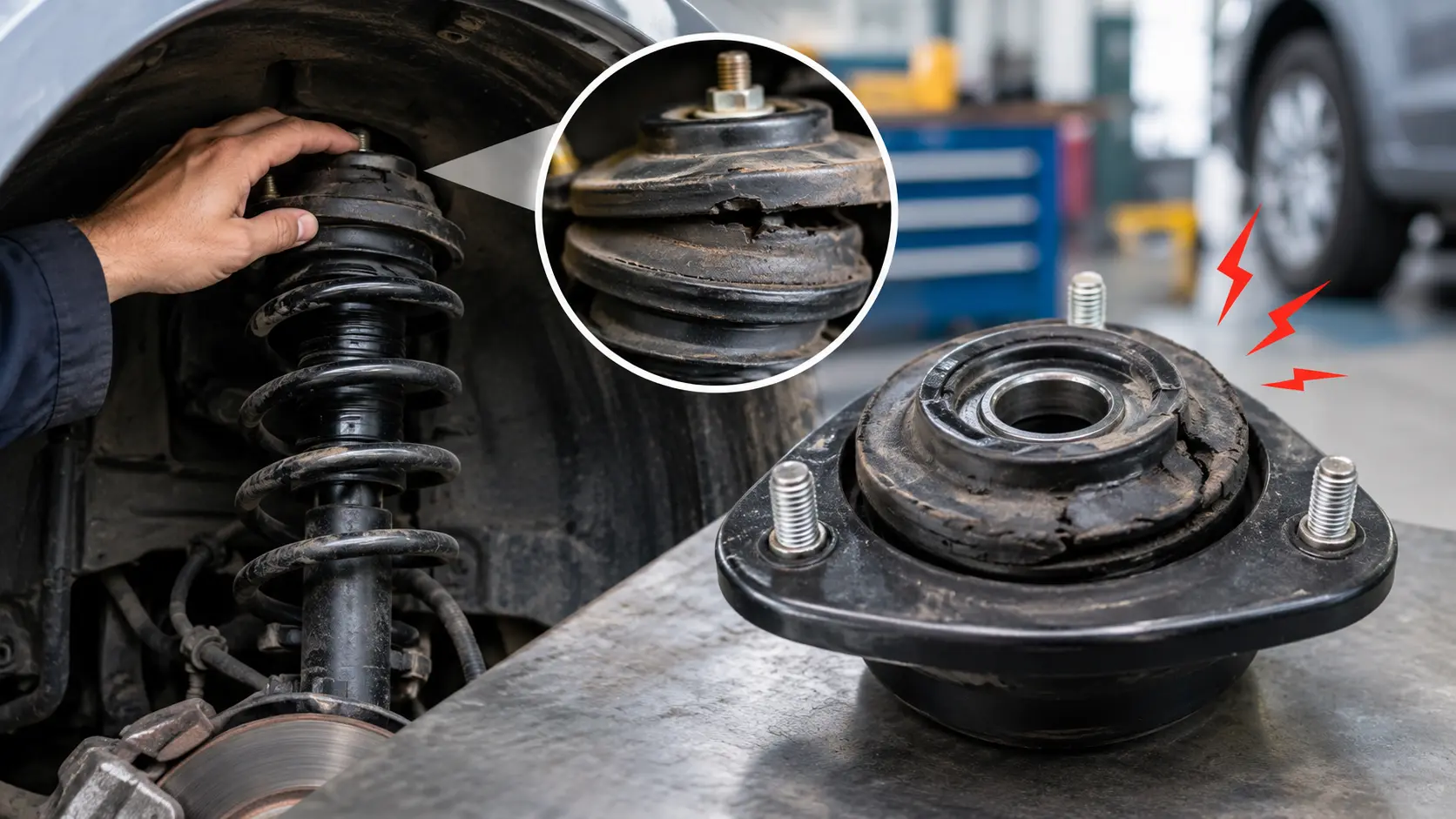
Unbalanced wheels, worn tyres or a bent rim cause vibration at speed. Worn driveshaft joints vibrate under acceleration. Worn engine or transmission mounts let vibration into the cabin.
Low or old fluid causes slipping and shudder too. A sticking TCC solenoid can cause all the lockup symptoms with a healthy converter. A worn valve body can cause harsh shifts and lockup problems.
The guides on bad transmission solenoid symptoms and bad transmission valve body symptoms explain those faults. Testing avoids replacing a converter that was not the cause.
How a Workshop Diagnoses a Torque Converter
A proper diagnosis starts with the fluid. The mechanic checks the level, colour, smell and any debris. Carista advises changing the fluid and filter first, because it is a cheap fix that resolves many lockup cases.
Next comes a road test with a scan tool connected. Carista recommends reading live lockup command and slip data. The mechanic watches whether the clutch is commanded on, the difference between engine speed and gearbox input speed, and when the shudder occurs.
Some workshops also do a stall speed test, comparing the engine speed with the brakes held and the throttle briefly applied against the manufacturer’s figure. This test must be done carefully and briefly, so it is a workshop job only. Book the diagnosis with an experienced car mechanic near you.
What Torque Converter Repair Involves
Carista lists the repair options in order: replace the TCC solenoid, the valve body or the torque converter as diagnostics indicate. Many lockup problems are fixed with a fluid change or a solenoid, without touching the converter.
Replacing the converter means removing the gearbox from the car, because the converter sits between the engine and the gearbox. The flex plate and the front gearbox seal are checked at the same time.
If a converter has failed internally, debris may have spread through the gearbox. The gearbox cooler and lines must be flushed, and the valve body may need cleaning, or the new converter can be damaged quickly. An engine and drivetrain specialist can advise whether a rebuild is needed.
Can a Fluid Change Fix Torque Converter Shudder?
Often, if the converter is not badly worn. Many manufacturers have released updated fluids for gearboxes known for shudder, because the friction properties of fresh fluid help the lockup clutch apply smoothly.
Carista calls a fluid and filter change a cheap fix that resolves many lockup cases. A transmission fluid service with the exact fluid type your manufacturer specifies is the first step.
If the shudder returns within weeks, or the fluid is full of debris, the converter or valve body likely needs repair.
Is It Safe to Drive With a Bad Torque Converter?
Mild shudder is not an immediate safety risk, but it should be checked soon. Slipping and overheating can damage the gearbox quickly, and stalling at stops is a real safety problem.
If the car loses drive or stalls on a highway, turn on your hazard lights and move to the hard shoulder. Stopping in a live lane because of a breakdown brings a AED 1,000 fine and six black points under Article 98 of the UAE Federal Traffic Law. Once safe, call roadside assistance.
An automatic car with a gearbox fault should go to the workshop on a flatbed tow truck. If the car is at home and still drives, a mobile mechanic can read the codes first.
How Long Does a Torque Converter Usually Last?
Many torque converters last as long as the gearbox. Others wear early because of old fluid, heat and heavy loads. Carista notes worn converters are most common on high mileage cars with poor fluid maintenance.
In UAE conditions, the gearbox runs hot for much of the year. Regular fluid changes are the best way to make the converter last.
A converter that starts to shudder usually gets worse. Fixing it early often means a fluid change or solenoid rather than a new converter.
Why Does the Shudder Feel Worse When Hot?
Many drivers notice the shudder appears after 20 to 30 minutes of driving, or only on summer afternoons. Hot fluid is thinner and loses some of its friction properties, so a worn lockup clutch grabs and releases more unevenly.
In Dubai, gearbox fluid can run very hot in slow traffic with the AC on. A converter that behaves well in the morning may shudder on the drive home.
Tell your mechanic when the shudder happens. A road test done when the gearbox is fully hot is far more likely to reproduce it.
How to Protect the Torque Converter
Change the gearbox fluid at the severe conditions interval in your owner’s manual. Use only the fluid type your manufacturer specifies. Fix leaks quickly, because low fluid causes slip and heat.
Avoid towing beyond your car’s rating, and do not hold the car on a slope with the accelerator instead of the brake. In heavy traffic, select Park or Neutral for long stops if your car allows it.
A regular car service in Dubai includes a check for gearbox leaks and stored codes. If you feel shudder or slipping, choose a car garage near you that reads live lockup data before replacing the converter.
Does a Torque Converter Fault Hurt Resale Value?
Yes, and buyers in Dubai often find it. Many used car buyers book a pre purchase inspection before they pay. A test drive at 60 to 80 km/h on a road like Al Khail Road shows converter shudder within minutes.
A stored P0741 code shows up the moment an inspector plugs in a scan tool. Dark fluid with a burnt smell is another warning sign that inspectors check. Any of these gives the buyer a strong reason to cut the price or walk away.
Dealers who trade in used cars price gearbox risk into their offers. A car with a shudder may receive an offer well below the market rate, because the dealer has to cover the repair and the time it takes.
Sellers have two choices. One is to fix the converter first and keep the workshop invoice.
A recent repair with proof of the work can reassure a buyer. The other choice is to disclose the fault and accept a lower price. Hiding a known gearbox fault tends to backfire once the buyer’s inspection finds it.
Cosmetic condition matters too. A car with a smooth gearbox but scratched bumpers still loses value. Many sellers fix gearbox faults first and then book paint and panel repair for scuffs from tight parking spots in Deira or Business Bay.
Buyers should ask for gearbox fluid change records. A car that had regular fluid changes is less likely to develop converter problems. A car with no records and a fresh fluid change just before sale deserves a longer test drive, since new fluid can hide a shudder for a short time.
FAQ
Here are the questions Dubai drivers most often ask about torque converters.
What does torque converter shudder feel like?
It feels like driving over rumble strips at steady speed, usually between about 50 and 90 km/h with light throttle. It often stops when you accelerate harder or ease off, and it can be worse when the gearbox is hot.
Can a bad torque converter cause stalling?
Yes. If the lockup clutch stays applied as you slow down, the engine stays locked to the gearbox and stalls at the stop. A sticking lockup solenoid or valve body fault is the usual cause.
What does code P0741 mean?
Carista explains that P0741 means the torque converter clutch failed to lock up when commanded. Engine revs stay higher in top gear, fuel economy drops and the fluid can overheat. A faulty solenoid is the most common cause.
Will a fluid change fix shudder?
Often, if the converter is not badly worn. Fresh fluid of the correct type helps the lockup clutch apply smoothly. Carista calls a fluid and filter change a cheap first fix for many lockup faults.
How do mechanics test a torque converter?
They check the fluid, then road test the car with a scan tool reading live lockup command and slip data. Some also run a brief stall speed test against the manufacturer's figure.
Conclusion
A bad torque converter shows up as shudder at steady speeds, higher revs on the highway, slipping from a stop, stalling at stops, overheating fluid, whining noises, dark fluid with debris and code P0741. Heat, old fluid and heavy loads wear converters faster in Dubai. Checking the fluid, then reading live lockup data on a road test, confirms whether a fluid change, a solenoid, a valve body or a new converter is needed.
Rapid Rev Garage is a full workshop open 24 hours at Al Khail Gate, 12th Street, Al Quoz Industrial Area 2, serving passenger cars across Al Quoz, Business Bay, Jumeirah, Al Barsha, Satwa, Downtown and the Sheikh Zayed Road corridor. Visit https://rapidrevgarage.com, send your car model and gearbox symptoms on WhatsApp, or get directions on Google Maps.
Rapid Rev Garage | Bad Torque Converter Symptoms | Al Quoz, Dubai